developer measuring cup
CN → US| HS Code | Tariff Rate | Origin | Destination | Doc |
|---|---|---|---|---|
| 3926909910 | 22.8% | CN | US | Official Doc |
| 7323930060 | 62.0% | CN | US | Official Doc |
| 7013495090 | 25.0% | CN | US | Official Doc |
| 7013495010 | 25.0% | CN | US | Official Doc |
Product Images
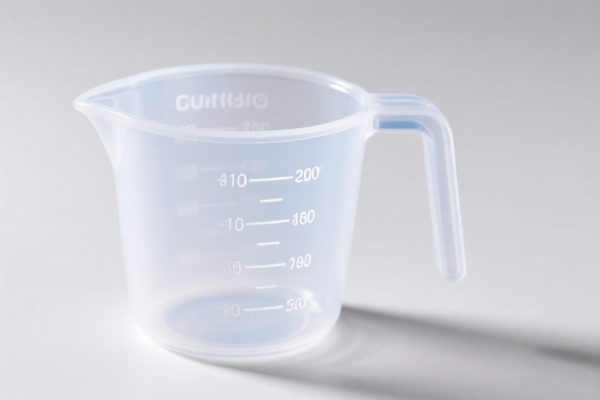
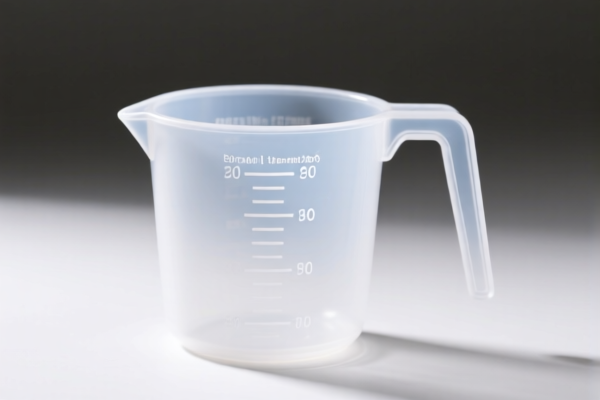
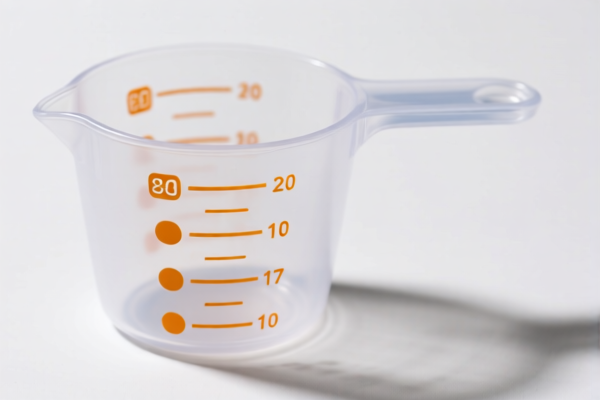
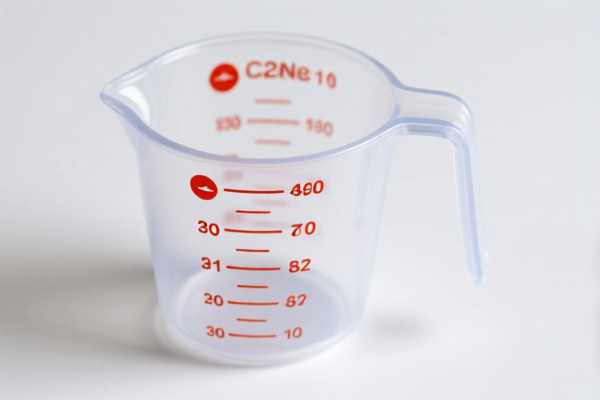
AI Analysis
🥄 Developer Measuring Cup (Kitchen & Laboratory Ware)
🌐 HS Code Reference & Customs Clearance Guide | 2026 Latest Tariff Analysis | Professional Strategy
📌 I. Product Definition & Classification: What is a "Developer Measuring Cup"?
The term "Developer Measuring Cup" is ambiguous and can refer to two distinct types of products based on the context of use:
- Kitchen/Culinary Context: A measuring cup used for mixing baking ingredients (e.g., coffee developers, yeast starters, or general kitchen prep). These are typically made of stainless steel, plastic, or glass.
- Laboratory/Industrial Context: A measuring cup or container used in chemical processing, specifically for mixing photographic developers, resin hardeners, or laboratory reagents. These are often made of specific plastics (like PP or PVC) or specialized glass to resist chemical corrosion.
⚠️ Key Distinction:
- If the item is for general food/kitchen use (even if called "developer" in baking), it generally falls under Chapter 73 (Iron/Steel) or Chapter 70 (Glass) or Chapter 39 (Plastics) depending on material.
- If the item is explicitly for laboratory use (chemical handling, precise scientific measurement), it may fall under Chapter 39 (Laboratory Ware) or specific glass headings, potentially affecting duty rates.
📦 II. HS Code Classification Details (Based on Provided Data)
| HS Code | Product Description | Material/Type | Use Case | Tax Rate (Total) |
|---|---|---|---|---|
7323.99.90.30 |
Table, kitchen or other household articles... of stainless steel: Kitchen ware | Stainless Steel | Kitchen baking, coffee preparation, general food contact | 52.0% |
3926.90.99.10 |
Other articles of plastics... Laboratory ware | Plastic | Laboratory use, chemical mixing, non-food industrial applications | 0.0% |
7013.49.50.90 |
Glassware... for table or kitchen purposes: Other... Valued >$3 but ≤$5 | Glass | Kitchen use, high-end glassware, general household | 15.0% |
7013.49.50.10 |
Glassware... for table or kitchen purposes: Crystalline or non-lead crystal | Crystal/Glass | Premium kitchen tableware, decorative glassware | 15.0% |
🔍 Critical Note on "Developer":
- If it's plastic and for lab use: Use3926.90.99.10(0% tax).
- If it's plastic but for kitchen use: The provided data does not list a specific plastic kitchenware code. It might be misclassified if declared as "kitchenware" but falls under "other plastics" without a specific lab exemption. However, based strictly on the provided data, plastic laboratory ware is 0%.
- If it's stainless steel (common for durable measuring cups): Use7323.99.90.30(52% tax). This is a very high tariff due to Section 232 (Steel/Aluminum) and Section 301 tariffs.
- If it's glass: Use7013.49.50.90or7013.49.50.10(15% tax).
💰 III. 2026 Tariff Rate Breakdown (Detailed Tax Clauses)
✅ Jurisdiction: United States (US)
✅ Origin: China (CN) (Assumed based on high tariff context in7323.99.90.30)
✅ Effective Date: Current rates apply as per 2026 data provided.
🎯 1. 7323.99.90.30 —— Stainless Steel Kitchen Ware
| Item | Detail |
|---|---|
| Product | Stainless steel measuring cup (kitchen/household) |
| Base Tariff | 2.0% (Basic MFN rate) |
| Additional Tariff | 50.0% (Section 232 Steel/Aluminum Tariff) |
| Total Tariff | 52.0% |
| Tax Calculation | CIF Value × 52% |
| Key Clause | "钢,铝铜制品加征关税: 50%" (Steel, Aluminum, Copper Products Additional Tariff: 50%) |
📌 Explanation:
- This is the most costly option if the measuring cup is made of stainless steel and declared as kitchenware.
- The 50% surcharge is imposed on all steel articles of iron/steel (with some exceptions for specific auto parts, etc., but kitchenware is generally included).
- Risk: High. This tariff significantly impacts profit margins.
🎯 2. 3926.90.99.10 —— Plastic Laboratory Ware
| Item | Detail |
|---|---|
| Product | Plastic measuring cup/container for laboratory use |
| Base Tariff | 0.0% |
| Additional Tariff | 0.0% |
| Total Tariff | 0.0% |
| Tax Calculation | CIF Value × 0% |
| Key Clause | "Laboratory ware" explicitly listed under "Other articles of plastics" |
📌 Explanation:
- If the product can be legitimately classified as laboratory ware (used for chemical, scientific, or non-food industrial purposes), the tariff is 0%.
- Condition: The product must be designed for and marketed as laboratory equipment. If customs determines it is for household/kitchen use, they may reclassify it to a different heading (e.g., plastic kitchenware, which may have different tariffs not listed here, but typically lower than steel).
- Opportunity: Zero tariff makes this the most cost-effective classification if applicable.
🎯 3. 7013.49.50.90 / 7013.49.50.10 —— Glass Kitchen Ware
| Item | Detail |
|---|---|
| Product | Glass measuring cup (kitchen/table use) |
| Base Tariff | 15.0% |
| Additional Tariff | 0.0% |
| Total Tariff | 15.0% |
| Tax Calculation | CIF Value × 15% |
| Key Clause | "Glassware of a kind used for table, kitchen... purposes" |
📌 Explanation:
- Glass kitchenware is taxed at 15%.
- This is significantly cheaper than steel (52%) but more expensive than plastic lab ware (0%).
- Note: The distinction between7013.49.50.90(Other) and7013.49.50.10(Crystal) depends on value and material quality (crystalline/non-lead crystal). Both are 15%.
🛠️ IV. Customs Clearance Practical Advice
✅ 1. Classification Strategy (Choose Wisely)
| Scenario | Recommended HS Code | Tariff | Reason |
|---|---|---|---|
| Stainless Steel Cup for Kitchen | 7323.99.90.30 |
52% | Must declare as steel kitchenware. High cost. |
| Plastic Cup for Lab/Chemical Use | 3926.90.99.10 |
0% | Best option if product is genuinely for lab use. |
| Glass Cup for Kitchen | 7013.49.50.90 |
15% | Moderate cost. Safe for general kitchen use. |
| Plastic Cup for Kitchen | Not Listed in Data | Unknown | Warning: If declared as plastic kitchenware, it might not be covered by the 0% lab rate. Ensure correct documentation. |
✅ 2. Documentation Requirements
| Document | Requirement | Purpose |
|---|---|---|
| Product Specification Sheet | Must clearly state Material (Steel, Plastic, Glass) and Intended Use (Kitchen vs. Laboratory) | Determines HS Code |
| Commercial Invoice | Clearly describe item as "Laboratory Measuring Cup" (for 0% rate) OR "Stainless Steel Kitchen Measuring Cup" (for 52% rate) | Avoids misclassification penalties |
| Product Photos | Show markings: "Lab Use Only," "Chemical Resistant," or conversely, "Food Safe," "Dishwasher Safe" | Evidence for classification |
| Certificate of Origin | Required for tariff calculation | Determines eligibility for trade agreements |
| Usage Statement | Letter explaining end-use (e.g., "Used for mixing chemical reagents in R&D lab") | Supports 0% lab classification |
✅ 3. Critical Clearance Tips
🔥 "Lab vs. Kitchen: One Word Can Save 52%!"
- If you want 0% Tax:
- Declare the product as "Laboratory Plastic Ware".
- Ensure the product has no food-safe certification (or emphasize chemical resistance).
- Include marketing materials showing lab use (e.g., in photos with beakers, lab coats).
-
HS Code:
3926.90.99.10. -
If you want to sell to Consumers (Kitchen):
- You must accept the 52% tariff if made of steel (
7323.99.90.30). - Consider switching to Glass (
7013.49.50.90, 15%) or Plastic (if a specific plastic kitchenware code exists with lower rates, though not in the provided data, plastic lab code is 0% but risky if used for food). - Warning: Declaring a kitchen stainless steel cup as "laboratory ware" to get 0% tax is customs fraud if it's intended for food use. Customs may inspect and reclassify, leading to penalties.
✅ 4. Special Cases
| Case | Advice |
|---|---|
| Stainless Steel Cup | No way to avoid 52% unless it's not "of iron or steel" (e.g., coated with non-metal, but still base is steel). |
| Plastic Cup | If it's for kitchen use, check if it falls under a different plastic code not listed. If only lab code is available, do not misclassify as lab if used for food. |
| Glass Cup | Safe 15% rate. Good balance of cost and marketability. |
🌍 V. Global Market Comparison (Hypothetical based on provided data)
| Market | HS Code (Kitchen Steel) | Tariff | HS Code (Lab Plastic) | Tariff |
|---|---|---|---|---|
| 🇺🇸 USA | 7323.99.90.30 |
52% | 3926.90.99.10 |
0% |
| 🇨🇳 China | Not in Data | N/A | Not in Data | N/A |
| 🇪🇺 EU | Not in Data | N/A | Not in Data | N/A |
📌 Conclusion:
- USA has the highest tariff for steel kitchenware (52%).
- Plastic laboratory ware is tax-free (0%), offering a strategic advantage if the product can be legally classified as such.
- Glass is a middle ground (15%).
📌 VI. Common Mistakes & Pitfalls
❌ Mistake 1: Declaring a stainless steel kitchen cup as "Plastic Laboratory Ware" to get 0%.
👉 Consequence: Customs inspection reveals material → Re-classified to 7323.99.90.30 → 52% tax + penalties + delay.
❌ Mistake 2: Using "Developer Measuring Cup" without specifying material.
👉 Consequence: Customs assumes worst-case (Steel) or requires clarification → Delay.
❌ Mistake 3: Ignoring the "Valued over $3" rule for glass.
👉 Consequence: If glass cup is valued ≤$3, it might fall under a different subheading (not in data). Ensure valuation is correct.
✅ Correct Approach:
For Kitchen Use:
- Stainless Steel:7323.99.90.30(52%)
- Glass:7013.49.50.90(15%)
For Lab Use:
- Plastic:3926.90.99.10(0%)
🎯 VII. Conclusion: Optimize Your Classification
🎯 Key Takeaway:
- Avoid Stainless Steel for low-cost export to the US due to 52% tariff.
- Use Plastic for Lab if the product is for non-food chemical use → 0% Tax.
- Use Glass for kitchen use → 15% Tax.
📌 Action Plan:
1. Define Use: Is it for food or lab?
2. Choose Material: Plastic (Lab) > Glass (Kitchen) > Steel (Kitchen).
3. Declare Accurately: Match description, material, and HS Code.
4. Document End-Use: Provide evidence for lab classification if claiming 0%.
📣 Final Recommendation:
If your "Developer Measuring Cup" is for kitchen use, consider Glass to avoid the 52% steel tariff. If it is for laboratory use, use Plastic and classify under 3926.90.99.10 for 0% tax.
🚀 Smart classification saves money. Accurate declaration avoids trouble.
✨ Professional customs compliance starts here.
💼 Minimize duties, maximize profits.
Customer Reviews
About HS Code Classification
The Harmonized System (HS) is an internationally standardized nomenclature developed by the World Customs Organization (WCO) to classify traded products. Over 200 countries use the HS system as the basis for customs tariffs, trade statistics, and import/export regulations.
Each HS code follows a hierarchical structure:
- Chapter (2 digits) — Broad category of goods (e.g., Chapter 84: Machinery and Mechanical Appliances)
- Heading (4 digits) — More specific grouping within the chapter
- Subheading (6 digits) — Internationally standardized breakdown, used by all WCO member countries
- National subdivisions (8-10 digits) — Country-specific extensions for further classification, such as US HTSUS 10-digit codes
Correct HS code classification is essential for smooth customs clearance, accurate duty payment, and compliance with trade regulations. Misclassification can lead to customs delays, overpayment of duties, or penalties.
When importing from CN to US, the applicable tariff rates may include:
- Most-Favored-Nation (MFN) rate — The standard duty rate applied to WTO members
- General rate — Applied to countries without trade agreements
- Trade remedy duties — Additional tariffs such as Section 301 (anti-dumping), Section 232 (national security), or countervailing duties
The information provided on this page is for reference purposes only. For official classification, please consult with your local customs authority or a licensed customs broker.