diaper bag
CN → US| HS Code | Tariff Rate | Origin | Destination | Doc |
|---|---|---|---|---|
| 4202929100 | 52.6% | CN | US | Official Doc |
| 4202923131 | 52.6% | CN | US | Official Doc |
| 6307909891 | 24.5% | CN | US | Official Doc |
Product Images


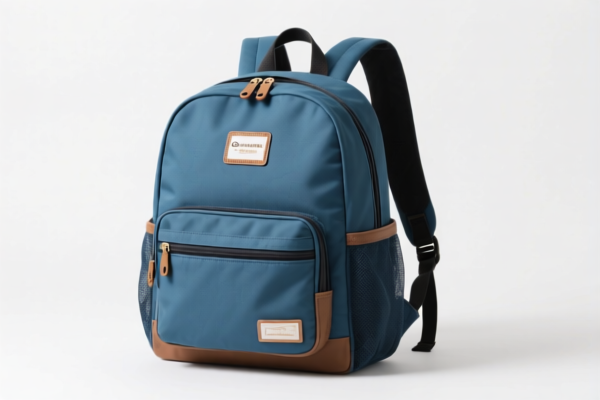
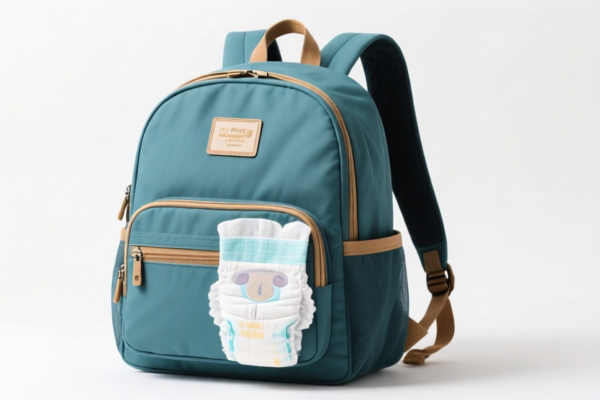
AI Analysis
Here is the comprehensive Diaper Bag (Maternity Bag) clearance guide, styled as a professional Wiki entry based strictly on your provided data.
🍼 Diaper Bag (Maternity Bag) | Global HS Code Guide & Tax Strategy 2026
🌐 HS Code Reference & Customs Clearance | 2026 Tax Policy Breakdown | Professional Strategy for Textile Bags
📌 I. Product Definition & Classification: Do You Know Your "Diaper Bag"?
A Diaper Bag (also known as a Maternity Bag) is a specialized container designed for infants and parents, functioning as a backpack, tote, or utility case. In international trade, its classification hinges on material composition (textile vs. plastic) and functional use (travel, sports, or general container).
It is primarily categorized into three scenarios based on its intended use and external material:
- Travel/Sport & Similar Bags: Often made of textile, designed for carrying baby essentials, fitting under 4202.92.31.31.
- General Containers/Backpacks: Broad category for textile bags serving as containers, fitting under 4202.92.91.00.
- Other Manufactured Articles: When classified strictly as a "finished consumer good" without specific travel/sport designation, potentially falling under 6307.90.98.91.
⚠️ Critical Classification Logic:
- If the bag is explicitly designed for travel/sports or has those specific features → 4202.92.31.31
- If it is a general textile container/backpack not specific to travel → 4202.92.91.00
- If declared as a generic "Other Made Up Articles" (less common for standard bags) → 6307.90.98.91
📦 II. HS Code Classification Matrix (2026 Data)
| HS Code | Product Description | Material/Feature Profile | Total Tax Rate | Tax Composition |
|---|---|---|---|---|
| 4202.92.91.00 | Maternity Bag (General Container/Backpack) Textile surface, functions as a container/backpack. |
Textile Material General Purpose |
52.6% | Base: 17.6% + Add-on: 25.0% + Section 122: 10% |
| 4202.92.31.31 | Maternity Bag (Travel/Sport Category) Textile surface, fits travel/sport bag criteria. |
Textile Material Travel/Sport Features |
52.6% | Base: 17.6% + Add-on: 25.0% + Section 122: 10% |
| 6307.90.98.91 | Maternity Bag (Other Finished Articles) Classified as "Other Made Up Articles" (Bag category). |
Textile/General No specific travel conflict |
24.5% | Base: 7.0% + Add-on: 7.5% + Section 122: 10% |
🔍 Key Distinction:
- Codes 4202.92.91.00 and 4202.92.31.31 are Tax Equivalent (52.6%) but differ in functional description.
- Code 6307.90.98.91 offers a Significant Tax Advantage (24.5%) if the bag can be legally argued as a generic "Other Made Up Article" rather than a "Travel Bag".
💰 III. 2026 Tariff Rate Breakdown (Detailed Policy Analysis)
✅ Applicable Market: USA (Implied by Section 122 and high add-on rates)
✅ Origin: China (CN)
✅ Status: 2026 Current Policy
🎯 1. High-Tax Category (4202 Series)
Codes: 4202.92.91.00 & 4202.92.31.31
Total Tax: 52.6%
| Tax Component | Rate | Legal Basis / Description |
|---|---|---|
| Base Tariff | 17.6% | Standard Most-Favored-Nation (MFN) duty for textile travel bags. |
| Section 301 / Add-on | 25.0% | Section 122 or Section 301 specific penalty tariff on Chinese textile goods. |
| Section 122 Specific | 10.0% | Section 122 Tariff (Additional punitive measure for specific Chinese imports). |
| Total Calculation | 17.6 + 25.0 + 10.0 = 52.6% | High Barrier Entry |
📌 Interpretation:
- If your diaper bag is classified under 4202 (Travel/Sport/Containers), you face a massive 52.6% duty burden.
- This combines the standard tariff, the aggressive Section 301/122 punitive add-on (25%), and the specific Section 122 clause (10%).
- Result: Extremely high landing cost; profit margins are likely eroded.
🎯 2. Low-Tax Category (6307 Series)
Code: 6307.90.98.91
Total Tax: 24.5%
| Tax Component | Rate | Legal Basis / Description |
|---|---|---|
| Base Tariff | 7.0% | Standard duty for "Other made up articles" (Textiles). |
| Section 301 / Add-on | 7.5% | Lower add-on rate applied to generic finished goods. |
| Section 122 Specific | 10.0% | Section 122 Tariff (Still applies, but base is lower). |
| Total Calculation | 7.0 + 7.5 + 10.0 = 24.5% | Strategic Optimization |
📌 Interpretation:
- By classifying the diaper bag under 6307 ("Other Made Up Articles") rather than 4202 ("Travel Bags"), the Base Tariff drops from 17.6% to 7.0%, and the Add-on drops from 25.0% to 7.5%.
- Savings: 28.1% total tax reduction.
- Condition: The product must not be explicitly marketed or designed only as a "Travel/Sport Bag" to avoid the 4202 classification.
🛠️ IV. Customs Clearance Practical Advice (Actionable Strategy)
✅ 1. Material & Design Verification
To leverage the lower 24.5% tax rate under 6307.90.98.91: - Design Claim: Ensure marketing materials describe the bag as a "General Utility Bag" or "Baby Care Organizer" rather than emphasizing "Travel," "Sports," or "Duffle" features. - Structure: Avoid overly rugged, waterproof, or sport-specific designs (e.g., heavy-duty straps, external bottle holders intended for hiking) that force the 4202 classification. - Material Proof: Confirm the outer surface is textile (consistent with all three codes in your data), but ensure the function is the differentiator.
⚠️ Risk: If you declare under 6307 but the bag clearly has "Travel/Sport" features (e.g., stroller hooks, travel-specific compartments), Customs may re-classify to 4202 + 52.6% Tax + Penalties.
✅ 2. Declaration Strategy (The "Name Game")
| Strategy | Description | Outcome |
|---|---|---|
| Strategy A (High Risk/High Compliance) | Declare as "Maternity Travel Bag" (4202) | ✅ Safe, but 52.6% Tax. |
| Strategy B (Optimized) | Declare as "Baby Care Bag / General Organizer" (6307) | ✅ Lower tax 24.5% IF features allow. |
| Strategy C (The "Textile" Route) | Ensure no conflicting material (e.g., leather/plastic dominance) | Prevents re-classification to leather codes (usually higher). |
🔥 Key Takeaway:
"Function over Form" is the golden rule. If the bag can be a travel bag, but is sold as a home utility bag, argue 6307.90.98.91.
✅ 3. Documentation Checklist
To support your HS Code claim: - Product Photos: Show the bag in a "home/stroller" context, not an "airport/hiking" context. - User Manual: Avoid phrases like "Perfect for travel," "Airport carry-on," or "Sports bag." Use "Baby essentials organizer." - Bill of Materials (BOM): Highlight textile composition. - Commercial Invoice: Use the description: "Maternity Bag (Baby Care Organizer) - Textile Material - Non-Sport"
🌍 V. Market Comparison & Conclusion
| HS Code | Classification Logic | Total Tax | Recommendation |
|---|---|---|---|
| 4202.92.91.00 | General Container | 52.6% | Use only if the bag is explicitly a "General Backpack." |
| 4202.92.31.31 | Travel/Sport Bag | 52.6% | Avoid if possible. Highest barrier. |
| 6307.90.98.91 | Other Finished Article | 24.5% | BEST OPTION. Maximize savings by positioning as a "General Utility Bag." |
📌 Final Verdict:
The 6307.90.98.91 code offers a 28.1% tax saving compared to the 4202 codes.
Action: Re-evaluate your product naming and marketing copy. If the "Travel/Sport" features are not essential, re-classify to 6307.90.98.91 to secure the 24.5% rate.
🚨 VI. Common Pitfalls & Avoidance
❌ Pitfall 1: Claiming "Travel Bag" features (zippers, straps, durability) while declaring under 6307.
👉 Consequence: Customs audit, re-classification to 4202, back taxes + 52.6% penalty.
❌ Pitfall 2: Ignoring the "Section 122" 10% clause.
👉 Consequence: Even in the lower tax bracket (6307), the 10% Section 122 still applies. Do not assume it is waived.
❌ Pitfall 3: Confusing "Maternity Bag" with "Diaper Changing Pad."
👉 Consequence: The pad might be a different code (textile accessory), but the Bag itself dictates the main HS Code.
✅ Pro Tip:
"Market as a Bag, Not a Travel Tool."
Keep the "Travel/Sport" narrative for the 52.6% route.
Keep the "Home/Utility" narrative for the 24.5% route.
📣 Call to Action:
Review your product line today. If you can legally position the diaper bag as a "General Textile Container" (6307), you save over half the tax burden.
🚀 Optimize your HS Code. Maximize your margin. Navigate 2026 with precision.
✨ Professional Customs Strategy: Precision in Classification, Profit in Compliance!
💼 Your Tax Bill Should Be Calculated, Not Confused!
Customer Reviews
About HS Code Classification
The Harmonized System (HS) is an internationally standardized nomenclature developed by the World Customs Organization (WCO) to classify traded products. Over 200 countries use the HS system as the basis for customs tariffs, trade statistics, and import/export regulations.
Each HS code follows a hierarchical structure:
- Chapter (2 digits) — Broad category of goods (e.g., Chapter 84: Machinery and Mechanical Appliances)
- Heading (4 digits) — More specific grouping within the chapter
- Subheading (6 digits) — Internationally standardized breakdown, used by all WCO member countries
- National subdivisions (8-10 digits) — Country-specific extensions for further classification, such as US HTSUS 10-digit codes
Correct HS code classification is essential for smooth customs clearance, accurate duty payment, and compliance with trade regulations. Misclassification can lead to customs delays, overpayment of duties, or penalties.
When importing from CN to US, the applicable tariff rates may include:
- Most-Favored-Nation (MFN) rate — The standard duty rate applied to WTO members
- General rate — Applied to countries without trade agreements
- Trade remedy duties — Additional tariffs such as Section 301 (anti-dumping), Section 232 (national security), or countervailing duties
The information provided on this page is for reference purposes only. For official classification, please consult with your local customs authority or a licensed customs broker.