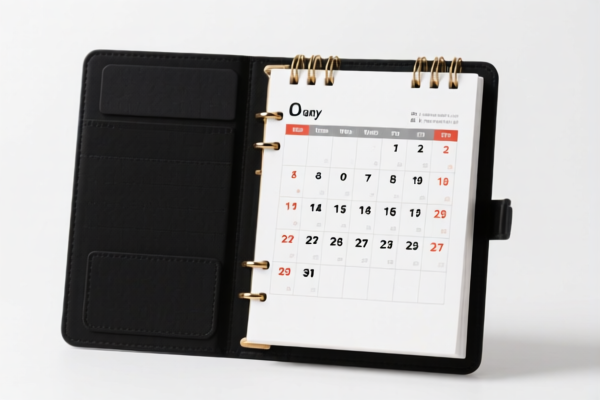
diary template
CN → US| HS Code | Tariff Rate | Origin | Destination | Doc |
|---|---|---|---|---|
| 4911998000 | 17.5% | CN | US | Official Doc |
| 4911996000 | 17.5% | CN | US | Official Doc |
| 4820102010 | 35.0% | CN | US | Official Doc |
| 4820102060 | 35.0% | CN | US | Official Doc |
| 482020 | 0.0% | CN | US | Official Doc |
| 482090 | 0.0% | CN | US | Official Doc |
Product Images



AI Analysis
📔 Diary Templates (Paper Stationery)
🌐 HS Code Reference & Customs Clearance Guide | 2026 Latest Tariff Analysis | Professional Clearance Strategy
📌 I. Product Definition & Classification: Do You Really Understand “Diary Templates”?
Diary Templates, in the context of international trade, refer to loose-leaf or unbound paper products designed to be assembled into diaries, notebooks, or appointment books. They include blank forms, lined pages, pocket folders, and binding components made of paper or paperboard.
In customs classification, these items are strictly categorized based on their bound status and finish:
- Loose-Leaf/Unbound Templates: Sheets, cards, or inserts that require user assembly. These typically fall under "Other paper or paperboard products" or specific "Notebooks" if pre-printed with forms.
- Bound Diary/Notebook: Items that are already stitched, glued, or stapled together. These fall under "Diaries, notebooks and address books, bound".
⚠️ Key Distinction Point:
- If the product is loose, unbound, or consists of separate sheets/forms without permanent binding → It is generally classified as "Other paper products" (e.g., 4820.90 or 4911.99) or "Notebooks" depending on specific construction.
- If the product is permanently bound (stitched, glued, stapled) and ready for use as a diary/notebook → It is classified as "Diaries, notebooks and address books, bound" (4820.10.20).
📦 II. HS Code Classification Details (2026 Latest Tariff Authority Comparison)
Based on the provided <DATA>, here is the precise breakdown for diary-related paper products:
| HS Code | Product Description | Applicable Scenario | Binding Status |
|---|---|---|---|
4820.10.20.10 |
Diaries, notebooks and address books, bound; memorandum pads, letter pads and similar articles | Finished Diaries/Notebooks: Pre-bound, ready-to-use diaries, appointment books, or memo pads. | ✅ Bound |
4820.10.20.60 |
Other: Diaries, notebooks and address books, bound; memorandum pads... | Other Bound Items: Similar to above but covering broader categories of bound paper stationery not specified elsewhere. | ✅ Bound |
4911.99.80.00 |
Other printed matter: Other: Other: Other | Loose Printed Matter: Loose sheets, unbound templates, printed inserts, or non-standard paper goods. | ❌ Unbound |
4911.99.60.00 |
Other printed matter: Printed on paper in whole or in part by a lithographic process | Lithographic Prints: Templates or pages printed via lithography (common for high-volume stationery). | ❌ Unbound (Typically) |
4820.20 |
Diary or appointment books, bound, with or without covers... | Generic Bound Diaries: A broader subheading for bound diaries/appointment books (tax info unavailable in source). | ✅ Bound |
4820.90 |
Other paper or paperboard products, including loose-leaf notebooks... | Loose-Leaf/Other Paper Products: Loose-leaf notebooks, diary templates, inserts, and similar items not classified as "bound" diaries. | ❌ Loose/Unbound |
🔍 Critical Note:
- "Diary Template" usually implies loose-leaf or unbound components. Therefore,4820.90(Other paper products) or4911.99.xx(Other printed matter) are more likely candidates than4820.10(Bound items).
- If the template is pre-assembled into a bound book, it falls under4820.10.
- Tax Information Alert: The source data indicates "Failed to retrieve tax information" for4820.20and4820.90. This requires verification with local customs authorities or a customs broker, as these codes may have specific local rates or restrictions not reflected in the global dataset.
💰 III. 2026 Latest Tariff Rate Details (US Imports from China)
✅ Applicable Country: United States (US)
✅ Country of Origin: China (CN)
✅ Effective Date: November 10, 2025 (and onwards)
🎯 1. 4820.10.20.10 & 4820.10.20.60 —— Bound Diaries & Notebooks
| Item | Content |
|---|---|
| Base Tariff | 0.0% (ad valorem) |
| Section 301 Additional Duty | +25.0% |
| Total Tax Rate | 25.0% |
| Tax Calculation | CIF Value × 25% |
| De Minimis Exemption | ❌ Not Applicable (Section 301 duties apply regardless of value) |
| Legal Basis | USITC Tariff Schedule, Section 301 Action on Chinese Imports |
📌 Explanation:
- Bound diaries/notebooks from China are subject to a 25% additional tariff under Section 301.
- The base tariff is 0%, but the 25% add-on makes the total duty 25%.
- No de minimis exemption exists for these goods; all shipments are taxed.
🎯 2. 4911.99.80.00 & 4911.99.60.00 —— Other Printed Matter (Unbound Templates)
| Item | Content |
|---|---|
| Base Tariff | 0.0% (ad valorem) |
| Section 301 Additional Duty | +7.5% |
| Total Tax Rate | 7.5% |
| Tax Calculation | CIF Value × 7.5% |
| De Minimis Exemption | ❌ Not Applicable (Section 301 duties apply) |
| Legal Basis | USITC Tariff Schedule, Section 301 Action on Chinese Imports |
📌 Explanation:
- Unbound printed matter (e.g., loose diary templates, lithographic prints) falls under Chapter 49.
- These items are subject to a 7.5% additional tariff under Section 301.
- Total duty is 7.5%, significantly lower than bound diaries (25%).
- Strategy Tip: If feasible, importing loose templates instead of bound diaries can save 17.5% in duties.
⚠️ 3. 4820.20 & 4820.90 —— Generic Bound/Loose Paper Products
| Item | Content |
|---|---|
| Tax Information | Error/Failed to Retrieve |
| Action Required | Verify with Customs Broker |
📌 Critical Warning:
- The source data shows "Failed to retrieve tax information" for4820.20and4820.90.
- Do not assume 0% tax. These codes may have different duty rates or additional tariffs.
- Recommendation: Use4820.10.20.xxfor bound items and4911.99.xxfor unbound items to ensure accurate tariff application, as these have clear 25% and 7.5% rates respectively.
🛠️ IV. Customs Clearance Practical Advice (Real-World Pitfall Avoidance)
✅ 1. Required Documentation Checklist
| Document | Mandatory? | Description |
|---|---|---|
| ✅ Product Specification Sheet | ✔️ | Must clearly state: "Loose-Leaf Diary Template" or "Bound Diary", material (paper type), size, and page count. |
| ✅ Product Photos | ✔️ | Clear images showing binding status: Are pages stitched/glued (Bound) or separate sheets (Loose)? |
| ✅ Commercial Invoice | ✔️ | Must specify: "Paper Diary Template, HS Code 4820.90/4911.99" and "Country of Origin: China". |
| ✅ Packing List | ✔️ | Detail contents: Number of sheets, number of covers, inserts, etc. |
| ✅ Third-Party Test Report | ✔️ | If applicable (e.g., flammability, ink safety), though less critical than for electronics. |
✅ 2. Declaration Strategy (Key Mnemonic)
🔥 "Loose is 7.5%, Bound is 25%, Don't Guess, Verify!"
| Scenario | Correct HS Code | Duty Rate | Common Mistake |
|---|---|---|---|
| Loose pages/templates (unbound) | 4911.99.60.00 / 4911.99.80.00 |
7.5% | Misdeclaring as "Notebooks" → 25% |
| Loose-leaf inserts (no binding) | 4820.90 |
⚠️ Verify | Assuming 0% tax → Risk of penalty |
| Bound diary (stitched/glued) | 4820.10.20.10 |
25% | Misdeclaring as "Paper sheets" → 7.5% (Audit Risk) |
| Diary with cover but loose pages | Depends on binding | 7.5% or 25% | Assuming "Cover = Bound" → May be loose |
💡 Pro Tip:
- If you are importing diary templates (loose sheets), explicitly declare them as "Loose-Leaf Paper Inserts" or "Unbound Printed Matter" to qualify for the 7.5% rate under4911.99.
- If they are pre-bound, they must be declared as "Diaries/Notebooks" for the 25% rate.
- Never under-declare bound items as loose sheets to save duty; customs will inspect and reclassify, leading to fines.
✅ 3. Special Cases & Handling
| Situation | Handling Advice |
|---|---|
| DIY Diary Kits | If sold as a kit (loose pages + cover + binder), declare as "Paper Stationery Kit" or split components. Check if the kit is considered "complete" (Bound) or "parts" (Loose). |
| Printed Forms | If templates contain pre-printed forms (e.g., appointment schedules), they still fall under 4911.99 if unbound. |
| High-Volume Lithographic Prints | Ensure description mentions "Lithographic Process" if applicable, to align with 4911.99.60.00. |
| Tax Error for 4820.90/20 | Contact a Customs Broker Immediately. Do not use these codes for final declaration without verified rates. |
🌍 V. Global Market Comparison (2026 Latest)
| Country/Region | Recommended HS Code | Tariff Rate | Notes |
|---|---|---|---|
| 🇺🇸 USA | 4911.99.60.00 (Loose) / 4820.10.20.10 (Bound) |
7.5% / 25% | Section 301 duties apply. |
| 🇨🇳 China | 4820.90 / 4911.99 |
0% ~ 5% | Low import tariffs for paper products. |
| 🇪🇺 EU | 4820.10 / 4911.99 |
0% ~ 4% | Generally low duties; check VAT. |
| 🇬🇧 UK | 4820.10 / 4911.99 |
0% ~ 4% | Post-Brexit rules apply; check UK Tariff. |
📌 Conclusion:
- USA imposes a 17.5% differential between loose (7.5%) and bound (25%) items.
- Design Strategy: To minimize US duty costs, consider shipping loose-leaf templates and adding binding locally, if feasible.
- EU/UK have minimal differences, so binding status is less critical for cost but still matters for classification accuracy.
📌 VI. Common Errors & Pitfalls (Lessons Learned)
❌ Error 1: Declaring loose templates as "Bound Diaries"
👉 Consequence: Pay 25% instead of 7.5% → Overpayment of 17.5%.
❌ Error 2: Declaring bound diaries as "Loose Paper Sheets"
👉 Consequence: Customs reclassifies → Back taxes + Penalties + Delays.
❌ Error 3: Using 4820.90 or 4820.20 without verifying tax rates
👉 Consequence: Unclear duty liability → Risk of incorrect payment or audit flags.
❌ Error 4: Ignoring Section 301 applicability
👉 Consequence: Assuming 0% duty for China-origin goods → 25% or 7.5% surprise bill.
✅ Correct Approach:
"Loose-Leaf Diary Template, Unbound, Printed Paper Inserts, HS Code 4911.99.60.00, Country of Origin: China, Subject to 7.5% Section 301 Duty."
🎯 VII. Conclusion: Smart Classification, Cost Savings!
🎯 Remember the Rule:
🔹 "Loose is 7.5%, Bound is 25%, Verify 4820.90/20!"
🔹 "HS Code Defines Duty, 17.5% Savings Wait for You!"
📌 Tips:
- If your diary templates are shipped loose, ensure packaging clearly shows unbound sheets to support the 7.5% classification.
- For bound items, ensure stitching/gluing is visible in photos to justify the 25% classification.
- Always verify 4820.90 and 4820.20 rates with a broker, as the source data is incomplete.
📣 Take Action:
📞 Consult a Customs Broker for
4820.90/20verification.
📸 Document Binding Status with clear photos.
🚀 Optimize Packaging to reflect accurate product nature (Loose vs. Bound).
✨ Professional Customs Clearance Starts with Accurate Classification!
💼 Your Every Dollar is Worth Precision!
Customer Reviews
About HS Code Classification
The Harmonized System (HS) is an internationally standardized nomenclature developed by the World Customs Organization (WCO) to classify traded products. Over 200 countries use the HS system as the basis for customs tariffs, trade statistics, and import/export regulations.
Each HS code follows a hierarchical structure:
- Chapter (2 digits) — Broad category of goods (e.g., Chapter 84: Machinery and Mechanical Appliances)
- Heading (4 digits) — More specific grouping within the chapter
- Subheading (6 digits) — Internationally standardized breakdown, used by all WCO member countries
- National subdivisions (8-10 digits) — Country-specific extensions for further classification, such as US HTSUS 10-digit codes
Correct HS code classification is essential for smooth customs clearance, accurate duty payment, and compliance with trade regulations. Misclassification can lead to customs delays, overpayment of duties, or penalties.
When importing from CN to US, the applicable tariff rates may include:
- Most-Favored-Nation (MFN) rate — The standard duty rate applied to WTO members
- General rate — Applied to countries without trade agreements
- Trade remedy duties — Additional tariffs such as Section 301 (anti-dumping), Section 232 (national security), or countervailing duties
The information provided on this page is for reference purposes only. For official classification, please consult with your local customs authority or a licensed customs broker.