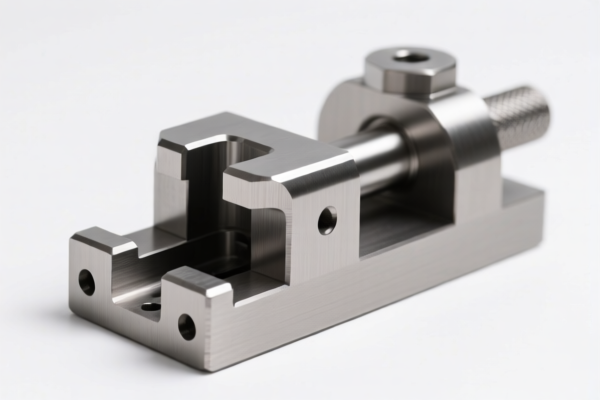
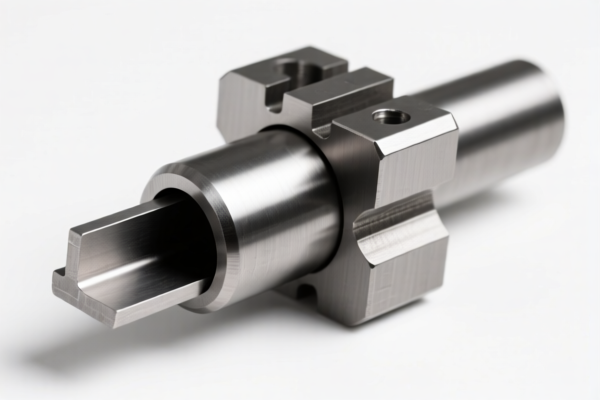
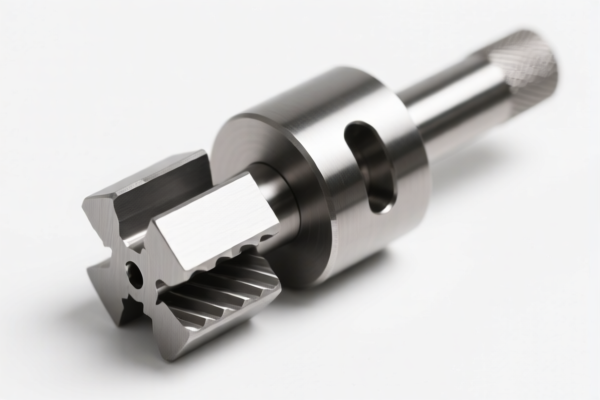
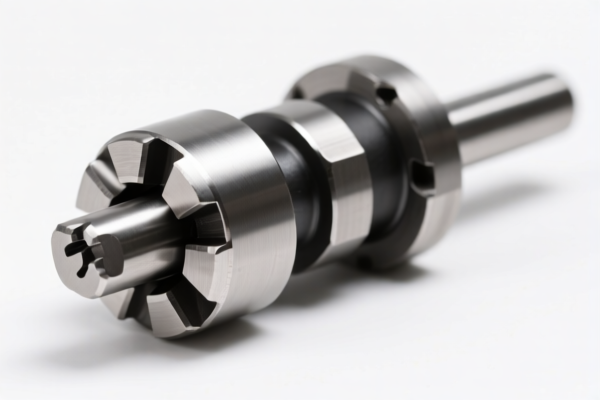
die cutting blade and die
CN → US| HS Code | Tariff Rate | Origin | Destination | Doc |
|---|---|---|---|---|
| 8479909565 | 35.0% | CN | US | Official Doc |
| 8207306032 | 37.9% | CN | US | Official Doc |
| 8207306062 | 37.9% | CN | US | Official Doc |
| 8479909596 | 85.0% | CN | US | Official Doc |
Product Images
AI Analysis
🔪 Die Cutting Blade & Die (The "Steel Razor" of Manufacturing)
🌐 HS Code Reference & Clearance Guide | 2026 Latest Tariff Analysis | Professional Customs Strategy
📌 One Product, Four Tariff Paths: Which One Fits Your Specific Tool?
Die cutting blades and dies are the critical "teeth" of the packaging and printing industry. However, US Customs and Border Protection (CBP) does not view them as a single category. The classification depends entirely on whether the item is a standalone cutting tool or a spare part for a specific machine.
Misclassification here is dangerous because the tariff rates range from 35% to 85% depending on the specific HS Code chosen.
📦 二、HS Code 分类明细(2026年最新税则权威对照)
Based on the provided data, there are four possible classifications. Here is the breakdown:
| HS Code | Product Description & Logic | Tax Rate (Total) | Key Distinction |
|---|---|---|---|
8479.90.95.65 |
Part of a Machine: Metal treated/processed mechanical parts. | 35.0% | Treated as a spare part for a general mechanical processing machine, not a standalone tool. |
8207.30.60.32 |
Standalone Tool: Punching/blanking/cutting tools (metal). | 37.9% | Treated as a standalone cutting instrument (like a chisel or punch). |
8207.30.60.62 |
Standalone Tool: Pressing, stamping, or punching tools (metal). | 37.9% | Similar to above, but specifically for stamping/pressing actions. |
8479.90.95.96 |
Part of a Machine: General machinery parts (Metal/Steel/Al/Cu). | 85.0% | ⚠️ HIGHEST RATE. Treated as a spare part, but triggers the 50% additional tariff on Steel/Al/Cu products. |
🔍 Critical Insight:
- The difference between 35% and 85% is huge!
-8207codes are generally for tools (you hold them or they are inserted into a press).
-8479codes are for parts (they belong to a larger automatic machine).
- ⚠️ Warning:8479.90.95.96includes a specific note about Steel/Al/Cu products being subject to an additional 50% tariff, pushing the total to 85%.
💰 三、2026年最新关税税率详解(含附加税、政策附加)
✅ Applicable Country: United States (US)
✅ Country of Origin: China (CN)
✅ Effective Date: Ongoing (Section 301 & IEEPA measures)
🎯 1. The "Lowest Risk" Path: 8479.90.95.65
Classification: Parts of mechanical appliances (Metal).
| Item | Detail |
|---|---|
| Base Tariff | 0.0% |
| Section 301 (25%) | +25.0% |
| IEEPA (10%) | +10.0% |
| Total Rate | 35.0% |
| Logic | This code assumes the die/blade is a component of a larger mechanical processing machine, not a hand tool. It avoids the "Steel/Al/Cu" specific penalty found in other 8479 subheadings. |
🎯 2. The "Tool" Path: 8207.30.60.32 & 8207.30.60.62
Classification: Interchangeable tools for machine-tools (Punching/Stamping).
| Item | Detail |
|---|---|
| Base Tariff | 2.9% |
| Section 301 (25%) | +25.0% |
| IEEPA (10%) | +10.0% |
| Total Rate | 37.9% |
| Logic | These codes classify the item as a tool rather than a part. Even though the base rate (2.9%) is slightly higher than 0%, the total is only marginally higher than the 8479.90.95.65 option. This is often the correct classification if the die/blade is sold as a separate, functional tool. |
🎯 3. The "High Risk" Path: 8479.90.95.96
Classification: Parts of mechanical appliances (General).
| Item | Detail |
|---|---|
| Base Tariff | 0.0% |
| Section 301 (25%) | +25.0% |
| IEEPA (10%) | +10.0% |
| Steel/Al/Cu Surcharge | +50.0% (Specific Note for Metal Products) |
| Total Rate | 85.0% |
| ⚠️ LOGIC | DO NOT USE UNLESS NECESSARY. This code triggers a specific penalty for steel, aluminum, or copper products used as machine parts. If your die/blade is metal (which it is), this code is a financial trap. |
🛠️ 四、清关实操建议(实战避坑指南)
✅ 1. How to Choose the Right HS Code?
| Scenario | Recommended HS Code | Why? |
|---|---|---|
| You are importing a full die-cutting machine | Look at 8479.82 (Machine itself) |
The blade is part of the machine. |
| You are importing standalone blades/dies for manual or semi-auto use | 8207.30.60.32 or 8207.30.60.62 |
They are classified as tools, not machine parts. Lower risk, clear definition. |
| You are importing spare blades FOR A SPECIFIC AUTOMATIC MACHINE | 8479.90.95.65 |
Must be proven to be a part of that specific machine, NOT a general tool. Avoid .96 to escape the 50% surcharge. |
| You want to avoid the 50% penalty | Avoid 8479.90.95.96 |
This code explicitly lists "Steel, Al, Cu products" for an additional 50%. |
✅ 2. Documentation Checklist (Must-Haves)
| Document | Requirement | Purpose |
|---|---|---|
| Product Specification Sheet | Must specify: Material (Steel/Carbide), Dimensions, Intended Machine (if any) | Proves whether it is a "Tool" (8207) or "Part" (8479). |
| Functional Description | "Interchangeable cutting tool" vs. "Spare part for Model X Machine" | Determines the primary classification logic. |
| Commercial Invoice | Clear description: "Metal Die Cutting Blade, HS 8207.30.60.32" | Prevents CBP from guessing and assigning a higher duty. |
| Photos | Clear shot of the item, showing it is a standalone tool or attached to a part | Visual proof for Customs Officers. |
✅ 3. Common Mistakes & Pitfalls
❌ Mistake 1: Using 8479.90.95.96 for Metal Blades
👉 Result: You pay 85% tax instead of 35-38%.
💡 Fix: Always check the "Steel/Al/Cu" note. If it's metal, try 8207 (Tool) or 8479.90.95.65 (Part without specific surcharge).
❌ Mistake 2: Calling it a "Machine Part" when it's a General Tool
👉 Result: CBP may reclassify it as a Tool (8207) or vice versa, causing delays.
💡 Fix: Be honest. If it fits many machines, it's a Tool. If it fits ONLY one specific model, it's a Part.
❌ Mistake 3: Ignoring the "122 Clause" / IEEPA
👉 Result: All codes listed here include a 10% IEEPA surcharge.
💡 Fix: Factor this into your cost calculation. It applies to all four HS codes.
📌 五、关键结论与建议
🎯 Final Recommendation:
-
Best Balance:
8207.30.60.32or8207.30.60.62(37.9%)
Why? If your blades/dies are versatile tools, classify them as Tools. This is the most standard and defensible classification for "cutting tools." -
Alternative:
8479.90.95.65(35.0%)
Why? If you can legally prove they are exclusive spare parts for a specific automated machine, this is the cheapest option. But do not use8479.90.95.96as it carries the 50% metal surcharge. -
AVOID:
8479.90.95.96(85.0%)
Why? The "Steel/Al/Cu" surcharge makes it economically unviable for metal die-cutting blades unless you have a very specific exemption.
💡 Pro Tip for Clearing:
Declare accurately!
❌ Bad Description: "Metal Blade"
✅ Good Description: "Interchangeable Metal Die Cutting Tool, Carbide Steel, for Packaging Machinery, HS 8207.30.60.32"
📣 Immediate Action:
- Check your Product Catalog: Are these tools used in many machines (→
8207) or only one specific machine (→8479.90.95.65)? - Calculate Costs:
- If
8207: Budget 37.9% duty. - If
8479.90.95.65: Budget 35.0% duty. - If
8479.90.95.96: Budget 85.0% duty (Avoid!).
- If
- Consult a Broker: Before shipping, send your technical specs to a US Customs Broker to confirm if
8207is accepted for your specific blade design.
✨ Precision in classification saves 50% in costs!
💼 Don't let a "Steel" surcharge cut your profits.
Customer Reviews
About HS Code Classification
The Harmonized System (HS) is an internationally standardized nomenclature developed by the World Customs Organization (WCO) to classify traded products. Over 200 countries use the HS system as the basis for customs tariffs, trade statistics, and import/export regulations.
Each HS code follows a hierarchical structure:
- Chapter (2 digits) — Broad category of goods (e.g., Chapter 84: Machinery and Mechanical Appliances)
- Heading (4 digits) — More specific grouping within the chapter
- Subheading (6 digits) — Internationally standardized breakdown, used by all WCO member countries
- National subdivisions (8-10 digits) — Country-specific extensions for further classification, such as US HTSUS 10-digit codes
Correct HS code classification is essential for smooth customs clearance, accurate duty payment, and compliance with trade regulations. Misclassification can lead to customs delays, overpayment of duties, or penalties.
When importing from CN to US, the applicable tariff rates may include:
- Most-Favored-Nation (MFN) rate — The standard duty rate applied to WTO members
- General rate — Applied to countries without trade agreements
- Trade remedy duties — Additional tariffs such as Section 301 (anti-dumping), Section 232 (national security), or countervailing duties
The information provided on this page is for reference purposes only. For official classification, please consult with your local customs authority or a licensed customs broker.