diesel engine hs code 8408909020
CN → US| HS Code | Tariff Rate | Origin | Destination | Doc |
|---|---|---|---|---|
| 8408909030 | 35.0% | CN | US | Official Doc |
| 8408909040 | 35.0% | CN | US | Official Doc |
| 8408909030 | 35.0% | CN | US | Official Doc |
| 8408909040 | 35.0% | CN | US | Official Doc |
| 8408909040 | 35.0% | CN | US | Official Doc |
Product Images
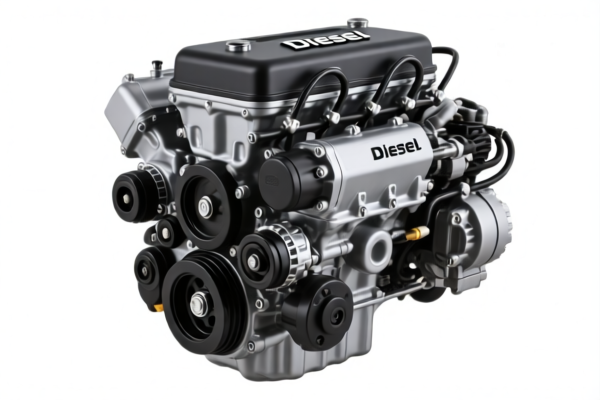
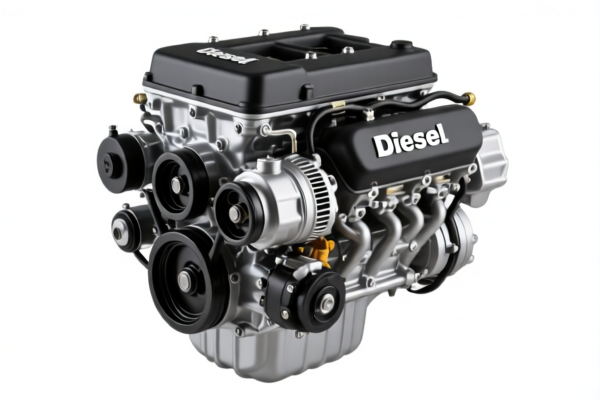
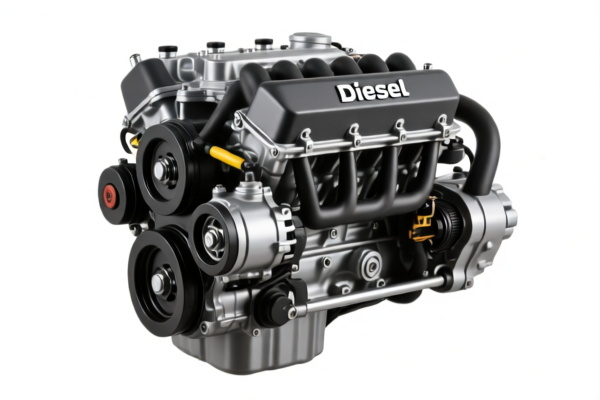
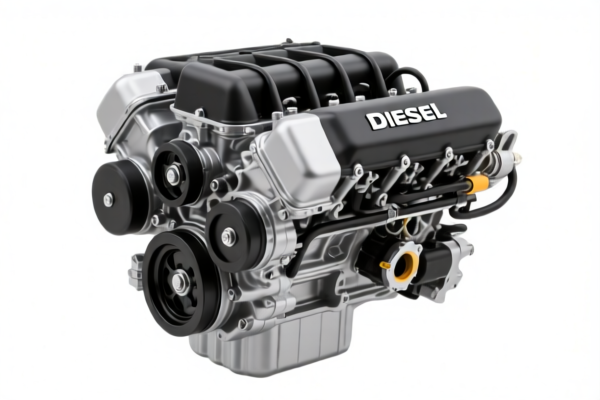
AI Analysis
⚙️ Diesel Engines: Navigating the Complex US Tariff Landscape
🌐 HS Code Reference & Customs Clearance Guide | 2026 Latest Tariff Analysis | Strategic Clearance Strategy
Diesel Engines are the heart of heavy-duty transportation, construction machinery, agricultural equipment, and industrial power generation. In international trade, they are primarily classified under Heading 84.08: Compression-ignition internal combustion piston engines (diesel or semi-diesel engines).
However, accurate classification depends heavily on power output (kW/HP), application, and specific technical specifications. The HS code you provided (8408.90.90.20) is a specific sub-category, but it differs significantly from the codes in your reference data (8408.90.90.30 and 8408.90.90.40).
⚠️ Critical Warning:
The HS codes listed in your<DATA>(...30and...40) carry a 35% total tax due to US-China trade tensions.
Please verify if your engine actually falls under8408.90.90.20or the referenced codes. Misclassification can lead to severe penalties, retroactive duties, and shipment delays.
📦 1. HS Code Classification Breakdown
🎯 Target HS Code: 8408.90.90.20
- Description: Typically refers to diesel engines with power between 37.25 kW and 74.5 kW (50 HP to 100 HP) or similar specific power ranges depending on the exact tariff year and national sub-heading interpretations. Note: Exact definitions for .20 may vary slightly by specific USITC rulings, but it is generally distinct from the higher-power categories.
- Applicable Scenario: Medium-duty engines for trucks, light industrial generators, or agricultural machinery.
- Key Feature: Specific power output bracket.
📚 Reference HS Codes from Your Data (8408.90.90.30 & 8408.90.90.40)
- Description:
8408.90.90.30: Diesel engines matching specific power intervals (often higher power ranges).8408.90.90.40: Diesel engines defined by material/usage consistency with reference classifications.
- Tax Implication: Both carry a 35% Total Tax Rate (0% Base + 25% Section 301 + 10% IEEPA).
🔍 Key Distinction:
- If your engine’s power output does not match the specific interval for.20, it may fall into.30or.40.
- Power Rating is Crucial: Check the engine's rated horsepower (HP) or kilowatts (kW) against the official US Harmonized Tariff Schedule (HTSUS).
💰 2. 2026 Latest Tariff Rate Breakdown (Including Surcharges & Policies)
✅ Applicable Country: United States (US)
✅ Country of Origin: China (CN)
✅ Effective Date: November 10, 2025 (and subsequent imports)
🎯 Scenario A: If Classified Under 8408.90.90.30 or 8408.90.90.40 (As Per Your Data)
| Item | Content |
|---|---|
| Base Tariff | 0% (ad valorem) |
| Section 301 Surcharge | +25% (USITC Footnote 9903.88.01) |
| IEEPA Surcharge | +10% (Against Chinese/HK products, effective Nov 10, 2025) |
| Total Tax Rate | 35% |
| Tax Calculation | CIF Value × 35% |
| De Minimis Exemption | ❌ Not Eligible (deny_de_minimis) |
| Legal Basis Path | IEEPA:9903.01.25 → IEEPA:9903.01.24 → USITC:8408.90.90.30/.40 → FOOTNOTE:9903.88.01 |
📌 Explanation:
- The 25% Section 301 tariff is part of the US-China trade war measures.
- The 10% IEEPA tariff is an additional surcharge under the International Emergency Economic Powers Act.
- Combined 35% is extremely high for mechanical components, significantly impacting profit margins.
🎯 Scenario B: If Correctly Classified Under 8408.90.90.20
| Item | Content |
|---|---|
| Base Tariff | Typically 0% - 2.5% (Check current HTSUS) |
| Section 301 Surcharge | +25% (If included in the exclusion list or not exempt) |
| IEEPA Surcharge | +10% |
| Total Tax Rate | Likely 35% or higher (Depending on exact sub-heading exclusion status) |
⚠️ Note: Many diesel engines are subject to the same 301/IEEPA surcharges regardless of specific power sub-headings. Always verify if
8408.90.90.20is exempt from Section 301. If not, the tax burden remains similar to the referenced codes.
🛠️ 3. Customs Clearance Practical Advice (Avoiding Pitfalls)
✅ 1. Required Documentation Checklist
| Document | Mandatory? | Notes |
|---|---|---|
| Product Specification Sheet | ✅ Yes | Must clearly state Power (HP/kW), Cylinders, Fuel Type (Diesel), and Application. |
| Engine Nameplate Photo | ✅ Yes | Clear image of the label showing model number, serial number, and power rating. |
| Commercial Invoice | ✅ Yes | Description must be precise: "Compression-Ignition Internal Combustion Piston Engine (Diesel)" |
| Packing List | ✅ Yes | Separate items if accessories (filters, mounts) are included. |
| Certificate of Origin | ✅ Yes | Crucial for determining origin-based tariffs (CN vs. non-CN). |
| Exclusion Proof (if applicable) | ✅ Optional | If claiming exemption from Section 301, provide valid exclusion letter. |
✅ 2. Declaration Tips (Key Mnemonic)
🔥 "Power Dictates Code, Origin Dictates Tax!"
| Scenario | Correct Declaration | Wrong Practice |
|---|---|---|
| Engine Power 50-100 HP | 8408.90.90.20 (if applicable) |
Use .30 or .40 → Penalty for misclassification |
| Engine > 100 HP | 8408.90.90.30 or 8408.90.90.40 |
Under-declare power → High risk of audit |
| Chinese Origin | Disclose CN origin explicitly | Hide origin → Fraud, fines, seizure |
| Accessories Included | Declare separately if minor | Bundle all into engine → Complex clearance issues |
✅ 3. Special Cases
| Case | Handling Advice |
|---|---|
| OEM Engines | Provide customer authorization and design specs. Avoid generic descriptions. |
| Used Engines | Additional environmental regulations may apply (EPA compliance). Declare as "Used" and provide proof of disposal/recycling compliance if required. |
| Parts vs. Engine | Do not declare engine parts (pistons, valves) as complete engines. Use separate HS codes for parts (e.g., 8409.91). |
🌍 4. Global Market Comparison (2026)
| Country/Region | Recommended HS Code | Tariff (China Origin) | Certification Requirements | Notes |
|---|---|---|---|---|
| 🇺🇸 USA | 8408.90.90.20/30/40 |
35% (Base + 301 + IEEPA) | EPA, CARB (if applicable) | Highest tax burden; verify power brackets carefully. |
| 🇨🇳 China | 8408.90.90.20 |
0% - 5% | CCC (if applicable) | No additional surcharges for domestic sale. |
| 🇪🇺 EU | 8408.90.90 |
0% - 4.5% | CE, Stage V Emissions | No US-style surcharges; strict emissions standards. |
| 🇦🇺 Australia | 8408.90.90 |
5% | ADR Compliance | Moderate tariffs; focus on safety standards. |
📌 Conclusion:
- The US market imposes the heaviest tariffs on Chinese-made diesel engines.
- Accuracy in power rating is the single most important factor in classification.
- Consider supply chain diversification if targeting the US market, as 35% tariffs significantly erode competitiveness.
📌 5. Common Mistakes & Pitfalls (Lessons Learned)
❌ Mistake 1: Using generic "Diesel Engine" without power specification.
👉 Consequence: Customs cannot determine the correct sub-heading → Delay or forced reclassification.
❌ Mistake 2: Assuming all diesel engines have the same tax rate.
👉 Consequence: Misclassification leads to underpayment → Penalties + Back Taxes + Interest.
❌ Mistake 3: Ignoring IEEPA surcharges.
👉 Consequence: Budgeting errors → Profit margin collapse (10% is no small amount on high-value engines).
❌ Mistake 4: Declaring parts as complete engines.
👉 Consequence: Higher duty rates for complete engines vs. parts, plus potential fraud allegations.
✅ Correct Practice:
"Compression-Ignition Diesel Engine, 75 HP (56 kW), Model XYZ, EPA Certified, For Industrial Generator Use, CN Origin"
🎯 6. Conclusion: Precision Saves Money
🎯 Key Takeaways:
🔹 "Power defines the code; Origin defines the tax."
🔹 "35% is the new normal for US-bound Chinese diesel engines."
🔹 "Verify HTSUS 8408.90.90.20 vs. .30/.40 based on exact HP/kW."
📌 Pro Tip:
If your engine falls under a different power bracket that is excluded from Section 301 or IEEPA, ensure you have the exclusion documentation ready. For engines subject to the 35% tariff, consider pricing adjustments or local assembly strategies to mitigate costs.
📣 Immediate Action:
📞 Consult a licensed US customs broker to verify the exact HTSUS code based on your engine's rated power.
📊 Calculate the landed cost including the 35% tariff to assess profitability.
🚀 Don't let misclassification stall your supply chain!
✨ Professional clearance starts with precise classification!
💼 Every percentage point of tax matters!
Customer Reviews
About HS Code Classification
The Harmonized System (HS) is an internationally standardized nomenclature developed by the World Customs Organization (WCO) to classify traded products. Over 200 countries use the HS system as the basis for customs tariffs, trade statistics, and import/export regulations.
Each HS code follows a hierarchical structure:
- Chapter (2 digits) — Broad category of goods (e.g., Chapter 84: Machinery and Mechanical Appliances)
- Heading (4 digits) — More specific grouping within the chapter
- Subheading (6 digits) — Internationally standardized breakdown, used by all WCO member countries
- National subdivisions (8-10 digits) — Country-specific extensions for further classification, such as US HTSUS 10-digit codes
Correct HS code classification is essential for smooth customs clearance, accurate duty payment, and compliance with trade regulations. Misclassification can lead to customs delays, overpayment of duties, or penalties.
When importing from CN to US, the applicable tariff rates may include:
- Most-Favored-Nation (MFN) rate — The standard duty rate applied to WTO members
- General rate — Applied to countries without trade agreements
- Trade remedy duties — Additional tariffs such as Section 301 (anti-dumping), Section 232 (national security), or countervailing duties
The information provided on this page is for reference purposes only. For official classification, please consult with your local customs authority or a licensed customs broker.