digital caliper
CN → US| HS Code | Tariff Rate | Origin | Destination | Doc |
|---|---|---|---|---|
| 9031499000 | 35.0% | CN | US | Official Doc |
| 9017308000 | 38.9% | CN | US | Official Doc |
| 9031808085 | 10.0% | CN | US | Official Doc |
Product Images
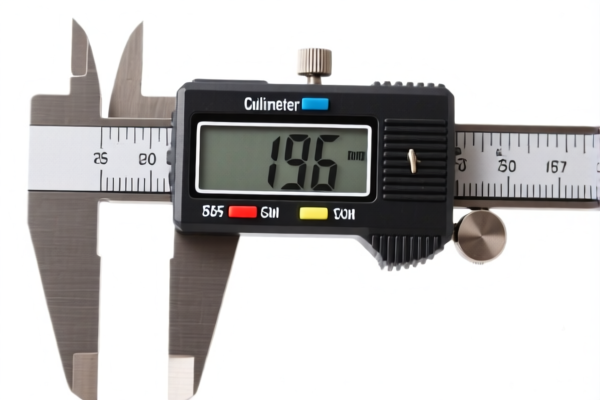
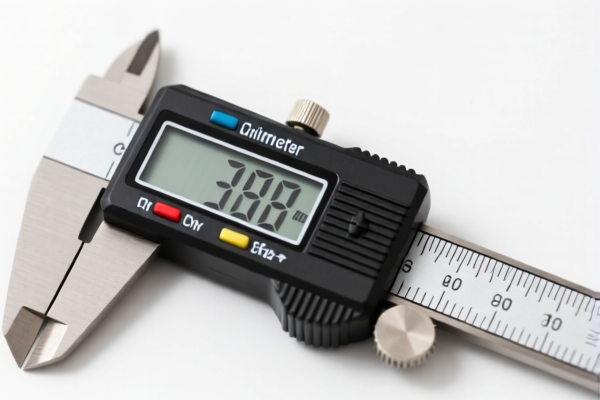
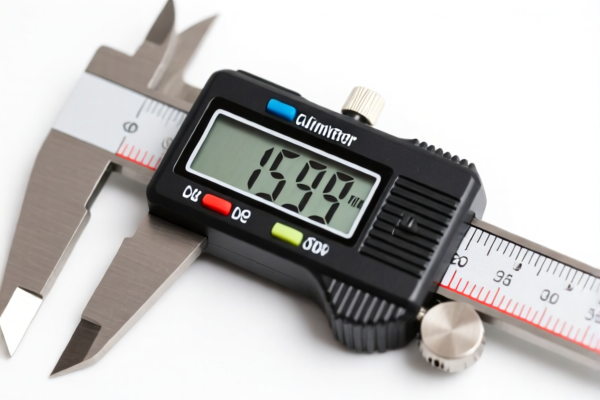
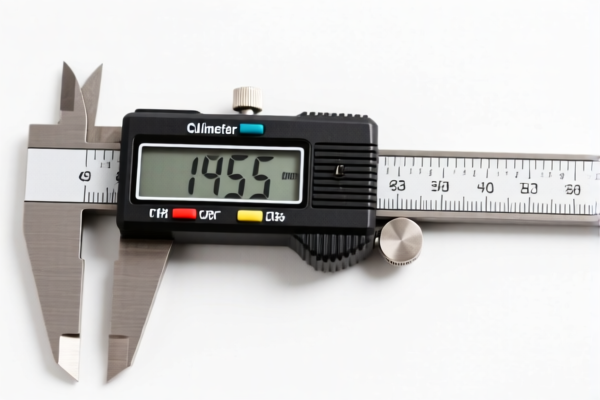
AI Analysis
📏 Digital Caliper (Digital Vernier Caliper)
🌐 HS Code Classification & Duty Guide | 2026 Latest Tariff Breakdown | Professional Customs Clearance Strategy
📌 One Product, Three Possible HS Codes — Know Which One Applies to You!
A digital caliper is a precision measuring instrument used for accurate length, thickness, depth, and diameter measurements. Despite its compact size, it plays a critical role in manufacturing, engineering, quality control, and industrial inspection. However, due to its technical function and design, it can be classified under three different HS codes, each with radically different tariffs.
⚠️ Critical Insight:
- The correct HS code determines whether your product pays 10%, 35%, or 38.9% in U.S. duties.
- Misclassification = massive overpayment, delayed clearance, or even seizure.
📦 2026 HS Code Classification Breakdown (U.S. Tariff Schedule)
| HS Code | Product Description | Key Features | Tax Implications |
|---|---|---|---|
9031.80.80.85 |
Other measuring or checking instruments | Digital display, non-optical, for length measurement | ✅ 10.0% Total Duty |
9031.49.90.00 |
Other optical or precision measuring instruments | High-precision, used in labs or calibration | ✅ 35.0% Total Duty |
9017.30.80.00 |
Measuring or checking instruments (specifically calipers and gauges) | Physical form matches “caliper” description in tariff text | ✅ 38.9% Total Duty |
🔍 Why So Many Options?
The U.S. Customs and Border Protection (CBP) evaluates function, design, technology, and intended use. Even one small detail — like whether it’s “optical” or “digital” — can shift the classification.
💰 2026 U.S. Duty Structure Breakdown (With Legal References)
✅ Applicable Country: China (CN)
✅ Effective Date: November 10, 2025 (as per updated Section 301 & IEEPA rules)
✅ Applicable to: All imports into the U.S. from China, Hong Kong, and other covered jurisdictions
🎯 1. 9031.80.80.85 — Digital Caliper as General Measuring Tool
| Item | Detail |
|---|---|
| Base Duty | 0.0% |
| Section 301 (USITC) Additional Duty | 0.0% |
| IEEPA (International Emergency Economic Powers Act) 122 Clause Duty | 10.0% |
| Total Duty | 10.0% |
| Duty Calculation | CIF Value × 10% |
| De Minimis Threshold | ✅ Eligible (if value < $800) |
| Legal Basis Path | IEEPA:9903.01.25 → 122 Clause:9903.01.24 → HS:9031.80.80.85 |
📌 Why This Applies:
- The caliper is digital, not optical or laser-based.
- It performs basic measurement functions (length, depth, step).
- It does not fall under “optical” or “precision” instruments as defined in the tariff schedule.
- Best for standard digital calipers with LCD display, no laser, no auto-calibration.
🎯 2. 9031.49.90.00 — Optical or Precision Measuring Instrument
| Item | Detail |
|---|---|
| Base Duty | 0.0% |
| Section 301 (USITC) Additional Duty | 25.0% |
| IEEPA 122 Clause Duty | 10.0% |
| Total Duty | 35.0% |
| Duty Calculation | CIF Value × 35% |
| De Minimis Threshold | ❌ Not eligible (exceeds $800 threshold) |
| Legal Basis Path | IEEPA:9901.25 → IEEPA:9903.01.24 → USITC:9031.49.90.00 → FOOTNOTE:9903.88.01 |
📌 Why This Applies:
- The caliper is marketed as high-precision, calibration-grade, or used in metrology labs.
- It includes auto-zero, data output, software integration, or laser alignment.
- If the product description includes terms like “precision”, “lab-grade”, “calibration tool”, or “digital micrometer alternative”, this code applies.⚠️ Red Flag:
- Even if it’s a standard digital caliper, if the sales literature or packaging emphasizes “precision” or “lab use”, CBP may reclassify it.
🎯 3. 9017.30.80.00 — Measuring or Checking Instruments (Specifically Calipers & Gauges)
| Item | Detail |
|---|---|
| Base Duty | 3.9% |
| Section 301 (USITC) Additional Duty | 25.0% |
| IEEPA 122 Clause Duty | 10.0% |
| Total Duty | 38.9% |
| Duty Calculation | CIF Value × 38.9% |
| De Minimis Threshold | ❌ Not eligible |
| Legal Basis Path | IEEPA:9903.01.25 → IEEPA:9903.01.24 → HS:9017.30.80.00 |
📌 Why This Applies:
- The tariff text explicitly lists “calipers and gauges” under this code.
- If the product is designed specifically as a “caliper” — with fixed/adjustable jaws, vernier scale, sliding mechanism, and no optical components — this is the most specific match.
- This code is intended for mechanical or digital calipers, even if digital.✅ Best for:
- Standard digital vernier calipers with no optical sensors.
- Products marketed as “calipers” in the product name, packaging, or catalog.
🛠️ Four Critical Clearing Tips (Proven Strategies)
✅ 1. Document Everything — Prove the Function & Design
| Document | Why It Matters |
|---|---|
| ✅ Product Manual (in English) | Shows function: “digital length measurement”, “no optical lens”, “no laser” |
| ✅ Circuit Diagram / PCB Layout | Proves no optical sensor or calibration module |
| ✅ Product Photos (with model number visible) | Shows digital display, jaws, sliding scale — no lens or beam |
| ✅ Commercial Invoice (with accurate description) | Must say: “Digital Caliper, 150mm, LCD Display, for General Industrial Use” |
❌ Never write: “Precision Measuring Instrument” or “Calibration Tool” — unless it truly is.
✅ 2. Use the Right Product Name in Invoice & Labeling
🔥 Correct Example:
Digital Caliper, 150mm, LCD Display, for General Industrial Measurement, Model XYZ❌ Avoid:
- “Precision Caliper”
- “Metrology Grade”
- “Laboratory Measuring Tool”
- “Digital Micrometer Alternative”📌 Rule of Thumb:
- If it’s not used in a lab or calibration lab, don’t use lab-related terms.
✅ 3. Choose the Right HS Code Based on Use Case
| Use Case | Recommended HS Code | Why |
|---|---|---|
| Standard digital caliper (e.g., for workshop, factory, DIY) | 9017.30.80.00 |
Most specific match — “calipers” |
| Caliper with advanced features (auto-zero, data export, software) | 9031.49.90.00 |
“Precision instrument” category |
| Caliper with no optical components, simple digital display | 9031.80.80.85 |
General measuring tool — lowest duty |
🎯 Best Strategy:
- Default to9017.30.80.00unless you’re selling to labs or high-precision markets.
✅ 4. Pre-Check with CBP (Advanced Ruling) — Risk-Free Clearance
🚀 Pro Tip:
Submit a Pre-Approval Request (Advance Ruling) to CBP before shipping.
- Cost: ~$2,000–$5,000 (one-time)
- Time: 60–90 days
- Outcome: Binding decision on HS code and duty rate
- Eliminates risk of seizure, refund, or penalties✅ Ideal for:
- High-volume shipments
- New product lines
- Exporters with $50K+ monthly imports
🌍 Global Duty Comparison (2026)
| Country | Recommended HS Code | Base Duty | Additional Taxes | Total Duty |
|---|---|---|---|---|
| 🇺🇸 United States | 9017.30.80.00 |
3.9% | +25% (301) +10% (IEEPA) | 38.9% |
| 🇨🇳 China | 9017.30.80.00 |
0% | None | 0% |
| 🇪🇺 European Union | 9017.30.80.00 |
0% | None | 0% |
| 🇦🇺 Australia | 9017.30.80.00 |
0% | None | 0% |
| 🇯🇵 Japan | 9017.30.80.00 |
0% | None | 0% |
📌 Key Insight:
- Only the U.S. imposes high附加 taxes on Chinese-origin digital calipers.
- China, EU, AU, JP treat them as standard measuring tools — no extra tariffs.
📌 Common Mistakes & Real-World Consequences
❌ Mistake 1: Using “precision” in product name → triggers 9031.49.90.00 → 35% duty instead of 10%
👉 Cost Impact: $10K shipment → $25K extra duty.
❌ Mistake 2: Not providing circuit diagrams → CBP assumes “optical” → classifies as 9031.49.90.00 → 35% duty
👉 Result: Delayed clearance, refund claim, or seizure.
❌ Mistake 3: Shipping in bulk without pre-approval → CBP audits → reclassification → 38.9% duty
👉 Cost: $50K shipment → $19,450 extra.
✅ Best Practice:
“Digital Caliper, 150mm, LCD Display, for General Industrial Use, No Optical Sensor, Model ABC”
🎯 Final Verdict: Which HS Code Should You Use?
| Scenario | Recommended HS Code | Duty | Strategy |
|---|---|---|---|
| Standard digital caliper (workshop, factory) | 9017.30.80.00 |
38.9% | ✅ Most accurate |
| High-precision lab-grade caliper | 9031.49.90.00 |
35.0% | Use only if true |
| Simple digital caliper (no advanced features) | 9031.80.80.85 |
10.0% | ✅ Lowest duty |
✅ Best Value Choice:
9031.80.80.85— if you can prove it’s a general-purpose measuring tool.🔥 Pro Tip:
- Use “digital measuring tool” in description.
- Avoid “precision”, “calibration”, “laboratory”, or “optical”.
- Keep marketing simple and factual.
📌 Summary: Your 3-Step Action Plan
- ✅ Review your product: Is it truly “precision” or just a standard digital caliper?
- ✅ Update your invoice & labeling: Use neutral terms like “digital measuring tool” or “digital caliper for industrial use”.
- ✅ Apply for pre-ruling (if high volume) or use
9031.80.80.85for lowest duty.
🎯 Final Words: Accuracy Pays Off
🔹 “HS Code is not just a number — it’s your profit margin.”
🔹 “A 10% duty vs. 38.9% can mean $10K in savings per container.”
🔹 “One wrong word in your invoice can cost you thousands.”
📣 Act Now!
📞 Contact a U.S. customs broker or HS code specialist
🚀 Get your HS Code pre-approval
💼 Save money, avoid delays, and ship with confidence!
✨ Smart Clearance Starts with Smart Classification!
💼 Your digital caliper isn’t just a tool — it’s your competitive edge.
Customer Reviews
About HS Code Classification
The Harmonized System (HS) is an internationally standardized nomenclature developed by the World Customs Organization (WCO) to classify traded products. Over 200 countries use the HS system as the basis for customs tariffs, trade statistics, and import/export regulations.
Each HS code follows a hierarchical structure:
- Chapter (2 digits) — Broad category of goods (e.g., Chapter 84: Machinery and Mechanical Appliances)
- Heading (4 digits) — More specific grouping within the chapter
- Subheading (6 digits) — Internationally standardized breakdown, used by all WCO member countries
- National subdivisions (8-10 digits) — Country-specific extensions for further classification, such as US HTSUS 10-digit codes
Correct HS code classification is essential for smooth customs clearance, accurate duty payment, and compliance with trade regulations. Misclassification can lead to customs delays, overpayment of duties, or penalties.
When importing from CN to US, the applicable tariff rates may include:
- Most-Favored-Nation (MFN) rate — The standard duty rate applied to WTO members
- General rate — Applied to countries without trade agreements
- Trade remedy duties — Additional tariffs such as Section 301 (anti-dumping), Section 232 (national security), or countervailing duties
The information provided on this page is for reference purposes only. For official classification, please consult with your local customs authority or a licensed customs broker.