digital keypad
CN → US| HS Code | Tariff Rate | Origin | Destination | Doc |
|---|---|---|---|---|
| 8473210000 | 35.0% | CN | US | Official Doc |
| 3926100000 | 15.3% | CN | US | Official Doc |
| 3926909989 | 22.8% | CN | US | Official Doc |
| 8473309100 | 35.0% | CN | US | Official Doc |
| 8538908140 | 38.5% | CN | US | Official Doc |
Product Images
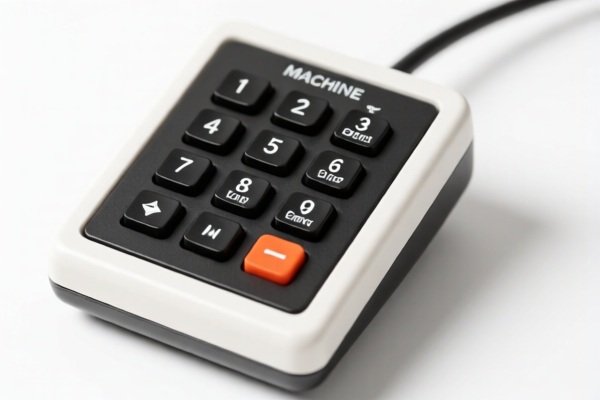
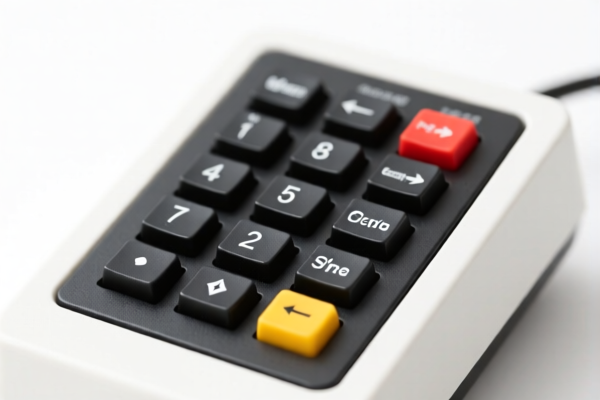
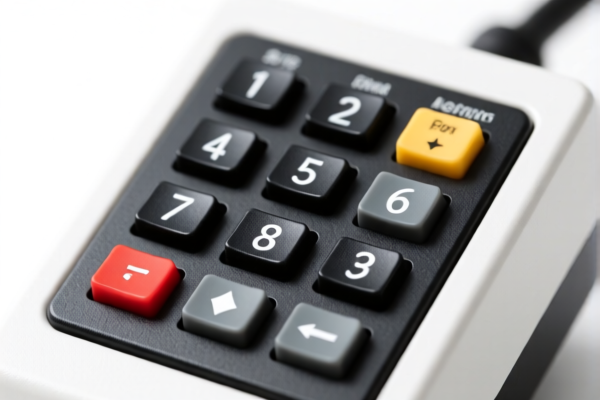
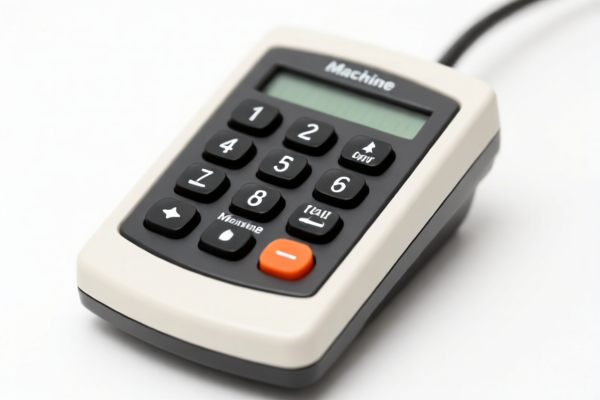
AI Analysis
🔢 Digital Keypad (Digital Keyboards & Button Modules)
🌐 HS Code Reference & Customs Clearance Guide | 2026 Latest Tariff Analysis | Professional Customs Strategy
📌 I. Product Definition & Classification: Do You Really Understand “Digital Keypads”?
A Digital Keypad is a critical input component used in electronic calculators, computer peripherals, industrial control panels, and office automation equipment. In international trade, its classification depends heavily on its specific application and material composition. It is generally categorized as either a part of a specific machine (like a calculator or computer) or as a general plastic/industrial accessory.
⚠️ Key Distinction Points:
- If the keypad is designed specifically for electronic calculators → It falls under Calculator Parts
- If it is a generic plastic button/component for various devices → It may fall under Plastic Articles
- If it is part of data processing machines (e.g., keyboard switches) → It may fall under Computer Parts
- If it is part of electrical control equipment (e.g., switch panels) → It may fall under Switch Parts
📦 II. HS Code Classification Details (2026 Latest Tariff Authority Comparison)
| HS Code | Product Description | Applicable Scenario | Material/Function Basis |
|---|---|---|---|
8473.21.00.00 |
Parts & accessories for electronic calculators | Digital buttons/keycaps specifically for calculators | ✅ Parts of calculators; matches form/function |
3926.10.00.00 |
Other plastic articles | Generic plastic digital key buttons used as parts | ✅ Plastic material; general plastic parts |
3926.90.99.89 |
Other plastic articles (General Purpose) | Plastic keypads/buttons for electronics/offices without specific material conflict | ✅ General plastic article; parts logic |
8473.30.91.00 |
Parts & accessories for machines of heading 8471 | Keypads/numeric keyboards for computers/data processing machines | ✅ Parts of data processing machines; function match |
8538.90.81.40 |
Parts suitable for use solely or principally with machines of heading 8535 or 8536 | Components of switch/control devices; form matches | ✅ Parts of electrical control/switch devices |
🔍 Important Reminder:
- Specificity Rule: If the keypad is uniquely designed for a calculator (8473.21.00.00) or computer (8473.30.91.00), it takes precedence over general plastic classifications.
- Material Conflict: Ensure no conflicting material declarations (e.g., claiming plastic when it’s metal) to avoid penalties.
- General vs. Specific: If the function is not clearly tied to one machine, customs may default to Plastic Articles (3926.x.x) or Other Parts (8538.x.x).
💰 III. 2026 Latest Tariff Rate Details (Including Surcharges, Policy Add-ons)
✅ Applicable Country: United States (US)
✅ Origin: China (CN)
✅ Effective Date: From November 10, 2025 (including subsequent imports)
🎯 1. 8473.21.00.00 —— Parts of Electronic Calculators
| Item | Content |
|---|---|
| Base Tariff | 0.0% (ad valorem) |
| USITC Additional Tariff (Section 301) | +25.0% |
| IEEPA Additional Tariff (Section 122) | +10.0% |
| Total Tax Rate | 35.0% |
| Tax Calculation | CIF Value × 35% |
| De Minimis Exemption? | ❌ No (deny_de_minimis) |
| Legal Basis Path | IEEPA:9903.01.24 → USITC:8473.21.00.00 → FOOTNOTE:9903.88.01 |
📌 Explanation:
- Although the base tariff is 0%, the high additional tariffs (25% + 10%) result in a 35% total rate.
- This is because calculators and their parts are specifically targeted under Section 301 and IEEPA provisions.
🎯 2. 3926.10.00.00 —— Other Plastic Articles (General Plastic Parts)
| Item | Content |
|---|---|
| Base Tariff | 5.3% |
| USITC Additional Tariff (Section 301) | 0.0% |
| IEEPA Additional Tariff (Section 122) | +10.0% |
| Total Tax Rate | 15.3% |
| Tax Calculation | CIF Value × 15.3% |
| De Minimis Exemption? | ❌ No |
| Legal Basis Path | IEEPA:9901.25 → USITC:3926.10.00.00 |
📌 Note:
- This is a cost-effective classification if the keypad is generic plastic and not strictly defined as a "calculator part" or "computer part."
- Base rate is 5.3%, plus 10% IEEPA, totaling 15.3%.
- Avoid this if the product is clearly identifiable as a calculator/computer part, as customs may reassess to a higher tariff.
🎯 3. 3926.90.99.89 —— Other Plastic Articles (General Purpose)
| Item | Content |
|---|---|
| Base Tariff | 5.3% |
| USITC Additional Tariff (Section 301) | +7.5% |
| IEEPA Additional Tariff (Section 122) | +10.0% |
| Total Tax Rate | 22.8% |
| Tax Calculation | CIF Value × 22.8% |
| De Minimis Exemption? | ❌ No |
| Legal Basis Path | IEEPA:9901.25 → USITC:3926.90.99.89 → FOOTNOTE:9903.88.01 |
📌 Note:
- This is a fallback category for plastic items not specifically listed elsewhere.
- Higher than3926.10.00.00due to the 7.5% Section 301 surcharge.
- Suitable if the keypad is made of plastic but doesn’t fit the strict definition of "calculator parts."
🎯 4. 8473.30.91.00 —— Parts of Data Processing Machines (Computers)
| Item | Content |
|---|---|
| Base Tariff | 0.0% |
| USITC Additional Tariff (Section 301) | +25.0% |
| IEEPA Additional Tariff (Section 122) | +10.0% |
| Total Tax Rate | 35.0% |
| Tax Calculation | CIF Value × 35% |
| De Minimis Exemption? | ❌ No |
| Legal Basis Path | IEEPA:9903.01.24 → USITC:8473.30.91.00 → FOOTNOTE:9903.88.01 |
📌 Explanation:
- If the keypad is part of a computer keyboard or data processing equipment, it falls here.
- Same high tariff as calculator parts (35%) due to Section 301 and IEEPA.
🎯 5. 8538.90.81.40 —— Parts of Electrical Control Devices/Switches
| Item | Content |
|---|---|
| Base Tariff | 3.5% |
| USITC Additional Tariff (Section 301) | +25.0% |
| IEEPA Additional Tariff (Section 122) | +10.0% |
| Total Tax Rate | 38.5% |
| Tax Calculation | CIF Value × 38.5% |
| De Minimis Exemption? | ❌ No |
| Legal Basis Path | IEEPA:9903.01.24 → USITC:8538.90.81.40 → FOOTNOTE:9903.88.01 |
📌 Explanation:
- This is the highest tariff category (38.5%) in the provided data.
- Apply only if the keypad is explicitly a component of electrical switchgear or control panels (not computers or calculators).
- Due to the higher base (3.5%) + 25% + 10%, it is less cost-effective unless the product is strictly defined as such.
🛠️ IV. Customs Clearance Practical Advice (Real-World Pitfall Avoidance)
✅ 1. Documentation Checklist (Non-Negotiable)
| Document | Required? | Notes |
|---|---|---|
| ✅ Product Specifications | ✔️ | Must include dimensions, material (plastic/metal/rubber), and intended use (calculator/computer/switch). |
| ✅ Diagram/Structure Image | ✔️ | Show how the keypad connects. Is it a standalone button or part of a larger assembly? |
| ✅ Product Photos | ✔️ | Clear images of labels, model numbers, and branding. |
| ✅ Commercial Invoice | ✔️ | Must state: “Digital Keypad, Plastic, for Use with Electronic Calculators” (or appropriate machine). |
| ✅ Packing List | ✔️ | Detail units per carton, gross weight, net weight. |
| ✅ Certificate of Origin (CO) | ✔️ | If originating from non-China countries, may qualify for exemptions. |
✅ 2. Declaration Tips (Key Mantra)
🔥 “Specificity Wins: Don’t use ‘Plastic’ if it’s a ‘Calculator Part’!”
| Scenario | Correct HS Code | Incorrect Declaration |
|---|---|---|
| Keypad for Calculator | 8473.21.00.00 (35%) |
Declaring as “Plastic Button” (3926...) → Risk of Reassessment & Penalty |
| Keypad for Computer | 8473.30.91.00 (35%) |
Declaring as “Plastic Button” → Risk of Reassessment & Penalty |
| Generic Plastic Button | 3926.10.00.00 (15.3%) |
Declaring as “Calculator Part” → Overpay Taxes |
| Keypad for Switch Panel | 8538.90.81.40 (38.5%) |
Declaring as “General Plastic” → Underpayment Risk |
📌 Strategy:
- If the keypad is generic and not tied to a specific machine, use3926.10.00.00(15.3%) to save costs.
- If it is machine-specific (calculator/computer), you must declare the specific part code, even if the tax is higher (35%). Misclassification leads to audits, fines, and delays.
✅ 3. Special Case Handling
| Scenario | Recommendation |
|---|---|
| OEM Keypads | Provide customer PO and design drawings to prove intended use. |
| Mixed Materials | Clearly declare material percentages. If >50% plastic, 3926 may apply, but function still matters. |
| Kit with Buttons + Housing | Declare as a single unit (complete part). Do not split into buttons and housing to avoid fragmentation penalties. |
| Used/Refurbished | Provide condition report. New goods are preferred for HS Code validation. |
🌍 V. Global Market Customs Comparison (2026 Latest)
| Country/Region | Recommended HS Code | Tariff (China Origin) | Certification | Notes |
|---|---|---|---|---|
| 🇺🇸 USA | 3926.10.00.00 |
15.3% (Plastic) / 35% (Parts) | FCC (if electronic) | Highest complexity; IEEPA/301 apply |
| 🇨🇳 China | 3926.10.00.00 |
5.3% | RoHS | No additional US-style tariffs |
| 🇪🇺 EU | 3926.10.00.00 |
3.9% (Plastic) | CE + REACH | Lower tariffs than US |
| 🇦🇺 Australia | 3926.10.00.00 |
5% | RCM | No major surcharges |
| 🇯🇵 Japan | 3926.10.00.00 |
3.5% | PSE (if electrical) | Competitive rate |
📌 Conclusion:
- USA is the most challenging market due to 301 and IEEPA tariffs.
- EU and Asia offer much lower tariffs for similar goods.
- Strategy: If exporting to the US, ensure accurate classification to avoid the 35-38.5% range. If possible, structure products as generic plastic components (15.3%) when functionally appropriate.
📌 VI. Common Errors & Pitfall Guide (Lessons Learned)
❌ Error 1: Declaring a Calculator Keypad as “Plastic Button” (3926) to save tax
👉 Consequence: Customs reclassifies to 8473.21.00.00 → Back taxes + penalty (35% vs 15.3%)
❌ Error 2: Not providing product diagrams
👉 Consequence: Customs cannot verify function → Hold for inspection or Retrospective audit
❌ Error 3: Mixing Computer Keypads with General Plastic Parts in one shipment
👉 Consequence: Complex valuation, potential seizure of non-compliant items
❌ Error 4: Using vague descriptions like “Keypad” without specifying machine type
👉 Consequence: Customs applies highest default rate or demands manual declaration
✅ Correct Practice:
“Digital Keypad, Plastic, 12 Keys, for Use with Electronic Calculators, Model K-12, FCC Compliant”
🎯 VII. Conclusion: Precision Classification Saves Money!
🎯 Remember the Mantra:
🔹 “Calculator/Computer Parts = 35% | Plastic Parts = 15.3% | Switch Parts = 38.5%”
🔹 “Function First, Material Second. Specificity Avoids Penalties.”
🔹 “HS Code Determines Your Profit Margin in the US Market.”
📌 Pro Tip:
- If your keypads are originally from Vietnam, Mexico, or Malaysia, you may qualify for IEEPA Exemptions or lower Section 301 rates.
- Always request an Advance Ruling from US Customs (CBP) for high-volume shipments to secure classification certainty.
📣 Take Action Now:
📞 Contact a Licensed Customs Broker
📸 Provide Product Photos & Specs
🚀 Get Pre-Clearance to ensure smooth US Customs Entry!
✨ Professional Clearance Starts with Precise Classification!
💼 Every Percentage Point Matters in Cross-Border Trade!
Customer Reviews
About HS Code Classification
The Harmonized System (HS) is an internationally standardized nomenclature developed by the World Customs Organization (WCO) to classify traded products. Over 200 countries use the HS system as the basis for customs tariffs, trade statistics, and import/export regulations.
Each HS code follows a hierarchical structure:
- Chapter (2 digits) — Broad category of goods (e.g., Chapter 84: Machinery and Mechanical Appliances)
- Heading (4 digits) — More specific grouping within the chapter
- Subheading (6 digits) — Internationally standardized breakdown, used by all WCO member countries
- National subdivisions (8-10 digits) — Country-specific extensions for further classification, such as US HTSUS 10-digit codes
Correct HS code classification is essential for smooth customs clearance, accurate duty payment, and compliance with trade regulations. Misclassification can lead to customs delays, overpayment of duties, or penalties.
When importing from CN to US, the applicable tariff rates may include:
- Most-Favored-Nation (MFN) rate — The standard duty rate applied to WTO members
- General rate — Applied to countries without trade agreements
- Trade remedy duties — Additional tariffs such as Section 301 (anti-dumping), Section 232 (national security), or countervailing duties
The information provided on this page is for reference purposes only. For official classification, please consult with your local customs authority or a licensed customs broker.