dining cabinet
CN → US| HS Code | Tariff Rate | Origin | Destination | Doc |
|---|---|---|---|---|
| 9403608093 | 35.0% | CN | US | Official Doc |
| 9403200090 | 85.0% | CN | US | Official Doc |
| 7013999090 | 24.7% | CN | US | Official Doc |
| 7013999010 | 24.7% | CN | US | Official Doc |
| 4415103000 | 35.0% | CN | US | Official Doc |
| 4415109000 | 45.7% | CN | US | Official Doc |
Product Images
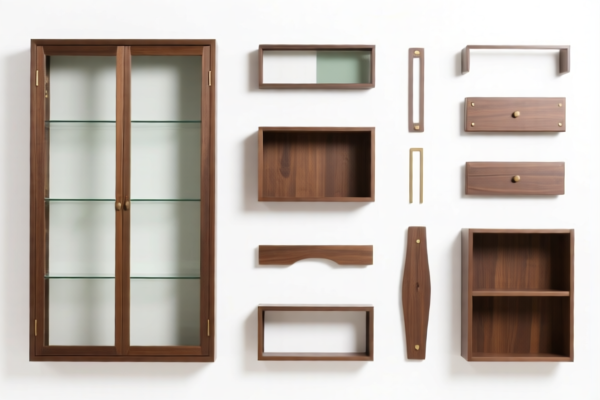
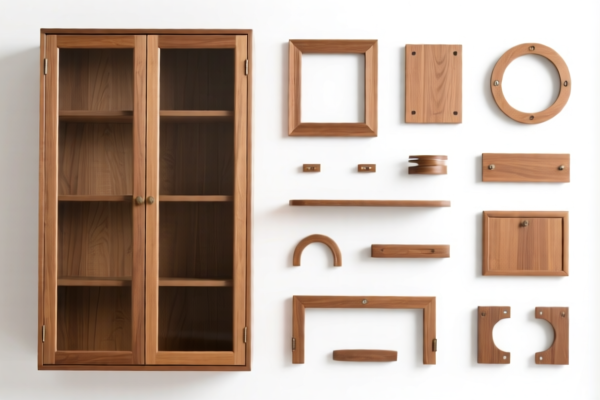
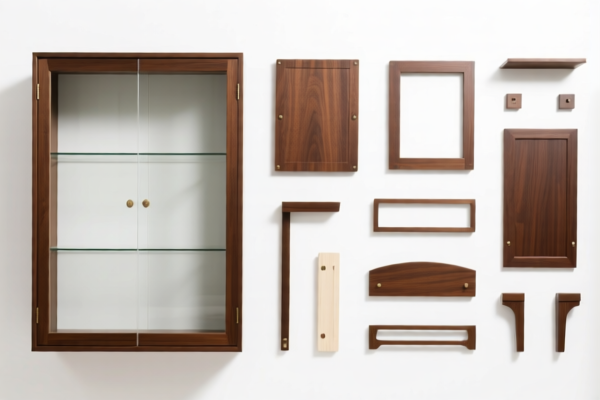
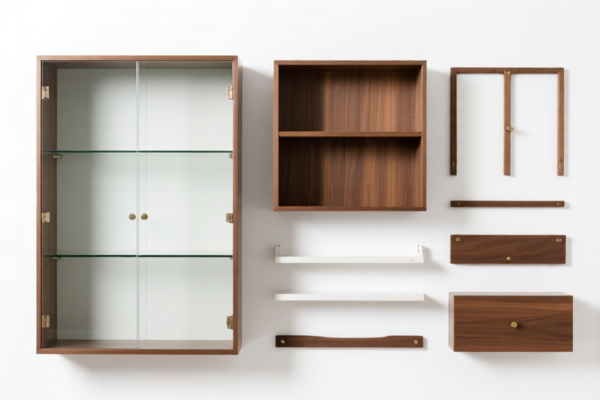
AI Analysis
🛋️ Dining Cabinet (餐柜/酒柜)
🌐 HS Code Reference & Customs Clearance Guide | 2026 Latest Tariff Analysis | Professional Clearance Strategy
📌 Part 1: Product Definition & Classification: Do You Really Know What a "Dining Cabinet" Is?
A Dining Cabinet is a piece of furniture designed for storing dining ware, table linens, or beverages (such as wine) in a dining room setting. In international trade, its classification depends heavily on its material composition and structural design. It is generally categorized under Chapter 94 (Furniture) or, less commonly, if it is purely a wooden packing case.
Two Main Categories: 1. Wooden Furniture: Solid wood, MDF, or plywood cabinets used for storage. 2. Wooden Packing Cases: If the "cabinet" is actually a shipping crate or pallet used solely for transportation, it falls under Chapter 44.
⚠️ Key Distinction Point: - If the item is furniture (legs, shelves, doors, intended for permanent use in a home) → Goes to HS Code 9403. - If the item is a shipping container/crate (slats, pallet base, intended for transit) → Goes to HS Code 4415. - Note: Metal parts in furniture may affect tariff rates significantly.
📦 Part 2: HS Code Classification Details (2026 Latest Tariff Authority Comparison)
| HS Code | Product Description | Applicable Scenario | Material | Contains Metal? |
|---|---|---|---|---|
4415.10.30.00 |
Packing boxes and cases with solid sides, lids and bottoms | Wooden shipping crates for dining tableware | Wood | ❌ No |
4415.10.90.00 |
Other packing cases, boxes, crates, drums | Other wooden shipping packaging | Wood | ❌ No |
9403.60.80.93 |
Other wooden furniture: Other | Standard wooden dining cabinets, sideboards, buffets | Wood | ❌ No (or negligible) |
9403.20.00.90 |
Other metal furniture: Other | Cabinets with significant metal frames or metal bodies | Metal (Steel, Aluminum, Copper) | ✅ Yes |
7013.99.90.90 |
Other glassware: Valued over $5 each | Glassware inside the cabinet (not the cabinet itself) | Glass | ❌ No |
7013.99.90.10 |
Other glassware: Crystalline/Non-lead crystal | Crystal decanters or wine glasses inside the cabinet | Crystal | ❌ No |
🔍 Key Reminder: - Wooden Dining Cabinets must be classified under 9403.60.80.93. Do not mistake them for packing cases (
4415) unless they are literally crates for export. - If the cabinet has a metal frame or is primarily metal, it may fall under 9403.20.00.90, which triggers a 75% total tariff (including steel/aluminum surcharge). This is a critical pitfall! - Glassware stored in the cabinet is classified separately under Chapter 70, not as part of the furniture.
💰 Part 3: 2026 Latest Tariff Rate Details (Including Surcharges)
✅ Applicable Country: United States (US)
✅ Country of Origin: China (CN)
✅ Effective Date: Current trade terms (Section 301 & IEEPA implications)
🎯 1. 4415.10.30.00 & 4415.10.90.00 —— Wooden Packing Cases/Crates
| Item | Content |
|---|---|
| Base Tariff | 0% (for 4415.10.30.00) / 10.7% (for 4415.10.90.00) |
| Additional Surcharge (Section 301) | +25.0% |
| Total Tax Rate | 25.0% (for solid-side cases) 35.7% (for other wooden crates) |
| Calculation Method | CIF Value × Total Tax Rate |
| De Minimis Exemption? | ❌ No (Not eligible for Section 321 de minimis) |
📌 Explanation: - If your "dining cabinet" is actually a wooden shipping crate used for logistics, it is taxed as packaging. - Solid-sided wooden cases have a lower base rate (0%) but still face the 25% Section 301 surcharge. - Other wooden crates have a 10.7% base + 25% surcharge = 35.7%.
🎯 2. 9403.60.80.93 —— Wooden Dining Cabinet (Furniture)
| Item | Content |
|---|---|
| Base Tariff | 0.0% |
| Additional Surcharge (Section 301) | +25.0% |
| Total Tax Rate | 25.0% |
| Calculation Method | CIF Value × 25% |
| De Minimis Exemption? | ❌ No |
| Legal Basis Path | HTSUS:9403.60.80.93 → Section 301: 25% surcharge |
📌 Note: - Standard wooden dining cabinets are taxed at 25%. - This is a standard furniture rate under current trade policies.
🎯 3. 9403.20.00.90 —— Metal Dining Cabinet (High Risk)
| Item | Content |
|---|---|
| Base Tariff | 0.0% |
| Additional Surcharge (Section 301) | +25.0% |
| Steel/Aluminum/Copper Surcharge | +50.0% |
| Total Tax Rate | 75.0% |
| Calculation Method | CIF Value × 75% |
| De Minimis Exemption? | ❌ No |
| Legal Basis Path | HTSUS:9403.20.00.90 → Section 301: 25% + Steel/Aluminum Tariff: 50% |
📌 Critical Warning: - If your cabinet has a metal frame, metal legs, or is primarily metal, it may be classified as metal furniture. - The 75% total tax rate is extremely high. Many importers mistakenly classify metal-frame wooden cabinets as "wooden" to avoid this, which can lead to audits and penalties. - Strict compliance requires correct material classification.
🎯 4. 7013.99.90.90 & 7013.99.90.10 —— Glassware (Inside the Cabinet)
| Item | Content |
|---|---|
| Base Tariff | 0.0% (90.90) / 7.2% (90.10) |
| Additional Surcharge | 0.0% (90.90) / 7.5% (90.10) |
| Total Tax Rate | 0.0% (Value > $5, non-crystal) 14.7% (Value > $5, crystal) |
| Note | These codes apply only to the glassware stored inside, not the cabinet itself. |
🛠️ Part 4: Customs Clearance Practical Advice (Avoid Pitfalls)
✅ 1. Documentation Checklist (Essential)
| Document | Required? | Description |
|---|---|---|
| ✅ Product Specification Sheet | ✔️ | Must clearly state material (Wood vs. Metal), dimensions, and use (Furniture vs. Packaging). |
| ✅ Material Breakdown | ✔️ | Specify if the cabinet has metal components. If yes, provide metal-to-wood ratio. |
| ✅ Product Photos | ✔️ | Clear photos of the front, back, legs, and interior. Distinguish between furniture and crates. |
| ✅ Commercial Invoice | ✔️ | Describe as "Wooden Dining Cabinet" or "Metal Frame Cabinet" accurately. |
| ✅ Packing List | ✔️ | Separate line items if glassware is shipped separately. |
✅ 2. Declaration Tips (Key Mnemonic)
🔥 "Furniture not Crate, Metal Pays Double, Wood is Moderate, Glass is Separate!"
| Scenario | Correct HS Code | Incorrect Action | Consequence |
|---|---|---|---|
| Wooden Dining Cabinet | 9403.60.80.93 |
Declare as 4415.10.30.00 (Packing Case) |
Risk of misclassification penalty |
| Metal-Frame Cabinet | 9403.20.00.90 |
Declare as Wooden (9403.60.80.93) |
75% vs 25% tax difference → Heavy back-tax & fines |
| Wooden Crate (Shipping) | 4415.10.30.00 |
Declare as Furniture | Overpaying tariffs (if allowed) or under-declaration risk |
| Glassware Inside | 7013.99.90.90 |
Include in Furniture Value | Incorrect valuation |
✅ 3. Special Cases
| Scenario | Handling Advice |
|---|---|
| Mixed Material (Wood + Metal Legs) | If metal is structural, classify as Metal Furniture (9403.20.00.90). If metal is decorative/leg-only, argue for Wooden Furniture (9403.60.80.93) with technical justification. |
| OEM Custom Cabinet | Provide design drawings showing material composition. |
| Glassware Shipped with Cabinet | If glassware is for display/sale, declare separately. If included as free gifts, still declare accurately. |
| Shipping Crate vs. Furniture | Ensure the item is not a "crate" disguised as furniture. Customs may inspect for structural integrity and reuse potential. |
🌍 Part 5: Global Market Comparison (2026)
| Country/Region | Recommended HS Code | Tariff (China Origin) | Certification | Notes |
|---|---|---|---|---|
| 🇺🇸 USA | 9403.60.80.93 |
25% | None | Avoid 9403.20.00.90 (75%) unless truly metal |
| 🇨🇳 China | 9403.60.80.93 |
5% | CCC (if applicable) | No Section 301 surcharge |
| 🇪🇺 EU | 9403.60.80.93 |
0-10% | CE (if applicable) | Varies by member state |
| 🇬🇧 UK | 9403.60.80.93 |
0-10% | UKCA | Post-Brexit rules apply |
📌 Conclusion: - The US market is the most critical for tariff planning due to the 25%–75% range. - Metal components are the biggest risk factor. Even small metal frames can trigger the 75% rate. - Wooden furniture is relatively stable at 25%.
📌 Part 6: Common Errors & Pitfalls (Lessons Learned)
❌ Error 1: Classifying a metal-frame cabinet as wooden. 👉 Consequence: 75% tariff instead of 25% → Back-tax + Penalties!
❌ Error 2: Declaring a furniture piece as a packing crate (4415).
👉 Consequence: Customs may reject it as improper use, leading to delays or reclassification.
❌ Error 3: Including glassware value in the cabinet value without separate declaration. 👉 Consequence: Incorrect valuation, potential audits on glass tariffs.
❌ Error 4: Ignoring Section 301 on metal furniture. 👉 Consequence: Unexpected 50% steel/aluminum surcharge on top of 25% Section 301.
✅ Correct Practice:
"Wooden Dining Cabinet, Solid Wood Construction, No Metal Structural Components, Model XYZ, FOB Price $XXX"
🎯 Part 7: Conclusion: Precise Classification Saves Money!
🎯 Remember the Mnemonic:
🔹 "Wood is 25%, Metal is 75%, Crate is Separate, Glass is Free!"
🔹 "HS Code defines your cost, one wrong letter costs thousands!"
📌 Pro Tip: If your cabinet has metal legs, consult a customs broker to determine if it qualifies as "wooden" (decorative metal) or "metal" (structural metal). An Advance Ruling is recommended for mixed-material furniture to avoid surprise tariffs.
📣 Immediate Action:
📞 Contact a professional customs broker + Provide material specs + Request HS Code Advance Ruling
🚀 Ensure your dining cabinets clear customs smoothly, minimizing costs!
✨ Professional Clearance Starts with Accurate Classification!
💼 Your every dollar of cost is worth precise calculation!
Customer Reviews
About HS Code Classification
The Harmonized System (HS) is an internationally standardized nomenclature developed by the World Customs Organization (WCO) to classify traded products. Over 200 countries use the HS system as the basis for customs tariffs, trade statistics, and import/export regulations.
Each HS code follows a hierarchical structure:
- Chapter (2 digits) — Broad category of goods (e.g., Chapter 84: Machinery and Mechanical Appliances)
- Heading (4 digits) — More specific grouping within the chapter
- Subheading (6 digits) — Internationally standardized breakdown, used by all WCO member countries
- National subdivisions (8-10 digits) — Country-specific extensions for further classification, such as US HTSUS 10-digit codes
Correct HS code classification is essential for smooth customs clearance, accurate duty payment, and compliance with trade regulations. Misclassification can lead to customs delays, overpayment of duties, or penalties.
When importing from CN to US, the applicable tariff rates may include:
- Most-Favored-Nation (MFN) rate — The standard duty rate applied to WTO members
- General rate — Applied to countries without trade agreements
- Trade remedy duties — Additional tariffs such as Section 301 (anti-dumping), Section 232 (national security), or countervailing duties
The information provided on this page is for reference purposes only. For official classification, please consult with your local customs authority or a licensed customs broker.