dining rack
CN → US| HS Code | Tariff Rate | Origin | Destination | Doc |
|---|---|---|---|---|
| 4419901100 | 15.3% | CN | US | Official Doc |
| 4421999880 | 38.3% | CN | US | Official Doc |
| 4419909100 | 20.7% | CN | US | Official Doc |
| 4421919880 | 38.3% | CN | US | Official Doc |
| 9403608040 | 35.0% | CN | US | Official Doc |
Product Images
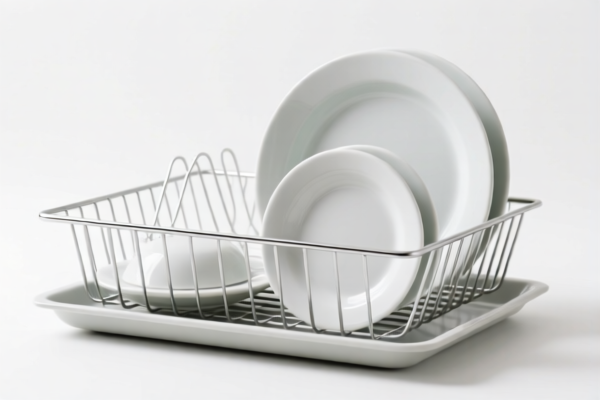
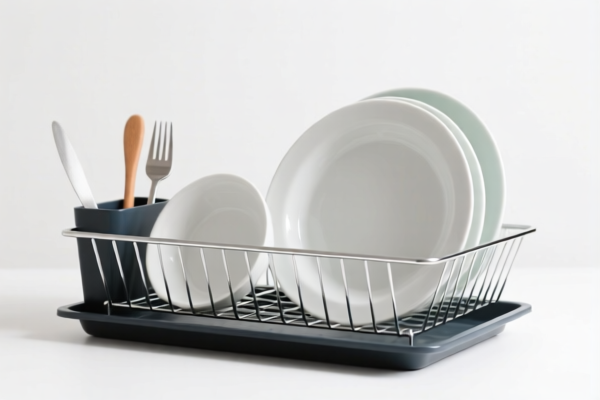
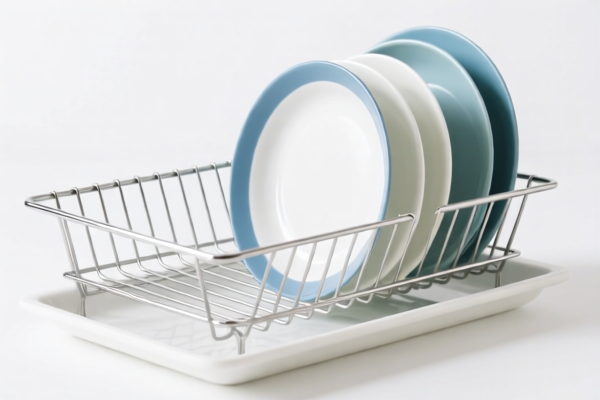
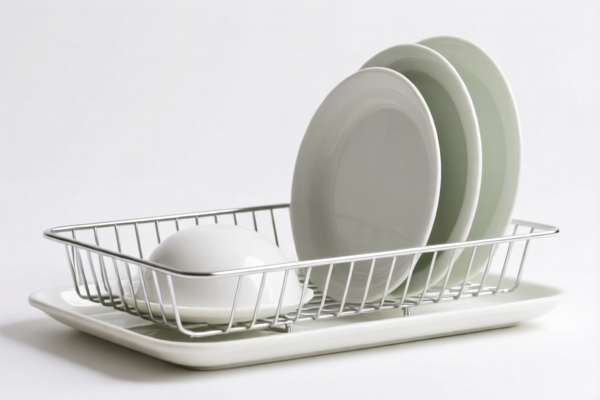
AI Analysis
🪵 Wooden Dining Rack (木制餐具架)
🌐 HS Code Reference & Customs Clearance Guide | 2026 Latest Tariff Analysis | Professional Clearance Strategy
📌 I. Product Definition & Classification: Do You Really Understand "Wooden Dining Rack"?
A Wooden Dining Rack is a functional household item used for storing, organizing, or displaying tableware and kitchen utensils. In international trade, its classification is not straightforward because it sits at the intersection of Kitchen Utensils, Miscellaneous Wood Products, and Furniture.
Key Distinctions: * As Kitchen Utensils: If the primary function is strictly for holding spoons, forks, or plates in a kitchen context. * As Miscellaneous Wood Products: If it is a generic storage rack not specifically defined as utensils or furniture. * As Furniture: If it is a large, standalone structure primarily used for storage/display in a dining or living area, resembling a piece of furniture.
⚠️ Critical Classification Point:
- If it fits the definition of "Tableware/Kitchen Utensils" → 4419.90 series (Lower Duty Potential).
- If it is considered a "Miscellaneous Wood Article" (catch-all) → 4421.99 series (High Duty).
- If it is deemed "Furniture" (e.g., a large sideboard-style rack) → 9403.60 series (Medium-High Duty).
📦 II. HS Code Classification Details (2026 Latest Tariff Authority Comparison)
| HS Code | Product Description (from Data) | Applicable Scenario | Tax Rate (Total) |
|---|---|---|---|
4419.90.11.00 |
Wooden dining rack: Material is wood, purpose falls under tableware and kitchen utensils. | Standard kitchen utensil racks, spoon holders, cutlery organizers. | 15.3% |
4419.90.91.00 |
Wooden dining rack: Complies with the classification of wooden tableware and kitchen utensils. | Generic wooden kitchen racks, slightly broader interpretation of "utensils." | 20.7% |
4421.99.98.80 |
Wooden dining rack: Defined as a non-specific category under "Other wood products." | Generic wooden storage racks not specifically recognized as utensils or furniture. | 38.3% |
4421.91.98.80 |
Wooden dining rack: Under the "catch-all" category of other wood products. | Similar to above; used when the product doesn't fit specific sub-categories of 4421.99. | 38.3% |
9403.60.80.40 |
Wooden dining rack: Complies with wooden furniture attributes,形态 (form) is a rack. | Large, standalone wooden racks treated as furniture (e.g., dining room side racks). | 35.0% |
🔍 Key Insight:
- Cheapest Option:4419.90.11.00at 15.3%. This requires proving the item is primarily a kitchen utensil. - Most Expensive Options:4421.99.98.80and4421.91.98.80at 38.3%. These are "catch-all" categories with high Section 301 tariffs. - Middle Ground:9403.60.80.40at 35.0%. Classified as furniture, avoiding the highest "miscellaneous" tariff but still facing Section 301.
💰 III. 2026 Latest Tariff Rate Breakdown (Including Additional Taxes, Policy Add-ons)
✅ Applicable Country: United States (US)
✅ Origin: China (CN)
✅ Effective Time: Post-2025 adjustments (Based on provided data structure)
🎯 1. 4419.90.11.00 —— Wooden Tableware/Kitchen Utensils (Best Case)
| Item | Detail |
|---|---|
| Base Duty Rate | 5.3% |
| Section 301 Additional Duty | 0.0% (Note: Data shows 0.0% for this specific code in the provided context, likely due to specific exclusion or classification nuance). |
| Section 122 Duty (IEEPA) | 10.0% |
| Total Tax Rate | 15.3% |
| Tax Calculation | CIF Value × 15.3% |
| Legal Basis | Base Tariff + Section 122 (10%) |
📌 Explanation:
- This is the optimal classification. - Why 0% Section 301? The provided data explicitly lists0.0%for "Added Tariff" (加征关税) for this code. This is significantly lower than other wood products. - Section 122 (10%): This is a specific additional duty applied to certain Chinese goods (often related to trade remedy or specific executive orders). - Result: Lowest total cost, maximizing profit margin.
🎯 2. 4419.90.91.00 —— Wooden Tableware/Kitchen Utensils (General)
| Item | Detail |
|---|---|
| Base Duty Rate | 3.2% |
| Section 301 Additional Duty | 7.5% |
| Section 122 Duty (IEEPA) | 10.0% |
| Total Tax Rate | 20.7% |
| Tax Calculation | CIF Value × 20.7% |
| Legal Basis | Base + 301 (7.5%) + Section 122 (10%) |
📌 Explanation:
- Slightly higher than4419.90.11.00. - Incurs a small Section 301 duty (7.5%). - Use this if4419.90.11.00is too specific and your product is a slightly different type of kitchen rack.
🎯 3. 4421.99.98.80 & 4421.91.98.80 —— Miscellaneous Wood Products (High Risk)
| Item | Detail |
|---|---|
| Base Duty Rate | 3.3% |
| Section 301 Additional Duty | 25.0% |
| Section 122 Duty (IEEPA) | 10.0% |
| Total Tax Rate | 38.3% |
| Tax Calculation | CIF Value × 38.3% |
| Legal Basis | Base + 301 (25%) + Section 122 (10%) |
📌 Explanation:
- Avoid if possible. - High Section 301 tariff (25%) is the main driver. - These codes are "catch-alls" for wood products not elsewhere specified. Customs may scrutinize these heavily to ensure they aren't better classified as utensils (4419) or furniture (9403).
🎯 4. 9403.60.80.40 —— Wooden Furniture (Rack Type)
| Item | Detail |
|---|---|
| Base Duty Rate | 0.0% |
| Section 301 Additional Duty | 25.0% |
| Section 122 Duty (IEEPA) | 10.0% |
| Total Tax Rate | 35.0% |
| Tax Calculation | CIF Value × 35.0% |
| Legal Basis | Base + 301 (25%) + Section 122 (10%) |
📌 Explanation:
- Base duty is 0%, which looks attractive. - However, the 25% Section 301 tariff makes it expensive. - Use this if the rack is large, robust, and clearly structured as furniture (e.g., a dining room sideboard rack) rather than a simple kitchen utensil holder.
🛠️ IV. Customs Clearance Practical Advice (Avoid Pitfalls)
✅ 1. Document Checklist (Must-Have)
| Document | Required? | Explanation |
|---|---|---|
| ✅ Product Photos | ✔️ | Show the rack with utensils inside to prove "kitchen use" (for 4419 classification). |
| ✅ Material Specification | ✔️ | Confirm 100% wood. If mixed with metal/plastic, classification changes. |
| ✅ Function Statement | ✔️ | Clearly state: "Used for storing kitchen tableware" (for 4419) vs. "Used for home storage/furniture" (for 9403). |
| ✅ Commercial Invoice | ✔️ | Accurate description is critical. Avoid vague terms like "Wooden Stand." |
| ✅ Packing List | ✔️ | Ensure consistency with invoice. |
✅ 2. Classification Strategy (Key Mantra)
🔥 "Prove Utensil, Save 23%! Furniture vs. Utensil is the Battle!"
| Scenario | Recommended HS Code | Why? | Risk |
|---|---|---|---|
| Small Rack, Kitchen Use | 4419.90.11.00 |
Lowest tax (15.3%). Must prove it's for tableware. | Low risk if documented well. |
| Medium Rack, General Kitchen | 4419.90.91.00 |
Good backup if 11.00 is too strict. (20.7%) | Medium risk. |
| Large Rack, Dining Room Decor | 9403.60.80.40 |
Classify as Furniture. (35.0%) | Medium risk. Accept higher tax for accuracy. |
| Generic/Unspecified Wood Rack | 4421.99.98.80 |
Avoid. High tax (38.3%). Only use if nothing else fits. | High risk of penalty if misclassified. |
💡 Pro Tip:
To qualify for4419.90.11.00(15.3%), provide photos of the rack holding spoons, forks, or plates. This visual evidence is crucial for customs officers to agree it is a kitchen utensil and not just a "wooden rack" (which would fall under 4421 or 9403).
✅ 3. Special Circumstances
| Situation | Advice |
|---|---|
| OEM for Brand | Provide brand agreement. Ensure marketing materials show it being used in a kitchen setting. |
| Mixed Materials | If the rack has metal hinges or plastic inserts, the classification may shift to 9403 (Furniture) or even 7326 (Metal), drastically changing tax rates. |
| Customs Audit | If audited for 4419.90.11.00, have a product spec sheet ready that explicitly states "Tableware Storage" as the primary function. |
🌍 V. Global Market Comparison (2026 Latest)
| Market | Recommended HS Code | Tax Rate (China Origin) | Notes |
|---|---|---|---|
| 🇺🇸 USA | 4419.90.11.00 |
15.3% | Best Option. Note Section 122 (10%). |
| 🇨🇳 China | 4419.90.11.00 |
~5-7% (Import) | Lower tariffs for inbound. |
| 🇪🇺 EU | 4419.90.91 |
~5-10% | No Section 301/122. Standard MFN rates. |
| 🇬🇧 UK | 4419.90.99 |
~5-10% | Post-Brexit rules apply. |
| 🇯🇵 Japan | 4419.90.00 |
0% | Preferential rates may apply. |
📌 Conclusion:
- USA Market is Critical: The difference between 15.3% and 38.3% is massive.
- Do NOT use4421.99.98.80unless absolutely necessary. The 38.3% rate can erase profits.
- Focus on4419.90.11.00as the primary target for classification.
📌 VI. Common Mistakes & Pitfalls (Blood & Tears Lessons)
❌ Mistake 1: Using "Wooden Rack" as the description.
👉 Consequence: Customs may default to 4421.99.98.80 (38.3%).
✅ Fix: Use "Wooden Kitchen Utensil Rack" or "Wooden Tableware Holder."
❌ Mistake 2: Ignoring Section 122.
👉 Consequence: Underestimating total tax. All codes in the data include a 10% Section 122 duty.
✅ Fix: Always add 10% to your cost calculation.
❌ Mistake 3: Classifying as Furniture when it's Utensils.
👉 Consequence: Paying 35.0% instead of 15.3%.
✅ Fix: If it's small and kitchen-specific, fight for 4419.90.11.00.
❌ Mistake 4: Mixing items in one shipment.
👉 Consequence: If a carton contains both a rack and a metal tray, customs may apply the highest rate to the whole batch.
✅ Fix: Separate shipments or clearly itemize on the invoice.
🎯 VII. Conclusion: Precise Classification, Maximize Profit!
🎯 Remember the Mantra:
🔹 "Utensils First, Save the Most! 15.3% vs 38.3% is the Key!"
🔹 "Show it with Spoons, Get the 11.00 Code! Prove Kitchen Use, Avoid the 21.98 Trap!"
📌 Small Tip:
If your product is 100% wood and small, always aim for 4419.90.11.00.
If it is large and structural, consider 9403.60.80.40 (35.0%).
Avoid 4421 codes unless you have no other option.
📣 Immediate Action:
📞 Consult a Customs Broker + Provide Photos of Utensils + Apply for Advance Ruling
🚀 Let Your Wooden Dining Rack Pass Smoothly, Maximize Profit, and Expand Globally!
✨ Professional Clearance Starts with Precise Classification!
💼 Every Percent of Tax Saved is Pure Profit!
Customer Reviews
About HS Code Classification
The Harmonized System (HS) is an internationally standardized nomenclature developed by the World Customs Organization (WCO) to classify traded products. Over 200 countries use the HS system as the basis for customs tariffs, trade statistics, and import/export regulations.
Each HS code follows a hierarchical structure:
- Chapter (2 digits) — Broad category of goods (e.g., Chapter 84: Machinery and Mechanical Appliances)
- Heading (4 digits) — More specific grouping within the chapter
- Subheading (6 digits) — Internationally standardized breakdown, used by all WCO member countries
- National subdivisions (8-10 digits) — Country-specific extensions for further classification, such as US HTSUS 10-digit codes
Correct HS code classification is essential for smooth customs clearance, accurate duty payment, and compliance with trade regulations. Misclassification can lead to customs delays, overpayment of duties, or penalties.
When importing from CN to US, the applicable tariff rates may include:
- Most-Favored-Nation (MFN) rate — The standard duty rate applied to WTO members
- General rate — Applied to countries without trade agreements
- Trade remedy duties — Additional tariffs such as Section 301 (anti-dumping), Section 232 (national security), or countervailing duties
The information provided on this page is for reference purposes only. For official classification, please consult with your local customs authority or a licensed customs broker.