dining room armchair
CN → US| HS Code | Tariff Rate | Origin | Destination | Doc |
|---|---|---|---|---|
| 4420908000 | 38.2% | CN | US | Official Doc |
| 4420110090 | 13.2% | CN | US | Official Doc |
| 9403608093 | 35.0% | CN | US | Official Doc |
| 9403200050 | 85.0% | CN | US | Official Doc |
| 9401614011 | 35.0% | CN | US | Official Doc |
| 9401696011 | 35.0% | CN | US | Official Doc |
Product Images
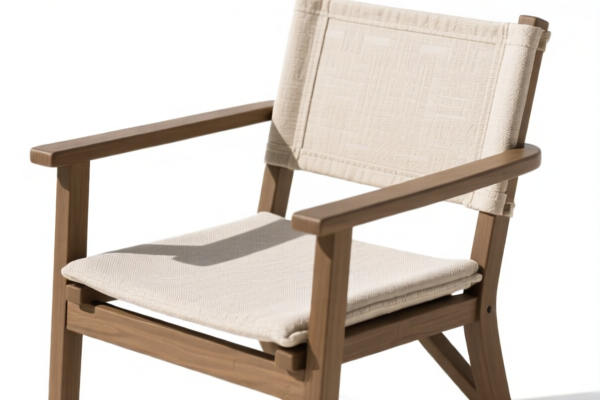
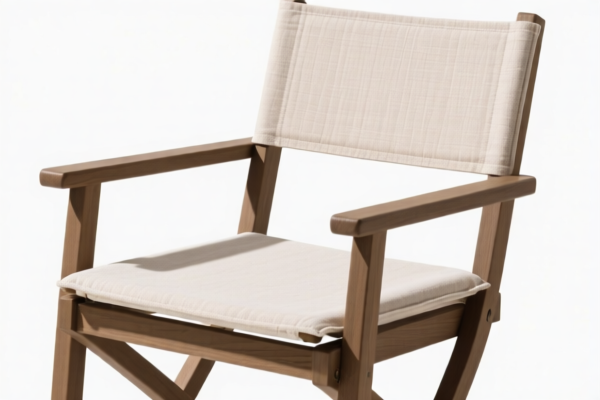
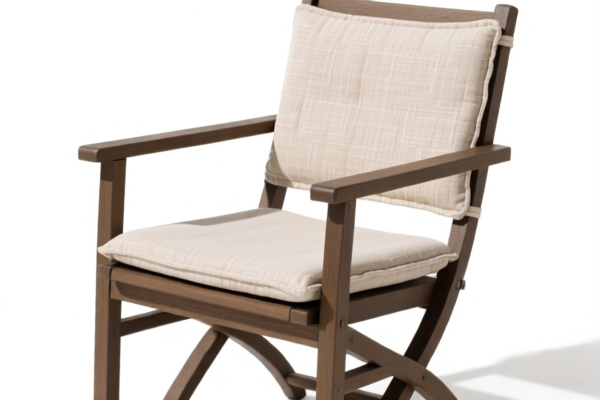
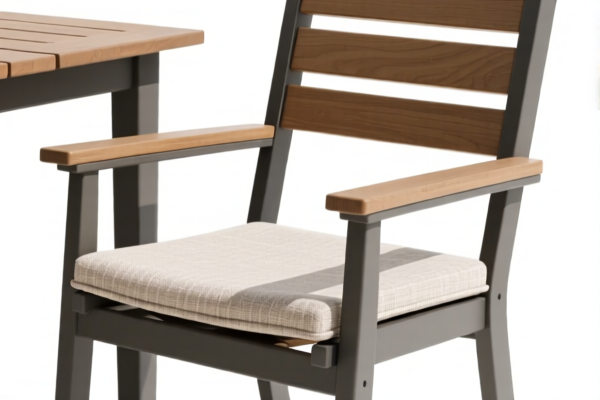
AI Analysis
🛋️ Dining Room Armchair (木制家具类)
🌐 HS Code Reference & Clearance Guide | 2026 Latest Tariff Analysis | US-China Trade Context
📌 I. Product Definition & Classification: What Exactly is a "Dining Room Armchair"?
A Dining Room Armchair is a specific subset of household seating furniture. Unlike standard side chairs, it features armrests, providing higher comfort and formality, typically used in formal dining settings or upscale residential spaces.
In international trade (specifically under the US Harmonized Tariff Schedule), the classification depends heavily on the frame material. Based on the provided data, we are analyzing Wooden Framed armchairs.
⚠️ Key Distinction:
- If the frame is Wood → It falls under Heading 9401 (Seats with wooden frames).
- If the frame is Metal → It falls under Heading 9403 (Metal furniture).
- If the frame is Plastic/Wicker → Different headings apply.The following analysis focuses on Wooden Framed Armchairs based on the input data.
📦 II. HS Code Classification Details (2026 Latest Tariff Alignment)
| HS Code | Product Description | Applicable Scenario | Frame Material | Tax Rate (CN Origin → US) |
|---|---|---|---|---|
9401.61.40.11 |
Other seats, with wooden frames: Upholstered: Chairs: Other Other household | Upholstered Armchairs (Cushioned, fabric/leather cover) | ✅ Wood | 25.0% |
9401.69.60.11 |
Other seats, with wooden frames: Other: Other: Chairs: Other Other household | Non-Upholstered/Mixed Armchairs (e.g., wooden armrests with non-upholstered seats, or less common configurations) | ✅ Wood | 25.0% |
🔍 Important Note on "Chair" vs. "Armchair":
In HS Code nomenclature, "Armchairs" are generally classified under Heading 9401 (Seats). The specific subheadings9401.61(Upholstered) and9401.69(Other) are the primary destinations for dining armchairs.
-9401.61.40.11is the most common code for standard upholstered dining armchairs (fabric or leather seat/back with wooden frame).
-9401.69.60.11applies to other wooden frame seats that do not fit the "upholstered" definition strictly (e.g., solid wood armchairs or mixed materials).
💰 III. 2026 Latest Tariff Rate Breakdown (Detailed Explanation)
✅ Applicable Country: United States (US)
✅ Origin: China (CN)
✅ Effective Date: Post-2025 tariffs apply
🎯 1. 9401.61.40.11 —— Upholstered Dining Armchairs (Wooden Frame)
| Item | Content |
|---|---|
| Base Tariff Rate | 0.0% (ad valorem) |
| Section 301 Additional Tariff | +25.0% |
| IEEPA Additional Tariff | N/A (Wooden furniture is not currently under the specific IEEPA 10% surcharge listed for electronics; only Section 301 applies here based on provided data) |
| Total Tax Rate | 25.0% |
| Tax Calculation | CIF Value × 25% |
| De Minimis Eligibility | ❌ No (Section 301 goods are generally excluded from de minimis exemptions if value > $800, but strictly speaking, 301 goods are subject to full duty regardless of de minimis in many enforcement contexts; however, for standard shipments, it applies fully). |
| Legal Basis Path | USITC:9401.61.40.11 → FOOTNOTE:301 |
📌 Explanation:
- Wooden furniture from China is subject to a 25% additional tariff under US Trade Law Section 301.
- The base MFN (Most Favored Nation) rate for wooden seats is 0%.
- Total Effective Duty: 25%.
- This is a significant cost driver. A $1,000 armchair incurs $250 in additional duties.
🎯 2. 9401.69.60.11 —— Other Wooden Frame Seats (Non-Upholstered/Other)
| Item | Content |
|---|---|
| Base Tariff Rate | 0.0% |
| Section 301 Additional Tariff | +25.0% |
| Total Tax Rate | 25.0% |
| Tax Calculation | CIF Value × 25% |
| De Minimis Eligibility | ❌ No |
| Legal Basis Path | USITC:9401.69.60.11 → FOOTNOTE:301 |
📌 Note:
- Even if the chair is not "upholstered" (e.g., solid wood armchair), the 25% surcharge still applies.
- Misclassification to avoid tariffs is risky and leads to penalties.
🛠️ IV. Clearance Practical Advice (Battle-Tested Pitfall Guide)
✅ 1. Documentation Checklist (Mandatory)
| Document | Required | Description |
|---|---|---|
| ✅ Product Specification Sheet | ✔️ | Must clearly state: Material (Wood type), Dimensions, Weight, Seat Type (Upholstered vs. Non-upholstered). |
| ✅ Product Photos | ✔️ | Front, Side, Rear, and Close-up of Joints/Fabrics to prove "Wooden Frame" and "Upholstered" status. |
| ✅ Commercial Invoice | ✔️ | Must list: Dining Armchair, Wooden Frame, Upholstered, Model XYZ. Avoid vague terms like "Furniture" or "Chair" alone. |
| ✅ Packing List | ✔️ | Show unit composition. If sold in sets (e.g., 4 chairs + table), declare separately to avoid complex composite good rules. |
| ✅ Bill of Lading (B/L) | ✔️ | Consistent with Invoice description. |
✅ 2. Classification Strategy (Key Mantra)
🔥 “Frame Matters, Upholstery Defines, Section 301 Hits 25%!”
| Scenario | Correct HS Code | Incorrect Code | Consequence of Error |
|---|---|---|---|
| Upholstered Wooden Armchair | 9401.61.40.11 |
9403.60.80.93 (Wooden Furniture - Other) |
Risk: Misclassification penalty. 9403 is for general furniture; 9401 is specifically for seats. |
| Solid Wood Armchair (No Cushion) | 9401.69.60.11 |
9401.61.40.11 |
Risk: Under-reporting if audited, but tax rate is same (25%). No savings, but wrong data. |
| Metal Frame Armchair | 9403.20.00.50 |
9401.61.40.11 |
Critical Error: 9403.20 has 75% total tax (0% base + 25% 301 + 50% Steel/Aluminum). Avoid this! |
🚨 CRITICAL WARNING:
- Do NOT classify a wooden armchair as "Metal Furniture" or vice versa.
- Do NOT classify a dining armchair as "Other Wooden Furniture" (9403.60.80.93) if it clearly fits9401. While9403also has a 25% tariff,9401is the more accurate and safer classification for seats. Misclassification can lead to customs audits and duty adjustments.
- Metal Frame Armchairs are extremely expensive to import (75% total tax). Ensure the frame is genuinely wood, not wood-veneer over metal.
✅ 3. Special Case Handling
| Situation | Handling Advice |
|---|---|
| OEM Branding | If private label, provide authorization letter to prove commercial reality. |
| Mixed Materials | If frame is wood but arms are plastic, still likely 9401 if wood is dominant structural material. Provide material breakdown. |
| Set Sales | If sold as a "Dining Set" (Table + 4 Armchairs), separate the values on the invoice. Do not lump together. |
| Origin Marking | Ensure products are marked "Made in China" to confirm origin for tariff calculation. |
🌍 V. Global Market Comparison (2026 Latest)
| Country/Region | Recommended HS Code | Total Tax (CN Origin) | Certification Requirements | Notes |
|---|---|---|---|---|
| 🇺🇸 USA | 9401.61.40.11 |
25.0% (Section 301) | N/A (Furniture is low-risk) | High duty cost. |
| 🇨🇳 China | 9401.61.40.11 |
5% | N/A | Export from China. |
| 🇪🇺 EU | 9401.61.40 |
0% - 5% (Depends on specific subheading) | REACH, CE (if applicable) | No major trade wars on furniture. |
| 🇬🇧 UK | 9401.61.40 |
0% - 6% | N/A | Post-Brexit rules apply. |
| 🇨🇦 Canada | 9401.61.40 |
0% (via USMCA if applicable, but not for CN) | N/A | CN origin faces MFN rates (~0-6%). |
📌 Conclusion:
- USA is the most challenging market due to the 25% Section 301 tariff.
- EU and UK are more favorable for Chinese wooden furniture exports.
- Price Sensitivity: A 25% duty increases the landed cost significantly. Consider pricing strategies or supply chain diversification (e.g., assembly in Vietnam/Malaysia) to mitigate risk.
📌 VI. Common Mistakes & Pitfalls (Lessons Learned)
❌ Mistake 1: Classifying as "Other Wooden Furniture" (9403.60.80.93) instead of "Seats" (9401).
👉 Consequence: While tax rate might be similar (25%), it triggers customs scrutiny for misdeclaration. 9401 is the correct heading for seats.
❌ Mistake 2: Ignoring the "Upholstered" distinction.
👉 Consequence: If you declare 9401.69.60.11 for an upholstered chair, customs may ask for proof. If proven upholstered, they may adjust code but keep the 25% rate. Better to be accurate.
❌ Mistake 3: Assuming "Wooden" includes "Wood Veneer over Particle Board".
👉 Consequence: If the frame is actually engineered wood (particle board/MDF), it still falls under 9401 (Wooden furniture/seats) as long as the surface is wood. However, if the frame is metal with wood veneer, it falls under 9403.20.00.50 with a 75% tax!
⚠️ CRITICAL: Ensure the structural frame is wood. If metal, the tax jumps from 25% to 75%.
✅ Correct Practice:
"Dining Armchair, Solid Oak Frame, Velvet Upholstered, Model XYZ, Made in China"
🎯 VII. Conclusion: Strategic Clearance for Cost Efficiency
🎯 Remember:
🔹 “Wooden Frame = 25%”
🔹 “Metal Frame = 75%”
🔹 “Seats = Heading 9401, Not 9403”🔹 “HS Code Accuracy Prevents 25% Surprise or 75% Disaster!”
📌 Pro Tip:
If your product volume is high, consider Advance Rulings from US CBP to confirm the 9401 classification. This provides legal certainty and avoids post-import audits.
📣 Immediate Action:
📞 Verify Frame Material: Is it truly wood?
📝 Check Invoice Description: Must include "Armchair" and "Wooden Frame".
💰 Budget for 25% Duty in your Cost Calculation.
✨ Precision in Classification, Profit in Clearance!
💼 Every Dollar Saved in Tariffs is Pure Profit!
Customer Reviews
About HS Code Classification
The Harmonized System (HS) is an internationally standardized nomenclature developed by the World Customs Organization (WCO) to classify traded products. Over 200 countries use the HS system as the basis for customs tariffs, trade statistics, and import/export regulations.
Each HS code follows a hierarchical structure:
- Chapter (2 digits) — Broad category of goods (e.g., Chapter 84: Machinery and Mechanical Appliances)
- Heading (4 digits) — More specific grouping within the chapter
- Subheading (6 digits) — Internationally standardized breakdown, used by all WCO member countries
- National subdivisions (8-10 digits) — Country-specific extensions for further classification, such as US HTSUS 10-digit codes
Correct HS code classification is essential for smooth customs clearance, accurate duty payment, and compliance with trade regulations. Misclassification can lead to customs delays, overpayment of duties, or penalties.
When importing from CN to US, the applicable tariff rates may include:
- Most-Favored-Nation (MFN) rate — The standard duty rate applied to WTO members
- General rate — Applied to countries without trade agreements
- Trade remedy duties — Additional tariffs such as Section 301 (anti-dumping), Section 232 (national security), or countervailing duties
The information provided on this page is for reference purposes only. For official classification, please consult with your local customs authority or a licensed customs broker.