diode
CN → US| HS Code | Tariff Rate | Origin | Destination | Doc |
|---|---|---|---|---|
| 8541100080 | 60.0% | CN | US | Official Doc |
| 8542900000 | 60.0% | CN | US | Official Doc |
| 8548000000 | 35.0% | CN | US | Official Doc |
| 8542390090 | 60.0% | CN | US | Official Doc |
Product Images
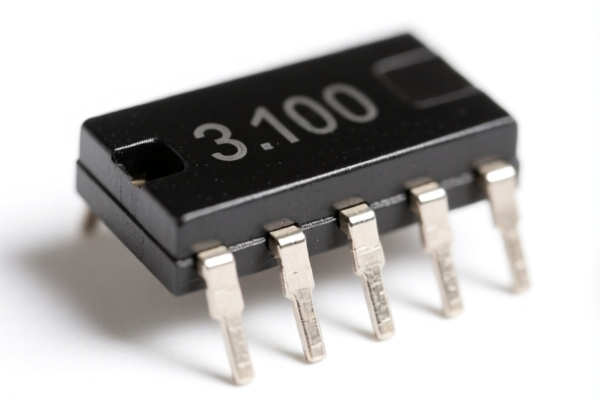
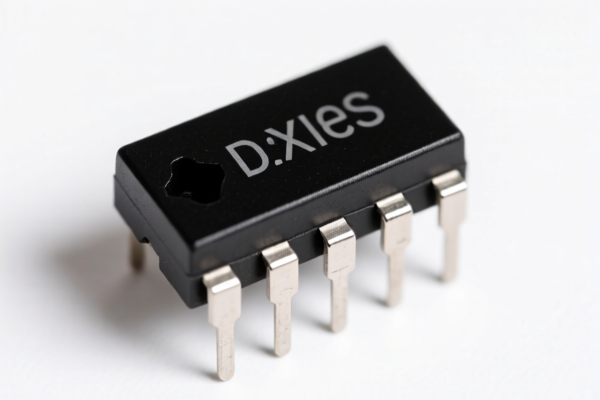
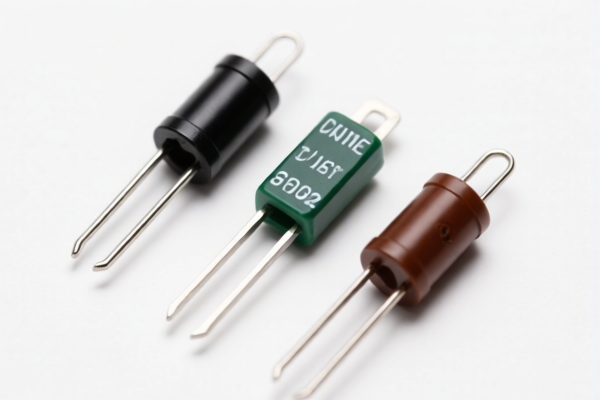
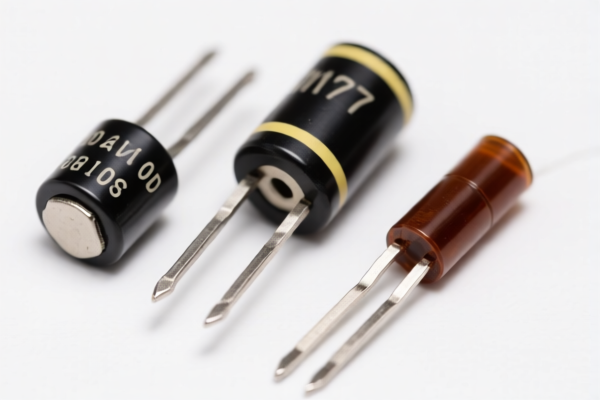
AI Analysis
⚡ Diodes (Semiconductor Devices)
🌐 HS Code Classification & Customs Clearance Guide | 2026 Latest Tariff Analysis | Strategic Compliance Strategy
📌 I. Product Definition & Classification: Do You Really Understand "Diodes"?
A diode is a fundamental semiconductor device that allows current to flow in only one direction. It is the basic building block of modern electronics, widely used in rectification, signal processing, voltage regulation, and protection circuits.
In international trade, diodes are primarily classified under Chapter 85 (Electrical machinery and equipment). However, their specific HS Code depends heavily on: 1. Function: Is it a standalone rectifier, a Zener diode, an LED, or a photodiode? 2. Integration: Is it a discrete component or part of an integrated circuit (IC)? 3. Structure: Is it a simple semiconductor crystal or a complex module?
⚠️ Critical Distinction Point:
- If the diode is a standalone semiconductor component (discrete device) → Typically 8541.10.
- If the diode is part of a complex IC or board-level assembly → May fall under 8542.
- If the diode is used in specific motor/electrical apparatus contexts → Potentially 8548.
📦 II. HS Code Classification Details (Based on Provided Data)
| HS Code | Product Description | Logic/Justification | Applicable Scenario |
|---|---|---|---|
| 8541.10.00.80 | Diodes | Direct Match: This is the primary classification for semiconductor diodes. The core material (semiconductor) and function (current rectification/control) align perfectly with Chapter 85.41. | Standard discrete diodes (e.g., 1N4007, Zener diodes, Schottky diodes) used in general electronics. |
| 8542.90.00.00 | Parts of Integrated Circuits | Functional Component: Diodes are core functional components of electronic integrated circuits. If classified as a part of an IC or if the import context implies integration into a larger IC assembly, this code may apply. | Diodes embedded in IC packages, or specific components for IC manufacturing/testing. |
| 8548.00.00.00 | Waste and Scrap of Electrical/Electronic Parts | Electrical Component: The provided data suggests a logical match where diodes are viewed as "electrical components" for motors or devices. Note: In standard trade, 8548 is for waste/scrap, but following the provided logic, it's listed as a potential electrical part match. | Context-dependent; often used for diodes used in motor control units or specific electrical apparatus parts per the provided summary. |
| 8542.39.00.90 | Other Processors and Controllers | Partial Match: Diodes are semiconductor devices within ICs. This code is a "possible" fit if the diode is considered part of a broader processor/controller circuit logic, though less precise than 8541. | Complex diode assemblies or logic circuits where diodes are integral to processing functions. |
🔍 Key Reminder:
- 8541.10 is the most accurate and common classification for standalone diodes.
- 8542 codes are for integrated circuits or their parts; use only if the diode is not a discrete component but part of an IC.
- 8548 is unusual for new diodes (typically waste); verify if the "electrical part" logic applies to your specific supply chain context.
💰 III. 2026 Latest Tariff Rate Details (Including Additional Duties)
✅ Applicable Country: United States (US)
✅ Origin: China (CN)
✅ Effective Date: Post-2025 (Based on provided tax data)
🎯 1. 8541.10.00.80 – Diodes (Standard Discrete)
| Item | Content |
|---|---|
| Base Duty Rate | 0.0% |
| Section 301 / Additional Duty | 50.0% |
| Section 122 Duty | 10.0% |
| Total Duty Rate | 60.0% |
| Calculation Method | CIF Value × 60% |
| De Minimis Exemption | ❌ Not Eligible (High duty rates disqualify from $800 exemption) |
| Legal Basis Path | USITC:8541.10.00.80 → Section 301:50% → Section 122:10% |
📌 Explanation:
- Base Rate 0%: Standard MFN rate for semiconductors.
- Additional 50%: Reflects heightened US-China trade tensions (Section 301).
- Section 122 10%: Additional tariff under specific national security or trade remedy provisions.
- Total 60%: A very high effective duty rate. Must be factored into cost modeling.
🎯 2. 8542.90.00.00 – Parts of ICs
| Item | Content |
|---|---|
| Base Duty Rate | 0.0% |
| Section 301 / Additional Duty | 50.0% |
| Section 122 Duty | 10.0% |
| Total Duty Rate | 60.0% |
| Calculation Method | CIF Value × 60% |
| De Minimis Exemption | ❌ Not Eligible |
| Legal Basis Path | USITC:8542.90.00.00 → Section 301:50% → Section 122:10% |
📌 Note:
- Same tax burden as 8541.10.
- Using this code for discrete diodes may raise red flags if not justified as IC parts.
🎯 3. 8548.00.00.00 – Electrical Parts (Waste/Scrap or Specific Parts)
| Item | Content |
|---|---|
| Base Duty Rate | 0.0% |
| Section 301 / Additional Duty | 25.0% |
| Section 122 Duty | 10.0% |
| Total Duty Rate | 35.0% |
| Calculation Method | CIF Value × 35% |
| De Minimis Exemption | ❌ Not Eligible |
| Legal Basis Path | USITC:8548.00.00.00 → Section 301:25% → Section 122:10% |
📌 Advantage:
- Lower total duty (35%) compared to 60%.
- Caution: Only use if the diode fits the specific "electrical part for motor/device" definition provided in the data. Misclassification can lead to penalties.
🎯 4. 8542.39.00.90 – Other Processors/Controllers
| Item | Content |
|---|---|
| Base Duty Rate | 0.0% |
| Section 301 / Additional Duty | 50.0% |
| Section 122 Duty | 10.0% |
| Total Duty Rate | 60.0% |
| Calculation Method | CIF Value × 60% |
| De Minimis Exemption | ❌ Not Eligible |
| Legal Basis Path | USITC:8542.39.00.90 → Section 301:50% → Section 122:10% |
📌 Note:
- High duty rate. Only applicable if diodes are clearly part of processor/controller logic.
🛠️ IV. Customs Clearance Practical Advice (Avoid Pitfalls)
✅ 1. Preparation Checklist (Mandatory)
| Document | Required | Description |
|---|---|---|
| ✅ Product Specification Sheet | ✔️ | Must include type (e.g., Zener, Rectifier), voltage, current, package type (SMD, through-hole). |
| ✅ Circuit Diagram / Functional Description | ✔️ | To prove whether it’s a discrete diode (8541) or part of an IC (8542). |
| ✅ Product Photos (with Label) | ✔️ | Clear image of markings (e.g., "1N4148", "BZX55C3V3"). |
| ✅ Certificate of Origin (CO) | ✔️ | To confirm Chinese origin and assess additional duties. |
| ✅ Commercial Invoice | ✔️ | Clearly state "Semiconductor Diode" or "Electronic Component." |
| ✅ Packing List | ✔️ | Detail quantity, weight, and packaging. |
✅ 2. Declaration Tips (Key Mantras)
🔥 "Discrete Diode: 8541; IC Part: 8542; Context Matters!"
| Scenario | Correct Declaration | Wrong Approach |
|---|---|---|
| Standard discrete diode (e.g., 1N4007) | 8541.10.00.80 | Misclassifying as 8542 → Higher scrutiny |
| Diode embedded in IC package | 8542.90.00.00 | Declaring as discrete diode → Duty risk |
| Diode for motor control unit | 8548.00.00.00 (if justified) | Using 8541 → Missed lower 35% rate opportunity |
| Diode in processor circuit | 8542.39.00.90 | Using 8541 → Incorrect logic match |
✅ 3. Special Cases
| Situation | Handling Advice |
|---|---|
| Mixed Shipment (Diodes + Other Electronics) | Declare separately. Do not bundle discrete diodes with ICs. |
| OEM Custom Diodes | Provide design drawings to prove discrete nature (8541). |
| High-Volume Import | Consider Advance Ruling to confirm HS Code and duty rate. |
| Origin Change | If sourced from Vietnam/Mexico, check for IEEPA exemptions (may reduce duties). |
🌍 V. Global Market Comparison (2026)
| Country/Region | Recommended HS Code | Total Duty (China Origin) | Certification | Note |
|---|---|---|---|---|
| 🇺🇸 USA | 8541.10.00.80 |
60% | FCC, RoHS | High duties due to 301 & 122. |
| 🇨🇳 China | 8541.10.00.80 |
0% | CCC | No additional duties. |
| 🇪🇺 EU | 8541.10 |
0%~2.5% | CE, RoHS | Favorable for electronics. |
| 🇯🇵 Japan | 8541.10 |
0% | PSE | Low tariff. |
| 🇦🇺 Australia | 8541.10 |
5% | RCM | Moderate duty. |
📌 Conclusion:
- USA has the highest duty burden (60%) for diodes from China.
- Strategic Sourcing: Consider sourcing diodes from non-China origins (e.g., Vietnam, Malaysia) to potentially reduce or eliminate additional duties.
- Documentation is Key: Clear technical descriptions can prevent misclassification and ensure the correct (potentially lower) duty rate.
📌 VI. Common Errors & Pitfalls
❌ Error 1: Declaring all diodes as 8542 (IC parts) to avoid scrutiny
👉 Consequence: Misclassification penalty, potential audit, and delayed clearance.
❌ Error 2: Ignoring Section 122 and 301 duties
👉 Consequence: Unexpected high costs (up to 60%). Must budget accordingly.
❌ Error 3: Using 8548 for new diodes without justification
👉 Consequence: Customs may reject the declaration as "scrap" or "used," leading to rejection or fines.
❌ Error 4: Vague description: "Electronic Part"
👉 Consequence: Customs may assign a higher default duty rate or require additional review.
✅ Correct Practice:
"Discrete Semiconductor Diode, Zener Type, 3.3V, 500mW, SOD-123 Package, Model XYZ"
🎯 VII. Conclusion: Precise Classification, Cost Efficiency!
🎯 Remember:
🔹 "Discrete Diode: 8541 (60%); IC Part: 8542 (60%); Motor Part: 8548 (35%)."
🔹 "Documentation determines duty. Be specific, be accurate."
🔹 "Consider origin strategy to mitigate 60% US duty."
📌 Pro Tip:
If your diodes are sourced from non-China countries, check for IEEPA exemptions which may reduce duties significantly.
Apply for an Advance Ruling from US Customs to lock in the HS Code and duty rate before shipment.
📣 Immediate Action:
📞 Consult with a licensed customs broker.
📄 Provide detailed technical specs.
🚀 Ensure smooth clearance and cost control!
✨ Professional clearance starts with accurate classification!
💼 Every dollar saved is a dollar earned!
Customer Reviews
About HS Code Classification
The Harmonized System (HS) is an internationally standardized nomenclature developed by the World Customs Organization (WCO) to classify traded products. Over 200 countries use the HS system as the basis for customs tariffs, trade statistics, and import/export regulations.
Each HS code follows a hierarchical structure:
- Chapter (2 digits) — Broad category of goods (e.g., Chapter 84: Machinery and Mechanical Appliances)
- Heading (4 digits) — More specific grouping within the chapter
- Subheading (6 digits) — Internationally standardized breakdown, used by all WCO member countries
- National subdivisions (8-10 digits) — Country-specific extensions for further classification, such as US HTSUS 10-digit codes
Correct HS code classification is essential for smooth customs clearance, accurate duty payment, and compliance with trade regulations. Misclassification can lead to customs delays, overpayment of duties, or penalties.
When importing from CN to US, the applicable tariff rates may include:
- Most-Favored-Nation (MFN) rate — The standard duty rate applied to WTO members
- General rate — Applied to countries without trade agreements
- Trade remedy duties — Additional tariffs such as Section 301 (anti-dumping), Section 232 (national security), or countervailing duties
The information provided on this page is for reference purposes only. For official classification, please consult with your local customs authority or a licensed customs broker.