disk enclosure
CN → US| HS Code | Tariff Rate | Origin | Destination | Doc |
|---|---|---|---|---|
| 8471709000 | 35.0% | CN | US | Official Doc |
| 8471706000 | 35.0% | CN | US | Official Doc |
Product Images
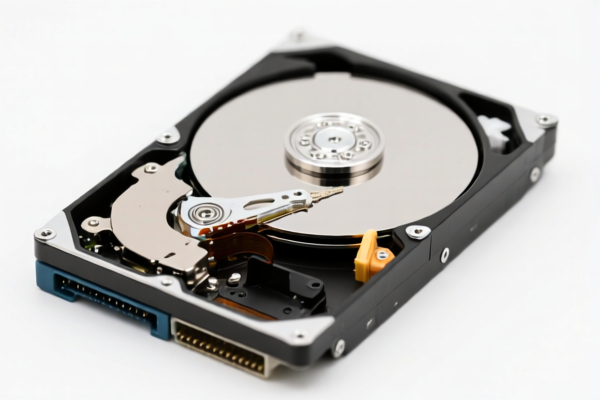
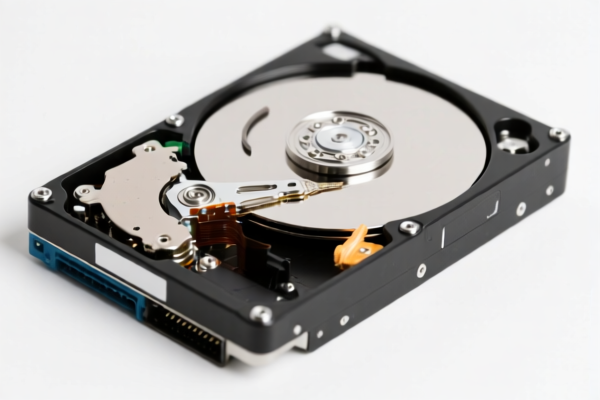
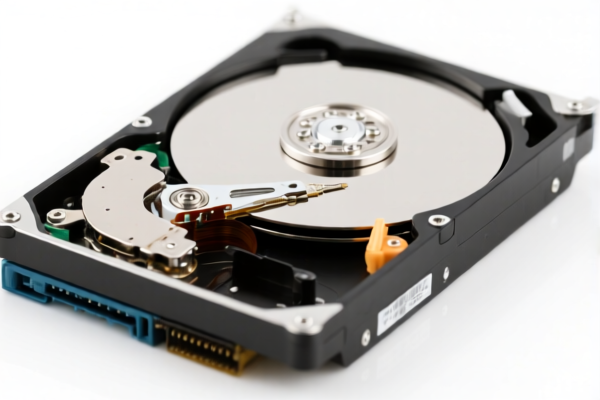
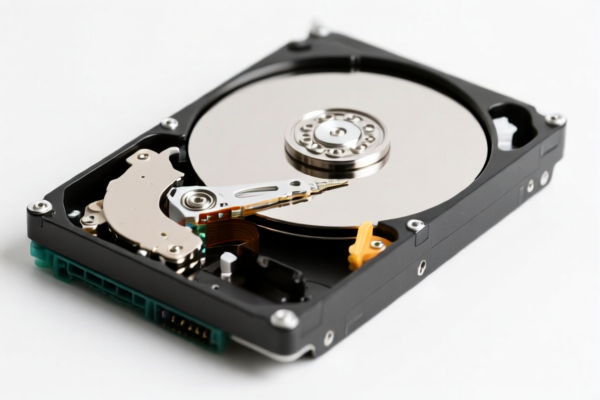
AI Analysis
💾 Hard Disk Enclosures (Storage Units for Data Processing Machines)
🌐 HS Code Reference & Customs Clearance Guide | 2026 Latest Tariff Analysis | Professional Level通关 Strategy
📌 1. Product Definition & Classification: Do You Really Understand "Disk Enclosure"?
A Disk Enclosure (often called HDD Enclosure, SSD Enclosure, or DAS - Direct Attached Storage) is a housing device used to connect internal hard drives or SSDs to a computer or server via interfaces like USB, Thunderbolt, SAS, or SATA.
In international trade, the classification depends heavily on whether the unit is assembled in a cabinet and its intended form factor. The key distinction lies in Chapter 84 (Nuclear reactors, boilers, machinery and mechanical appliances; parts thereof).
⚠️ Critical Distinction:
- Desktop/Tabletop/Portable Units: These are separate units not integrated into the main computer chassis. They are classified under 8471.70.
- Server Rack/Chassis Units: If the enclosure is an integral part of a server cabinet or rack system, it might fall under different subheadings, but standard standalone enclosures fall under 8471.70.
📦 2. HS Code Classification Details (2026 Latest Tariff Authority Comparison)
Based on the provided data, the relevant HS Codes for Storage Units used with Automatic Data Processing Machines (ADPM) are:
| HS Code | Product Description | Application Scenario | Cabinet Status |
|---|---|---|---|
8471.70.60.00 |
Other storage units: Not assembled in cabinets for placing on a table, desk, wall, floor or similar place | Desktop HDD/SSD Enclosures, Portable External Drives, NAS devices not in server racks | ❌ Not Assembled in Cabinets |
8471.70.90.00 |
Other storage units: Other | Storage units that do not fit the specific definition of 8471.70.60 (e.g., specialized non-standard forms, or units that are considered "Other" because they aren't clearly desktop-style standalone units) | ⚠️ Other / Ambiguous |
🔍 Key Insight:
- Most standard USB/Thunderbolt External Enclosures for HDDs/SSDs fall under8471.70.60.00because they are designed to be placed on a desk or table and are not assembled into a large cabinet. -8471.70.90.00is a "catch-all" for storage units that are not specifically "not assembled in cabinets." Use this only if the product structure is ambiguous or doesn't fit the clear "desktop/standalone" description of 60.00.
💰 3. 2026 Latest Tariff Rate Details (Including Surtaxes & Policy Add-ons)
✅ Applicable Country: United States (US)
✅ Origin: China (CN)
✅ Effective Date: Current rates apply (as per data provided)
🎯 1. 8471.70.60.00 – Storage Units (Not Assembled in Cabinets)
| Item | Content |
|---|---|
| Base Tariff | 0.0% |
| Surtax (Section 301/IEEPA) | +25.0% |
| Total Tariff | 25.0% |
| Tax Calculation | CIF Value × 25.0% |
| De Minimis Exemption | ❌ Not Applicable (High tariff prevents low-value exemption for many categories) |
| Legal Basis Path | USITC:8471.70.60.00 → Surtax:25% |
📌 Explanation:
- Base Rate: 0% (Most Favored Nation rate for storage units is often low or zero).
- Surtax: The 25.0% additional tariff is applied due to US trade actions against Chinese imports (often under Section 301).
- Total Cost Impact: You must budget for a 25% total tax burden on the CIF value. This is a significant cost factor for high-volume or high-value storage equipment.
🎯 2. 8471.70.90.00 – Other Storage Units
| Item | Content |
|---|---|
| Base Tariff | 0.0% |
| Surtax (Section 301/IEEPA) | +25.0% |
| Total Tariff | 25.0% |
| Tax Calculation | CIF Value × 25.0% |
| De Minimis Exemption | ❌ Not Applicable |
| Legal Basis Path | USITC:8471.70.90.00 → Surtax:25% |
📌 Note:
- The tariff rate is identical to 8471.70.60.00 (25% total).
- However, misclassifying a desktop enclosure as "Other" (90.00) instead of "Not Assembled" (60.00) can lead to customs audits and potential penalties if the physical characteristics clearly show it is a standalone desktop unit.
🛠️ 4. Customs Clearance Practical Advice (Battle-Hardened Pitfall Guide)
✅ 1. Preparation Checklist (Non-Negotiable)
| Document | Required | Description |
|---|---|---|
| ✅ Product Specification Sheet | ✔️ | Must clearly state: Interface (USB 3.0/Thunderbolt), Supported Drive Types (SATA/NVMe), Dimensions, Weight. |
| ✅ Product Photos | ✔️ | Clear images showing the enclosure without the drive inside (if sold separately) or with it. Show ports and labels. |
| ✅ Commercial Invoice | ✔️ | Description must be precise: e.g., "USB 3.0 Hard Disk Enclosure for 3.5" SATA HDD" or "Portable SSD Enclosure." Avoid vague terms like "Computer Part." |
| ✅ Proof of Assembly Status | ✔️ | If claiming 8471.70.60.00, confirm it is not designed to be mounted in a rack/cabinet. |
| ✅ Origin Certificate | ✔️ | Required to prove origin for tariff calculation. |
✅ 2. Declaration Tips (Key Mantra)
🔥 "Describe Function, Clarify Form, Avoid 'Other' if Possible!"
| Scenario | Correct Declaration | Wrong Practice |
|---|---|---|
| Standalone USB Enclosure (Desktop/Tabletop) | 8471.70.60.00 |
Use 8471.70.90.00 (Risk of audit for incorrect specific heading) |
| Server Rack Mount Enclosure (if not in data) | Verify if it fits "Not assembled in cabinets." If it's a rack unit, it might still be 8471.70.60.00 if it's a discrete unit, not part of a larger cabinet structure. | Misclassifying as a "Part of Computer" (8471.41) |
| Enclosure + Hard Drive Sold Together | Declare as Storage Unit. The drive and enclosure are often treated as a complete storage system. | Separating drive and enclosure into different HS codes (Complex & Risky) |
✅ 3. Special Situations
| Situation | Handling Advice |
|---|---|
| OEM/White Label Enclosures | Provide the end-user manual and spec sheet to prove it's a storage accessory, not a specialized industrial machine. |
| Enclosure with Built-in Power Supply | Still classified under 8471.70. The power supply is integral. Do not try to separate it. |
| Thunderbolt/USB4 High-Speed Enclosures | Ensure the description highlights the data processing function. It is a "storage unit for ADPM," not just a "cable." |
| Empty Enclosure vs. Pre-filled | Both fall under 8471.70. The description should match the actual shipment (e.g., "Empty Enclosure" or "Complete Storage Unit"). |
🌍 5. Global Market Comparison (2026 Latest)
| Country/Region | Recommended HS Code | Tariff (China Origin) | Certification Requirements | Notes |
|---|---|---|---|---|
| 🇺🇸 USA | 8471.70.60.00 |
25.0% | FCC (if wireless), UL (if applicable) | High surtax; precise description is key. |
| 🇨🇳 China | 8471.70.60.00 |
0% (or low) | CCC (if applicable) | No surtax for domestic import. |
| 🇪🇺 EU | 8471.70.60 |
~0-4% | CE, RoHS | No US-style surtax. |
| 🇯🇵 Japan | 8471.70.60 |
~0-4% | PSE | Competitive rate. |
| 🇦🇺 Australia | 8471.70.60 |
~5% | RCM | Moderate tariff. |
📌 Conclusion:
- The US market is the most expensive due to the 25% surtax.
- EU, Japan, and Australia have significantly lower or zero base tariffs, making them more attractive for pricing strategies if surtaxes don't apply.
📌 6. Common Errors & Pitfall Guide (Lessons Learned)
❌ Error 1: Declaring an enclosure as a "Part of Computer" (8471.41)
👉 Consequence: Customs may reject it because 8471.70 is the correct heading for storage units. Misclassification can lead to audits.
❌ Error 2: Using vague terms like "Computer Accessory" on the Invoice
👉 Consequence: Customs will assign a default HS code, which might be 8471.70.90.00 (25% tax) or even a higher tax rate if deemed "Other Electrical Machinery."
👉 Fix: Always specify "Hard Disk Enclosure" or "Storage Unit."
❌ Error 3: Ignoring the "Not Assembled in Cabinets" Clause
👉 Consequence: If your product is clearly a desktop unit but you declare it as "Other" (90.00), it may trigger a review. While the tax is the same (25%), accuracy builds trust and speeds up clearance.
❌ Error 4: Failing to Declare the Interface Type
👉 Consequence: USB vs. SAS vs. Thunderbolt doesn't change the HS code (8471.70), but it helps customs officers verify the product is indeed for data processing machines.
✅ Correct Practice:
"External Hard Disk Enclosure, USB 3.1, Metal Casing, Model XYZ, For Data Storage"
🎯 7. Conclusion: Professional Declaration, Save Time & Money
🎯 Remember the Mantra:
🔹 "Desktop Enclosure? Go to 60.00. Rack? Check 60.00 or 90.00. Tax is 25% in US. Be Specific!"
🔹 "Clear Description = Fast Clearance. Vague Description = Delays + Penalties."
📌 Pro Tip:
If your enclosures are shipped from Vietnam, Mexico, or other non-China origins, you may avoid the 25% surtax.
Ensure your Certificate of Origin is correctly issued to leverage Free Trade Agreements (FTAs) or avoid Section 301 tariffs.
📣 Immediate Action:
📞 Consult with a licensed customs broker.
🚀 Provide high-res photos and spec sheets to pre-validate your HS Code.
💼 Accurate classification saves thousands in unexpected duties!
✨ Professional Customs Clearance Starts with Accurate Classification!
💼 Every dollar of tariff saved is pure profit!
Customer Reviews
About HS Code Classification
The Harmonized System (HS) is an internationally standardized nomenclature developed by the World Customs Organization (WCO) to classify traded products. Over 200 countries use the HS system as the basis for customs tariffs, trade statistics, and import/export regulations.
Each HS code follows a hierarchical structure:
- Chapter (2 digits) — Broad category of goods (e.g., Chapter 84: Machinery and Mechanical Appliances)
- Heading (4 digits) — More specific grouping within the chapter
- Subheading (6 digits) — Internationally standardized breakdown, used by all WCO member countries
- National subdivisions (8-10 digits) — Country-specific extensions for further classification, such as US HTSUS 10-digit codes
Correct HS code classification is essential for smooth customs clearance, accurate duty payment, and compliance with trade regulations. Misclassification can lead to customs delays, overpayment of duties, or penalties.
When importing from CN to US, the applicable tariff rates may include:
- Most-Favored-Nation (MFN) rate — The standard duty rate applied to WTO members
- General rate — Applied to countries without trade agreements
- Trade remedy duties — Additional tariffs such as Section 301 (anti-dumping), Section 232 (national security), or countervailing duties
The information provided on this page is for reference purposes only. For official classification, please consult with your local customs authority or a licensed customs broker.