display book
CN → US| HS Code | Tariff Rate | Origin | Destination | Doc |
|---|---|---|---|---|
| 3926100000 | 15.3% | CN | US | Official Doc |
| 4911100020 | 17.5% | CN | US | Official Doc |
| 4820102060 | 35.0% | CN | US | Official Doc |
| 4820500000 | 35.0% | CN | US | Official Doc |
| 3926904800 | 13.4% | CN | US | Official Doc |
Product Images
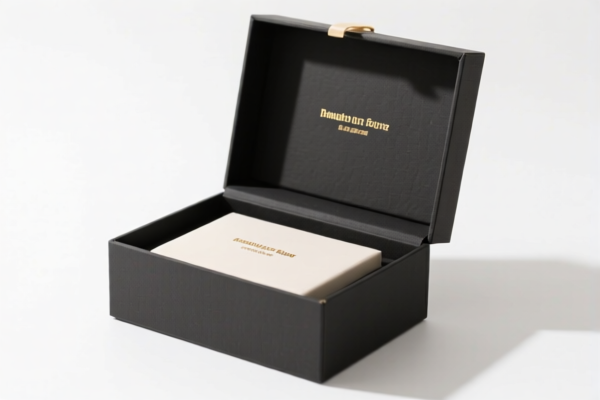
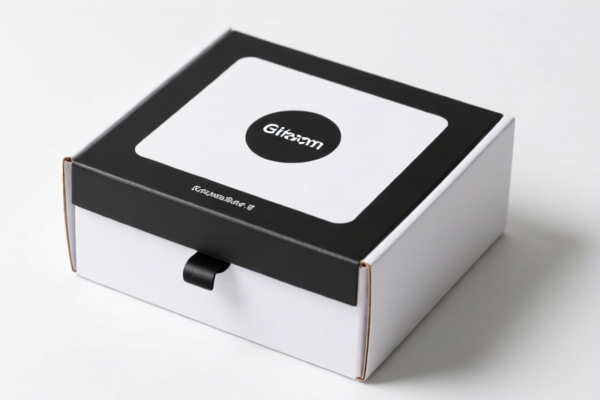
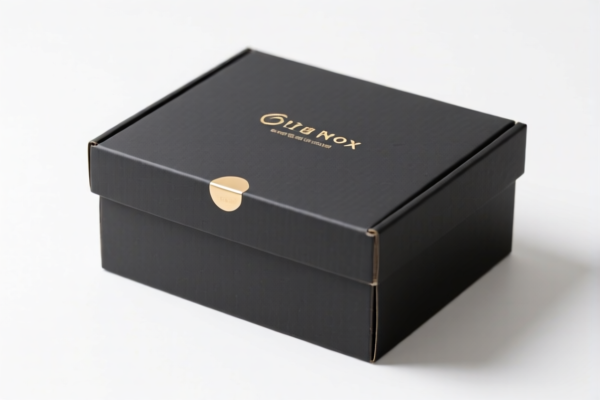
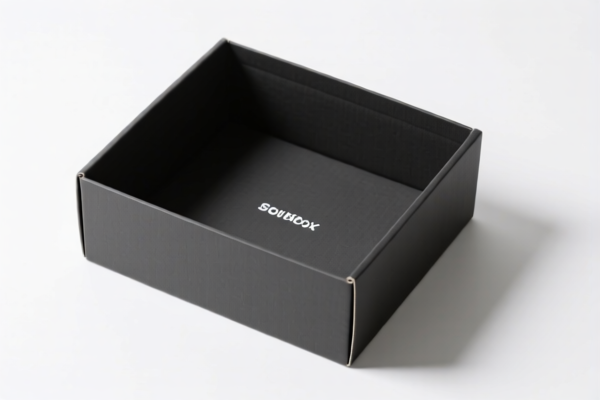
AI Analysis
📔 Display Books & Stationery Articles (Paper/Plastic/Printed)
🌐 HS Code Reference & Customs Clearance Guide | 2026 Latest Tariff Analysis | Professional Entry Strategy
📌 I. Product Definition & Classification: Do You Really Know What a "Display Book" Is?
In international trade, the term "Display Book" is ambiguous and falls into three distinct categories based on material and function. Misclassification leads to severe penalties, especially under current US trade restrictions (Section 301 & IEEPA).
The three main classifications are: 1. Paper Stationery: Traditional binders, diaries, folders made of paper/paperboard. 2. Plastic Accessories: Binders, folders, or photo albums made of plastics (headings 3901–3914). 3. Printed Matter: Commercial catalogs, price lists, or advertising materials printed on paper.
⚠️ Critical Distinction Point:
- If it is a binding device (empty or for holding items) → It is Stationery/Office Supply (HS 4820 or 3926).
- If it contains printed content (ads, catalogs) → It is Printed Matter (HS 4911).
- Never classify a plastic binder as "paper stationery" or vice versa; the material determines the heading.
📦 II. HS Code Classification Details (2026 Latest Tariff Authority)
Based on the provided data, here are the specific HS Codes and their corresponding tax implications.
| HS Code | Product Description | Material | Key Characteristics |
|---|---|---|---|
| 4820.50.00.00 | Registers, account books, notebooks, etc. | Paper/Paperboard | General category for paper-based stationery, binders, folders, and photo albums (if paper-based). |
| 4820.10.20.60 | Diaries, notebooks, address books (bound); Memo pads, letter pads | Paper/Paperboard | Specifically for bound diaries/notebooks or pads. Excludes simple loose-leaf folders if not bound. |
| 4911.10.00.80 | Trade advertising material, commercial catalogs | Paper | Printed matter primarily for commercial advertising or catalog purposes. |
| 4911.10.00.20 | Printed catalogs relating principally to current offers for US products | Paper | Specific subset of printed matter for US product sales catalogs. |
| 3926.90.48.00 | Other articles of plastics: Photo albums | Plastic | Plastic-based photo albums. Distinct from paper ones. |
| 3926.10.00.00 | Other articles of plastics: Office or school supplies | Plastic | Plastic binders, folders, loose-leaf mechanisms, and other office/plastic stationery items. |
🔍 Key Reminder:
- Plastic vs. Paper: If your "display book" is a plastic binder holding paper, check the primary material. Plastic binders often fall under 3926.10.00.00 (0% tariff) or 3926.90.48.00 (if specific like photo albums).
- Content vs. Container: A blank plastic binder is an "office supply" (3926.10). A printed catalog inside it is "printed matter" (4911). If they are sold together, customs may look at the essential character, but often separate lines are safer if distinct.
💰 III. 2026 Latest Tariff Rate Breakdown (Including Additional Taxes)
✅ Applicable Country: United States (US)
✅ Origin: China (CN)
✅ Effective Date: Current Section 301 and IEEPA tariffs apply.
🎯 1. Paper-Based Stationery & Binders (HS 4820)
A. General Paper Stationery (4820.50.00.00)
| Item | Detail |
|---|---|
| Base Tariff | 0.0% |
| Additional Tariff (Section 301) | 25.0% |
| Total Tax Rate | 25.0% |
| Tax Detail | Base: 0.0%, Additional: 25.0% |
| Legal Path | USITC:4820.50.00.00 → FOOTNOTE:301-Tariff |
B. Specific Bound Diaries/Notebooks (4820.10.20.60)
| Item | Detail |
|---|---|
| Base Tariff | 0.0% |
| Additional Tariff (Section 301) | 25.0% |
| Total Tax Rate | 25.0% |
| Tax Detail | Base: 0.0%, Additional: 25.0% |
| Legal Path | USITC:4820.10.20.60 → FOOTNOTE:301-Tariff |
📌 Interpretation:
- All paper-based "display books," binders, folders, and diaries are subject to a 25% additional tariff on top of the 0% base rate.
- This is a high-cost category for Chinese exporters. No de minimis exemption applies to general merchandise of this type if valued above thresholds.
🎯 2. Printed Matter & Catalogs (HS 4911)
A. General Trade Advertising/Catalogs (4911.10.00.80)
| Item | Detail |
|---|---|
| Base Tariff | 0.0% |
| Additional Tariff (Section 301) | 7.5% |
| Total Tax Rate | 7.5% |
| Tax Detail | Base: 0.0%, Additional: 7.5% |
| Legal Path | USITC:4911.10.00.80 → FOOTNOTE:301-Tariff |
B. US-Product Sales Catalogs (4911.10.00.20)
| Item | Detail |
|---|---|
| Base Tariff | 0.0% |
| Additional Tariff (Section 301) | 7.5% |
| Total Tax Rate | 7.5% |
| Tax Detail | Base: 0.0%, Additional: 7.5% |
📌 Interpretation:
- Printed catalogs and advertising materials enjoy a lower additional tariff (7.5%) compared to paper stationery (25%).
- Crucial: If the item is purely a "display book" (empty binder) containing paper, it is NOT 4911. It is 4820. You only use 4911 if the primary purpose is the printed content itself.
🎯 3. Plastic Office Supplies & Photo Albums (HS 3926)
A. Plastic Office/School Supplies (3926.10.00.00)
| Item | Detail |
|---|---|
| Base Tariff | 0.0% |
| Additional Tariff | 0.0% |
| Total Tax Rate | 0.0% |
| Tax Detail | Base: 0.0%, Additional: 0.0% |
| Legal Path | USITC:3926.10.00.00 |
📌 Strategic Insight:
- Plastic binders, folders, and loose-leaf mechanisms often fall under 3926.10.00.00 with a 0% total tariff.
- Actionable Advice: If your "display book" is a plastic binder holding photos or documents, classify it as Plastic Office Supplies (3926.10.00.00) rather than Paper Stationery (4820). This saves 25% in duties.
B. Plastic Photo Albums (3926.90.48.00)
| Item | Detail |
|---|---|
| Base Tariff | 3.4% |
| Additional Tariff | 0.0% |
| Total Tax Rate | 3.4% |
| Tax Detail | Base: 3.4%, Additional: 0.0% |
📌 Strategic Insight:
- Specific plastic photo albums have a low 3.4% total tariff.
- Ensure the product is clearly defined as a "photo album" and not a general "folder" to secure this rate.
🛠️ IV. Customs Clearance Practical Advice (Battle-Tested Pitfall Guide)
✅ 1. Preparation Checklist (Non-Negotiable)
| Document | Required | Explanation |
|---|---|---|
| ✅ Product Specifications | ✔️ | Clearly state material: "100% Plastic Binder" vs. "Paper Diary." |
| ✅ Product Photos | ✔️ | Show the item empty (if binder) or with content (if catalog). |
| ✅ Commercial Invoice | ✔️ | Description must match HS Code exactly (e.g., "Plastic Photo Album" not just "Display Book"). |
| ✅ Bill of Lading | ✔️ | Ensure weight/volume matches. |
| ✅ Material Declaration | ✔️ | Explicitly declare: "Material: Polypropylene (PP)" for plastic items. |
✅ 2. Declaration Tips (The Golden Rules)
🔥 "Material First, Content Second, Name Precise, Tax Minimized!"
| Scenario | Correct HS Code | Risk of Wrong Code |
|---|---|---|
| Empty Plastic Binder | 3926.10.00.00 (0%) |
Misclassifying as paper (4820) → 25% penalty tax. |
| Paper Diary/Notebook | 4820.10.20.60 (25%) |
Misclassifying as plastic → Customs audit + fines. |
| Printed Sales Catalog | 4911.10.00.80 (7.5%) |
Misclassifying as blank binder → Wrong duty base. |
| Plastic Photo Album | 3926.90.48.00 (3.4%) |
Misclassifying as general plastic (3926.90) → Potential higher base rate. |
✅ 3. Special Case Handling
| Situation | Handling Strategy |
|---|---|
| "Display Book" is a Hybrid (Plastic cover, paper pages) | Declare based on essential character. If plastic cover dominates structure, argue for 3926. If paper pages dominate, argue for 4820. Evidence is key. |
| Bulk Import of Catalogs | Ensure marketing content is clear. If it’s a general company brochure, 4911.10.00.80 applies. |
| Customs Inquiry on "Display Book" | Provide a breakdown: "Item is a [Material] [Function] used for [Purpose]." Do not use vague terms like "Display Book." |
🌍 V. Global Market Comparison (2026)
| Country/Region | Recommended HS Code | Tariff (China Origin) | Notes |
|---|---|---|---|
| 🇺🇸 USA | See above | 0% - 25% | Critical: Plastic office supplies (3926.10) are 0%. Paper (4820) is 25%. |
| 🇨🇳 China | Same HS Codes | Varies (Export Tax) | Check Chinese export tariffs if applicable. |
| 🇪🇺 EU | 4820/3926/4911 | 6.5% - 12% | Generally lower than US, but VAT applies (19-27%). |
| 🇬🇧 UK | Same HS Codes | 6.5% - 12% | Post-Brexit rules apply. |
📌 Conclusion:
- USA is the most complex due to Section 301 tariffs.
- Smart Classification: Using 3926.10.00.00 for plastic binders can save 25% in US duties compared to paper equivalents.
📌 VI. Common Errors & Pitfalls (Blood Lessons)
❌ Error 1: Calling a plastic binder a "Paper Binder"
👉 Consequence: Paying 25% tax instead of 0%. Loss of profit.
❌ Error 2: Calling a printed catalog a "Office Supply"
👉 Consequence: 0% tax might seem good, but if it’s advertising material, it should be 7.5%. Minor risk, but consistency is key.
❌ Error 3: Using "Display Book" as the HS Code description
👉 Consequence: Customs Rejection. HS Codes do not have "Display Book" as a line item. You must map to the specific subheading.
✅ Correct Approach:
"Plastic Photo Album, Model XYZ, Material: PVC, Use: Home Storage" → HS 3926.90.48.00
"Plastic Ring Binder, Model ABC, Material: PP, Use: Office" → HS 3926.10.00.00
"Leather Diary, Bound, Model DEF" → HS 4820.10.20.60
🎯 VII. Conclusion: Precision Classification, Maximum Savings!
🎯 Remember the Golden Rule:
🔹 "Plastic Binders = 0% (Save 25%)!"
🔹 "Paper Binders = 25% (Expensive!)"
🔹 "Catalogs = 7.5% (Moderate)"
📌 Pro Tip:
If you are importing plastic binders or folders, ensure the commercial invoice explicitly states "Plastic" and "Office Supplies". This preempts customs questioning and ensures the 0% tariff rate is applied immediately.
📣 Immediate Action:
📞 Verify Material: Is it Paper or Plastic?
📦 Check Content: Is it Blank or Printed?
🚀 Select Correct HS Code: Avoid the 25% trap!
✨ Professional Clearance Starts with Accurate Classification!
💼 Every Percentage Point Saved is Pure Profit!
Customer Reviews
About HS Code Classification
The Harmonized System (HS) is an internationally standardized nomenclature developed by the World Customs Organization (WCO) to classify traded products. Over 200 countries use the HS system as the basis for customs tariffs, trade statistics, and import/export regulations.
Each HS code follows a hierarchical structure:
- Chapter (2 digits) — Broad category of goods (e.g., Chapter 84: Machinery and Mechanical Appliances)
- Heading (4 digits) — More specific grouping within the chapter
- Subheading (6 digits) — Internationally standardized breakdown, used by all WCO member countries
- National subdivisions (8-10 digits) — Country-specific extensions for further classification, such as US HTSUS 10-digit codes
Correct HS code classification is essential for smooth customs clearance, accurate duty payment, and compliance with trade regulations. Misclassification can lead to customs delays, overpayment of duties, or penalties.
When importing from CN to US, the applicable tariff rates may include:
- Most-Favored-Nation (MFN) rate — The standard duty rate applied to WTO members
- General rate — Applied to countries without trade agreements
- Trade remedy duties — Additional tariffs such as Section 301 (anti-dumping), Section 232 (national security), or countervailing duties
The information provided on this page is for reference purposes only. For official classification, please consult with your local customs authority or a licensed customs broker.