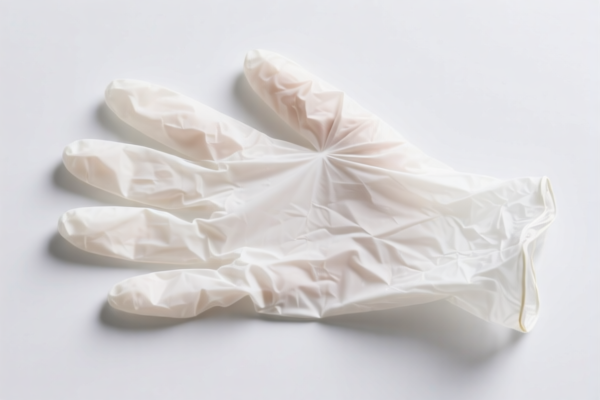
disposable cleaning and disinfection plastic gloves
CN → US| HS Code | Tariff Rate | Origin | Destination | Doc |
|---|---|---|---|---|
| 3926204010 | 16.5% | CN | US | Official Doc |
| 3926201020 | 10.0% | CN | US | Official Doc |
| 3926204010 | 16.5% | CN | US | Official Doc |
| 3926201020 | 10.0% | CN | US | Official Doc |
| 3926201020 | 10.0% | CN | US | Official Doc |
Product Images



AI Analysis
🧤 Disposable Cleaning and Disinfection Plastic Gloves
🌐 HS Code Reference & Customs Clearance Guide | 2026 Latest Tariff Analysis | Professional Compliance Strategy
📌 I. Product Definition & Classification: What Exactly Are "Disposable Plastic Gloves"?
Disposable plastic gloves, primarily used for hygiene, cleaning, and disinfection in medical, industrial, or household settings, are classified under Chapter 39 (Plastics and Articles Thereof). Specifically, they fall under Heading 3926, which covers "Other articles of plastics and articles of other materials of headings 3901 to 3914."
Key Classification Logic: * Material: Plastic (Polyethylene, PVC, Nitrile, etc.). * Form: Gloves (Handwear). * Usage: Disposable (single-use). * Specific Features: Powdered vs. Non-powdered; Boxed packaging vs. Bulk.
⚠️ Critical Distinction:
- Latex/Natural Rubber Gloves → Usually classified under Chapter 40 (Rubber).
- Plastic/Polymer Gloves (PE, PVC, Nitrile) → Classified under Chapter 39 (Plastics).
The data provided below strictly applies to Plastic gloves as indicated in the source material.
📦 II. HS Code Classification Details (2026 Latest Tariff Authority)
Based on the provided data, there are two primary HS Codes for disposable plastic gloves, differentiated mainly by the 122 Clause Tariff (Section 301/IEEPA implications) and specific physical characteristics (such as the presence of powder or packaging format).
| HS Code | Product Description | Key Characteristics | Total Tax Rate |
|---|---|---|---|
3926.20.40.10 |
Disposable Plastic Gloves (General) | Standard plastic gloves; Powdered variants also fall here. | 16.5% |
3926.20.10.20 |
Disposable Plastic Gloves (Specific Category) | Often associated with non-powdered or specific packaging formats (e.g., boxed). | 10.0% |
🔍 Data Source Analysis:
- Code3926.20.40.10is associated with a 16.5% total tax rate. This includes basic tariffs and the 122 Clause Tariff (10%).
- Code3926.20.10.20is associated with a 10.0% total tax rate. This includes only the 122 Clause Tariff (10%), with 0.0% Basic Tariff.
- Note: The presence of powder ("Powdered Plastic Gloves") is explicitly mentioned in the summary for3926.20.40.10in some entries, but also appears in3926.20.10.20in others. The key differentiator in the tax outcome seems to be the specific subheading alignment rather than just the powder content alone, possibly influenced by packaging (e.g., "Boxed" vs. loose).
💰 III. 2026 Latest Tariff Rate Breakdown (Detailed Tax Clause Analysis)
✅ Applicable Jurisdiction: United States (US)
✅ Origin: China (CN)
✅ Effective Time: Current regulations (including Section 301/IEEPA measures)
🎯 1. 3926.20.40.10 —— Disposable Plastic Gloves (High-Tax Category)
| Item | Detail |
|---|---|
| Basic Tariff | 6.5% (Ad Valorem) |
| Surtax (301) | 0.0% |
| 122 Clause Tariff | 10.0% |
| Total Tax Rate | 16.5% |
| Tax Calculation | CIF Value × 16.5% |
| De Minimis Eligibility | ❌ Not Eligible (Standard for China-origin goods under these clauses) |
| Legal Basis | USTR Section 301 + IEEPA/301 Clause 122 |
📌 Explanation:
- The 6.5% Basic Tariff is the standard Most Favored Nation (MFN) rate for this subheading.
- The 10% 122 Clause Tariff is an additional surcharge applied to specific Chinese imports, significantly increasing the cost.
- Total Effective Rate: 16.5%. This is a significant cost factor for importers.
🎯 2. 3926.20.10.20 —— Disposable Plastic Gloves (Lower-Tax Category)
| Item | Detail |
|---|---|
| Basic Tariff | 0.0% |
| Surtax (301) | 0.0% |
| 122 Clause Tariff | 10.0% |
| Total Tax Rate | 10.0% |
| Tax Calculation | CIF Value × 10.0% |
| De Minimis Eligibility | ❌ Not Eligible |
| Legal Basis | USTR Section 301 + IEEPA/301 Clause 122 |
📌 Explanation:
- This subheading enjoys a 0% Basic Tariff, making it more competitive than3926.20.40.10.
- However, the 10% 122 Clause Tariff still applies, bringing the total to 10.0%.
- Total Effective Rate: 10.0%. This is 6.5 percentage points cheaper than the 40.10 code.💡 Strategic Insight:
If your product fits the criteria for3926.20.10.20(e.g., specific non-powdered types, boxed packaging), you can save 6.5% on duties compared to3926.20.40.10. Proper product description and packaging presentation are crucial.
🛠️ IV. Customs Clearance Practical Advice (Pitfall Avoidance Guide)
✅ 1. Required Documentation Checklist
| Document | Mandatory? | Notes |
|---|---|---|
| ✅ Commercial Invoice | ✔️ | Must clearly state: "Disposable Plastic Gloves," material composition, and HS Code. |
| ✅ Packing List | ✔️ | Detail quantities, box dimensions, and gross/net weights. |
| ✅ Product Specifications | ✔️ | Include: Material (PE/PVC/Nitrile), Powdered/Non-Powdered, Length, Thickness. |
| ✅ Photo of Product | ✔️ | Show the gloves, packaging, and any labels (e.g., "Medical Grade" vs. "Industrial"). |
| ✅ Certificate of Origin | ✔️ | Required to verify country of origin (China). |
| ✅ FDA Registration | ✔️ | If marketed as "Medical" or "Healthcare" gloves, FDA facility registration is mandatory. |
✅ 2. Classification Strategy & Declaration Tips
🔥 "Describe Precisely, Classify Correctly, Save 6.5%!"
| Scenario | Recommended HS Code | Reason |
|---|---|---|
| Boxed, Non-Powdered | 3926.20.10.20 |
Often qualifies for 0% basic tariff + 10% 122 clause. |
| Loose, Powdered | 3926.20.40.10 |
Higher tax burden (16.5%). |
| Medical-Grade Plastic Gloves | Verify 3926.20.10.20 first |
Check if specific medical subheadings offer better rates; if not, use general plastic glove codes. |
| Mixed Packaging (Box + Bulk) | Declare as Boxed if majority | Packaging type can influence classification between 10.20 and 40.10. |
✅ 3. Special Considerations
- Powdered Gloves: Ensure the description clearly states "Powdered" if applicable. Some US healthcare facilities have banned powdered gloves due to allergen risks.
- "Disposable" Definition: Clearly state "Single-Use" or "Disposable." Reusable plastic gloves may fall under different headings.
- 122 Clause Impact: The 10% 122 Clause is non-negotiable for China-origin goods. Do not attempt to bypass this via false origin declaration.
🌍 V. Global Market Comparison (2026)
| Country/Region | HS Code | Tariff | Notes |
|---|---|---|---|
| 🇺🇸 USA | 3926.20.10.20 / 3926.20.40.10 |
10% / 16.5% | High due to 122 Clause. |
| 🇨🇳 China (Import) | 3926.20.40.10 |
~6.5% | No 122 Clause applied to imports. |
| 🇪🇺 EU | 3926.20.90 |
~6.5% | No additional surcharges like US. |
| 🇬🇧 UK | 3926.20.90 |
~6.5% | Post-Brexit tariffs apply. |
📌 Conclusion:
The US market imposes the highest barriers due to the combination of basic tariffs and the 122 Clause. Importers must carefully select the correct HS Code to minimize costs.
📌 VI. Common Mistakes & Pitfalls (Blood Lessons)
❌ Mistake 1: Classifying all plastic gloves under 3926.20.40.10.
👉 Consequence: Paying 16.5% instead of 10%.
💡 Fix: Check if your product fits the criteria for 3926.20.10.20 (e.g., non-powdered, boxed).
❌ Mistake 2: Ignoring the "122 Clause."
👉 Consequence: Unexpected delays or fines due to misclassification of tax obligations.
💡 Fix: Always include the 10% 122 Clause in cost calculations for China-origin goods.
❌ Mistake 3: Ambiguous Product Description.
👉 Consequence: Customs may reclassify your goods, leading to penalties.
💡 Fix: Use precise terms: "Disposable Polyethylene Gloves, Non-Powdered, Boxed, 100pcs/box."
🎯 VII. Conclusion: Professional Declaration, Cost Efficiency, Compliance!
🎯 Remember the Key Takeaway:
🔹 "Plastic Gloves: 10.20 vs 40.10 – The 6.5% Difference Matters!"
🔹 "122 Clause: 10% is Inevitable. Basic Tariff: 0% vs 6.5% is Your Choice!"📌 Pro Tip:
- If your gloves are non-powdered and boxed, strive for3926.20.10.20.
- If they are powdered or loose, they likely fall under3926.20.40.10.
- Always verify the latest IEEPA/301 updates, as tariff policies can change.
📣 Immediate Action:
📞 Consult a licensed customs broker.
📦 Provide detailed product images and specifications.
📊 Calculate landed costs using both 10% and 16.5% rates to determine pricing strategy.
✨ Precision in Classification, Profit in Compliance!
💼 Your Margins Depend on the Digits: .10.20 vs .40.10!
Customer Reviews
About HS Code Classification
The Harmonized System (HS) is an internationally standardized nomenclature developed by the World Customs Organization (WCO) to classify traded products. Over 200 countries use the HS system as the basis for customs tariffs, trade statistics, and import/export regulations.
Each HS code follows a hierarchical structure:
- Chapter (2 digits) — Broad category of goods (e.g., Chapter 84: Machinery and Mechanical Appliances)
- Heading (4 digits) — More specific grouping within the chapter
- Subheading (6 digits) — Internationally standardized breakdown, used by all WCO member countries
- National subdivisions (8-10 digits) — Country-specific extensions for further classification, such as US HTSUS 10-digit codes
Correct HS code classification is essential for smooth customs clearance, accurate duty payment, and compliance with trade regulations. Misclassification can lead to customs delays, overpayment of duties, or penalties.
When importing from CN to US, the applicable tariff rates may include:
- Most-Favored-Nation (MFN) rate — The standard duty rate applied to WTO members
- General rate — Applied to countries without trade agreements
- Trade remedy duties — Additional tariffs such as Section 301 (anti-dumping), Section 232 (national security), or countervailing duties
The information provided on this page is for reference purposes only. For official classification, please consult with your local customs authority or a licensed customs broker.