document insertion
CN → US| HS Code | Tariff Rate | Origin | Destination | Doc |
|---|---|---|---|---|
| 4820300020 | 35.0% | CN | US | Official Doc |
| 4820300040 | 35.0% | CN | US | Official Doc |
| 8304000000 | 13.9% | CN | US | Official Doc |
| 3926100000 | 15.3% | CN | US | Official Doc |
| 3926908700 | 40.3% | CN | US | Official Doc |
Product Images
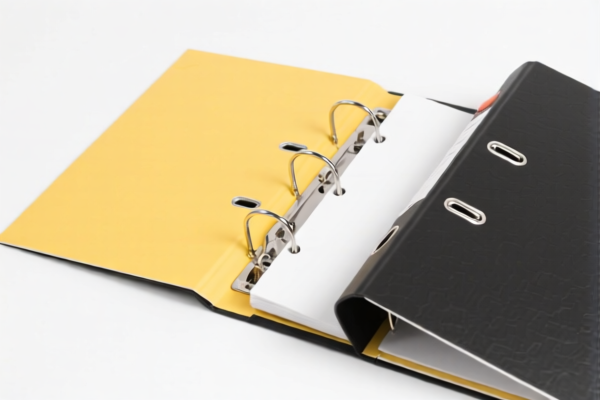
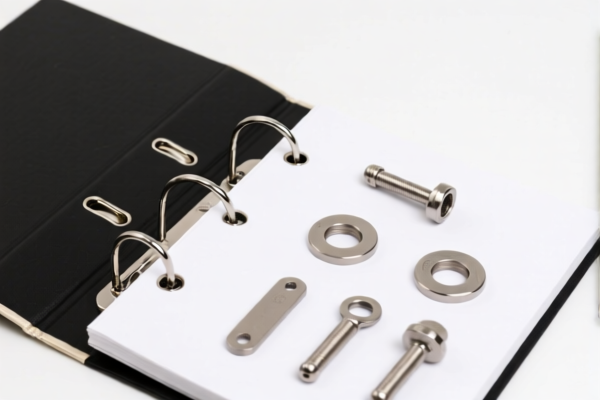
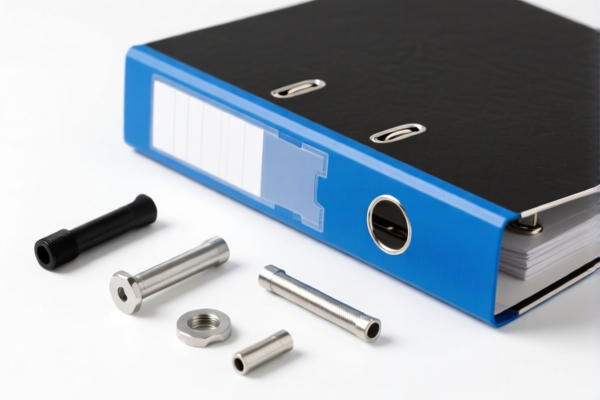
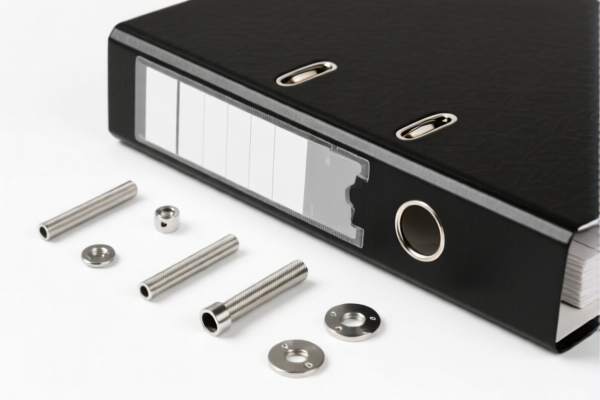
AI Analysis
📂 File Insertions / Organizers (Paper/Plastic/Metal)
🌐 HS Code Reference & Customs Clearance Guide | 2026 Latest Tariff Analysis | Professional Level Strategy
📌 I. Product Definition & Classification: What exactly are "File Insertions"?
"File Insertions" (often referring to inserts, divider cards, pockets, or components for ring binders and folders) are essential stationery accessories used for organizing documents. In international trade, their classification heavily depends on material composition and functional purpose.
They are generally categorized into two main types:
Paper/Cardboard Based (Stationery): * Items made of paper or cardboard, such as divider cards, file inserts, or plastic-coated paper pockets that serve as functional parts of a folder. * Logic: Classified under "Other articles of paper or paperboard" specifically for stationery/filing purposes.
Plastic/Metal Based (Office Accessories): * Items made of plastic (e.g., clear PVC pockets, plastic dividers) or base metals (e.g., metal rings, plastic/metal reinforcements). * Logic: Classified under "Articles of plastic" or "Base metal articles" if they are not primarily paper-based stationery.
⚠️ Key Distinction Point:
- If the item is paper/cardboard and used for filing → Chapter 48
- If the item is plastic and used for filing → Chapter 39 (depends on specific form)
- If the item is metal or non-paper office accessory → Chapter 83
📦 II. HS Code Classification Details (2026 Latest Tariff Authority Cross-Reference)
| HS Code | Product Description | Scenario | Material Logic | Total Tax Rate |
|---|---|---|---|---|
4820.30.00.20 |
File insertion for use with ring binders/folders | Paper/Cardboard inserts matching ring binders | Paper/Cardboard (Stationery) | 35.0% |
4820.30.00.40 |
Functional component of folders | Part of a folder system, logical paper stationery | Paper/Cardboard (Stationery) | 35.0% |
8304.00.00.00 |
Desktop office auxiliary equipment | Base metal or hard plastic desk organizers/accessories | Base Metal / Plastic (Office Accessory) | 13.9% |
3926.10.00.00 |
Office or school supplies articles | Plastic items fitting "office/school supplies" description | Plastic (Specific Office Use) | 15.3% |
3926.90.87.00 |
Other plastic articles (flat/flexible) | Flat or flexible plastic inserts (general classification) | Plastic (General/Other) | 40.3% |
🔍 Key Reminder:
- Paper-based inserts (4820.30) are the most common for "file insertion" purposes.
- Plastic inserts can be tricky: if clearly "office supplies," use3926.10; if generic/flexible, use3926.90.
- Metal accessories (8304.00) apply if the item is primarily a desk aid made of base metal.
💰 III. 2026 Latest Tariff Rate Details (Including Additional Taxes & Policy Surcharges)
✅ Applicable Country: United States (US)
✅ Origin: China (CN)
✅ Effective Date: From November 10, 2025 (including subsequent imports)
🎯 1. 4820.30.00.20 & 4820.30.00.40 —— Paper/Cardboard File Insertions (Stationery)
| Item | Content |
|---|---|
| Base Duty Rate | 0.0% (ad valorem) |
| USITC Additional Duty (Section 301) | +25.0% |
| IEEPA Additional Duty | +10.0% (Targeting China/HK products, effective Nov 10, 2025) |
| Total Effective Rate | 35.0% |
| Tax Calculation | CIF Value × 35% |
| De Minimis Eligibility | ❌ NOT Eligible (deny_de_minimis) |
| Legal Basis Path | IEEPA:9903.01.25 → IEEPA:9903.01.24 → USITC:4820.30.00.20/40 → FOOTNOTE:9903.88.01 |
📌 Explanation:
- "0% Base" might seem attractive, but the 35% total is significant.
- The +25% is from USITC Footnote 9903.88.01 (Section 301 tariffs).
- The +10% is the IEEPA surcharge.
- High Cost Warning: Even for low-value paper goods, this 35% tax erodes margins significantly.
🎯 2. 8304.00.00.00 —— Desktop Office Auxiliary Equipment (Base Metal/Plastic)
| Item | Content |
|---|---|
| Base Duty Rate | 3.9% |
| USITC Additional Duty | 0.0% |
| IEEPA Additional Duty | +10.0% |
| Total Effective Rate | 13.9% |
| Tax Calculation | CIF Value × 13.9% |
| De Minimis Eligibility | ❌ NOT Eligible (deny_de_minimis) |
| Legal Basis Path | IEEPA:9903.01.25 → IEEPA:9903.01.24 → USITC:8304.00.00.00 → FOOTNOTE:9903.88.01 |
📌 Note:
- This is the most tax-efficient option if the product can be legitimately classified as "base metal" or specific "office auxiliary equipment" rather than generic plastic/paper.
- However, proving "base metal" composition is difficult for many plastic/paper inserts. Misclassification here risks customs penalties.
🎯 3. 3926.10.00.00 —— Office or School Supplies (Plastic)
| Item | Content |
|---|---|
| Base Duty Rate | 5.3% |
| USITC Additional Duty | 0.0% |
| IEEPA Additional Duty | +10.0% |
| Total Effective Rate | 15.3% |
| Tax Calculation | CIF Value × 15.3% |
| De Minimis Eligibility | ❌ NOT Eligible (deny_de_minimis) |
| Legal Basis Path | IEEPA:9903.01.25 → IEEPA:9903.01.24 → USITC:3926.10.00.00 → FOOTNOTE:9903.88.01 |
📌 Note:
- Best for clear plastic pockets, dividers, or organizers explicitly marketed as "office supplies."
- The key is demonstrating "office/school" use to qualify for subheading3926.10instead of the generic3926.90.
🎯 4. 3926.90.87.00 —— Other Plastic Articles (Flat/Flexible)
| Item | Content |
|---|---|
| Base Duty Rate | 5.3% |
| USITC Additional Duty | +25.0% |
| IEEPA Additional Duty | +10.0% |
| Total Effective Rate | 40.3% |
| Tax Calculation | CIF Value × 40.3% |
| De Minimis Eligibility | ❌ NOT Eligible (deny_de_minimis) |
| Legal Basis Path | IEEPA:9903.01.25 → IEEPA:9903.01.24 → USITC:3926.90.87.00 → FOOTNOTE:9903.88.01 |
📌 Warning:
- This is the highest tariff category.
- Applies if the plastic item is considered a "general article" rather than a specific office supply, or if it's a flexible/flat plastic insert not meeting3926.10criteria.
- Avoid this classification if possible.
🛠️ IV. Customs Clearance Practical Advice (Battle-Tested Pitfall Avoidance)
✅ 1. Preparation Checklist (Mandatory)
| Document | Required | Explanation |
|---|---|---|
| ✅ Product Specifications | ✔️ | Must detail material (Paper/PVC/Metal), dimensions, and intended use. |
| ✅ Material Composition Certificate | ✔️ | Critical for distinguishing between 4820 (Paper), 3926 (Plastic), or 8304 (Metal). |
| ✅ Product Photos (Clear) | ✔️ | Show texture, thickness, and any branding. Plain plastic vs. paper texture matters. |
| ✅ Commercial Invoice | ✔️ | Must clearly state: "Paper File Inserts" or "Plastic Office Dividers." Vague terms like "Stationery" should be avoided. |
| ✅ Packing List | ✔️ | Ensure consistent weight/volume data to match material density expectations. |
| ✅ Third-Party Test Report | ✔️ | If claiming "Plastic Office Supplies," test reports supporting durability/quality help justify 3926.10. |
✅ 2. Declaration Strategy (Key Mnemonics)
🔥 "Material Defines Code, Office Use Lowers Tax!"
| Scenario | Correct HS Code | Mistake |
|---|---|---|
| Paper Dividers/Inserts | 4820.30.00.20 / 4820.30.00.40 (35%) |
Misdeclare as Plastic (3926) → Risk of penalty |
| Plastic Pockets (Office Use) | 3926.10.00.00 (15.3%) |
Misdeclare as General Plastic (3926.90) → 40.3% |
| Plastic Pockets (General/Flexible) | 3926.90.87.00 (40.3%) |
None (This is the fallback) |
| Metal/Plastic Desk Organizers | 8304.00.00.00 (13.9%) |
Misdeclare as Paper → Severe mismatch |
📌 Tip:
- If your product is plastic, provide evidence it is sold specifically for office/school filing to qualify for3926.10(15.3%) instead of3926.90(40.3%).
- If your product is paper, stick to4820. The 35% tax is fixed, but misclassification leads to delays.
✅ 3. Special Circumstances Handling
| Scenario | Handling Advice |
|---|---|
| Mixed Materials (e.g., Paper + Plastic Cover) | Classify by essential character. If paper dominates, use 4820. If plastic is the main functional component, consider 3926. |
| OEM Custom Inserts | Provide customer PO + design specs. Proves specific "office" use, supporting 3926.10 or 4820. |
| Small Samples for Evaluation | Still subject to 35-40% tax. No de minimis exemption. Do not ship under $800 thinking it's tax-free. |
| Plastic "File Folders" vs. "Inserts" | Folders may have different codes. Inserts are components. Ensure description matches "Inserts" or "Dividers." |
🌍 V. Global Market Comparison (2026 Latest)
| Country/Region | Recommended HS Code | Tariff (China Origin) | Certification Req. | Notes |
|---|---|---|---|---|
| 🇺🇸 USA | 3926.10.00.00 |
15.3% | N/A | Best rate for plastic. Avoid 3926.90 (40.3%). |
| 🇺🇸 USA | 4820.30.00.20 |
35.0% | N/A | High tax for paper. |
| 🇨🇳 China | 4820.30 |
5-10% | CCC (if applicable) | Lower duty, no IEEPA. |
| 🇪🇺 EU | 4820.30 |
6.5% | CE/RoHS | No Section 301 equivalent. |
| 🇬🇧 UK | 4820.30 |
6.5% | UKCA | Post-Brexit tariffs apply. |
📌 Conclusion:
- USA has the highest compliance costs due to IEEPA (10%) + Section 301 (25%) on many categories.
- Plastic office supplies (3926.10) are the most cost-effective for US entry at 15.3%.
- Paper inserts (4820) are heavily taxed at 35% in the US.
📌 VI. Common Errors & Pitfalls (Lessons Learned)
❌ Mistake 1: Declaring plastic file inserts as "Plastic Bags" (3923.29)
👉 Consequence: Wrong HS code, potential 40.3% tax if reclassified, plus penalties.
Fix: Use "Plastic File Insert" or "Office Supply."
❌ Mistake 2: Assuming "De Minimis" ($800) applies
👉 Consequence: Package held at customs, fines, and retroactive tax of 35-40%.
Fix: All these HS codes are deny_de_minimis.
❌ Mistake 3: Using vague descriptions like "Stationery Parts"
👉 Consequence: Customs exam delay, manual classification, risk of higher duty.
Fix: Be specific: "Paper File Divider, 11x17 inch" or "PVC Document Pocket."
❌ Mistake 4: Ignoring Material Composition
👉 Consequence: If you claim "Plastic" but send "Paper," you get caught.
Fix: Ensure physical product matches the HS Code's material requirement.
✅ Correct Declaration Example:
"Plastic File Insert, Clear PVC, 11x14 inch, for Ring Binders, Office Supply, Model: FI-2026"
🎯 VII. Conclusion: Precise Classification Saves Money!
🎯 Remember These Keys:
🔹 "Plastic + Office Use = 15.3% (Gold Standard)"
🔹 "Plastic + General = 40.3% (Avoid!)"
🔹 "Paper + Filing = 35.0% (High, but Stable)"
🔹 "Metal + Desk Aid = 13.9% (Lowest, but Hard to Prove)"🚀 Pro Tip:
If possible, design and market your products as "Office & School Supplies" to qualify for3926.10. This saves you 25% in taxes compared to general plastic articles!
📣 Immediate Action:
📞 Contact your customs broker with product samples and material specs.
📄 Request a Pre-Ruling (ISF + HTS Classification) before bulk shipping.
💡 Your profit margin depends on accurate HS coding!
✨ Professional Clearance Starts with Precise Classification!
💼 Don't let 35% tax eat your margin. Optimize your HS Code today!
Customer Reviews
About HS Code Classification
The Harmonized System (HS) is an internationally standardized nomenclature developed by the World Customs Organization (WCO) to classify traded products. Over 200 countries use the HS system as the basis for customs tariffs, trade statistics, and import/export regulations.
Each HS code follows a hierarchical structure:
- Chapter (2 digits) — Broad category of goods (e.g., Chapter 84: Machinery and Mechanical Appliances)
- Heading (4 digits) — More specific grouping within the chapter
- Subheading (6 digits) — Internationally standardized breakdown, used by all WCO member countries
- National subdivisions (8-10 digits) — Country-specific extensions for further classification, such as US HTSUS 10-digit codes
Correct HS code classification is essential for smooth customs clearance, accurate duty payment, and compliance with trade regulations. Misclassification can lead to customs delays, overpayment of duties, or penalties.
When importing from CN to US, the applicable tariff rates may include:
- Most-Favored-Nation (MFN) rate — The standard duty rate applied to WTO members
- General rate — Applied to countries without trade agreements
- Trade remedy duties — Additional tariffs such as Section 301 (anti-dumping), Section 232 (national security), or countervailing duties
The information provided on this page is for reference purposes only. For official classification, please consult with your local customs authority or a licensed customs broker.