dog balls
CN → US| HS Code | Tariff Rate | Origin | Destination | Doc |
|---|---|---|---|---|
| 4016992000 | 14.3% | CN | US | Official Doc |
| 4016993550 | 35.0% | CN | US | Official Doc |
| 9503000013 | 10.0% | CN | US | Official Doc |
| 9503000011 | 10.0% | CN | US | Official Doc |
| 3926909989 | 22.8% | CN | US | Official Doc |
| 3926909905 | 22.8% | CN | US | Official Doc |
Product Images

AI Analysis
🐶 Dog Balls – Toys for Pets | HS Code & Tariff Guide 2026 | Customs Clearance Expert Tips
🌐 HS Code Reference & Customs Clearance Handbook | 2026 Updated Tariff Breakdown | Pro-Level Import Strategy
📌 1. Product Definition & Classification: What Exactly Is a "Dog Ball"?
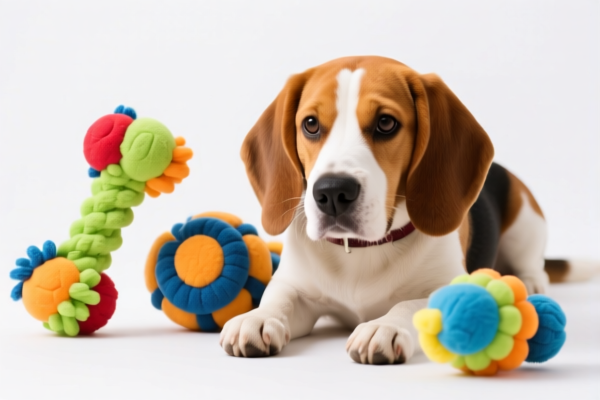
A dog ball is a recreational toy designed for canines, typically made of durable materials such as rubber or synthetic polymers. These toys are intended for chewing, fetching, rolling, and interactive play.
In international trade, dog balls fall under "Toys for Pets" and are specifically classified based on:
- Material (rubber, plastic, or mixed)
- Intended use (for pets, not children)
- Whether they are inflatable or solid
- Age group of intended user (if labeled)
⚠️ Key Distinction:
- If the ball is made of vulcanized rubber and marketed as a pet toy, it falls under 4016.99.20.00
- If made of natural rubber, it may trigger additional tariffs under 4016.99.35.50
- If made of plastic, it may be classified under 3926.90.99.89 or 3926.90.99.05 depending on composition
📦 2. HS Code Classification Summary (2026 Official Tariff Table)
| HS Code | Product Description | Material | Intended Use | Key Feature |
|---|---|---|---|---|
4016.99.20.00 |
Other articles of vulcanized rubber (not hard rubber): Other: Other: Toys for pets | Vulcanized rubber (not hard rubber) | For pets | Non-inflatable, durable, chew-resistant |
4016.99.35.50 |
Other articles of plastics and articles of other materials...: Other: Other: Of natural rubber: Other | Natural rubber | For pets | High-risk for tariffs |
3926.90.99.89 |
Other articles of plastics and other materials (3901–3914): Other: Other | Plastic (non-rubber) | General use | Includes non-elastic plastic toys |
3926.90.99.05 |
Elastic bands made wholly of plastics | Plastic (elastic) | For pets (e.g., chewable bands) | No tariffs if fully plastic |
9503.00.00.13 |
Inflatable toy balls, balloons, punchballs of rubber: For children aged 3–12 | Rubber (inflatable) | Children's toys | Not for pets – misclassification risk |
9503.00.00.11 |
Inflatable toy balls, balloons, punchballs of rubber: For children under 3 | Rubber (inflatable) | Children's toys | Not for pets – high risk |
🔍 Critical Note:
- Dog balls must NOT be labeled or declared as “children’s toys” – even if they look similar.
- Misclassifying a pet dog ball as a children’s toy (9503.00.00.11/13) can result in severe penalties, rejection, or fines.
💰 3. 2026 Tariff Breakdown (U.S. Import Rules – China Origin)
✅ Target Market: United States (US)
✅ Origin: China (CN)
✅ Effective Date: 2025–2026 (current tariff regime)
🎯 1. 4016.99.20.00 – Toys for Pets (Vulcanized Rubber, Not Hard Rubber)
| Item | Detail |
|---|---|
| Base Duty | 0.0% (ad valorem) |
| Additional Tariff | 0.0% |
| Total Tariff | 0.0% |
| Tax Calculation | CIF Value × 0.0% |
| De Minimis Threshold | ✅ Yes – eligible for $800 exemption |
| Legal Basis | US Harmonized Tariff Schedule (HTSUS) – Subheading 4016.99.20.00 |
📌 Explanation:
- This code applies to vulcanized rubber toys designed for pets, such as rubber dog balls used for chewing or fetching. - No additional tariffs apply under Section 301 or IEEPA. - Perfect for pet product exporters – zero duty on import.
🎯 2. 4016.99.35.50 – Other Articles of Natural Rubber (Pet Toys)
| Item | Detail |
|---|---|
| Base Duty | 0.0% |
| Additional Tariff | 25.0% (Section 301 – China-specific) |
| Total Tariff | 25.0% |
| Tax Calculation | CIF Value × 25.0% |
| De Minimis Threshold | ❌ No – not eligible for $800 exemption |
| Legal Basis | HTSUS 4016.99.35.50 + USITC Footnote 9903.88.01 |
📌 Explanation:
- This code applies to natural rubber-based toys, even if used for pets. - Despite being for pets, natural rubber is subject to 25% Section 301 tariff. - High-risk category: If your dog ball is made from natural rubber, you must pay 25%. - No de minimis relief – even small shipments face full tariff.🔥 Warning:
- Do not claim "synthetic rubber" if it’s actually natural rubber – customs will verify via material test. - Misclassification = penalties + seizure + future audits.
🎯 3. 3926.90.99.89 – Other Plastic Articles (General Use)
| Item | Detail |
|---|---|
| Base Duty | 5.3% |
| Additional Tariff | 7.5% (Section 301) |
| Total Tariff | 12.8% |
| Tax Calculation | CIF Value × 12.8% |
| De Minimis Threshold | ✅ Yes – eligible for $800 exemption |
| Legal Basis | HTSUS 3926.90.99.89 + USITC 9903.88.01 |
📌 Explanation:
- Applies to plastic dog toys that are not elastic bands or inflatable. - Includes solid plastic balls, chew toys, non-elastic plastic items. - 12.8% total tariff due to 5.3% base + 7.5% Section 301. - Still eligible for de minimis – ideal for small shipments.
🎯 4. 3926.90.99.05 – Elastic Bands Made Wholly of Plastics
| Item | Detail |
|---|---|
| Base Duty | 0.0% |
| Additional Tariff | 0.0% |
| Total Tariff | 0.0% |
| Tax Calculation | CIF Value × 0.0% |
| De Minimis Threshold | ✅ Yes – eligible for $800 exemption |
| Legal Basis | HTSUS 3926.90.99.05 |
📌 Explanation:
- Applies only to elastic bands made entirely of plastic (e.g., stretchy chewable bands). - No tariffs at all – ideal for pet chew bands. - Not for rubber bands or mixed materials.
🎯 5. 9503.00.00.13 – Inflatable Toy Balls (For Children 3–12 Years)
| Item | Detail |
|---|---|
| Base Duty | 0.0% |
| Additional Tariff | 0.0% |
| Total Tariff | 0.0% |
| De Minimis Threshold | ✅ Yes |
| Legal Basis | HTSUS 9503.00.00.13 |
❌ But Wait!
- This code is for children’s toys only. - If your inflatable dog ball is labeled or determined as intended for children, it must be declared as such. - Mislabeling = seizure, fines, rejection, future audits. - Never use this code for pet products.
🎯 6. 9503.00.00.11 – Inflatable Toy Balls (For Children Under 3)
| Item | Detail |
|---|---|
| Base Duty | 0.0% |
| Additional Tariff | 0.0% |
| Total Tariff | 0.0% |
| De Minimis Threshold | ✅ Yes |
| Legal Basis | HTSUS 9503.00.00.11 |
❌ Same Warning:
- Do NOT use this code for pet toys. - Even if the ball is inflatable and rubber, if intended for pets, it must not be labeled as “for children under 3”.
🛠️ 4. Customs Clearance Best Practices (Pro Tips to Avoid Rejection)
✅ 1. Documentation Checklist (MUST-HAVE)
| Document | Required? | Notes |
|---|---|---|
| ✅ Commercial Invoice | ✔️ | Must state "Toys for Pets", not "Children's Toys" |
| ✅ Packing List | ✔️ | Show product name, material, quantity, weight |
| ✅ Product Photos (with label) | ✔️ | Show "For Dogs", "Not for Children", "Pet Chew Toy" |
| ✅ Material Certificate | ✔️ | Prove synthetic vs. natural rubber, plastic type |
| ✅ Test Report (RoHS, REACH, ASTM F963) | ✔️ | Especially for plastic/rubber items |
| ✅ Declaration of Intended Use | ✔️ | "Intended for use by pets only" – critical |
| ✅ Certificate of Origin (CO) | ✔️ | For tariff eligibility |
✅ 2.申报技巧 (Key Rules of Thumb)
🔥 “Label Right, Declare True, Pay Less, Stay Safe!”
| Scenario | Correct HS Code | Wrong Code | Risk |
|---|---|---|---|
| Rubber dog ball (vulcanized) | 4016.99.20.00 |
9503.00.00.13 |
Seizure + fine |
| Natural rubber dog ball | 4016.99.35.50 |
4016.99.20.00 |
25% extra duty |
| Plastic dog ball (solid) | 3926.90.99.89 |
3926.90.99.05 |
7.5% extra |
| Plastic elastic band | 3926.90.99.05 |
4016.99.20.00 |
Wrong material |
| Inflatable ball for dogs | Must NOT use 9503.00.00.11/13 | 9503.00.00.13 |
Seizure + penalties |
✅ 3. Special Cases & Solutions
| Situation | Solution |
|---|---|
| Inflatable rubber ball for dogs | Use 4016.99.20.00 – not 9503.00.00.11/13 |
| Natural rubber ball | Accept 25% tariff – no way around it |
| Small shipment (<$800) | Use 3926.90.99.89 or 4016.99.20.00 – de minimis applies |
| Elastic plastic band | Use 3926.90.99.05 – zero duty |
| Multiple types in one shipment | Separate by HS Code – don’t bundle |
🌍 5. Global Tariff Comparison (2026)
| Country | Recommended HS Code | Duty | Certification | Notes |
|---|---|---|---|---|
| 🇺🇸 USA | 4016.99.20.00 |
0.0% | FCC, ASTM F963 | 25% if natural rubber |
| 🇨🇳 China | 4016.99.20.00 |
5% | CCC | No extra tariffs |
| 🇪🇺 EU | 4016.99.20.00 |
0% (if CE) | CE, REACH | No Section 301 |
| 🇦🇺 Australia | 4016.99.20.00 |
5% | RCM | No extra tariffs |
| 🇯🇵 Japan | 4016.99.20.00 |
0% | PSE | No extra tariffs |
📌 Takeaway:
- USA is the most complex – natural rubber = 25%, mislabeling = disaster. - EU/Japan/Australia are much safer for pet toy exports.
📌 6. Common Mistakes & How to Avoid Them (Avoid Costly Errors!)
❌ Mistake 1: Labeling a dog ball as “for children” to get lower tariff
👉 Result: Seizure, fine, future audits, rejection of all shipments
❌ Mistake 2: Using 9503.00.00.13 for an inflatable dog ball
👉 Result: Misclassification – $10,000+ penalties possible
❌ Mistake 3: Not declaring natural rubber – claiming synthetic
👉 Result: Customs testing → 25% tariff + penalty
❌ Mistake 4: Bundling different toys under one HS Code
👉 Result: Partial rejection, delayed clearance
✅ Correct Way:
“Rubber Dog Ball, 4-inch, vulcanized rubber, for pets, not children, chew-resistant, non-inflatable, Model XYZ, ASTM F963 Certified”
🎯 7. Final Verdict: Smart Export Strategy for Dog Balls
🔹 Best for Low Cost:
- Use4016.99.20.00→ 0% tariff (vulcanized rubber)
- Use3926.90.99.05→ 0% tariff (plastic elastic bands)
- Use3926.90.99.89→ 12.8% tariff (plastic, but eligible for de minimis)🔹 Avoid at All Costs:
- Never use9503.00.00.11/13for pet toys
- Never mislabel natural rubber as synthetic🔹 Pro Tip:
- If you’re shipping natural rubber dog balls, consider replacing material with synthetic rubber to avoid 25% tariff.
📣 Action Step Now:
📞 Contact a U.S. Customs Broker + Submit product photos + material test report
🚀 Apply for HS Code Pre-Ruling – get legal certainty before shipment
✨ Professional Clearance Starts with Accurate Classification!
💼 Your profit margin depends on the right HS Code. Don’t gamble.
🎯 Remember:
"Label Right → Declare True → Pay Less → Ship Safe!"
One wrong code = thousands in penalties.
Get it right from the start.
Customer Reviews
About HS Code Classification
The Harmonized System (HS) is an internationally standardized nomenclature developed by the World Customs Organization (WCO) to classify traded products. Over 200 countries use the HS system as the basis for customs tariffs, trade statistics, and import/export regulations.
Each HS code follows a hierarchical structure:
- Chapter (2 digits) — Broad category of goods (e.g., Chapter 84: Machinery and Mechanical Appliances)
- Heading (4 digits) — More specific grouping within the chapter
- Subheading (6 digits) — Internationally standardized breakdown, used by all WCO member countries
- National subdivisions (8-10 digits) — Country-specific extensions for further classification, such as US HTSUS 10-digit codes
Correct HS code classification is essential for smooth customs clearance, accurate duty payment, and compliance with trade regulations. Misclassification can lead to customs delays, overpayment of duties, or penalties.
When importing from CN to US, the applicable tariff rates may include:
- Most-Favored-Nation (MFN) rate — The standard duty rate applied to WTO members
- General rate — Applied to countries without trade agreements
- Trade remedy duties — Additional tariffs such as Section 301 (anti-dumping), Section 232 (national security), or countervailing duties
The information provided on this page is for reference purposes only. For official classification, please consult with your local customs authority or a licensed customs broker.