dog muzzle
CN → US| HS Code | Tariff Rate | Origin | Destination | Doc |
|---|---|---|---|---|
| 6307907500 | 14.3% | CN | US | Official Doc |
| 4205001000 | 35.0% | CN | US | Official Doc |
| 4205008000 | 35.0% | CN | US | Official Doc |
| 3926909989 | 22.8% | CN | US | Official Doc |
| 6307909891 | 24.5% | CN | US | Official Doc |
Product Images


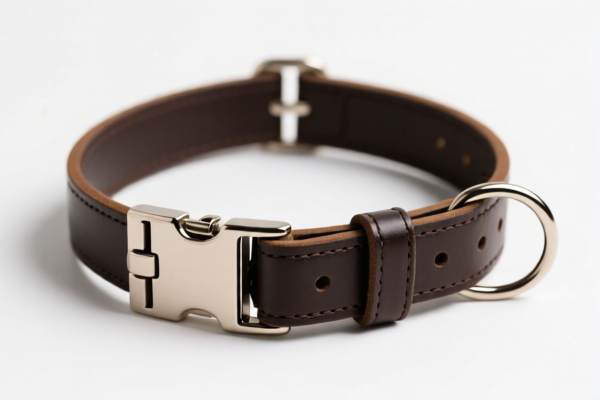
AI Analysis
🐶 Dog Muzzle – HS Code & Tariff Guide | 2026 Customs Clearance Masterclass
🌐 HS Code Reference & Clearance Strategy | 2026 Updated Tariff Rules | Expert-Level Import Planning
📦 一、Product Definition & Classification: What Exactly Is a Dog Muzzle?
A dog muzzle is a restraining device designed to prevent a dog from biting, barking excessively, or chewing on objects. It is commonly used in veterinary clinics, dog training, pet travel, and public safety settings.
In international trade, muzzles are classified based on material, form, and intended use. The key classification criteria:
- ✅ Material: Fabric, textile, soft plastic, rubber, or synthetic leather
- ✅ Form: Finished product (not raw material)
- ✅ Use Case: Pet care / animal welfare / safety equipment
⚠️ Critical Distinction:
- If made from textile or soft fabric → likely 6307.90.75.00
- If made from leather or synthetic leather → likely 4205.00.10.00 / 4205.00.80.00
- If made from plastic/rubber → likely 3926.90.99.89
- If no clear material → falls under 6307.90.98.91 (general "other made-up articles")
🔍 二、HS Code Classification Breakdown (2026 Updated Tariff Table)
| HS Code | Product Description | Material Clue | Use Case | Tax Rate |
|---|---|---|---|---|
6307.90.75.00 |
Other made-up articles, for pets (e.g., textile muzzles) | Textile / soft material | Pet safety, training, travel | 14.3% |
4205.00.10.00 |
Other leather or composition leather articles | Genuine leather or recycled leather | Premium pet muzzles, luxury pet accessories | 35.0% |
4205.00.80.00 |
Other articles of leather or composition leather | Synthetic leather / PU leather | Non-leather but leather-like muzzles | 35.0% |
3926.90.99.89 |
Other articles of plastic or rubber | Plastic, rubber, or elastomer | Flexible, durable muzzles (e.g., for aggressive dogs) | 22.8% |
6307.90.98.91 |
Other made-up articles (non-specific) | No clear material stated | General-purpose pet muzzles (default category) | 24.5% |
🔍 Key Insight:
- No material specification? → Default to 6307.90.98.91 (highest risk of misclassification)
- If fabric-based? → Use 6307.90.75.00 → lowest tax
- If leather/synthetic? → 4205.00.10.00 / 4205.00.80.00 → high tax due to 25% + 10% add-ons
- If plastic/rubber? → 3926.90.99.89 → moderate tax, but still high
💰 三、2026 Tariff Breakdown (With Full Legal & Policy Explanation)
✅ Target Market: United States (US)
✅ Origin: China (CN)
✅ Effective Date: November 10, 2025 (inclusive)
🎯 1. 6307.90.75.00 – Textile-Based Dog Muzzle (Pet Use)
| Item | Detail |
|---|---|
| Base Tariff | 4.3% (ad valorem) |
| Additional Duty (USITC Section 301) | 0% |
| Section 122 Tariff (IEEPA) | 10% |
| Total Duty | 14.3% |
| De Minimis Threshold | ✅ Yes (10% de minimis applies) |
| Legal Basis Path | IEEPA:9903.01.25 → IEEPA:9903.01.24 → 6307.90.75.00 |
📌 Explanation:
- Only 10% IEEPA applies — no Section 301 (USITC) duty on textile pet products
- Lowest tax rate among all muzzles
- De minimis allowed → if value ≤ $800, no duty due
🎯 2. 4205.00.10.00 – Genuine Leather Dog Muzzle
| Item | Detail |
|---|---|
| Base Tariff | 0% |
| Additional Duty (USITC Section 301) | 25% |
| Section 122 Tariff (IEEPA) | 10% |
| Total Duty | 35.0% |
| De Minimis Threshold | ❌ No (denied) |
| Legal Basis Path | IEEPA:9903.01.25 → IEEPA:9903.01.24 → USITC:4205.00.10.00 → FOOTNOTE:9903.88.01 |
📌 Explanation:
- 25% USITC duty applies under Section 301 (China trade war tariffs)
- 10% IEEPA added under International Emergency Economic Powers Act
- No de minimis → even $100 shipment triggers full 35% duty
- High-risk category — must prove material is NOT leather
🎯 3. 4205.00.80.00 – Synthetic Leather (PU/Leather-Style) Dog Muzzle
| Item | Detail |
|---|---|
| Base Tariff | 0% |
| Additional Duty (USITC Section 301) | 25% |
| Section 122 Tariff (IEEPA) | 10% |
| Total Duty | 35.0% |
| De Minimis Threshold | ❌ No |
| Legal Basis Path | IEEPA:9903.01.25 → IEEPA:9903.01.24 → USITC:4205.00.80.00 → FOOTNOTE:9903.88.01 |
📌 Explanation:
- Same as above — synthetic leather treated as "leather-like" under US customs rules
- Even if labeled "eco-leather" or "PU", still triggers 25% + 10%
- No exceptions — must avoid this code if possible
🎯 4. 3926.90.99.89 – Plastic/Rubber Dog Muzzle
| Item | Detail |
|---|---|
| Base Tariff | 5.3% |
| Additional Duty (USITC Section 301) | 7.5% |
| Section 122 Tariff (IEEPA) | 10% |
| Total Duty | 22.8% |
| De Minimis Threshold | ✅ Yes |
| Legal Basis Path | IEEPA:9903.01.25 → IEEPA:9903.01.24 → USITC:3926.90.99.89 → FOOTNOTE:9903.88.01 |
📌 Explanation:
- 7.5% Section 301 duty applies to plastic goods from China
- 10% IEEPA added
- De minimis applies → under $800, no duty
- Moderate risk — but still high compared to textile
🎯 5. 6307.90.98.91 – General "Other Made-Up Articles" (No Material Specified)
| Item | Detail |
|---|---|
| Base Tariff | 7.0% |
| Additional Duty (USITC Section 301) | 7.5% |
| Section 122 Tariff (IEEPA) | 10% |
| Total Duty | 24.5% |
| De Minimis Threshold | ✅ Yes |
| Legal Basis Path | IEEPA:9903.01.25 → IEEPA:9903.01.24 → 6307.90.98.91 |
📌 Explanation:
- Default code — used when material is not clearly stated
- High risk of audit — customs may reclassify to higher-taxed category
- Best avoided — always specify material in invoice and product description
🛠️ 四、Clearance Best Practices (Pro Tips to Avoid Penalties)
✅ 1. Essential Documentation Checklist
| Document | Required? | Why It Matters |
|---|---|---|
| ✅ Product Specifications | ✔️ | Show material (e.g., "100% cotton mesh", "synthetic PU leather") |
| ✅ Material Certificate | ✔️ | Prove it's not leather or not plastic if avoiding high tax |
| ✅ Product Photos (Clear, Labelled) | ✔️ | Show stitching, material texture, logo |
| ✅ Commercial Invoice | ✔️ | Must state exact HS Code and material type |
| ✅ Packing List | ✔️ | Show unit count, packaging type |
| ✅ Certificate of Origin (CO) | ✔️ | If from Vietnam/Mexico, may qualify for lower duty |
| ✅ Test Report (if applicable) | ✔️ | Safety, durability, non-toxic (e.g., REACH, CPSIA) |
✅ 2.申报技巧(Key Pro Tips)
🔥 “Material First, Code Second, De Minimis Last!”
| Scenario | Correct HS Code | Wrong Code | Risk |
|---|---|---|---|
| Cotton mesh muzzle | 6307.90.75.00 |
6307.90.98.91 |
→ 14.3% vs 24.5% |
| Leather muzzle | 4205.00.10.00 |
6307.90.75.00 |
→ 35% vs 14.3% → massive penalty risk |
| Plastic muzzle | 3926.90.99.89 |
6307.90.98.91 |
→ 22.8% vs 24.5% → minor, but avoid |
| No material info | ❌ Never use 6307.90.98.91 |
6307.90.98.91 |
→ High audit risk |
✅ Pro Tip:
Always write in the commercial invoice:“Dog muzzle, made of 100% breathable cotton mesh, for pet safety, not leather or plastic”
✅ 3. Special Cases & Solutions
| Situation | Recommended Action |
|---|---|
| Muzzle with metal parts (e.g., nose clip) | Still classify as textile if main body is fabric → use 6307.90.75.00 |
| Muzzle from Vietnam/Mexico | Apply for USMCA or trade agreement → may reduce or eliminate 301/IEEPA duties |
| Custom OEM muzzles | Submit pre-ruling request to U.S. CBP for HS Code confirmation |
| High-volume shipments | Use HTSUS pre-approval or binding ruling to lock in rates |
🌍 五、Global Market Tariff Comparison (2026)
| Country | Recommended HS Code | Duty Rate | Certification | Notes |
|---|---|---|---|---|
| 🇺🇸 USA | 6307.90.75.00 |
14.3% | None (de minimis applies) | Avoid leather/plastic codes |
| 🇨🇳 China | 6307.90.75.00 |
5% | CCC | No extra tariffs |
| 🇪🇺 EU | 6307.90.75.00 |
0% | CE | No IEEPA/301 |
| 🇦🇺 Australia | 6307.90.75.00 |
5% | RCM | No extra duties |
| 🇯🇵 Japan | 6307.90.75.00 |
0% | PSE | No additional tariffs |
📌 Insight:
- Only the US imposes high IEEPA + 301 duties
- China and EU are much more favorable for textile muzzles
🚨 Six Common Mistakes (And How to Avoid Them)
❌ Mistake 1: Labeling a leather muzzle as "fabric" to avoid 35%
👉 Result: Customs audit → penalties, seizure, reputational damage
❌ Mistake 2: Using 6307.90.98.91 without material proof
👉 Result: 24.5% duty + risk of reclassification to 35%
❌ Mistake 3: Shipping plastic muzzles from China without documentation
👉 Result: 22.8% duty + 7.5% Section 301 — no de minimis
❌ Mistake 4: Not specifying material in commercial invoice
👉 Result: Customs may assume leather → 35% duty
❌ Mistake 5: Using "pet accessory" as product name only
👉 Result: No clear HS Code → delay, reclassification
✅ Correct Approach:
“Dog Muzzle, 100% Cotton Mesh, Breathable, Adjustable Strap, for Pet Safety, Not Leather or Plastic, HS Code: 6307.90.75.00”
🎯 Seven Key Takeaways (Pro Summary)
🔹 Textile muzzles = lowest tax (14.3%)
🔹 Leather/synthetic leather = 35% (avoid at all costs)
🔹 Plastic = 22.8% (still high, but de minimis applies)
🔹 Never use6307.90.98.91without material proof
🔹 De minimis applies to textile & plastic → use it!
🔹 Origin matters — Vietnam/Mexico = lower risk
🔹 Pre-ruling = peace of mind — request CBP pre-approval
📌 Final Advice: Smart Importing Starts with Smart Classification
🚀 Your motto:
“Material First, Code Right, Duty Low, Profit High!”📞 Action Step:
Contact a CBP-licensed customs broker + submit product photos + request HS Code pre-ruling
→ Lock in the lowest possible tariff before shipping
✨ Professional Clearance Starts Here
💼 One wrong code can cost 20% more in duty — don’t gamble!
📦 Your dog muzzles deserve accurate, low-cost, smooth clearance!
📣 Ready to ship?
👉 Get your HS Code confirmed today — avoid fines, delays, and surprises!
Customer Reviews
About HS Code Classification
The Harmonized System (HS) is an internationally standardized nomenclature developed by the World Customs Organization (WCO) to classify traded products. Over 200 countries use the HS system as the basis for customs tariffs, trade statistics, and import/export regulations.
Each HS code follows a hierarchical structure:
- Chapter (2 digits) — Broad category of goods (e.g., Chapter 84: Machinery and Mechanical Appliances)
- Heading (4 digits) — More specific grouping within the chapter
- Subheading (6 digits) — Internationally standardized breakdown, used by all WCO member countries
- National subdivisions (8-10 digits) — Country-specific extensions for further classification, such as US HTSUS 10-digit codes
Correct HS code classification is essential for smooth customs clearance, accurate duty payment, and compliance with trade regulations. Misclassification can lead to customs delays, overpayment of duties, or penalties.
When importing from CN to US, the applicable tariff rates may include:
- Most-Favored-Nation (MFN) rate — The standard duty rate applied to WTO members
- General rate — Applied to countries without trade agreements
- Trade remedy duties — Additional tariffs such as Section 301 (anti-dumping), Section 232 (national security), or countervailing duties
The information provided on this page is for reference purposes only. For official classification, please consult with your local customs authority or a licensed customs broker.