doormat
CN → US| HS Code | Tariff Rate | Origin | Destination | Doc |
|---|---|---|---|---|
| 4016910000 | 37.7% | CN | US | Official Doc |
| 4016990500 | 20.9% | CN | US | Official Doc |
| 5701901020 | 35.0% | CN | US | Official Doc |
| 5701902020 | 35.0% | CN | US | Official Doc |
| 3925900000 | 40.3% | CN | US | Official Doc |
| 3925200091 | 22.8% | CN | US | Official Doc |
Product Images
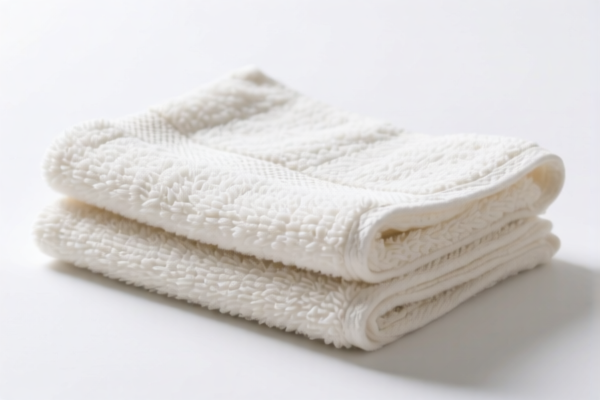
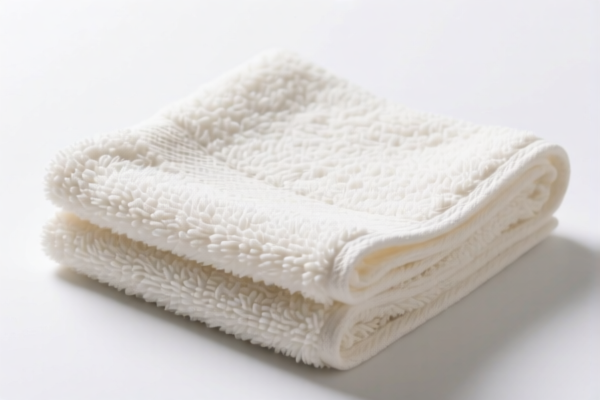
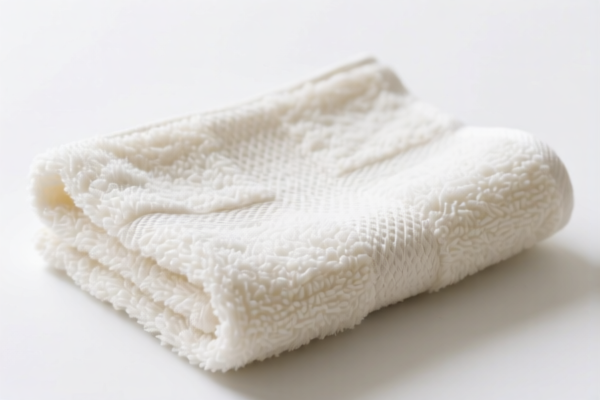
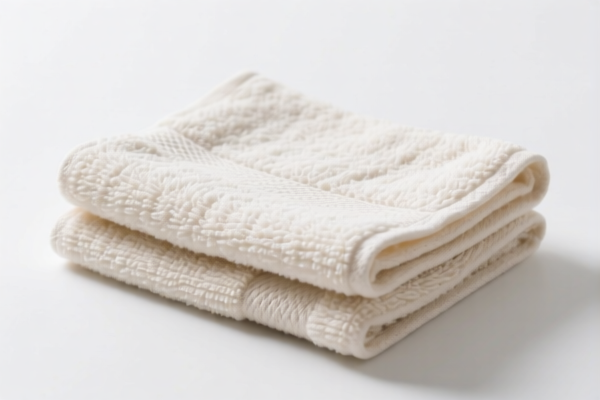
AI Analysis
🚪 Doormats & Floor Coverings: The Ultimate HS Code & Duty Guide (2026 Update)
🌐 HS Code Reference & Customs Clearance Guide | 2026 Latest Tariff Analysis | Professional Clearance Strategy
📌 I. Product Definition: What Exactly is a "Doormat"?
The term "Doormat" is a broad consumer descriptor that masks significant differences in material and construction in international trade. In customs classification, material is king. A rubber mat, a cotton carpet, and a plastic building component are treated entirely differently under HS codes.
Key Classification Drivers: 1. Material Composition: Is it natural fiber (cotton), synthetic plastic, or vulcanized rubber? 2. Construction Method: Is it knotted, woven, or molded? 3. Function: Is it a decorative floor covering, a functional building component, or a household article?
⚠️ Critical Distinction:
- Textile Mats (Cotton/Wool): Classified as carpets/floor coverings → Chapter 57
- Rubber Mats: Classified as vulcanized rubber articles → Chapter 40
- Plastic Mats (Building/Wall): Classified as builders' ware of plastics → Chapter 39
📦 II. HS Code Classification Details (2026 Latest Tariff Authority)
Based on the provided data, here are the specific HS codes and their corresponding tax implications for products falling under the "Doormat" or related floor covering category.
| HS Code | Product Description | Material/Type | Primary Use |
|---|---|---|---|
3925.90.00.00 |
Builders' ware of plastics, nesoi: Other | Plastic | Non-textile plastic building components; general plastic mats not specified elsewhere. |
3925.20.00.91 |
Builders' ware of plastics: Doors, windows... thresholds... Other | Plastic | Plastic thresholds or door frames/components; not a soft floor mat. |
5701.90.10.20 |
Carpets... knotted... Of other textile materials... With pile inserted... Of cotton | Cotton | Knotted cotton doormats/rugs with inserted pile during weaving/knitting. |
5701.90.20.20 |
Carpets... knotted... Of other textile materials... Other: Of cotton | Cotton | Other knotted cotton doormats/rugs (excluding the specific "pile inserted" type above). |
4016.91.00.00 |
Articles of vulcanized rubber other than hard rubber: Other: Floor coverings and mats | Vulcanized Rubber | Rubber doormats, anti-slip rubber floor coverings. |
4016.99.05.00 |
Articles of vulcanized rubber other than hard rubber: Other: Other: Household articles nesoi | Vulcanized Rubber | Rubber household items (e.g., rubber doorstops, small rubber accessories), not primarily floor coverings. |
🔍 Key Insight:
- If your doormat is Cotton, look at5701.90.10.20or5701.90.20.20.
- If your doormat is Rubber, look at4016.91.00.00(for floor mats) or4016.99.05.00(for other household rubber goods).
- If your doormat is Plastic and acts as a building component/threshold, look at3925.20.00.91or3925.90.00.00.
💰 III. 2026 Latest Tariff Rate Breakdown (Including Additional Duties)
✅ Applicable Market: United States (US)
✅ Origin: China (CN) (Implied by "Additional Tariffs" context)
✅ Effective Time: Current rates apply (2026)
🎯 1. 5701.90.10.20 & 5701.90.20.20 —— Knotted Cotton Carpets/Mats
| Item | Content |
|---|---|
| Basic Tariff | 0.0% |
| Additional Tariff | 0.0% |
| Total Effective Tax Rate | 0.0% |
| Tax Detail | Basic: 0.0% + Additional: 0.0% |
| De Minimis Eligibility | ✅ Yes (Generally, textile items under $800 may qualify, but check specific section notes) |
| Legal Basis | General Trade Agreement terms; no Section 301 or IEEPA surcharges listed for these specific cotton knotted items in this dataset. |
📌 Explanation:
- Cotton textile floor coverings currently enjoy duty-free entry into the US under this classification.
- This makes cotton doormats/carpets a low-cost compliance option for exporters.
🎯 2. 4016.91.00.00 —— Vulcanized Rubber Floor Coverings & Mats
| Item | Content |
|---|---|
| Basic Tariff | 2.7% |
| Additional Tariff (Section 301/IEEPA) | 25.0% |
| Total Effective Tax Rate | 27.7% |
| Tax Detail | Basic: 2.7% + Additional: 25.0% |
| De Minimis Eligibility | ❌ No (High duty rates typically preclude de minimis benefits; requires formal entry) |
| Legal Basis | USITC:4016.91.00.00 → Section 301: 25% surcharge |
📌 Explanation:
- Rubber mats are subject to significant tariffs.
- The 27.7% total rate includes a hefty 25% additional duty on top of the base 2.7%.
- This is a high-cost classification for US-bound shipments.
🎯 3. 3925.90.00.00 —— Builders' Ware of Plastics, nesoi
| Item | Content |
|---|---|
| Basic Tariff | 0.0% |
| Additional Tariff | 0.0% |
| Total Effective Tax Rate | 0.0% |
| Tax Detail | Basic: 0.0% + Additional: 0.0% |
| De Minimis Eligibility | ✅ Likely (Check specific plastic rules, but base rate is 0%) |
📌 Explanation:
- General plastic building ware not elsewhere specified is duty-free.
- However, misclassification here for a simple "floor mat" can lead to penalties if it doesn't meet the "builders' ware" definition.
🎯 4. 3925.20.00.91 —— Plastic Doors, Windows, Frames, Thresholds
| Item | Content |
|---|---|
| Basic Tariff | 5.3% |
| Additional Tariff | 7.5% |
| Total Effective Tax Rate | 12.8% |
| Tax Detail | Basic: 5.3% + Additional: 7.5% |
| De Minimis Eligibility | ❌ No (Duty > 0%, usually requires formal entry) |
📌 Explanation:
- This code is for structural plastic components (like door frames or thresholds), not soft mats.
- If you classify a rubber/cotton mat here incorrectly, you risk 12.8% duty plus potential misdeclaration fines.
🎯 5. 4016.99.05.00 —— Rubber Household Articles, nesoi
| Item | Content |
|---|---|
| Basic Tariff | 0.0% |
| Additional Tariff | 0.0% |
| Total Effective Tax Rate | 0.0% |
| Tax Detail | Basic: 0.0% + Additional: 0.0% |
📌 Explanation:
- Small rubber household items (non-floor coverings) are duty-free.
- Warning: Do not use this for a "doormat" if it is clearly a floor covering (4016.91.00.00), as misclassification can lead to audits.
🛠️ IV. Customs Clearance Practical Advice (Avoid Pitfalls)
✅ 1. Documentation Checklist (Must-Have)
| Document | Required? | Notes |
|---|---|---|
| ✅ Product Composition Label | ✔️ | Must clearly state "100% Cotton" or "Vulcanized Rubber". |
| ✅ Product Photos | ✔️ | Show texture, construction (knotted vs. molded). |
| ✅ Commercial Invoice | ✔️ | Describe as "Cotton Knotted Doormat" or "Rubber Anti-Slip Floor Mat". |
| ✅ Packing List | ✔️ | Weight and dimensions are critical for duty calculation. |
| ✅ Certificate of Origin | ✔️ | To prove Chinese origin (if applicable) and verify tariff eligibility. |
✅ 2. Classification Strategy (Key Rules)
| Scenario | Correct HS Code | Reason |
|---|---|---|
| Cotton Doormat, Knotted | 5701.90.10.20 or 5701.90.20.20 |
Textile chapter (57) overrides rubber/plastic for natural fibers. 0% Duty. |
| Rubber Doormat (Floor Covering) | 4016.91.00.00 |
Explicitly "Floor coverings and mats" under rubber. 27.7% Duty. |
| Plastic Door Threshold | 3925.20.00.91 |
Structural plastic part of a door frame. 12.8% Duty. |
| General Plastic Mat (Non-Textile, Non-Rubber) | 3925.90.00.00 |
If not a threshold or window part, use "Others". 0% Duty. |
🔥 "Material First, Function Second!"
- Don't call it a "mat" if it's a structural plastic piece.
- Don't call it a "household article" if it's clearly a floor covering.
✅ 3. Special Cases
| Case | Handling Advice |
|---|---|
| Mixed Material Mats | If >50% cotton by weight, use Chapter 57. If >50% rubber, use Chapter 40. |
| OEM Custom Mats | Provide design specs to prove material composition. |
| Sample Shipments | Even for samples, declare correctly. Misclassification can affect future shipments. |
🌍 V. Global Market Comparison (2026)
| Country | Recommended HS Code | Tariff Rate | Notes |
|---|---|---|---|
| 🇺🇸 USA | 5701.90.20.20 (Cotton) |
0.0% | Best for cotton. Rubber mats face 27.7%. |
| 🇺🇸 USA | 4016.91.00.00 (Rubber) |
27.7% | High duty. Consider cotton alternative. |
| 🇪🇺 EU | 5701.90.20 (Cotton) |
0-12% | Varies by country. Check EORI. |
| 🇨🇳 China | 5701.90.20 |
5-10% | Import tariff. |
📌 Conclusion:
- For US market, Cotton Doormats are the most tariff-efficient option (0%).
- Rubber Doormats are expensive to import into the US due to 27.7% duty.
📌 VI. Common Errors & Pitfalls (Lessons Learned)
❌ Error 1: Classifying a Rubber Mat as "Household Article" (4016.99.05.00) to avoid duty.
👉 Consequence: Customs may reclassify as 4016.91.00.00 and charge 27.7% + penalties.
❌ Error 2: Describing a Cotton Carpet as "Plastic Building Ware" (3925.90.00.00).
👉 Consequence: Misdeclaration. Customs will inspect and find textile fibers. Fine & Delay.
❌ Error 3: Ignoring Knotted Construction.
👉 Consequence: Knotted cotton items have specific sub-codes (5701.90.10.20). Wrong sub-code can lead to valuation discrepancies.
✅ Correct Declaration Example:
"Cotton Knotted Doormat, 18x24 inch, Hand-knotted, 100% Cotton Yarn, For Indoor/Outdoor Use"
🎯 VII. Conclusion: Optimize Your Clearance Strategy
🎯 Remember:
🔹 "Cotton is King (0% Duty), Rubber is Tough (27.7% Duty)"
🔹 "Material Determines Code, Code Determines Cost"
🔹 "Never misclassify floor coverings as household articles!"
📌 Pro Tip:
If you are exporting Rubber Doormats to the US, consider:
1. Switching to Cotton: If design allows, switch to knotted cotton to save 27.7%.
2. Applying for Exclusions: Check if your rubber product qualifies for any Section 301 exclusions (rare but possible).
3. Pre-Ruling: Apply for an Advance Ruling from CBP to confirm the correct HS code before shipping.
📣 Act Now:
📞 Consult a licensed customs broker.
📦 Verify material composition.
📝 Choose the correct HS code to maximize profit and minimize risk.
✨ Professional Clearance Starts with Accurate Classification!
💼 Every Percent Saved is Profit Gained!
Customer Reviews
About HS Code Classification
The Harmonized System (HS) is an internationally standardized nomenclature developed by the World Customs Organization (WCO) to classify traded products. Over 200 countries use the HS system as the basis for customs tariffs, trade statistics, and import/export regulations.
Each HS code follows a hierarchical structure:
- Chapter (2 digits) — Broad category of goods (e.g., Chapter 84: Machinery and Mechanical Appliances)
- Heading (4 digits) — More specific grouping within the chapter
- Subheading (6 digits) — Internationally standardized breakdown, used by all WCO member countries
- National subdivisions (8-10 digits) — Country-specific extensions for further classification, such as US HTSUS 10-digit codes
Correct HS code classification is essential for smooth customs clearance, accurate duty payment, and compliance with trade regulations. Misclassification can lead to customs delays, overpayment of duties, or penalties.
When importing from CN to US, the applicable tariff rates may include:
- Most-Favored-Nation (MFN) rate — The standard duty rate applied to WTO members
- General rate — Applied to countries without trade agreements
- Trade remedy duties — Additional tariffs such as Section 301 (anti-dumping), Section 232 (national security), or countervailing duties
The information provided on this page is for reference purposes only. For official classification, please consult with your local customs authority or a licensed customs broker.