doped silicon wafer for sensor manufacturing
CN → US| HS Code | Tariff Rate | Origin | Destination | Doc |
|---|---|---|---|---|
| 8541100040 | 60.0% | CN | US | Official Doc |
| 3818000020 | 60.0% | CN | US | Official Doc |
| 3818000095 | 60.0% | CN | US | Official Doc |
| 8541590040 | 60.0% | CN | US | Official Doc |
Product Images
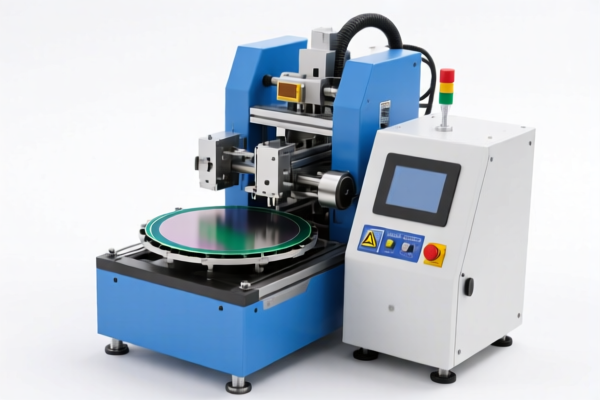
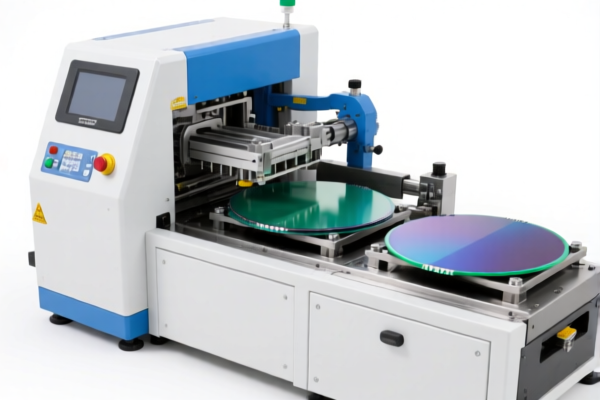
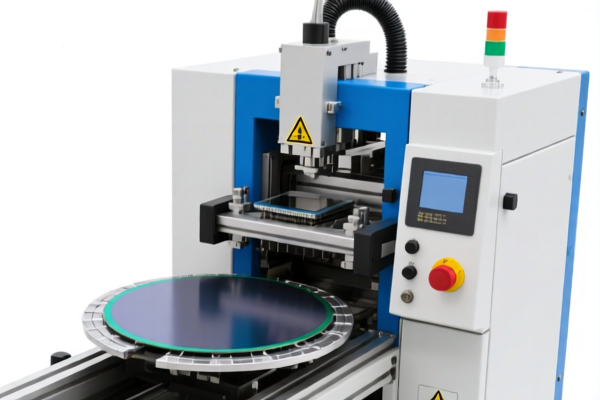
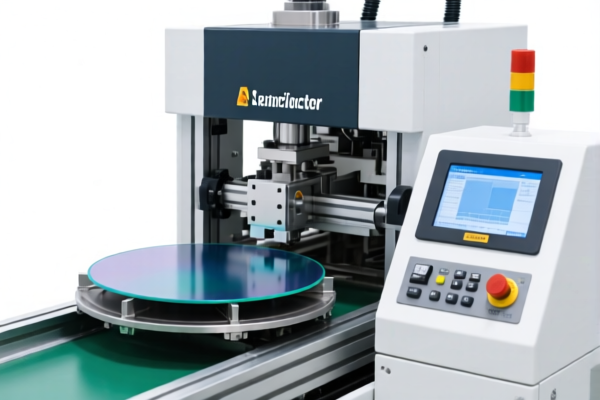
AI Analysis
⚛️ Doped Silicon Wafer for Sensor Manufacturing (Doped Silicon Substrates)
🌐 HS Code Reference & Customs Clearance Guide | 2026 Latest Tariff Analysis | Professional Clearance Strategy
📌 1. Product Definition: What Exactly Is a "Doped Silicon Wafer"?
A Doped Silicon Wafer is the foundational material used in semiconductor manufacturing, including for sensors. It is a thin slice of silicon crystal (Wafer) that has been intentionally impurified ("doped") with other elements to modify its electrical properties.
In international trade, these are not considered finished "diodes" or "sensors" yet. They are raw semiconductor materials intended for further processing (etching, photolithography, packaging) to become active electronic components.
⚠️ Key Distinction:
- If it is a bare silicon slice with specific resistivity/doping for electronic use → It is a Material/Product of Chemical Industry or Unmounted Semiconductor.
- It is NOT a finished sensor module or a packaged diode.
- The key descriptor is "Doped" (chemical modification) and "Wafer" (form factor).
📦 2. HS Code Classification Details (2026 Latest Tariff Alignment)
Based on the provided data, there are four potential HS Codes. The choice depends on the specific technical interpretation of "doped silicon" vs. "unmounted chip."
| HS Code | Product Description | Matching Logic & Reasoning | Tax Rate |
|---|---|---|---|
3818.00.00.20 |
Doped Elements Prepared for Semiconductor Use | ✅ Best Match. The item name explicitly states "Doped Silicon." This code covers silicon prepared specifically for the semiconductor industry (doped single crystals). The summary confirms: "Material (polycrystalline/doped) and purpose (electronics) match perfectly." | 60.0% |
3818.00.00.95 |
Other Doped Elements/Compounds | ✅ Strong Match. Covers "Silicon Wafers" in a doped compound form for electronics if 3818.00.00.20 is deemed too specific or if the doping level/form doesn't fit the primary subheading. The summary states: "Silicon belongs to electronic industry doped compounds... no conflicting specific materials like GaAs." |
60.0% |
8541.10.00.40 |
Diodes, Photovoltaic Cells, etc. - Unmounted Chips/Grains/Wafers | ⚠️ Alternative Match. If customs views the wafer not as a "chemical element" but as a "semi-finished semiconductor device" (chip/wafer), it falls here. Summary: "Material is Silicon, Form is Wafer, fits 'Unmounted chips, grains, and wafers' under diodes." | 60.0% |
8541.59.00.40 |
Other Semiconductor Devices - Wafers | ⚠️ Alternative Match. Similar to above, focuses on the "Wafer" aspect under semiconductor devices. Summary: "Silicon wafer belongs to 'wafers' category, doping attribute fits semiconductor material characteristics." | 60.0% |
🔍 Critical Analysis:
-3818.00.00.20is generally the most accurate for "Doped Silicon" as a raw material.
-8541.10.00.40and8541.59.00.40are used when the wafer is considered a "semi-finished product" of a semiconductor device rather than a chemical material.
- All four codes carry the SAME tax rate (60%) in this specific scenario, likely due to Section 301 and IEEPA penalties.
💰 3. 2026 Latest Tariff Rate Breakdown (Including Surcharges & Policy Surcharges)
✅ Applicable Country: United States (US)
✅ Country of Origin: China (CN)
✅ Effective Time: 2025 November 10 onwards (including subsequent imports)
🎯 All Matching HS Codes (3818.00.00.20, 3818.00.00.95, 8541.10.00.40, 8541.59.00.40)
| Item | Content |
|---|---|
| Base Tariff Rate | 0.0% (Most semiconductor materials are duty-free at the base level) |
| Section 301 Surtax | +50.0% (Add-on Tariff under US Trade Act Section 301) |
| IEEPA Surcharge | +10.0% (122-Section Tariff, targeting Chinese products under International Emergency Economic Powers Act) |
| Total Tariff Rate | 60.0% |
| Tax Calculation | CIF Value × 60% |
| De Minimis Exemption | ❌ NOT APPLICABLE (High value + specific trade war items usually exempt from $800 de minimis) |
| Legal Basis Path | Base Tariff: 0% → Section 301: +50% → IEEPA/122 Clause: +10% |
📌 Explanation:
- "Base Tariff 0%": Silicon wafers/doped elements often have low base duties.
- "Section 301 50%": This is the significant punitive tariff on Chinese tech components.
- "IEEPA 10%": An additional emergency surcharge specifically targeting Chinese imports in this category.
- Total 60%: This is an EXTREMELY HIGH tariff. It significantly impacts cost. You cannot ignore this.
🛠️ 4. Customs Clearance Practical Advice (Real-World Pitfall Guide)
✅ 1. Documentation Checklist (Essential)
| Document | Required | Notes |
|---|---|---|
| ✅ Product Specification Sheet | ✔️ | Must specify: Doping type (N-type/P-type), Resistivity, Diameter (e.g., 200mm/300mm), Crystal Orientation. |
| ✅ Commercial Invoice | ✔️ | Clearly state: "Doped Silicon Wafer for Sensor Manufacturing, Not a Finished Sensor." Avoid vague terms like "Silicon Piece." |
| ✅ Certificate of Origin (CO) | ✔️ | Proof of China origin triggers the 60% tariff. If transshipped, be careful of "Substantial Transformation" rules. |
| ✅ Material Safety Data Sheet (MSDS) | ✔️ | Silicon is generally safe, but purity levels matter for customs classification. |
| ✅ Packing List | ✔️ | Detail packaging to prevent damage (wafers are fragile). |
✅ 2. Declaration Strategy (Key Mantra)
🔥 "Doped Silicon = Chemical/Material (
3818) OR Semi-Finished (8541)? Be Consistent!"
| Scenario | Correct Declaration | Wrong Practice |
|---|---|---|
| Raw Doped Wafer | Use 3818.00.00.20 |
Declare as "Sensor" → Misclassification Penalty |
| Wafer with Chips Already Attached | Use 8541 codes |
Declare as "Raw Silicon" → Rejection |
| High-Purity Silicon (Undoped) | Different Code (likely lower tax) | Declare as "Doped" → Overpay or Misdeclare |
| Small Samples (Under $800) | ❌ Do Not Use De Minimis | These items are likely excluded from de minimis due to Section 301/IEEPA. |
✅ 3. Special Circumstances Handling
| Situation | Handling Advice |
|---|---|
| OEM Custom Wafers | Provide customer order + design specs to prove they are semi-finished goods, not finished consumer electronics. |
| Transshipment via Vietnam/Malaysia | High Risk. US Customs严查 (strictly investigates) circumvention. If origin is China, penalties apply even if shipped from SE Asia. |
| Sensor vs. Wafer | If you sell the finished sensor, the HS Code changes completely (likely 8541.40 or 9031.80). Do not use wafer codes for finished sensors. |
| Pre-Decision (Advance Ruling) | Highly Recommended. Apply for an Advance Ruling from CBP to confirm if 3818 or 8541 applies, as the tax rate is the same, but the legal risk differs. |
🌍 5. Global Market Comparison (2026 Latest)
| Country/Region | Recommended HS Code | Tariff (China Origin) | Certification | Notes |
|---|---|---|---|---|
| 🇺🇸 USA | 3818.00.00.20 |
60% (0% Base + 50% Sec 301 + 10% IEEPA) | None specific | Highest Cost. Budget accordingly. |
| 🇨🇳 China | 3818.00.00.20 |
Low (Import Duty ~0-5%) | CCC (if final product) | No surtax for domestic use. |
| 🇪🇺 EU | 3818.00.00.20 |
0% (Most Favored Nation) | REACH + RoHS | No Trade War Tariffs. Cheapest route if possible. |
| 🇹🇼 Taiwan | 3818.00.00.20 |
0% | CE/UL | Strategic supply chain hub. |
📌 Conclusion:
- USA is the most expensive market for doped silicon wafers from China due to the 60% blended tariff.
- EU and Asia-Pacific (non-US) have significantly lower or zero tariffs.
- Strategic Advice: If selling to the US, consider supply chain diversification (sourcing from non-China origins like Taiwan, Japan, or USA) to avoid the 60% penalty, if feasible.
📌 6. Common Errors & Pitfalls (Lessons Learned)
❌ Error 1: Declaring "Doped Silicon Wafer" as "Finished Sensor"
👉 Consequence: Wrong HS Code. Even if tax is similar, compliance risk is high. Customs may audit your entire shipment.
❌ Error 2: Ignoring the IEEPA 10% Surchcharge
👉 Consequence: Underpayment. Total tax is 60%, not just 50%. Failure to add the 10% leads to back taxes + penalties.
❌ Error 3: Using De Minimis ($800) for small samples
👉 Consequence: Denied Entry. Section 301 and IEEPA items are often excluded from de minimis. Small shipments are still subject to full 60% tariff.
❌ Error 4: Vague Description ("Silicon Plate")
👉 Consequence: Customs may classify it as a generic metal plate or reject it for lack of detail. Always specify "Doped," "Wafer," "Semiconductor Grade."
✅ Correct Declaration Example:
"Doped Silicon Wafers, Semiconductor Grade, N-Type, 200mm Diameter, for Sensor Manufacturing. Not finished electronic components. HS Code: 3818.00.00.20."
🎯 7. Conclusion: Professional Declaration, Save Time & Money
🎯 Remember the Mantra:
🔹 "Doped Silicon = 60% Tax in USA."
🔹 "Base 0% + Sec 301 50% + IEEPA 10% = Total 60%."
🔹 "Declare as Material (3818) or Semi-Finished (8541), Never as Finished Sensor."
📌 Pro Tip:
If your wafers are sourced from Taiwan, Japan, or the USA, the tariff is 0-5%.
If you are re-exporting to the US, ensure Country of Origin is clearly marked. Do not attempt "transshipment" from China without legal advice.
📣 Immediate Action:
📞 Contact a US Customs Broker + Provide Product Specs + Apply for Advance Ruling
🚀 Let your silicon wafers clear smoothly, avoid penalties, and protect your margins!
✨ Professional Clearance, Starts with Accurate Classification!
💼 Every Cent of Cost Deserves Precision Calculation!
Customer Reviews
About HS Code Classification
The Harmonized System (HS) is an internationally standardized nomenclature developed by the World Customs Organization (WCO) to classify traded products. Over 200 countries use the HS system as the basis for customs tariffs, trade statistics, and import/export regulations.
Each HS code follows a hierarchical structure:
- Chapter (2 digits) — Broad category of goods (e.g., Chapter 84: Machinery and Mechanical Appliances)
- Heading (4 digits) — More specific grouping within the chapter
- Subheading (6 digits) — Internationally standardized breakdown, used by all WCO member countries
- National subdivisions (8-10 digits) — Country-specific extensions for further classification, such as US HTSUS 10-digit codes
Correct HS code classification is essential for smooth customs clearance, accurate duty payment, and compliance with trade regulations. Misclassification can lead to customs delays, overpayment of duties, or penalties.
When importing from CN to US, the applicable tariff rates may include:
- Most-Favored-Nation (MFN) rate — The standard duty rate applied to WTO members
- General rate — Applied to countries without trade agreements
- Trade remedy duties — Additional tariffs such as Section 301 (anti-dumping), Section 232 (national security), or countervailing duties
The information provided on this page is for reference purposes only. For official classification, please consult with your local customs authority or a licensed customs broker.