doped silicon wafer for solar cells
CN → US| HS Code | Tariff Rate | Origin | Destination | Doc |
|---|---|---|---|---|
| 2849202000 | 10.5% | CN | US | Official Doc |
| 2849201000 | 10.0% | CN | US | Official Doc |
| 3818000020 | 60.0% | CN | US | Official Doc |
| 3818000095 | 60.0% | CN | US | Official Doc |
| 3818000020 | 60.0% | CN | US | Official Doc |
Product Images
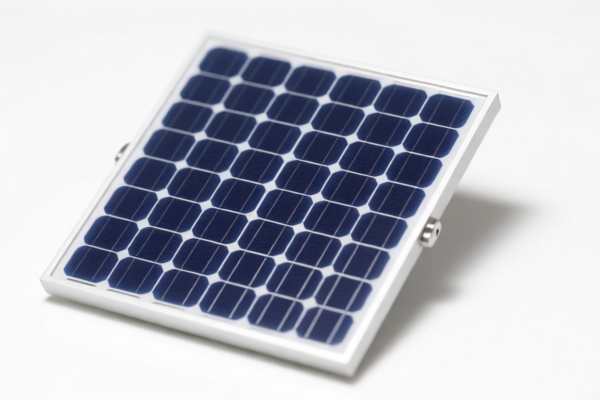
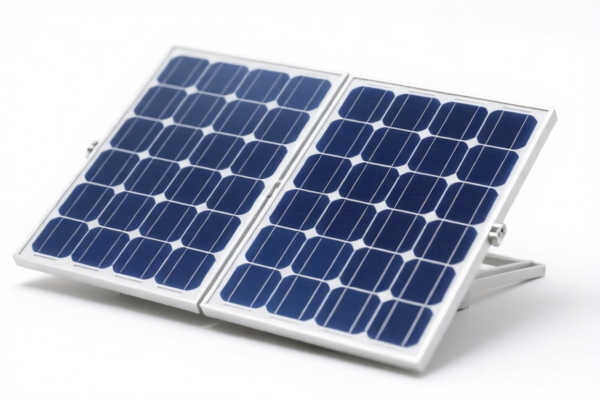
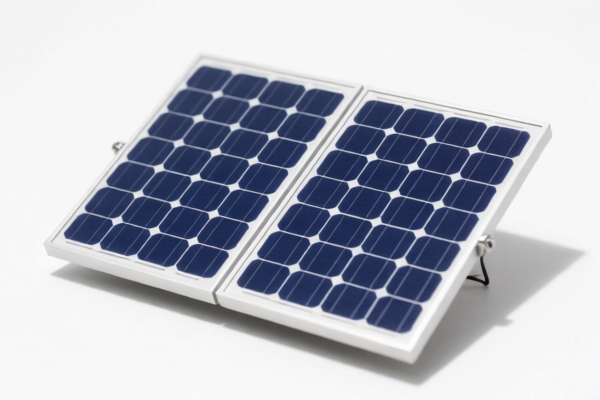
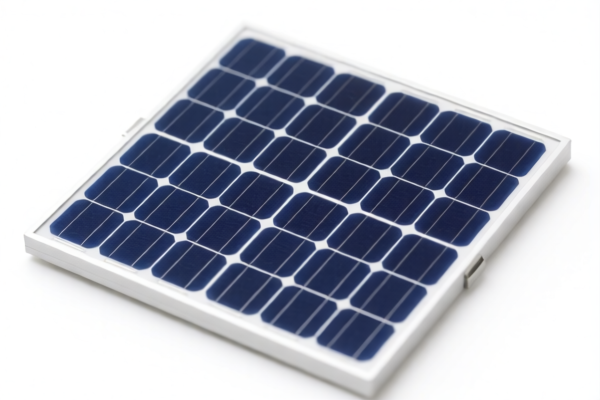
AI Analysis
⚛️ Doped Silicon Wafer for Solar Cells (Photovoltaic Materials)
🌐 HS Code Reference & Customs Clearance Guide | 2026 Latest Tariff Analysis | Professional Compliance Strategy
📌 I. Product Definition & Classification: Do You Really Understand "Doped Silicon"?
Doped silicon wafers are the foundational semiconductor materials for the photovoltaic (PV) industry. In international trade, they are strictly categorized based on their material purity, physical state (wafer vs. powder), and application purpose (electronic vs. solar). Misclassification here leads to severe penalties due to the high tariffs involved.
Key Distinction Logic:
Is it a finished "Wafer" for Electronics? → Look at 3818.00.00 (High Tariff Risk).
Is it "Solar Material" in powder/granular form or specific PV-ready state? → Look at 2849.20 (Lower Tariff Risk).
Is it a generic "Doped Material" not fitting other specific categories? → Look at 3818.00.00.95* (Fallback High Tariff).
⚠️ Critical Warning:
- If the product is described simply as "Doped Silicon Wafer" for solar cells, customs often scrutinize whether it falls under Chapter 28 (Chemical Products) or Chapter 38 (Miscellaneous Chemical Products).
- Chapter 38 items attract significantly higher tariffs due to Section 301 and IEEPA regulations.
- Chapter 28 items may benefit from lower base rates, provided the description matches "silicon carbide" or specific solar material definitions accurately.
📦 II. HS Code Classification Details (2026 Latest Tariff Authority Comparison)
| HS Code | Product Description | Applicable Scenario | Tax Rate (Total) | Risk Level |
|---|---|---|---|---|
2849.20.20.00 |
Doped silicon PV material; matches silicon carbide material attributes and granular, ground, crushed, or refined forms | Solar-grade silicon powder, granules, or refined forms specifically for PV | 10.5% | 🟢 Medium (Low Base + High Add-on) |
2849.20.10.00 |
Doped silicon PV material; matches unrefined silicon carbide material attributes | Unrefined solar-grade silicon materials | 10.0% | 🟢 Low (Best Option if Qualifying) |
3818.00.00.20 |
Doped silicon wafer; matches polycrystalline silicon material and electronic industry use | Electronic-grade or dual-purpose wafers (Note: Often misused for Solar) | 60.0% | 🔴 Critical (Very High) |
3818.00.00.95 |
Doped materials; matches other doping elements or compounds (Catch-all category) | Generic doped silicon not fitting specific 2849 or specific 3818.20 descriptions | 60.0% | 🔴 Critical (Very High) |
3818.00.00.20 |
Silicon wafers for electronic devices; matches polycrystalline/doped material and electronic industry use | Electronic device wafers (Same HS as above, different context description) | 60.0% | 🔴 Critical (Very High) |
🔍 Focus Alert:
-2849.20.xxis the only category potentially suitable for Solar PV Materials with lower total tariffs (10-10.5%).
-3818.00.xxis primarily for Electronic Semiconductors. Using this for solar wafers is a common misclassification that triggers massive fines.
- If your product is a finished wafer intended for solar cells, customs may still argue it falls under 3818 if it meets electronic-grade purity standards. You must prove it is solar-grade and fits the 2849 definition (often involving silicon carbide references in specific tariff schedules).
💰 III. 2026 Latest Tariff Rate Breakdown (Including Surtaxes & Policy Add-ons)
✅ Applicable Country: USA (US)
✅ Origin: China (CN)
✅ Effective Date: November 10, 2025 (and subsequent imports)
🎯 1. 2849.20.10.00 / 2849.20.20.00 —— Doped Silicon PV Material (Silicon Carbide Category)
| Item | Content |
|---|---|
| Base Tariff | 0.0% - 0.5% (Ad Valorem) |
| Section 301 Surtax | +10.0% (122 Clause Tariff) |
| Additional Surtax | 0.0% |
| Total Tax Rate | 10.0% - 10.5% |
| Calculation Basis | CIF Value × 10.0-10.5% |
| De Minimis Exemption | ❌ Not Applicable (Denied for Section 301/IEEPA goods) |
| Legal Basis Path | HTSUS:2849.20.xx → Section 301 Footnote 122 |
📌 Explanation:
- These codes fall under Section 301 (Trade Enhancement Act).
- The "122 Clause Tariff" adds 10% on top of the base rate.
- Crucial: If you cannot prove the material matches "silicon carbide" attributes or specific solar material definitions under Chapter 28, you will be reassigned to Chapter 38, increasing tariffs by 50%.
🎯 2. 3818.00.00.20 / 3818.00.00.95 —— Doped Silicon Wafers / Electronic Materials
| Item | Content |
|---|---|
| Base Tariff | 0.0% |
| Section 301 Surtax | +50.0% (High-tier Surtax) |
| 122 Clause Tariff | +10.0% |
| Total Tax Rate | 60.0% |
| Calculation Basis | CIF Value × 60.0% |
| De Minimis Exemption | ❌ Not Applicable |
| Legal Basis Path | HTSUS:3818.00.xx → Section 301 Footnote 9903.88.01 + IEEPA:9903.01.25 |
📌 Explanation:
- This is the punitive tariff tier.
- The 50% surtax is applied to "List 4B" items or specific semiconductor-related products.
- Adding the 10% from the 122 clause results in a 60% total duty.
- Warning: Using these codes for solar wafers without strict compliance will result in massive cost increases and potential customs audits.
🛠️ IV. Customs Clearance Practical Advice (Operational Pitfall Avoidance Guide)
✅ 1. Required Documentation Checklist (Mandatory)
| Document | Must Provide | Explanation |
|---|---|---|
| ✅ Technical Data Sheet | ✔️ | Must specify: Purity, Dopant Type (B/P), Resistivity, Crystal Structure (Mono/Poly). |
| ✅ End-Use Certificate | ✔️ | Explicitly state: "For Photovoltaic Solar Cell Manufacturing" to argue for 2849 if possible. |
| ✅ Material Safety Data Sheet (MSDS) | ✔️ | Required for chemical handling compliance. |
| ✅ Commercial Invoice | ✔️ | Clearly describe as "Doped Silicon Material for Solar PV, NOT Electronic Grade." |
| ✅ Packing List | ✔️ | Detail weight, dimensions, and packaging type. |
| ✅ Certificate of Origin (CO) | ✔️ | Prove country of origin to apply correct Section 301 rates. |
✅ 2. Declaration Strategy (Key Rules)
🔥 "Clarify Material Form, Specify End-Use, Avoid 'Electronic' Triggers!"
| Situation | Correct Declaration | Incorrect Practice |
|---|---|---|
| Solar-Grade Silicon (Powder/Granules) | 2849.20.10.00 or .20.00Desc: "Doped Silicon Carbide-like PV Material" |
Using 3818 → 60% Tax |
| Solar-Grade Wafers | High Risk: Likely 3818 unless specific 2849 exemption applies. Consult Advance Ruling. |
Assuming 2849 applies to wafers → Audit Risk |
| Electronic-Grade Wafers | 3818.00.00.20Desc: "Polycrystalline Silicon Wafers for Electronics" |
Describing as "Solar" → Fraud Risk |
| Generic Doped Silicon | 3818.00.00.95Desc: "Other Doped Silicon Materials" |
Vague description "Silicon Pieces" → Rejection |
📌 Key Tip:
- If your product is a wafer, customs will likely default to 3818. To use 2849, you must demonstrate that the material aligns with silicon carbide classifications or specific solar material exceptions in the HTSUS.
- Do not use terms like "Electronic Device Component" for solar products. Use "Photovoltaic Cell Raw Material."
✅ 3. Special Circumstances Handling
| Situation | Handling Advice |
|---|---|
| OEM Solar Wafers | Provide customer PO specifying "Solar Cell Application" and technical specs matching solar-grade (lower purity than electronic). |
| Mixed Shipments | Separate electronic-grade from solar-grade shipments. Do not mix. |
| Wafer Thickness Variations | Thin wafers (<100μm) may be scrutinized as "processed" rather than "material." Ensure description fits "material" definition. |
| Dopant Type | Specify boron (p-type) or phosphorus (n-type). Vague "doped" descriptions delay clearance. |
🌍 V. Global Market Comparison (2026 Latest)
| Country/Region | Recommended HS Code | Tariff (China Origin) | Certification | Notes |
|---|---|---|---|---|
| 🇺🇸 USA | 2849.20.xx (if qualifying) |
10.0-10.5% | No special cert | High audit risk for misclassification |
| 🇺🇸 USA | 3818.00.xx |
60.0% | None | Default for most silicon wafers |
| 🇪🇺 EU | 3818.00.00 |
0-5% | REACH Compliance | Lower tariffs, but strict REACH registration |
| 🇨🇳 China | 3818.00.00 |
0-6% | CCC (if applicable) | Import duty may be low, but VAT applies |
📌 Conclusion:
- USA: The only market with punitive tariffs. Maximize chance of 2849 classification to save ~50% in duties.
- EU/China: Tariffs are significantly lower, but REACH (EU) and Environmental (China) regulations are strict.
📌 VI. Common Errors & Pitfall Guide (Lessons Learned)
❌ Error 1: Declaring "Silicon Wafers" under 2849 without proving solar-grade/silicon carbide match.
👉 Consequence: Customs reclassifies to 3818 → Back-taxes + 60% tariff + Penalties!
❌ Error 2: Using "Electronic Grade" terminology for solar wafers.
👉 Consequence: Triggers Section 301 higher tier tariffs automatically.
❌ Error 3: Vague description "Doped Silicon Pieces."
👉 Consequence: Customs selects highest possible code (3818.00.00.95) → 60% Tax.
❌ Error 4: Ignoring the "122 Clause" in tariff calculation.
👉 Consequence: Underpayment by 10% → Audits and Interest Charges.
✅ Correct Action:
For Solar Wafers:
"Doped Silicon Material for Photovoltaic Solar Cells, Solar-Grade, Polycrystalline, Boron-Doped, Not for Electronic Devices, Model XYZ."
For Electronic Wafers:
"Doped Silicon Wafer, Electronic Grade, Polycrystalline, Phosphorus-Doped, for Semiconductor Manufacturing, Model ABC."
🎯 VII. Conclusion: Professional Classification Saves Millions!
🎯 Remember the Golden Rule:
🔹 "Solar = 2849 (10%)? Electronic = 3818 (60%)!"
🔹 "If in doubt, assume 60% and request Advance Ruling!"
📌 Pro Tip:
If your product originates from Vietnam, Thailand, Malaysia, or Mexico, you may apply for IEEPA Exemption or FTZ Benefits, potentially reducing rates to 0-5%.
Recommendation: Apply for a Customs Ruling Letter before shipment to lock in the 2849.20.xx classification.
📣 Immediate Action:
📞 Contact a Licensed Customs Broker
📄 Prepare Technical Specs proving Solar-Grade status
🚀 Secure Lower Tariffs, Avoid Audits, Protect Margins!
✨ Professional Classification Starts Here!
💼 Every Percentage Point of Tariff Affects Your Bottom Line!
Customer Reviews
About HS Code Classification
The Harmonized System (HS) is an internationally standardized nomenclature developed by the World Customs Organization (WCO) to classify traded products. Over 200 countries use the HS system as the basis for customs tariffs, trade statistics, and import/export regulations.
Each HS code follows a hierarchical structure:
- Chapter (2 digits) — Broad category of goods (e.g., Chapter 84: Machinery and Mechanical Appliances)
- Heading (4 digits) — More specific grouping within the chapter
- Subheading (6 digits) — Internationally standardized breakdown, used by all WCO member countries
- National subdivisions (8-10 digits) — Country-specific extensions for further classification, such as US HTSUS 10-digit codes
Correct HS code classification is essential for smooth customs clearance, accurate duty payment, and compliance with trade regulations. Misclassification can lead to customs delays, overpayment of duties, or penalties.
When importing from CN to US, the applicable tariff rates may include:
- Most-Favored-Nation (MFN) rate — The standard duty rate applied to WTO members
- General rate — Applied to countries without trade agreements
- Trade remedy duties — Additional tariffs such as Section 301 (anti-dumping), Section 232 (national security), or countervailing duties
The information provided on this page is for reference purposes only. For official classification, please consult with your local customs authority or a licensed customs broker.