doped silicon wafer indium doped
CN → US| HS Code | Tariff Rate | Origin | Destination | Doc |
|---|---|---|---|---|
| 8541590040 | 60.0% | CN | US | Official Doc |
| 2804691000 | 15.3% | CN | US | Official Doc |
| 2804695000 | 15.5% | CN | US | Official Doc |
| 8541100040 | 60.0% | CN | US | Official Doc |
Product Images
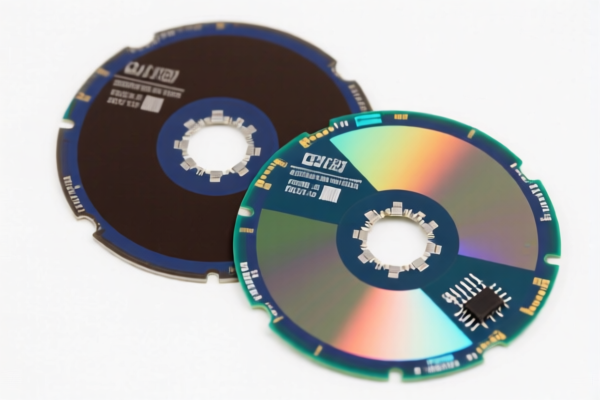
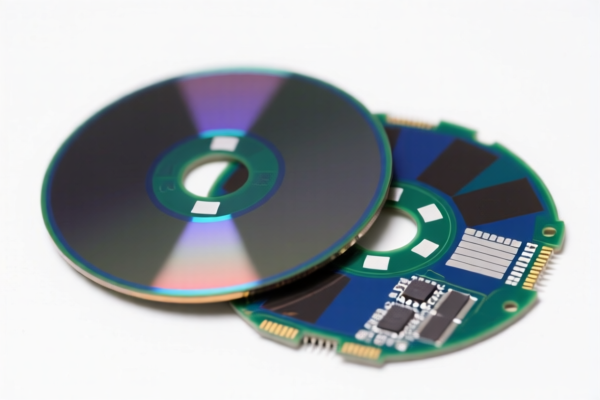
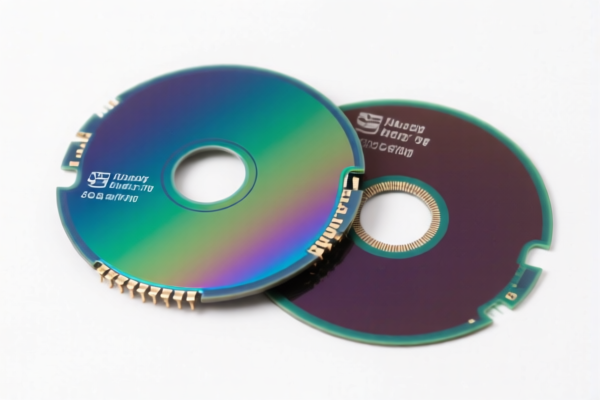
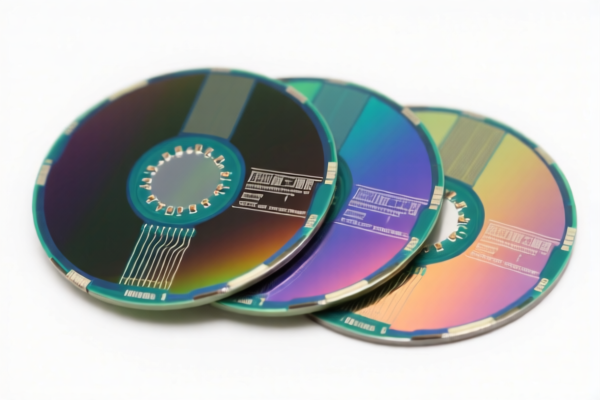
AI Analysis
🔬 Doped Silicon Wafer (Indium Doped) | Semiconductor Materials
🌐 HS Code Reference & Customs Clearance Guide | 2026 Latest Tariff Analysis | Professional Level Clearance Strategy
📌 I. Product Definition & Classification: Do You Truly Understand "Indium-Doped Silicon"?
Indium-doped silicon wafers are critical raw materials in the semiconductor industry, used primarily in the fabrication of p-type semiconductors for diodes, transistors, and solar cells. In international trade, their classification depends heavily on their physical state, purity level, and intended use (whether as a raw material or a finished semiconductor component).
Key Distinctions: - As a Semiconductor Material (Unassembled): If the wafer is in the form of a crystal slice, unmounted, and intended as a base for semiconductor devices, it falls under Chapter 85 (Electrical machinery/equipment). - As a Chemical Element (Silicon): If viewed primarily as a processed form of the element silicon itself (regardless of doping), it may fall under Chapter 28 (Inorganic chemicals).
⚠️ Critical Classification Point:
- If the product is explicitly described as a "semiconductor wafer" or "unassembled semiconductor" → Classify under 8541.59.00.40 or 8541.10.00.40.
- If the product is described merely as "silicon pieces" or "chemical silicon" without emphasis on semiconductor device application → Classify under 2804.69.10.00 or 2804.69.50.00.
📦 II. HS Code Classification Details (2026 Latest Tariff Authority Comparison)
Based on the provided data, here are the four possible classifications and their rationales:
| HS Code | Product Description | Classification Logic | Total Tax Rate |
|---|---|---|---|
8541.59.00.40 |
Doped Silicon Wafer (Arsenic/Indium Doped) | Classified as semiconductor material, shape is wafer, fits unassembled wafer category. | 60.0% |
2804.69.10.00 |
Doped Silicon Wafer (Arsenic/Indium Doped) | Material is silicon, shape is sheet-like semi-finished product, fits other silicon category. | 15.3% |
2804.69.50.00 |
Doped Silicon Wafer (Arsenic/Indium Doped) | Core material is silicon, shape is sheet-like, fits other silicon category. | 15.5% |
8541.10.00.40 |
Doped Silicon Wafer (Arsenic/Indium Doped) | Material is silicon, shape is sheet/wafer, use is basic raw material for semiconductor devices. | 60.0% |
🔍 Key Insight:
- High Tax Route (60%): Classifying as a semiconductor component/material (8541). This is often chosen for high-tech components where the "semiconductor" nature is dominant.
- Low Tax Route (15.3%-15.5%): Classifying as chemical silicon (2804). This is technically possible if the doping level is low or if the wafer is treated as a bulk silicon product rather than a finished semiconductor piece.
- ⚠️ Warning: Misclassification can lead to severe penalties. If customs determines the product is clearly a semiconductor wafer, they may force reclassification to 8541, resulting in a ~45% tax increase.
💰 III. 2026 Latest Tariff Rate Details (Including Surtaxes & Policy Add-ons)
✅ Applicable Country: United States (US)
✅ Origin: China (CN)
✅ Effective Date: November 10, 2025 (and subsequent imports)
🎯 1. HS Code 8541.59.00.40 & 8541.10.00.40 (Semiconductor Classification)
| Item | Detail |
|---|---|
| Base Tariff | 0.0% (ad valorem) |
| Section 301 Surtax | +50.0% (Additional Tariff) |
| Section 122 Tariff | +10.0% (Specific to this category) |
| Total Tax Rate | 60.0% |
| Tax Calculation | CIF Value × 60.0% |
| De Minimis Eligibility | ❌ Not Applicable (High-value semiconductor material) |
| Legal Basis Path | Section 301: 8541.59.00.40 → Section 122: 10% |
📌 Explanation:
- The 0% base rate reflects the general treatment for electronic components.
- The 50% Section 301 tariff is the key driver, applied to Chinese-origin semiconductors to restrict high-tech imports.
- The 10% Section 122 tariff is an additional levy specific to this subheading.
- Combined 60% is extremely high. This category is subject to strict scrutiny and potential export/import controls under US semiconductor policies.
🎯 2. HS Code 2804.69.10.00 (Chemical Silicon Classification)
| Item | Detail |
|---|---|
| Base Tariff | 5.3% (ad valorem) |
| Section 301 Surtax | 0.0% |
| Section 122 Tariff | +10.0% |
| Total Tax Rate | 15.3% |
| Tax Calculation | CIF Value × 15.3% |
| De Minimis Eligibility | ❌ Not Applicable (Bulk chemical) |
| Legal Basis Path | Section 122: 2804.69.10.00 |
📌 Explanation:
- The 5.3% base rate applies to inorganic chemicals (silicon).
- No Section 301 tax is applied here, assuming it is not deemed a "semiconductor device."
- The 10% Section 122 tariff still applies.
- Total 15.3% is significantly lower than the semiconductor classification.
- ⚠️ Risk: Customs may challenge this if the product is clearly a "wafer" intended for semiconductor manufacturing.
🎯 3. HS Code 2804.69.50.00 (Alternative Chemical Silicon Classification)
| Item | Detail |
|---|---|
| Base Tariff | 5.5% (ad valorem) |
| Section 301 Surtax | 0.0% |
| Section 122 Tariff | +10.0% |
| Total Tax Rate | 15.5% |
| Tax Calculation | CIF Value × 15.5% |
| De Minimis Eligibility | ❌ Not Applicable |
| Legal Basis Path | Section 122: 2804.69.50.00 |
📌 Explanation:
- Similar to2804.69.10.00, but with a slightly higher base tariff (5.5% vs 5.3%).
- Also benefits from no Section 301 surtax.
- Total 15.5% is the most competitive rate among the provided options.
🛠️ IV. Customs Clearance Practical Advice (Real-World Pitfall Avoidance)
✅ 1. Required Documentation Checklist
| Document | Mandatory | Description |
|---|---|---|
| ✅ Product Specification Sheet | ✔️ | Must clearly state: Doping type (Indium/Arsenic), resistivity, diameter, thickness, and orientation. |
| ✅ Material Safety Data Sheet (MSDS) | ✔️ | Required for chemical classification (2804) to prove it is treated as a chemical substance. |
| ✅ Commercial Invoice | ✔️ | Must accurately describe the product. Avoid ambiguous terms like "generic silicon." |
| ✅ Certificate of Origin (CO) | ✔️ | To prove Chinese origin (which triggers Section 122/301). |
| ✅ Packaging List | ✔️ | Detail the number of wafers and packaging material (e.g., vacuum-sealed, anti-static). |
| ✅ Letter of Explanation | ✔️ | If using 2804, provide a letter explaining why the product is classified as "silicon" rather than "semiconductor device" (e.g., low doping, bulk form). |
✅ 2. Declaration Strategy (Key Mantras)
🔥 “Define Purpose, Choose Chapter, Watch the 60% Trap!”
| Scenario | Recommended HS Code | Reason |
|---|---|---|
| High-Tech Semiconductor Wafer (Used for ICs, transistors) | 8541.59.00.40 or 8541.10.00.40 |
Clearly a semiconductor material. High tax (60%) but legally accurate for high-end components. |
| Industrial/Basic Silicon (Low doping, bulk form, not for ICs) | 2804.69.10.00 or 2804.69.50.00 |
Classified as chemical silicon. Lower tax (15.3%-15.5%). |
| R&D Sample / Non-Commercial | Check for exemptions | May qualify for different treatment, but still subject to Section 122. |
📌 Critical Tip:
- Do not mix declarations. If you send a wafer clearly labeled "Semiconductor Device," declaring it as "Silicon Powder/Sheet" (2804) is considered misdeclaration.
- If the indium doping level is very low, emphasize the chemical nature of the material to justify2804.
✅ 3. Special Circumstances Handling
| Situation | Handling Advice |
|---|---|
| Indium vs. Arsenic Doping | The provided data mentions "Arsenic-doped" in the summary, but your query is "Indium-doped." Ensure the MSDS and Invoice explicitly state "Indium." The HS codes provided are generic for "doped silicon," so the classification logic remains the same. |
| Wafer Thickness | If the wafer is extremely thin (e.g., <100µm), it is more likely to be considered a "semiconductor device" (8541). Thicker wafers may be argued as "raw silicon" (2804). |
| End-Use Declaration | If the buyer is a semiconductor manufacturer, customs may automatically assume 8541. Provide proof if the end-use is non-semiconductor (e.g., solar cells might have different interpretations). |
🌍 V. Global Market Clearance Comparison (2026 Latest)
| Country/Region | Recommended HS Code | Estimated Tariff | Certification Requirements | Notes |
|---|---|---|---|---|
| 🇺🇸 USA | 2804.69.10.00 |
15.3% | N/A | Best option for cost-saving if legally justifiable. |
| 🇨🇳 China | 2804.69.10.00 |
~5-10% | N/A | Lower base rates. |
| 🇪🇺 EU | 2804.69.10.00 |
~5.5% | REACH + RoHS | No Section 301/122 equivalents. |
| 🇯🇵 Japan | 2804.69.10.00 |
~0-5% | PSE (if applicable) | Favorable for silicon products. |
📌 Conclusion:
- The US market is the most challenging due to the 60% vs. 15.3% dichotomy.
- Recommendation: If the product is not a high-end semiconductor component, strive to classify under2804.69.10.00to save ~45% in tariffs.
- Ensure all documentation supports the chemical nature of the product, not the electronic function.
📌 VI. Common Mistakes & Pitfall Guide (Lessons Learned)
❌ Mistake 1: Declaring "Indium-Doped Silicon Wafer" as 8541.59.00.40 without justification for high-tech use.
👉 Consequence: Paying 60% tax when 15.3% was available.
❌ Mistake 2: Declaring "Silicon Wafer" as 2804.69.10.00 when it is clearly a semiconductor device for ICs.
👉 Consequence: Customs reclassification to 8541, leading to back taxes + penalties.
❌ Mistake 3: Ignoring Section 122 Tariff.
👉 Consequence: Even under 2804, the 10% Section 122 tariff applies. Failing to declare this may cause delays.
❌ Mistake 4: Confusing Indium with Arsenic.
👉 Consequence: Mismatch in MSDS and Invoice description leads to customs hold.
✅ Correct Approach:
“Silicon Wafer, Indium-Doped, P-Type, 4-inch, 525µm thickness, for Solar Cell Application” (if non-IC use) →
2804.69.10.00
“Semiconductor Wafer, Indium-Doped, for IC Fabrication” →8541.59.00.40
🎯 VII. Conclusion: Precision in Classification Saves Millions
🎯 Remember the Mantra:
🔹 “Semiconductor = 60%, Chemical Silicon = 15.3%”
🔹 “Document the Doping, Define the Use, Avoid the Trap!”
🔹 “Section 122 + 301 = 60%, Only 122 = 15.3%”
📌 Pro Tip:
If you are exporting to the US, consider applying for a HS Code Ruling from CBP (Customs and Border Protection) before shipment. This provides legal certainty and prevents costly audits.
For Indium-doped wafers, emphasize the chemical composition in your MSDS to support the2804classification if applicable.
📣 Immediate Action:
📞 Consult a Customs Broker
📄 Prepare Detailed MSDS & Specification Sheet
🚀 Optimize Your Tariff Rate, Protect Your Margin!
✨ Professional Clearance Starts with Accurate Classification!
💼 Every Percent Counts in the Semiconductor Trade!
Customer Reviews
About HS Code Classification
The Harmonized System (HS) is an internationally standardized nomenclature developed by the World Customs Organization (WCO) to classify traded products. Over 200 countries use the HS system as the basis for customs tariffs, trade statistics, and import/export regulations.
Each HS code follows a hierarchical structure:
- Chapter (2 digits) — Broad category of goods (e.g., Chapter 84: Machinery and Mechanical Appliances)
- Heading (4 digits) — More specific grouping within the chapter
- Subheading (6 digits) — Internationally standardized breakdown, used by all WCO member countries
- National subdivisions (8-10 digits) — Country-specific extensions for further classification, such as US HTSUS 10-digit codes
Correct HS code classification is essential for smooth customs clearance, accurate duty payment, and compliance with trade regulations. Misclassification can lead to customs delays, overpayment of duties, or penalties.
When importing from CN to US, the applicable tariff rates may include:
- Most-Favored-Nation (MFN) rate — The standard duty rate applied to WTO members
- General rate — Applied to countries without trade agreements
- Trade remedy duties — Additional tariffs such as Section 301 (anti-dumping), Section 232 (national security), or countervailing duties
The information provided on this page is for reference purposes only. For official classification, please consult with your local customs authority or a licensed customs broker.