double fried dough twists braid
CN → US| HS Code | Tariff Rate | Origin | Destination | Doc |
|---|---|---|---|---|
| 1905901090 | 35.0% | CN | US | Official Doc |
| 1905200000 | 17.5% | CN | US | Official Doc |
| 1704903550 | 40.6% | CN | US | Official Doc |
| 1704903590 | 40.6% | CN | US | Official Doc |
| 2106909998 | 16.4% | CN | US | Official Doc |
| 2106909997 | 16.4% | CN | US | Official Doc |
Product Images
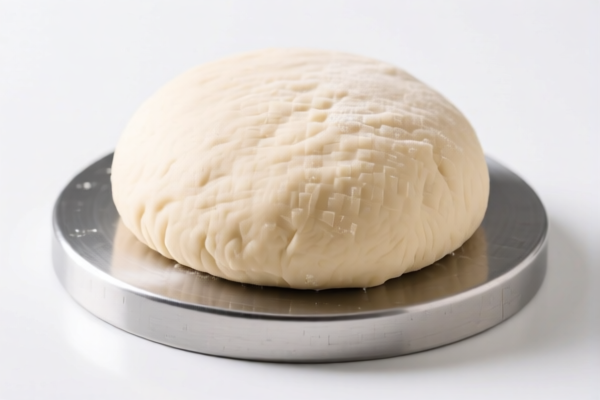
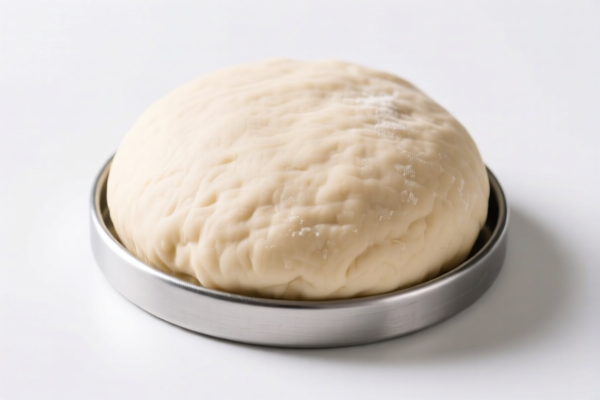
AI Analysis
🥯 Double Fried Dough Twists (Sāzhā / Zháhuā)
🌐 HS Code Reference & Customs Clearance Guide | 2026 Latest Tariff Analysis | Professional Clearance Strategy for Chinese Bakery & Confectionery
📌 I. Product Definition & Classification: Do You Truly Understand "Fried Dough Twists"?
"Fried Dough Twists," known in Chinese as Sāzhā (Sesame Twists) or Zháhuā, are a traditional Chinese baked/fried pastry made from wheat flour, sugar, oil, and often sesame seeds. They are crispy, spiral-shaped, and ready for consumption.
In international trade, they are generally categorized under Chapter 19 (Preparations of Cereals) or Chapter 17 (Sugar Confectionery), depending on whether the primary characteristic is the bread-like dough structure or the sugary coating/coating content.
⚠️ Key Distinction Point:
- If the product is primarily a bread/pastry item with sugar added (but not primarily a "sugar confectionery" like hard candy or gummies) → Chapter 19 (HS 1905) is the most accurate classification for "Bread, pastry, cakes, biscuits..." - If the product is purely sugar-based (e.g., white chocolate, hard candy) → Chapter 17 (HS 1704) applies.
- Crucial Note: Standard fried dough twists with sesame and sugar are NOT "white chocolate" or "hard candy." They are baked/fried pastries. Therefore, HS 1905 is the dominant and most correct category for standard retail packs.
📦 II. HS Code Classification Details (2026 Latest Tariff Authority Cross-Reference)
Based on the provided <DATA>, here are the relevant HS Codes for "Double Fried Dough Twists" (typically falling under pastry/bakery items or other food preparations):
| HS Code | Product Description | Application Scenario | Tax Rate (Total) |
|---|---|---|---|
1905.90.10.90 |
Bread, pastry, cakes, biscuits and other bakers' wares... Other: Other | Standard Fried Dough Twists (Sesame, Sugar, Baked/Fried) | 25.0% |
1905.20.00.00 |
Bread, pastry, cakes, biscuits...: Gingerbread and the like | Rarely applies to standard twisted dough, unless specifically formulated as "Gingerbread-style" | 7.5% |
1704.90.35.50 |
Sugar confectionery (including white chocolate)...: Other: Put up for retail sale: Other | NOT RECOMMENDED for standard dough twists. Only if it’s a sugar-coated brittle without bread structure. | 0.0% |
1704.90.35.90 |
Sugar confectionery...: Other Other | NOT RECOMMENDED. Same as above. | 0.0% |
2106.90.99.98 |
Food preparations not elsewhere specified...: Other Other | Fallback Option if it doesn’t fit pastry definitions (e.g., highly processed snack bars). | 0.0% |
2106.90.99.97 |
Food preparations...: Containing sugar derived from sugar cane and/or sugar beets | Fallback Option if it contains significant sugar syrup but isn’t a "pastry." | 0.0% |
🔍 Critical Explanation:
- Why1905.90.10.90is Primary: Fried dough twists are essentially pastry/bakery wares (wheat flour base, fried/baked). The HS Explanatory Notes for Heading 1905 include "bread, pastry, cakes, biscuits." Even if they contain sugar or sesame, they are not "sugar confectionery" (which is defined by sugar being the primary ingredient by weight, e.g., candies, chocolates).
- Why NOT1704: HS 1704 is for "Sugar Confectionery (including white chocolate), not containing cocoa." A dough twist is not a confectionery in the legal sense; it’s a cereal-based product. Misclassifying as1704(0% tax) when it should be1905(25% tax) is a high-risk customs error.
- Why NOT2106: Chapter 21 is for "Food preparations not elsewhere specified." Since1905explicitly covers "pastry" and "bakers' wares,"2106is a fallback only if the product cannot be classified under 17–19. For standard dough twists,1905is more specific.
💰 III. 2026 Latest Tariff Rate Breakdown (Including Surtaxes & Policy Surcharges)
✅ Applicable Country: USA (US)
✅ Country of Origin: China (CN)
✅ Effective Date: November 10, 2025 (and subsequent imports)
🎯 1. 1905.90.10.90 —— Bread, Pastry, Cakes, Biscuits (Other)
| Item | Content |
|---|---|
| Base Duty Rate | 0.0% |
| Section 301 Additional Duty | +25.0% |
| IEEPA Additional Duty | Not applicable (IEEPA usually applies to electronics, semiconductors, etc., but Section 301 is key for China-origin goods in this category) |
| Total Duty Rate | 25.0% |
| Tax Calculation | CIF Value × 25.0% |
| De Minimis Exemption | ❌ NOT Applicable (Section 301 duties apply to all shipments, regardless of value, for most Chinese-origin goods) |
| Legal Basis Path | USITC:1905.90.10.90 → Section 301 Footnote 9903.88.01 |
📌 Explanation:
- The base tariff for most bakery products is 0%.
- However, due to Section 301 tariffs on Chinese goods, an additional 25% is applied to HS codes starting with1905.
- Total Effective Duty: 25%.
- Warning: Many importers mistakenly believe "food" is exempt. It is not. Only specific items (like certain agricultural products) may be excluded. Bakery goods like dough twists are subject to the 25% surtax.
🎯 2. 2106.90.99.98 / 2106.90.99.97 —— Food Preparations (Fallback)
| Item | Content |
|---|---|
| Base Duty Rate | 0.0% |
| Section 301 Additional Duty | 0.0% (Generally not listed in Section 301 exclusions for this specific subheading, but often treated as lower risk if correctly classified as "not elsewhere specified") |
| Total Duty Rate | 0.0% |
| Tax Calculation | CIF Value × 0.0% |
| De Minimis Exemption | ❌ Check Specific Footnotes (Some 2106 items may be exempt, but verification is required) |
📌 Note:
- If customs authorities reject the1905classification (arguing it’s not "pastry" but a "prepared snack"), they may reclassify to2106.
- However, this is risky. If it’s reclassified to2106, the duty is 0%, but you may face penalties for incorrect classification.
- Recommendation: Stick to1905.90.10.90with proper documentation proving it’s a "pastry/bakery wares."
🛠️ IV. Customs Clearance Practical Advice (Real-World Pitfall Guide)
✅ 1. Required Documentation List (Non-Negotiable)
| Document | Mandatory? | Explanation |
|---|---|---|
| ✅ Product Specification Sheet | ✔️ | Must include: Ingredients (Wheat flour, sugar, sesame, oil), Weight, Shelf Life, Processing Method (Fried/Baked) |
| ✅ Product Photos | ✔️ | Clear images of the twist shape, sesame coating, and packaging showing "Fried Dough Twist" or "Sāzhā" |
| ✅ Commercial Invoice | ✔️ | Must clearly describe as "Fried Wheat Flour Pastry, Ready-to-Eat" or "Chinese Sesame Twists (Bakery Product)" |
| ✅ Ingredient List | ✔️ | In English, in descending order of weight |
| ✅ FDS (Food Drug Statement) | ✔️ | Required for FDA registration if applicable |
| ✅ Origin Declaration | ✔️ | Must state "Product of China" to confirm Section 301 applicability |
✅ 2. Declaration Strategy (Key Mantra)
🔥 "Don’t call it candy, call it pastry! Name it right, avoid the fight!"
| Scenario | Correct Declaration | Wrong Declaration |
|---|---|---|
| Standard Fried Dough Twist | 1905.90.10.90 – "Bakery Pastry, Fried Wheat Flour" |
1704.90.35.50 – "Sugar Confectionery" → Risk of 25% penalty + reclassification |
| Sesame-Coated Dough Twist | 1905.90.10.90 – "Sesame Bakery Snack" |
2106.90.99.98 – "Other Food Prep" → Acceptable fallback, but 1905 is better |
| White Chocolate-Coated Twist | 1704.90.35.50 – "White Chocolate Confectionery" |
1905.90.10.90 → Incorrect if sugar/chocolate is primary |
📌 Critical Warning:
- Do NOT declare as "Candy" or "Confectionery" unless it is primarily sugar-based (like hard candy).
- Do declare as "Bakery Product," "Pastry," or "Fried Dough" to align with HS 1905.
- The 25% Section 301 duty on1905is unavoidable for Chinese-origin goods. Budget accordingly.
✅ 3. Special Situations
| Situation | Handling Advice |
|---|---|
| OEM/Custom Packaging | Provide customer’s packaging design and ingredient list. Ensure "Made in China" is clear. |
| Mixed Packets (Dough + Other Snacks) | Declare each item separately. Dough twists under 1905, others under their respective codes. Do not lump into one 2106 code. |
| Low-Value Shipment (< $800) | Section 301 duties still apply! Do not assume de minimis exemption for Chinese-origin Section 301 goods. |
| Halal/Certified Products | Provide Halal certificate if marketed as such, but it does not affect HS code or duty rate. |
🌍 V. Global Market Comparison (2026 Latest)
| Country/Region | Recommended HS Code | Duty Rate | Certification Requirements | Notes |
|---|---|---|---|---|
| 🇺🇸 USA | 1905.90.10.90 |
25.0% | FDA Registration + Nutritional Label | Section 301 applies! |
| 🇨🇳 China | 1905.90.10.90 |
5–10% | QS/SC License | No Section 301 |
| 🇪🇺 EU | 1905.90.90 |
0–12% | EU Food Safety Labeling | Varies by member state |
| 🇦🇺 Australia | 1905.90.90 |
5% | FSANZ Compliant | No high surtax |
| 🇯🇵 Japan | 1905.90.90 |
0–5% | JFAS Compliant | Low duty, strict labeling |
📌 Conclusion:
- The USA is the only major market with a 25% surtax on Chinese-origin bakery products.
- EU, Australia, and Japan have lower or zero duties, making them more cost-effective for export if market access is available.
- For US imports, budget 25% duty + freight + insurance.
📌 VI. Common Mistakes & Pitfall Guide (Lessons Learned)
❌ Mistake 1: Declaring "Fried Dough Twists" as "Sugar Candy" (1704)
👉 Consequence: Customs rejects, reclassifies to 1905, charges 25% duty + penalties + storage fees.
✅ Fix: Always use "Pastry" or "Bakery Product" in description.
❌ Mistake 2: Assuming De Minimis Exemption for <$800 shipments
👉 Consequence: Goods held at customs, 25% duty charged retroactively.
✅ Fix: Pay duty upfront for all Chinese-origin goods, regardless of value.
❌ Mistake 3: Missing Ingredient List on Packaging
👉 Consequence: FDA refusal, product returned or destroyed.
✅ Fix: Ensure English ingredient list, allergen warnings (Wheat, Sesame), and nutritional facts are on label.
❌ Mistake 4: Using Vague Descriptions like "Chinese Snack"
👉 Consequence: Customs asks for clarification, delays clearance.
✅ Fix: Use precise terms: "Fried Wheat Flour Pastry, Sesame-Coated, Ready-to-Eat."
🎯 VII. Conclusion: Professional Declaration, Save Time, Reduce Cost!
🎯 Remember the Mantra:
🔹 "It’s Pastry, Not Candy! Declare 1905, Avoid the 25% Surprise!"
🔹 "Budget 25% for US Imports from China, Don’t Get Caught by Section 301!"
🔹 "Label Clearly, Describe Accurately, Clear Customs Smoothly!"
📌 Pro Tip:
- If you are importing large volumes, consider HS Code Pre-Ruling from US Customs (CBP) to get a binding determination on 1905.90.10.90.
- For small samples, ensure the description explicitly states "Bakery Product" to avoid confusion with confectionery.
📣 Take Action Now:
📞 Contact a Licensed Customs Broker + Provide Product Photos + Ingredient List
🚀 Ensure Your "Fried Dough Twists" Clear Customs Without a Hassle, Profit Maximized!
✨ Professional Clearance Starts with Accurate Classification!
💼 Every Percent of Duty Matters!
Customer Reviews
About HS Code Classification
The Harmonized System (HS) is an internationally standardized nomenclature developed by the World Customs Organization (WCO) to classify traded products. Over 200 countries use the HS system as the basis for customs tariffs, trade statistics, and import/export regulations.
Each HS code follows a hierarchical structure:
- Chapter (2 digits) — Broad category of goods (e.g., Chapter 84: Machinery and Mechanical Appliances)
- Heading (4 digits) — More specific grouping within the chapter
- Subheading (6 digits) — Internationally standardized breakdown, used by all WCO member countries
- National subdivisions (8-10 digits) — Country-specific extensions for further classification, such as US HTSUS 10-digit codes
Correct HS code classification is essential for smooth customs clearance, accurate duty payment, and compliance with trade regulations. Misclassification can lead to customs delays, overpayment of duties, or penalties.
When importing from CN to US, the applicable tariff rates may include:
- Most-Favored-Nation (MFN) rate — The standard duty rate applied to WTO members
- General rate — Applied to countries without trade agreements
- Trade remedy duties — Additional tariffs such as Section 301 (anti-dumping), Section 232 (national security), or countervailing duties
The information provided on this page is for reference purposes only. For official classification, please consult with your local customs authority or a licensed customs broker.