double pair socks
CN → US| HS Code | Tariff Rate | Origin | Destination | Doc |
|---|---|---|---|---|
| 6115959000 | 31.0% | CN | US | Official Doc |
| 6115969020 | 24.6% | CN | US | Official Doc |
| 6115298010 | 26.0% | CN | US | Official Doc |
Product Images
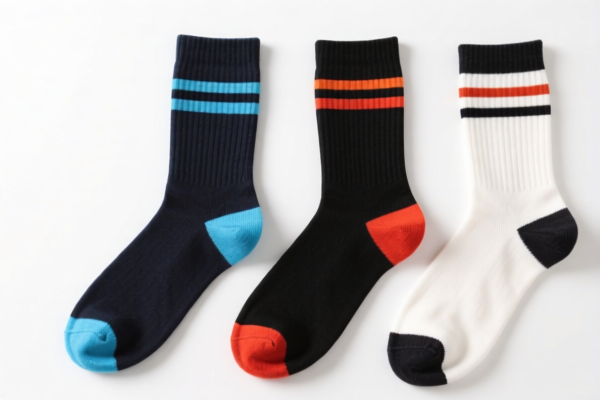
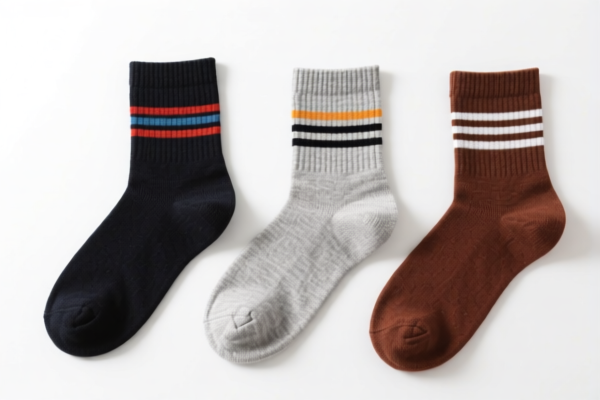
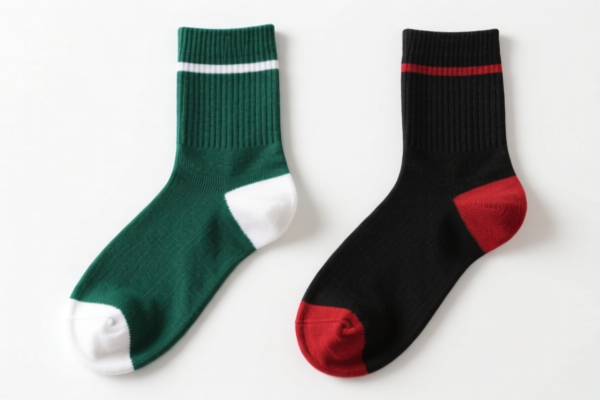
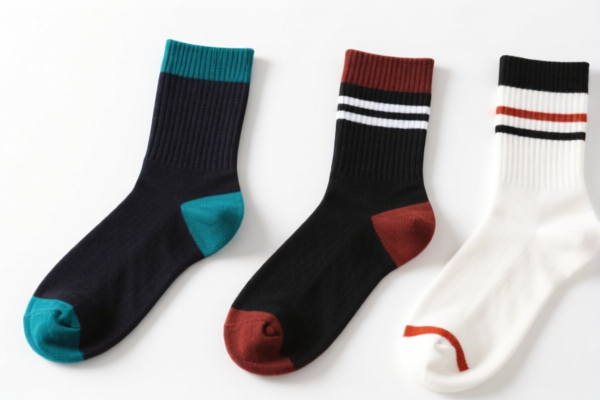
AI Analysis
🧦 Double Pair Socks: The Ultimate Import & Customs Guide
🌐 HS Code Reference & Clearance Strategy | 2026 Latest Tariff Analysis | Professional Clearance Tactics
📌 I. Product Definition & Classification: What are "Double Pair Socks"?
In international trade, "Double Pair Socks" typically refer to socks sold in a set of two pairs (totaling 4 individual socks) in a single retail package. However, for customs classification (HS Code), the physical format (packaging) is secondary to the material composition and knitting method.
⚠️ Key Classification Point:
- Customs looks at the single unit (one sock), not the package.
- The HS Code is determined by Material (Cotton, Synthetic, Wool, etc.) and Knitting Type (Knitted or Crocheted, Chapter 61).
- "Double Pair" is a retail presentation detail, not a customs attribute. It may trigger de minimis exemptions for low-value shipments but does not change the tariff rate.
📦 II. HS Code Classification Details (Based on Provided Data)
Based on the provided <DATA> set, the socks fall under Chapter 61 (Articles of Apparel and Clothing Accessories, Knitted or Crocheted). Specifically, they are classified under heading 6115 (Pantyhose, Tights, Stockings, Socks and Other Hosiery).
Here are the three most likely HS Codes based on material composition:
| HS Code | Product Description (from Data) | Likely Material | Total Tax Rate |
|---|---|---|---|
6115.95.90.00 |
Socks category, morphology matches, material possibly Cotton or other fibers | Cotton / Blends | 31.0% |
6115.96.90.20 |
Socks category, morphology matches, material possibly Synthetic Fibers or Cotton | Synthetic (Polyester/Nylon) | 24.6% |
6115.29.80.10 |
Socks, morphology and classification usage consistent, material possibly Cotton | Cotton / Specific Type | 26.0% |
🔍 Key Distinction:
- 6115.95 vs 6115.96: The difference lies in the fiber content. 95 often covers cotton or mixed fibers with higher cotton content, while 96 covers synthetic fibers (like polyester or nylon) which are common in athletic or dress socks.
- 6115.29: This subheading often relates to specific types of hosiery (e.g., knee-highs or specific functional socks). If your "double pair" socks are standard ankle/crew socks, 6115.95 or 6115.96 are more likely.
💰 III. 2026 Latest Tariff Rate Breakdown (Including Additional Duties)
✅ Applicable Country: United States (US)
✅ Origin: China (CN)
✅ Effective Time: 2025 onwards (Current Data)
🎯 1. 6115.95.90.00 —— Socks (Possibly Cotton)
| Item | Detail |
|---|---|
| Base Tariff | 13.5% |
| Section 301 Add-on | 7.5% |
| Section 122 Tariff | 10.0% |
| Total Effective Rate | 31.0% |
| Tax Calculation | CIF Value × 31.0% |
| De Minimis Exemption | ❌ Not Applicable (High tax burden) |
| Legal Basis | Base Duty + Section 301 (7.5%) + Section 122 (10%) |
📌 Explanation:
- Section 301 (7.5%): Standard retaliatory tariff on Chinese textile products.
- Section 122 (10%): Additional tariff under specific US trade provisions.
- Result: A very high combined rate of 31%. Importers must factor this into pricing.
🎯 2. 6115.96.90.20 —— Socks (Possibly Synthetic)
| Item | Detail |
|---|---|
| Base Tariff | 14.6% |
| Section 301 Add-on | 0.0% |
| Section 122 Tariff | 10.0% |
| Total Effective Rate | 24.6% |
| Tax Calculation | CIF Value × 24.6% |
| De Minimis Exemption | ❌ Not Applicable |
| Legal Basis | Base Duty + Section 122 (10%) |
📌 Note:
- Crucial Advantage: This code has 0% Section 301 Add-on.
- The total tax (24.6%) is 6.4% lower than the cotton classification (31.0%).
- Strategy: If the socks contain synthetic fibers (even if blended), verify if they qualify for 6115.96 to save significant costs.
🎯 3. 6115.29.80.10 —— Socks (Specific Cotton Type)
| Item | Detail |
|---|---|
| Base Tariff | 16.0% |
| Section 301 Add-on | 0.0% |
| Section 122 Tariff | 10.0% |
| Total Effective Rate | 26.0% |
| Tax Calculation | CIF Value × 26.0% |
| De Minimis Exemption | ❌ Not Applicable |
| Legal Basis | Base Duty + Section 122 (10%) |
📌 Note:
- This code also benefits from 0% Section 301 Add-on.
- It is more expensive than the synthetic option (24.6%) but cheaper than the general cotton option (31.0%).
- Use this code only if the specific cotton type matches the customs description for 6115.29.
🛠️ IV. Customs Clearance Practical Advice (Real-World Pitfall Guide)
✅ 1. Documentation Checklist (Non-Negotiable)
| Document | Must Provide | Purpose |
|---|---|---|
| ✅ Commercial Invoice | ✔️ | Must state "Socks, Set of 2 Pairs" and list unit price per single sock or per set clearly. |
| ✅ Packing List | ✔️ | Detail quantity: e.g., "100 Sets (400 individual socks)." |
| ✅ Material Composition Label | ✔️ | Critical for determining HS Code (Cotton % vs. Synthetic %). Must match invoice. |
| ✅ Product Photos | ✔️ | Show packaging, individual socks, and labels. |
| ✅ Test Report (Optional) | ✔️ | If disputed, lab report confirming fiber content (e.g., 80% Cotton, 20% Polyester). |
✅ 2. Declaration Strategy (Key Mantra)
🔥 “Material is King, Package is Just a Wrapper!”
| Scenario | Correct Declaration | Wrong Declaration | Consequence |
|---|---|---|---|
| Synthetic Socks | HS 6115.96.90.20 (24.6%) |
HS 6115.95.90.00 (31.0%) |
Overpay 6.4% tax |
| Cotton Socks | HS 6115.95.90.00 (31.0%) |
HS 6115.96.90.20 (24.6%) |
Under-declared → Penalty + Back Tax |
| "Double Pair" Packaging | Declare as "Socks" | Declare as "Textile Sets" (Wrong) | Customs may reclassify or delay |
📌 Critical Tip:
- Do NOT use the term "Double Pair" as the primary HS Code descriptor.
- Describe it as: "Knitted Cotton Socks, Sold in Retail Sets of Two Pairs."
- The unit of value for duty calculation is usually per pair or per sock, depending on local customs practice. Clarify this in your invoice.
✅ 3. Special Cases & Risk Mitigation
| Situation | Handling Suggestion |
|---|---|
| Mixed Material Socks | If >50% synthetic → Use 6115.96. If >50% cotton → Use 6115.95. Blends are determined by weight. |
| De Minimis Shipment (Under $800) | ❌ Warning: Even if under $800 (Section 321), high-duty items like socks (31%) may still be subject to scrutiny or exclusion from exemption depending on current US policy. Always consult a broker. |
| Country of Origin | If not China, no Section 301/122 applies. Check for FTAs (e.g., USMCA for Canada/Mexico). |
🌍 V. Global Market Comparison (2026)
| Country/Region | Recommended HS Code | Estimated Duty (China Origin) | Notes |
|---|---|---|---|
| 🇺🇸 USA | 6115.96.90.20 (Best) |
24.6% | Highest duty due to Section 301 + 122. |
| 🇪🇺 EU | 6115.95 |
~12-14% | No Section 301. Standard EU textile duty. |
| 🇬🇧 UK | 6115.95 |
~12-14% | Post-Brexit tariff rates apply. |
| 🇨🇳 China | 6115.95 |
~10-15% | Import duty for foreign socks into China. |
📌 Conclusion:
- USA is the most expensive market for Chinese socks due to layered tariffs.
- Synthetic fibers (6115.96) save 6.4% compared to cotton (6115.95) in the US market.
- Optimize material composition if possible to stay under the synthetic threshold for cost savings.
📌 VI. Common Mistakes & Pitfalls (Lessons Learned)
❌ Mistake 1: Declaring "Double Pair Socks" as a new category.
👉 Result: Customs rejects or assigns arbitrary code → Delays & Fines.
❌ Mistake 2: Ignoring Fiber Content.
👉 Result: Using Cotton rate (31%) for Synthetic socks (24.6%) → Loss of Profit.
👉 Fix: Always test or verify material percentage.
❌ Mistake 3: Assuming "De Minimis" ($800) exempts high-tariff goods.
👉 Result: Some high-tariff items are excluded from de minimis. Check current US CBP guidelines.
❌ Mistake 4: Incorrect Unit of Measurement.
👉 Result: Declaring price per "set" when duty is per "pair" → Calculation Errors.
✅ Best Practice:
"Label Clearly: 60% Cotton, 40% Polyester. HS 6115.96.90.20. Price per Pair: $1.00."
🎯 VII. Conclusion: Precision Saves Money!
🎯 Remember:
🔹 "Synthetic = 24.6%, Cotton = 31.0%. Difference: 6.4%!
🔹 "Double Pair is a retail term, not a customs term. Classify by material!"
🔹 "Always declare the unit price per pair or sock accurately."
📌 Pro Tip:
If you are shipping small quantities (e.g., samples or small e-commerce orders), ensure the CIF value is correctly declared. Even if under $800, high duties may apply if the exemption is contested. For bulk imports, negotiate landed costs based on the 24.6% rate (synthetic) to maximize margins.
📣 Immediate Action:
📞 Contact your customs broker with the material composition label of your socks.
🚀 Verify HS Code before shipping to avoid surprise 31% tax bills!
✨ Professional Clearance Starts with Accurate Classification!
💼 Your Cost Efficiency Depends on the Right HS Code!
Customer Reviews
About HS Code Classification
The Harmonized System (HS) is an internationally standardized nomenclature developed by the World Customs Organization (WCO) to classify traded products. Over 200 countries use the HS system as the basis for customs tariffs, trade statistics, and import/export regulations.
Each HS code follows a hierarchical structure:
- Chapter (2 digits) — Broad category of goods (e.g., Chapter 84: Machinery and Mechanical Appliances)
- Heading (4 digits) — More specific grouping within the chapter
- Subheading (6 digits) — Internationally standardized breakdown, used by all WCO member countries
- National subdivisions (8-10 digits) — Country-specific extensions for further classification, such as US HTSUS 10-digit codes
Correct HS code classification is essential for smooth customs clearance, accurate duty payment, and compliance with trade regulations. Misclassification can lead to customs delays, overpayment of duties, or penalties.
When importing from CN to US, the applicable tariff rates may include:
- Most-Favored-Nation (MFN) rate — The standard duty rate applied to WTO members
- General rate — Applied to countries without trade agreements
- Trade remedy duties — Additional tariffs such as Section 301 (anti-dumping), Section 232 (national security), or countervailing duties
The information provided on this page is for reference purposes only. For official classification, please consult with your local customs authority or a licensed customs broker.