double soap bag
CN → US| HS Code | Tariff Rate | Origin | Destination | Doc |
|---|---|---|---|---|
| 3926909989 | 22.8% | CN | US | Official Doc |
| 3926909905 | 22.8% | CN | US | Official Doc |
| 6307909875 | 17.0% | CN | US | Official Doc |
| 6307909891 | 24.5% | CN | US | Official Doc |
Product Images
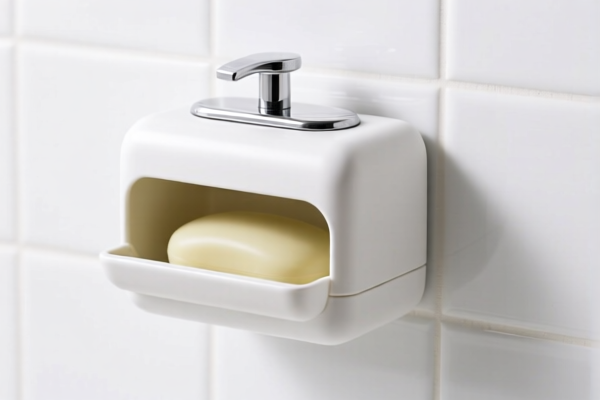
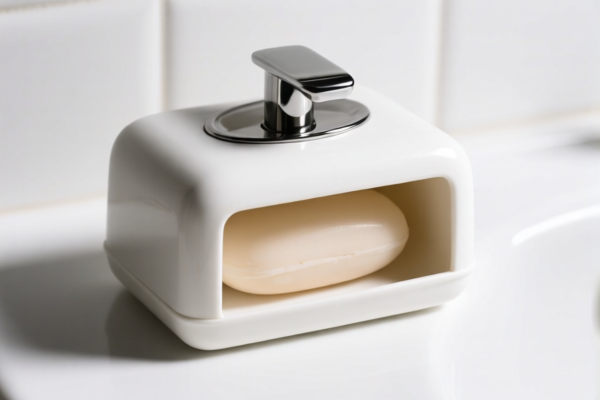
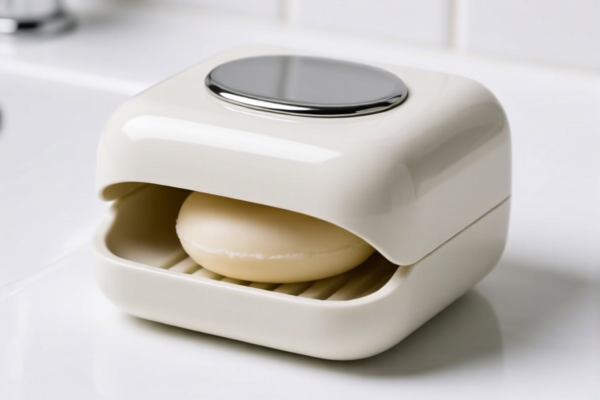
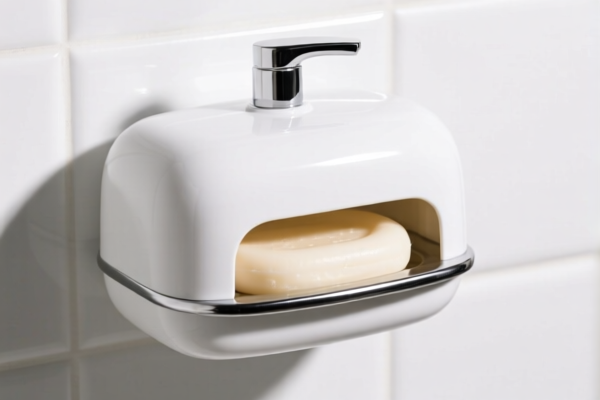
AI Analysis
🧼 Double Soap Bag (Mesh Soap Pouch)
🌐 HS Code Reference & Customs Clearance Guide | 2026 Latest Tariff Analysis | Professional Clearance Strategy
📌 I. Product Definition & Classification: What is a "Double Soap Bag"?
A Double Soap Bag (often referred to as a Mesh Soap Pouch or Soap Net) is a practical household accessory designed to hold two bars of soap simultaneously, allowing for efficient lather generation and drainage. In international trade, its classification hinges entirely on material composition and finished status.
Material Inference:
- Plastic/Synthetic Fiber: If made from synthetic mesh or hard plastic components.
- Fabric/Mesh: If made from woven or knitted textile materials (common for eco-friendly or cloth-based bags).
⚠️ Key Classification Point:
- If the primary material is plastic/synthetic, it falls under Chapter 39 (Articles of Plastic).
- If the primary material is textile/fabric, it falls under Chapter 63 (Other Made-up Articles).
- The "Double" aspect is a design feature, not a classification differentiator. The material dictates the HS Code.
📦 II. HS Code Classification Details (2026 Latest Tariff Authority)
Based on the provided data, here are the four most likely HS Codes for Double Soap Bags, categorized by material inference:
| HS Code | Product Description | Material Inference | Summary & Logic |
|---|---|---|---|
3926.90.99.89 |
Other塑料制品 (Plastic Products) | Plastic or Synthetic Fiber | Inferred as other plastic/synthetic fiber products not specified elsewhere. "Plastic"兜底 (Catch-all) category. |
3926.90.99.05 |
Plastic Finished Consumer Goods | Fabric or Mesh-like Plastic | Inferred as fabric or mesh-like plastic. Fits finished consumer goods, no conflict with plastic catch-all. |
6307.90.98.75 |
Other Made-up Textile Articles | Fabric or Mesh (Textile) | Classified as a finished product under "Other". Inferred as fabric or mesh material. No material conflict. |
6307.90.98.91 |
Double Soap Bag Specific | Fabric or Mesh (Textile) | Matches "Double Soap Bag" finished attribute. Typically made of fabric or mesh. Fits "Other Made-up Articles" catch-all. |
🔍 Key Reminder:
- Plastic-based bags (Chapter 39) generally incur higher total tariffs due to the 10% Section 301/IEEPA surcharge on plastic goods from China.
- Textile-based bags (Chapter 63) may have lower base tariffs but still face the 10% Section 301/IEEPA surcharge if classified under specific subheadings.
- Do not split declarations: The bag is a single finished unit. Do not declare as "plastic net" + "soap holder" separately.
💰 III. 2026 Latest Tariff Rate Breakdown (Including Surcharges & Policy Add-ons)
✅ Applicable Country: United States (US)
✅ Origin: China (CN)
✅ Effective Date: November 10, 2025 (Includes subsequent imports)
✅ Policy: Section 301 Tariffs + IEEPA 10% Surcharge (122 Clause)
🎯 1. 3926.90.99.89 — Other Plastic Products
| Item | Content |
|---|---|
| Base Tariff | 5.3% |
| Section 301 Surcharge | 7.5% |
| IEEPA (122 Clause) Surcharge | 10% |
| Total Tariff Rate | 22.8% |
| Tax Calculation | CIF Value × 22.8% |
| De Minimis Exemption | ❌ Not Eligible (Section 301/IEEPA tariffs apply regardless of value) |
| Legal Pathway | IEEPA:9903.01.25 → USITC:3926.90.99.89 → FOOTNOTE:301 |
📌 Explanation:
- Plastic products are heavily targeted under trade restrictions.
- The 22.8% rate is a blend of standard USITC duties and political surcharges.
- Warning: This is a high-risk classification for cost control. Consider material alternatives if possible.
🎯 2. 3926.90.99.05 — Plastic Finished Consumer Goods
| Item | Content |
|---|---|
| Base Tariff | 5.3% |
| Section 301 Surcharge | 7.5% |
| IEEPA (122 Clause) Surcharge | 10% |
| Total Tariff Rate | 22.8% |
| Tax Calculation | CIF Value × 22.8% |
| De Minimis Exemption | ❌ Not Eligible |
| Legal Pathway | IEEPA:9903.01.24 → USITC:3926.90.99.05 → FOOTNOTE:301 |
📌 Note:
- Despite the different sub-heading, the tariff structure is identical to3926.90.99.89.
- This code is used when the product is clearly defined as a "finished consumer good" made of plastic mesh/fabric-like plastic.
- No cost advantage over the other plastic code.
🎯 3. 6307.90.98.75 — Other Made-up Textile Articles
| Item | Content |
|---|---|
| Base Tariff | 7.0% |
| Section 301 Surcharge | 0.0% |
| IEEPA (122 Clause) Surcharge | 10% |
| Total Tariff Rate | 17.0% |
| Tax Calculation | CIF Value × 17.0% |
| De Minimis Exemption | ❌ Not Eligible (IEEPA 10% still applies) |
| Legal Pathway | IEEPA:9903.01.24 → USITC:6307.90.98.75 → FOOTNOTE:122 |
📌 Key Advantage:
- Saves 5.8% compared to plastic codes!
- Why? The Section 301 (7.5%) surcharge does NOT apply to this specific textile subheading, but the IEEPA 10% surcharge DOES apply.
- Crucial: Must be genuinely made of textile/fabric. If customs inspect and find it’s plastic, this is considered fraudulent declaration with severe penalties.
🎯 4. 6307.90.98.91 — Double Soap Bag Specific Textile
| Item | Content |
|---|---|
| Base Tariff | 7.0% |
| Section 301 Surcharge | 7.5% |
| IEEPA (122 Clause) Surcharge | 10% |
| Total Tariff Rate | 24.5% |
| Tax Calculation | CIF Value × 24.5% |
| De Minimis Exemption | ❌ Not Eligible |
| Legal Pathway | IEEPA:9903.01.25 → USITC:6307.90.98.91 → FOOTNOTE:301 & 122 |
📌 Warning:
- This code applies to textile soap bags but attracts BOTH the Section 301 (7.5%) and IEEPA (10%) surcharges.
- Highest total rate (24.5%) among all options.
- Only use if specifically required by customs for "Double Soap Bag" textile items, but cost-inefficient.
🛠️ IV. Customs Clearance Practical Advice (Avoid Pitfalls)
✅ 1. Required Documentation Checklist (Non-negotiable)
| Document | Must Provide | Explanation |
|---|---|---|
| ✅ Product Specification Sheet | ✔️ | Must clearly state Material (e.g., "100% Polyester Mesh" or "Polyethylene Plastic"). |
| ✅ Material Composition Statement | ✔️ | Detailed breakdown (e.g., "Outer: Nylon Mesh, Inner: Cotton Lining"). |
| ✅ Product Photos | ✔️ | Clear images showing texture, stitching, and any plastic components. |
| ✅ Commercial Invoice | ✔️ | Description: "Double Soap Bag, Mesh Material, Model XYZ". Avoid vague terms like "Accessory". |
| ✅ Packing List | ✔️ | Confirm net/gross weight. Ensure no hidden plastic parts if declaring as textile. |
| ✅ Third-Party Test Report | ✔️ | If claiming textile, provide a fiber content test report to avoid misclassification. |
✅ 2. Declaration Strategy (Key Mnemonic)
🔥 “Material is King, Code follows Material, Surcharge follows Policy!”
| Scenario | Correct Declaration | Incorrect Action | Consequence |
|---|---|---|---|
| Plastic Mesh Bag | 3926.90.99.89 or 3926.90.99.05 |
Declare as 6307 (Textile) |
Fraud! Severe penalties, goods seized. |
| Fabric/Textile Bag | 6307.90.98.75 |
Declare as 6307.90.98.91 |
Unnecessary Cost! Pay 24.5% instead of 17.0%. |
| Mixed Material (Plastic Frame + Mesh) | Check Principal Material | Declare as "Mixed" | Customs will assess based on essential character. Usually plastic if frame is dominant. |
| Sample for Evaluation | Mark "NOT FOR SALE" | Declare as Commercial | May still incur taxes if value > $800 (De Minimis limit changes). |
✅ 3. Special Situations
| Situation | Handling Advice |
|---|---|
| OEM Custom Colors | Provide design proof. Color does not affect HS Code, but ensures no confusion with similar items. |
| Packaged with Soap | Declare Bag and Soap Separately! Soap is Chapter 34 (different tariff). Do not bundle into one HS Code. |
| Eco-Friendly/Biodegradable | If truly biodegradable (e.g., PLA plastic), provide certification. May still fall under 3926, but could affect environmental compliance. |
| High-Value Luxury Brand | If brand adds significant value, ensure invoice reflects true value to avoid under-declaration audits. |
🌍 V. Global Market Comparison (2026 Latest)
| Country/Region | Recommended HS Code | Tariff Rate | Certification | Remarks |
|---|---|---|---|---|
| 🇺🇸 USA | 6307.90.98.75 (Textile) |
17.0% | None usually required | Best for Textile. Avoid Plastic (3926) unless necessary (22.8%). |
| 🇨🇳 China | 6307.90.98.75 |
5.0% - 10% | None | Lower base rates. No Section 301/IEEPA. |
| 🇪🇺 EU | 6307.90.98.75 |
4.0% - 6.0% | CE (if plastic) | No anti-dumping. Stable rates. |
| 🇬🇧 UK | 6307.90.98.75 |
4.0% - 6.0% | UKCA (if plastic) | Post-Brexit rules similar to EU. |
| 🇯🇵 Japan | 6307.90.98.75 |
5.0% - 7.0% | PSE (if plastic) | Low tariffs. Good market. |
📌 Conclusion:
- For USA Imports: Textile-based soap bags (6307.90.98.75) are 5.8% cheaper than plastic-based ones.
- For Plastic Bags: You cannot avoid the 22.8% rate. Focus on volume efficiency.
- For Other Markets: Tariffs are generally lower and more stable.
📌 VI. Common Mistakes & Pitfalls (Lessons Learned)
❌ Mistake 1: Declaring a Plastic Mesh Bag as 6307 (Textile) to save taxes.
👉 Result: Customs inspection reveals plastic. Penalty: 2-3x tax value + legal fees.
❌ Mistake 2: Declaring a Textile Soap Bag as 6307.90.98.91.
👉 Result: Paying 24.5% instead of 17.0%. Unnecessary cost of 7.5% per unit.
❌ Mistake 3: Bundling Soap + Bag into one HS Code.
👉 Result: Customs rejects because soap and bag have different chapters. Shipment delayed.
❌ Mistake 4: Ignoring Section 301/IEEPA in cost calculation.
👉 Result: Profit margin wiped out by surprise 10-17% surcharges.
✅ Correct Action:
"Double Soap Bag, 100% Polyester Mesh, Model XYZ, for Household Use, Not for Resale of Soap"
🎯 VII. Conclusion: Smart Classification, Maximize Profit!
🎯 Remember the Mnemonic:
🔹 “Plastic: 22.8%, Textile: 17.0% (if 6307.98.75), Fraud: Jail!”
🔹 “Check material first, then apply surcharge, declare separately for soap!”
📌 Pro Tip:
If your product is textile-based, ensure your supplier provides a Fiber Content Test Report from a recognized lab (e.g., SGS, BV) to support the 6307.90.98.75 classification and avoid the higher 24.5% rate or fraud accusations.
📣 Immediate Action:
📞 Contact your Customs Broker + Provide Material Test Report + Use
6307.90.98.75for Textile Bags
🚀 Reduce Tariff Cost by 5.8% with Correct Classification!
✨ Professional Clearance, Starts with Accurate Classification!
💼 Your Margin Depends on Your HS Code!
Customer Reviews
About HS Code Classification
The Harmonized System (HS) is an internationally standardized nomenclature developed by the World Customs Organization (WCO) to classify traded products. Over 200 countries use the HS system as the basis for customs tariffs, trade statistics, and import/export regulations.
Each HS code follows a hierarchical structure:
- Chapter (2 digits) — Broad category of goods (e.g., Chapter 84: Machinery and Mechanical Appliances)
- Heading (4 digits) — More specific grouping within the chapter
- Subheading (6 digits) — Internationally standardized breakdown, used by all WCO member countries
- National subdivisions (8-10 digits) — Country-specific extensions for further classification, such as US HTSUS 10-digit codes
Correct HS code classification is essential for smooth customs clearance, accurate duty payment, and compliance with trade regulations. Misclassification can lead to customs delays, overpayment of duties, or penalties.
When importing from CN to US, the applicable tariff rates may include:
- Most-Favored-Nation (MFN) rate — The standard duty rate applied to WTO members
- General rate — Applied to countries without trade agreements
- Trade remedy duties — Additional tariffs such as Section 301 (anti-dumping), Section 232 (national security), or countervailing duties
The information provided on this page is for reference purposes only. For official classification, please consult with your local customs authority or a licensed customs broker.