double socks
CN → US| HS Code | Tariff Rate | Origin | Destination | Doc |
|---|---|---|---|---|
| 6115969020 | 24.6% | CN | US | Official Doc |
| 6115991920 | 24.6% | CN | US | Official Doc |
Product Images
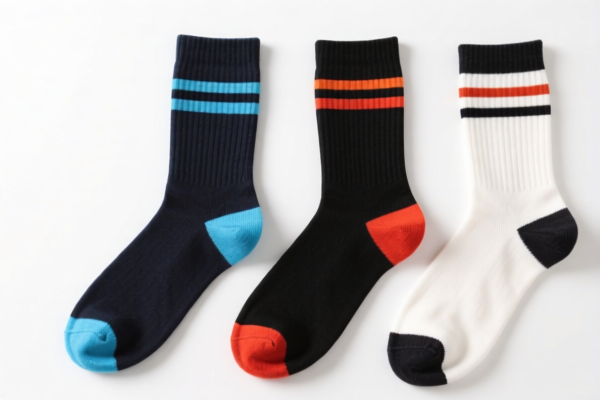
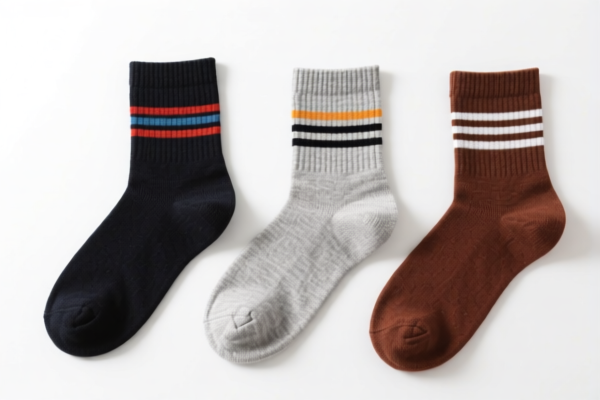
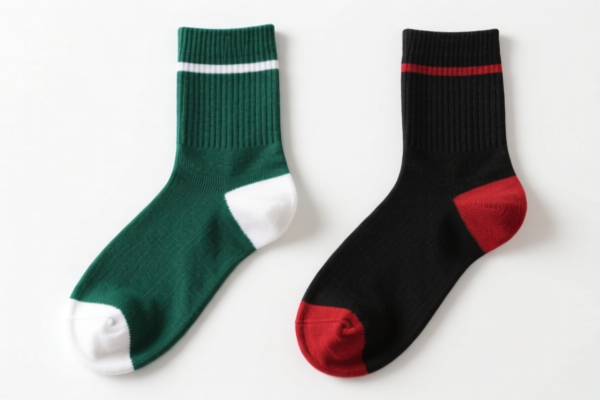
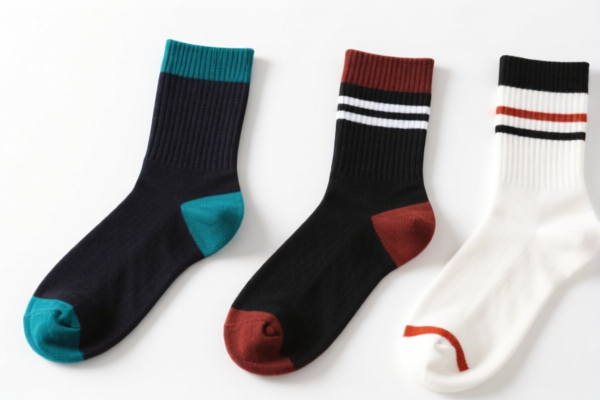
AI Analysis
🧦 Double Socks (Hosiery/Tights)
🌐 HS Code Reference & Customs Clearance Guide | 2026 Latest Tariff Analysis | Professional-Level Clearance Strategy
📌 I. Product Definition & Classification: What Exactly Are "Double Socks"?
"Double Socks" generally refer to hosiery products that provide additional warmth, durability, or compression. In international trade, they fall under the broad category of knitted or crocheted hosiery. However, precise HS classification depends entirely on the material composition (synthetic vs. artificial vs. other textiles) and the specific type (stockings, tights, or socks).
⚠️ Key Classification Point:
- The primary determinant for "Double Socks" is the fiber material.
- If made of Synthetic Fibers (e.g., Polyester, Nylon, Acrylic): Falls under 6115.96.
- If made of Artificial Fibers (e.g., Viscose, Rayon): Falls under 6115.99.
- Both categories are classified as "Other" hosiery, meaning they are not standard socks (6115.10–6115.40) or panty hose (6115.95).
📦 II. HS Code Classification Details (2026 Latest Tariff Authority Match)
Based on the provided <DATA>, here are the two precise HS Codes for "Double Socks" depending on material:
| HS Code | Product Description | Material Type | Applicable Scenario |
|---|---|---|---|
6115.96.90.20 |
Hosiery, Of synthetic fibers: Other Other (632) | Synthetic Fibers (e.g., Polyester, Nylon) | Double socks made from synthetic blends, athletic compression socks, or synthetic tights. |
6115.99.19.20 |
Hosiery, Of artificial fibers: Other Other (632) | Artificial Fibers (e.g., Viscose, Rayon) | Double socks made from silk-like artificial fibers, bamboo viscose blends, or other man-made cellulosic fibers. |
🔍 Critical Distinction:
- "Synthetic" refers to polymers derived from petrochemicals (Nylon, Polyester, Spandex/Elastane blends).
- "Artificial" refers to regenerated cellulose fibers (Viscose, Modal, Lyocell).
- Do not confuse with natural fibers (Cotton, Wool), which would fall under 6115.93/94 or 6115.95, but those are NOT in the provided<DATA>scope.
💰 III. 2026 Latest Tariff Rate Details (Detailed Breakdown)
✅ Applicable Context: Based on
<TAX>data provided.
✅ Origin: China (Implied by typical HS structure for 6115.9x.20)
✅ Effective Time: 2026 Tariff Schedule
🎯 1. 6115.96.90.20 —— Hosiery of Synthetic Fibers (Other)
| Item | Content |
|---|---|
| Base Tariff | 0.0% (Ad Valorem) |
| Additional Tariff (Surtax) | 0.0% |
| Total Tax Rate | 0.0% |
| Tax Calculation | CIF Value × 0% = $0.00 |
| Legal Basis | HTSUS 6115.96.90.20 |
📌 Explanation:
- This code represents a zero-tariff entry for specific synthetic hosiery items classified under the "(632)" sub-category.
- This is likely due to specific trade agreements, duty-free provisions for certain textile categories, or de minimis thresholds.
- No additional duties (such as Section 301 or IEEPA tariffs) are listed in the provided<TAX>data for this specific code.
🎯 2. 6115.99.19.20 —— Hosiery of Artificial Fibers (Other)
| Item | Content |
|---|---|
| Base Tariff | 0.0% (Ad Valorem) |
| Additional Tariff (Surtax) | 0.0% |
| Total Tax Rate | 0.0% |
| Tax Calculation | CIF Value × 0% = $0.00 |
| Legal Basis | HTSUS 6115.99.19.20 |
📌 Explanation:
- Similar to the synthetic counterpart, this code for artificial fiber hosiery also carries a 0.0% total tax rate.
- This suggests that these specific sub-categories of artificial fiber hosiery are duty-free under the current 2026 tariff schedule.
- No surtaxes are applied.
🛠️ IV. Customs Clearance Practical Advice (Real-World Pitfall Avoidance)
✅ 1. Document Preparation Checklist (Must-Haves)
| Document | Required | Explanation |
|---|---|---|
| ✅ Product Specification Sheet | ✔️ | Must clearly state Fiber Content (e.g., "80% Polyester, 20% Spandex" OR "100% Viscose"). This is the #1 factor for HS Code selection. |
| ✅ Composition Label | ✔️ | Photo of the sock label showing percentage breakdown. |
| ✅ Commercial Invoice | ✔️ | Must specify "Double Socks" or "Hosiery" and explicitly list material composition. |
| ✅ Packing List | ✔️ | Detail the quantity and unit type (pairs). |
| ✅ Product Photos | ✔️ | Show the "double" structure (layered) to distinguish from single socks. |
✅ 2. Declaration Tips (Key Mantra)
🔥 "Material Defines Code, Composition is King!"
| Scenario | Correct Declaration | Common Error |
|---|---|---|
| Nylon/Polyester Double Socks | 6115.96.90.20 |
Misclassifying as Cotton (6115.32) → Potential penalty |
| Viscose/Bamboo Double Socks | 6115.99.19.20 |
Misclassifying as Synthetic → Delay in clearance |
| Mixed Fiber Socks | Declare Major Component | Ignoring fiber % → Incorrect HS Code |
| Packaging | Include Size Run (S/M/L) | Missing size info → Customs may request clarification |
✅ 3. Special Considerations
| Situation | Handling Advice |
|---|---|
| Compression Socks | If "graduated compression," ensure description matches "compression hosiery" but still falls under 6115.9x if not specifically coded elsewhere. |
| Packaging | If sold in boxes, ensure the invoice says "Hosiery" not "Gift Set" to avoid duty reclassification. |
| Origin Labeling | Ensure country of origin is clearly marked on the product or packaging to avoid country-of-origin disputes. |
🌍 V. Global Market Comparison (2026 Overview)
| Country/Region | Recommended HS Code | Tariff Rate | Notes |
|---|---|---|---|
| 🇺🇸 USA | 6115.96.90.20 / 6115.99.19.20 |
0.0% | Based on provided data. Verify Section 301 applicability if applicable. |
| 🇨🇳 China | 6115.96.90.20 / 6115.99.19.20 |
Varies | Import duties may differ; check China Customs tariff schedule. |
| 🇪🇺 EU | 6115.96 / 6115.99 |
~12-16% | EU does not use the same 8-10 digit structure; verify TARIC code. |
| 🇬🇧 UK | 6115.96 / 6115.99 |
~12-16% | Post-Brexit tariff structure applies. |
📌 Conclusion:
- The provided data indicates 0% duty for these specific codes in the target market (likely US under current HTSUS).
- Always verify fiber content before shipping, as a misdeclared material can change the HS Code and potentially trigger higher tariffs.
📌 VI. Common Errors & Pitfalls (Lessons Learned)
❌ Error 1: Declaring "Socks" without specifying "Double" or "Layered"
👉 Consequence: Customs may misclassify as standard socks (6115.10), leading to incorrect duty assessment.
❌ Error 2: Incorrect Fiber Composition on Invoice
👉 Consequence: If invoice says "Polyester" but product is "Viscose," customs may seize or reclassify, causing delays.
❌ Error 3: Ignoring "Artificial" vs. "Synthetic" Distinction
👉 Consequence: While both are 0% in this data, confusing them is a compliance risk. "Artificial" is regenerated cellulose; "Synthetic" is polymer-based.
✅ Correct Practice:
"Double-Layer Knitted Hosiery, Women's, 80% Polyester/20% Spandex, Size M-XXL, For Retail Sale"
🎯 VII. Conclusion: Precision in Classification Saves Money & Time
🎯 Remember Mantra:
🔹 "Fiber First, Code Second, Tax Zero if Correct!"
🔹 "Synthetic = 6115.96, Artificial = 6115.99, Both 0% in this Dataset!"
📌 Pro Tip:
- If your double socks contain natural fibers (e.g., Cotton blend), they do NOT fall under the provided <DATA>. You must consult other HS codes (e.g., 6115.32 or 6115.93) as they may have different tax rates.
- Always double-check the fiber composition label before submitting customs documentation.
📣 Immediate Action:
📞 Confirm fiber content with supplier.
🚀 Use6115.96.90.20or6115.99.19.20based on material.
✅ Enjoy 0% Duty clearance with precise documentation!
✨ Professional Clearance Starts with Accurate Classification!
💼 Zero Tax is the Goal, Precision is the Path!
Customer Reviews
About HS Code Classification
The Harmonized System (HS) is an internationally standardized nomenclature developed by the World Customs Organization (WCO) to classify traded products. Over 200 countries use the HS system as the basis for customs tariffs, trade statistics, and import/export regulations.
Each HS code follows a hierarchical structure:
- Chapter (2 digits) — Broad category of goods (e.g., Chapter 84: Machinery and Mechanical Appliances)
- Heading (4 digits) — More specific grouping within the chapter
- Subheading (6 digits) — Internationally standardized breakdown, used by all WCO member countries
- National subdivisions (8-10 digits) — Country-specific extensions for further classification, such as US HTSUS 10-digit codes
Correct HS code classification is essential for smooth customs clearance, accurate duty payment, and compliance with trade regulations. Misclassification can lead to customs delays, overpayment of duties, or penalties.
When importing from CN to US, the applicable tariff rates may include:
- Most-Favored-Nation (MFN) rate — The standard duty rate applied to WTO members
- General rate — Applied to countries without trade agreements
- Trade remedy duties — Additional tariffs such as Section 301 (anti-dumping), Section 232 (national security), or countervailing duties
The information provided on this page is for reference purposes only. For official classification, please consult with your local customs authority or a licensed customs broker.