dough flattener
CN → US| HS Code | Tariff Rate | Origin | Destination | Doc |
|---|---|---|---|---|
| 8210000000 | 38.7% | CN | US | Official Doc |
| 8438100090 | 17.5% | CN | US | Official Doc |
| 8479820040 | 35.0% | CN | US | Official Doc |
| 8438100010 | 17.5% | CN | US | Official Doc |
| 8479820080 | 35.0% | CN | US | Official Doc |
Product Images
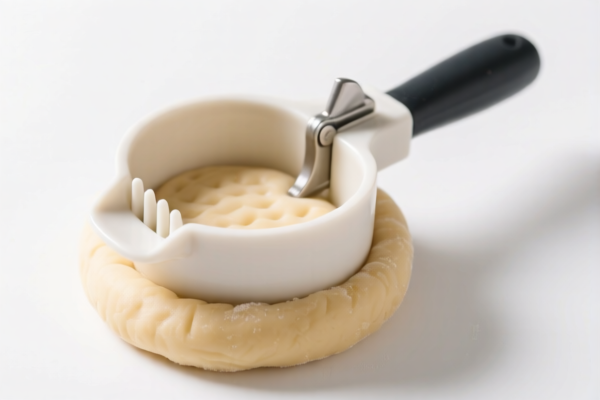
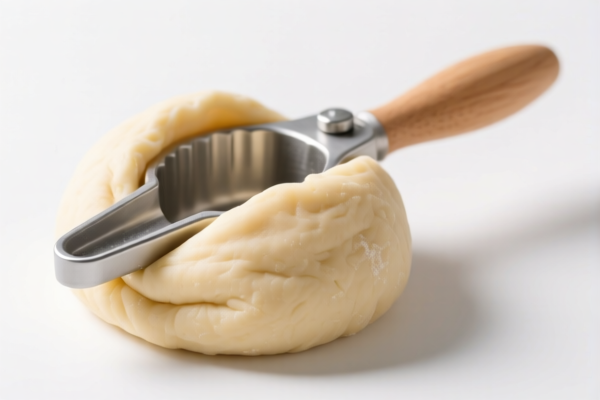
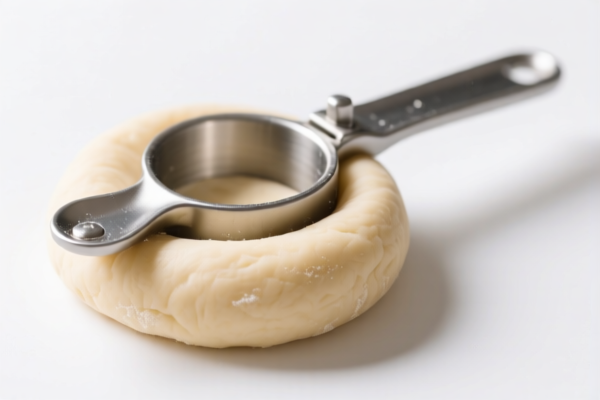
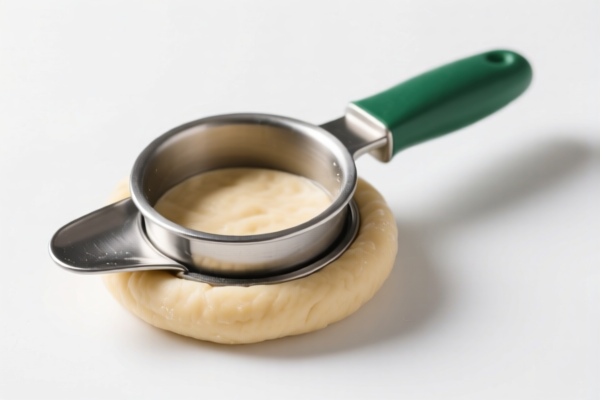
AI Analysis
🥯 Dough Flattener (Food Processing Machinery)
🌐 HS Code Reference & Customs Clearance Guide | 2026 Latest Tariff Analysis | Professional Level Compliance Strategy
📌 Part 1: Product Definition & Classification: Do You Really Understand "Dough Flattener"?
A Dough Flattener is specialized machinery used in food preparation to flatten, roll, or press dough into uniform sheets. It is commonly used in the production of noodles, pasta, dumplings, flatbreads, and pizza bases.
In international trade, its classification depends heavily on its specific function and industrial application:
Type A: Specific Food Preparation Machinery (8210.00.00.00)
If the machine is designed generally for food/ beverage preparation and contains base metal parts, it may fall under "Machines for preparing food or drinks."
Type B: Noodle/Pasta Processing Machinery (8438.10.00.x0)
If the device is specifically used for manufacturing noodles, pasta, or similar wheat-based products, it falls under the specific subheading for "Machines for the manufacture of noodles, pasta, couscous, or similar farinaceous products."
Type C: General Mixing/Kneading Machinery (8479.82.00.x0)
If the machine’s primary function is mixing, kneading, or pressing dough without a specific "pasta/noodle" designation, or if it serves as a general industrial mixer/kneader, it falls under "Machines for mixing, kneading, working, or emulsifying doughs."
⚠️ Key Distinction Point:
- If it is a dedicated noodle/pasta line component → 8438.10
- If it is a general-purpose dough press/mixer → 8479.82
- If it is a general food prep machine with base metal parts → 8210.00
📦 Part 2: HS Code Classification Details (2026 Latest Tariff Authority Comparison)
| HS Code | Product Description | Application Scenario | Taxation Logic |
|---|---|---|---|
8210.00.00.00 |
Machines for preparing food or drinks, with base metal parts | General food prep, multi-use dough tools | High Tariff (38.7%) |
8438.10.00.90 |
Machines for manufacturing noodles, pasta, etc. (Other) | Industrial pasta/noodle lines | Medium Tariff (17.5%) |
8438.10.00.10 |
Machines for manufacturing noodles, pasta, etc. (Specific) | Bread machinery / Industrial food prep | Medium Tariff (17.5%) |
8479.82.00.40 |
Machines for mixing/kneading dough (Specific) | Industrial dough mixers/presses | High Tariff (35.0%) |
8479.82.00.80 |
Machines for mixing/kneading dough (Other) | General purpose pressing/kneading machines | High Tariff (35.0%) |
🔍 Key Reminder:
- 8438.10 codes benefit from a 0% Base Duty but attract a 7.5% Section 301 surcharge.
- 8479.82 codes also have a 0% Base Duty but attract a 25% Section 301 surcharge.
- 8210.00 has a 3.7% Base Duty plus a 25% Section 301 surcharge.
- All HS Codes listed above are subject to an additional 10% Section 122 Tariff.
💰 Part 3: 2026 Latest Tariff Rate Breakdown (Including Surtaxes & Policy Add-ons)
✅ Applicable Country: United States (US)
✅ Origin: China (CN)
✅ Effective Date: November 10, 2025 (including subsequent imports)
🎯 1. 8210.00.00.00 – Food Preparation Machinery (Base Metal Parts)
| Item | Content |
|---|---|
| Base Duty | 3.7% (Ad Valorem) |
| Section 301 Surtax | +25.0% (USITC Footnote 9903.88.01) |
| Section 122 Tariff | +10.0% (Trade Promotion Authority) |
| Total Tax Rate | 38.7% |
| Tax Calculation | CIF Value × 38.7% |
| De Minimis Exemption? | ❌ No (deny_de_minimis) |
| Legal Basis Path | IEEPA:9903.01.25 → IEEPA:9903.01.24 → USITC:8210.00.00.00 → FOOTNOTE:9903.88.01 |
📌 Explanation:
- The 3.7% Base Duty applies to general food prep machines with base metal parts.
- The 25% Section 301 Surcharge is the standard penalty for Chinese-origin machinery under USITC rules.
- The 10% Section 122 Tariff is a specific trade law add-on for certain industrial goods.
- Total 38.7%: A significant cost driver. Avoid this code if a more specific food machine code applies.
🎯 2. 8438.10.00.90 / 8438.10.00.10 – Noodle/Pasta/Bread Machinery
| Item | Content |
|---|---|
| Base Duty | 0.0% |
| Section 301 Surtax | +7.5% (USITC Footnote 9903.88.01 - Reduced Rate) |
| Section 122 Tariff | +10.0% (Trade Promotion Authority) |
| Total Tax Rate | 17.5% |
| Tax Calculation | CIF Value × 17.5% |
| De Minimis Exemption? | ❌ No (deny_de_minimis) |
| Legal Basis Path | IEEPA:9903.01.24 → USITC:8438.10.00.xx → FOOTNOTE:9903.88.01 |
📌 Key Advantage:
- These codes enjoy a 0% Base Duty.
- The Section 301 surcharge is only 7.5% (significantly lower than the standard 25%).
- Total 17.5%: This is the most cost-effective classification for dough flatteners if they can be clearly defined as noodle, pasta, or bread manufacturing equipment.
- Note:8438.10.00.10is for bread machinery logic;8438.10.00.90is for other pasta/noodle machines. Both share the same 17.5% rate.
🎯 3. 8479.82.00.40 / 8479.82.00.80 – Mixing/Kneading Machinery
| Item | Content |
|---|---|
| Base Duty | 0.0% |
| Section 301 Surtax | +25.0% (USITC Footnote 9903.88.01) |
| Section 122 Tariff | +10.0% (Trade Promotion Authority) |
| Total Tax Rate | 35.0% |
| Tax Calculation | CIF Value × 35.0% |
| De Minimis Exemption? | ❌ No (deny_de_minimis) |
| Legal Basis Path | IEEPA:9903.01.25 → IEEPA:9903.01.24 → USITC:8479.82.00.xx → FOOTNOTE:9903.88.01 |
📌 Explanation:
- If the machine is classified as a general "mixing or kneading" machine (not specific to pasta/noodle lines), it falls here.
- Base duty is 0%, but the 25% Section 301 surcharge applies.
- Total 35.0%: Higher than the noodle/pasta category (17.5%) but slightly lower than the base metal food prep category (38.7%).
-8479.82.00.40is for specific mixers;8479.82.00.80is for "other" mixing/kneading/pressing machines. Both share the same 35.0% rate.
🛠️ Part 4: Customs Clearance Practical Advice (Battle-Tested Pitfall Guide)
✅ 1. Documentation Checklist (Non-Negotiable)
| Document | Required | Notes |
|---|---|---|
| ✅ Product Specification Sheet | ✔️ | Must clearly state function (e.g., "Noodle Dough Flattener" vs. "General Dough Mixer") |
| ✅ Technical Diagrams | ✔️ | Show if it is part of a line (pasta) or standalone (mixer) |
| ✅ Product Photos (with Nameplate) | ✔️ | Clear view of model number, voltage, and purpose |
| ✅ Commercial Invoice | ✔️ | Must describe item as "Machinery for Noodle/Pasta Manufacture" if claiming 17.5% |
| ✅ Packing List | ✔️ | Detailed breakdown of machine vs. accessories |
| ✅ Certificate of Origin (CO) | ✔️ | Confirm CN origin to apply correct surcharges |
| ✅ FCC/CE Certification | ✔️ | For electrical components, if applicable |
✅ 2. Declaration Strategy (Critical Tips)
🔥 "Be Specific, Not Generic! 'Noodle Machine' Saves You 21% vs 'Food Prep'!"
| Scenario | Correct Declaration | Wrong Declaration | Result |
|---|---|---|---|
| Machine for Noodle/Pasta Line | 8438.10.00.xx(17.5%) |
"Dough Flattener" (Generic) → Risk of 8210 or 8479 | Save $21,000 on $100k shipment |
| Machine for Bread Making | 8438.10.00.10(17.5%) |
"Industrial Mixer" → 8479.82 | Save $17,500 on $100k shipment |
| General Dough Press (No Line) | 8479.82.00.xx(35.0%) |
"Food Preparation Machine" → 8210.00 | Save $3,700 on $100k shipment |
| Base Metal Manual Tool | 8210.00.00.00(38.7%) |
N/A | Highest Tax Tier |
📌 Strategy:
- If your dough flattener is used in a pasta or noodle production line, insist on 8438.10. The 7.5% Section 301 rate is a huge advantage.
- If it is a standalone unit for general dough handling, aim for 8479.82 (35.0%) rather than 8210.00 (38.7%).
- Avoid describing it simply as "Food Machine" without context, as this may trigger the higher base duty or incorrect classification.
✅ 3. Special Cases & Handling
| Scenario | Recommendation |
|---|---|
| OEM Custom Dough Flattener | Provide customer PO + design drawings. Clearly label as "Part of Noodle Production Line" if applicable. |
| Hybrid Machine (Mix + Press) | If it kneads AND flattens, classify as 8479.82 (Mixing/Kneading) unless it’s a dedicated pasta line. |
| Manual vs. Electric | Ensure electrical specs are clear. If manual, it might still be 8210 if base metal. |
| Used Machinery | Provide maintenance records and age proof. Duties remain the same, but compliance is stricter. |
🌍 Part 5: Global Market Comparison (2026 Latest)
| Country/Region | Recommended HS Code | Tariff (China Origin) | Certification | Notes |
|---|---|---|---|---|
| 🇺🇸 USA | 8438.10.00.xx |
17.5% (Best Case) | FCC + UL | Avoid 8210/8479 if possible |
| 🇨🇳 China | 8438.10.00.xx |
5% (Import) | CCC | Low entry barrier |
| 🇪🇺 EU | 8438.10.00.xx |
0% (General) | CE + RoHS | No Section 301 equivalent |
| 🇬🇧 UK | 8438.10.00.xx |
0% (Post-Brexit) | UKCA | Free trade opportunities |
| 🇦🇺 Australia | 8438.10.00.xx |
5% | RCM | Moderate tariff |
📌 Conclusion:
- USA is the highest-cost market due to Section 301 and 122 tariffs.
- Optimizing HS Code from 8210 (38.7%) to 8438.10 (17.5%) can cut tariffs by nearly HALF.
- EU/UK/Australia offer much lower tariffs, making China-origin machinery highly competitive.
📌 Part 6: Common Mistakes & Pitfalls (Blood-Tested Lessons)
❌ Mistake 1: Using a generic name like "Kitchen Appliance" or "Food Tool"
👉 Consequence: Customs may assign 8210.00.00.00 (38.7%) due to lack of specificity.
✅ Fix: Use precise language: "Industrial Dough Flattener for Noodle Production"
❌ Mistake 2: Misclassifying a Pasta Machine as a General Mixer
👉 Consequence: Paying 35.0% instead of 17.5%.
✅ Fix: Provide line diagrams showing integration into pasta production.
❌ Mistake 3: Ignoring Section 122 Tariff
👉 Consequence: Unexpected 10% additional charge on top of Section 301.
✅ Fix: Factor 10% into all US landing cost calculations.
❌ Mistake 4: Splitting Machine and Accessories for De Minimis
👉 Consequence: Denial of de minimis. All parts must be declared together under the main HS Code.
✅ Fix: Ship as one unit or declare accessories under the same HS Code.
🎯 Part 7: Conclusion: Precision Classification = Profit Protection
🎯 Remember the Golden Rule:
🔹 "Noodle/Pasta = 17.5% | General Mixer = 35.0% | Base Metal Food = 38.7%"
🔹 "HS Code determines fate! A 21% difference can make or break your margin!"
📌 Pro Tip:
- If your dough flattener is used in a pasta/noodle factory, ensure your invoice and commercial documents explicitly state "For Use in Noodle/Pasta Manufacturing".
- Consider Advance Rulings from US CBP if the machine’s function is ambiguous.
- For shipments under $800, remember de minimis does NOT apply to these HS Codes (denied de minimis status).
📣 Immediate Action:
📞 Consult a licensed customs broker
📄 Prepare technical documentation highlighting food processing specificity
🚀 Optimize your HS Code to save thousands in duties!
✨ Professional Clearance Starts with Precise Classification!
💼 Every Dollar of Duty Saved is Pure Profit!
Customer Reviews
About HS Code Classification
The Harmonized System (HS) is an internationally standardized nomenclature developed by the World Customs Organization (WCO) to classify traded products. Over 200 countries use the HS system as the basis for customs tariffs, trade statistics, and import/export regulations.
Each HS code follows a hierarchical structure:
- Chapter (2 digits) — Broad category of goods (e.g., Chapter 84: Machinery and Mechanical Appliances)
- Heading (4 digits) — More specific grouping within the chapter
- Subheading (6 digits) — Internationally standardized breakdown, used by all WCO member countries
- National subdivisions (8-10 digits) — Country-specific extensions for further classification, such as US HTSUS 10-digit codes
Correct HS code classification is essential for smooth customs clearance, accurate duty payment, and compliance with trade regulations. Misclassification can lead to customs delays, overpayment of duties, or penalties.
When importing from CN to US, the applicable tariff rates may include:
- Most-Favored-Nation (MFN) rate — The standard duty rate applied to WTO members
- General rate — Applied to countries without trade agreements
- Trade remedy duties — Additional tariffs such as Section 301 (anti-dumping), Section 232 (national security), or countervailing duties
The information provided on this page is for reference purposes only. For official classification, please consult with your local customs authority or a licensed customs broker.