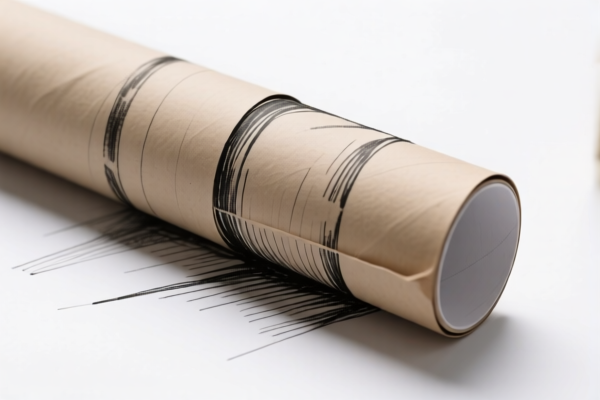
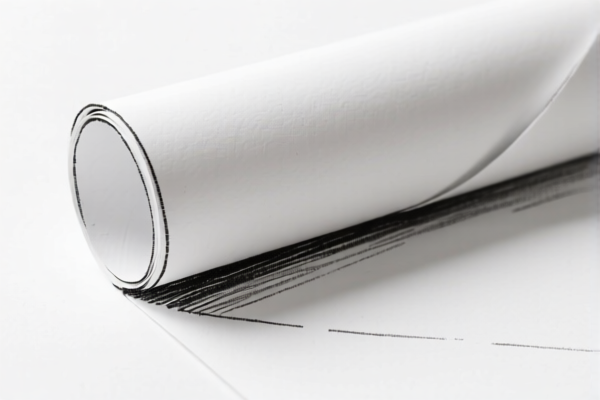
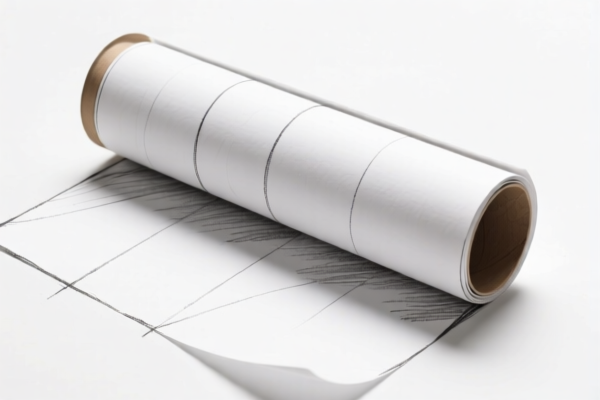
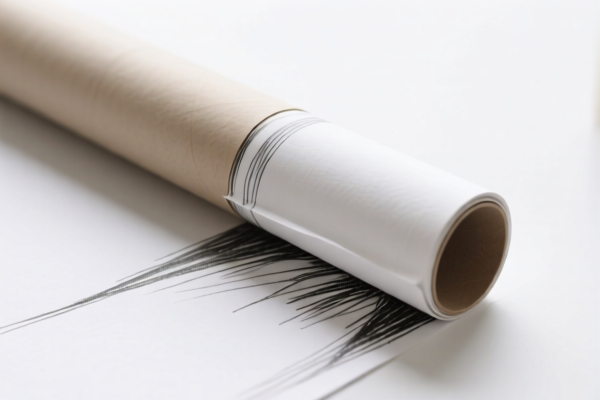
drawing paper roll
CN → US| HS Code | Tariff Rate | Origin | Destination | Doc |
|---|---|---|---|---|
| 4811908030 | 35.0% | CN | US | Official Doc |
| 4811906010 | 35.0% | CN | US | Official Doc |
| 4802552000 | 35.0% | CN | US | Official Doc |
| 4802612000 | 35.0% | CN | US | Official Doc |
Product Images
AI Analysis
📄 Drawing Paper Rolls (Paper, Paperboard, Cellulose Wadding and Webs)
🌐 HS Code Reference & Customs Clearance Guide | 2024 Latest Tariff Analysis | Professional Clearance Strategy
📌 I. Product Definition & Classification: Do You Really Know "Drawing Paper"?
Drawing Paper, in the context of international trade, refers to uncoated paper specifically designed for drawing, sketching, or technical illustration. It is distinct from standard printer paper (which may be coated or have different brightness/opacity requirements) and kraft paper.
In international trade, it is primarily categorized based on its fiber content and production process:
- Mechanical/Chemi-mechanical Process (>10% fibers): Paper containing a significant amount of wood pulp derived from mechanical grinding or chemi-mechanical pulping. This is the most common type for general drawing paper due to cost-effectiveness and texture.
- Non-Mechanical Process (≤10% fibers): Paper made from chemical pulps (e.g., virgin wood pulp without mechanical grinding) or other non-mechanical sources. This type often has higher durability and resistance to yellowing.
⚠️ Key Distinction Point:
- If the paper contains more than 10% of fibers from a mechanical or chemi-mechanical process → Classify under 4802.61.
- If the paper contains 10% or less of fibers from a mechanical or chemi-mechanical process (i.e., mostly chemical pulp) → Classify under 4802.55.
- Note: Both must be "Uncoated" and "Of a kind used for writing, printing or other graphic purposes."
📦 II. HS Code Classification Details (2024 Latest Tariff Authority Comparison)
| HS Code | Product Description | Application Scenario | Fiber Content | Base Duty | Section 301 Duty | Total Duty |
|---|---|---|---|---|---|---|
4802.55.20.00 |
Drawing paper, weighing ≥40 g/m² but ≤150 g/m², in rolls, width >15 cm | High-quality sketching, technical drafting, acid-free paper | ≤ 10% mechanical/chemi-mechanical fibers | 0.0% | 0.0% | 0.0% |
4802.61.20.00 |
Drawing paper, in rolls, width >15 cm, containing >10% mechanical/chemi-mechanical fibers | General-purpose drawing pads, student sketch paper, commercial printing | > 10% mechanical/chemi-mechanical fibers | 0.0% | 25.0% | 25.0% |
🔍 Critical Reminder:
- Weight Matters: The subheading4802.55specifies a weight range of 40 g/m² to 150 g/m². If your drawing paper weighs less than 40 g/m² or more than 150 g/m², it may fall into different subheadings (e.g., 4802.59 or 4802.69).
- Roll Width: Both codes require the paper to be in rolls with a width exceeding 15 cm. If it is cut into sheets, different rules apply.
- Coating: These codes apply to uncoated paper. If the paper is coated (e.g., with clay or polymer), it falls under Heading 4810 or 4811.
💰 III. 2024 Latest Tariff Rate Breakdown (Including Additional Duties)
✅ Applicable Country: United States (US)
✅ Country of Origin: China (CN)
✅ Effective Time: Ongoing (as per USITC Section 301 List 4A)
🎯 1. 4802.55.20.00 —— Drawing Paper (Low Mechanical Fiber Content)
| Item | Content |
|---|---|
| Base Tariff Rate | 0.0% (ad valorem) |
| USITC Additional Duty (Section 301) | 0.0% (Excluded from List 4A) |
| Total Tariff Rate | 0.0% |
| Tax Calculation | CIF Value × 0% = $0 |
| De Minimis Eligibility | ✅ Yes (If applicable under de minimis rules) |
| Legal Basis Path | HTSUS:4802.55.20.00 → No Section 301 Footnote |
📌 Explanation:
- This code is exempt from the 25% Section 301 tariff that typically applies to Chinese goods.
- This is a highly favorable classification for importers, as it results in zero additional duty.
- Strategy: If your product fits this description (uncoated, ≤10% mechanical fibers, 40-150 g/m², rolls >15cm), ensure your supplier provides technical data sheets proving the fiber composition to justify this classification.
🎯 2. 4802.61.20.00 —— Drawing Paper (High Mechanical Fiber Content)
| Item | Content |
|---|---|
| Base Tariff Rate | 0.0% |
| USITC Additional Duty (Section 301) | +25.0% (List 4A) |
| Total Tariff Rate | 25.0% |
| Tax Calculation | CIF Value × 25% |
| De Minimis Eligibility | ❌ No (Deny de minimis for Section 301 goods if over threshold) |
| Legal Basis Path | HTSUS:4802.61.20.00 → USITC:Footnote 9903.88.01 |
📌 Explanation:
- This code is subject to the full 25% Section 301 tariff.
- Reason: Paper with >10% mechanical fibers is considered more generic and less specialized, thus falling under the tariff list.
- Cost Impact: For a $10,000 shipment, you will pay $2,500 in additional duties. This significantly impacts profit margins.
- Strategy: If possible, verify if the paper can be reformulated or if the supplier can certify it as ≤10% mechanical fiber to qualify for4802.55.20.00and save 25%.
🛠️ IV. Customs Clearance Practical Advice (Battle-Tested Pitfall Avoidance)
✅ 1. Required Documentation Checklist (Non-Negotiable)
| Document | Mandatory? | Purpose |
|---|---|---|
| ✅ Product Specification Sheet | ✔️ | Must specify: Weight (g/m²), Roll Width, Fiber Content %, Coating Status |
| ✅ Technical Data Sheet (TDS) | ✔️ | To prove "Uncoated" status and fiber composition (Chemical vs. Mechanical pulp) |
| ✅ Commercial Invoice | ✔️ | Must clearly state: "Uncoated Drawing Paper, Unprinted," HS Code, and Country of Origin |
| ✅ Packing List | ✔️ | Details roll dimensions, weight, and quantity |
| ✅ Certificate of Origin | ✔️ | Required to verify China origin for Section 301 assessment |
| ✅ Bill of Lading (B/L) | ✔️ | Standard shipping document |
✅ 2. Declaration Tips (Key Mnemonics)
🔥 “Uncoated is Key, Fiber % Decides, Weight Range Checks, 25% vs 0% Survives!”
| Scenario | Correct Declaration | Wrong Approach |
|---|---|---|
| Paper is uncoated, 50 g/m², rolls 50cm wide, ≤10% mech fibers | 4802.55.20.00 |
Declaring as "Paper" generically → Risk of audit |
| Paper is uncoated, 50 g/m², rolls 50cm wide, >10% mech fibers | 4802.61.20.00 |
Declaring as 4802.55 → Penalty + Back Duties |
| Paper is coated (e.g., matte finish) | NOT 4802.xx | Must go to 4810 or 4811 → Different tax rules |
| Paper is in sheets (not rolls) | NOT these codes | Must check subheadings for sheets (e.g., 4802.56, 4802.62) |
✅ 3. Special Situations Handling
| Situation | Handling Advice |
|---|---|
| Mixed Batches (Coated & Uncoated) | Do NOT mix in one shipment under different HS Codes. Separate shipments or clearly segregate. Mixed shipments lead to full audit of all goods. |
| Weight Close to Boundaries (39 g/m² or 151 g/m²) | Provide lab tests proving exact weight. If 39 g/m², it does not qualify for 4802.55 (min 40 g/m²). It may fall under 4802.59 or 4802.69, which might have different tariffs. |
| "Drawing Paper" vs "Printer Paper" | US Customs often conflates these. Printer paper is often coated or highly refined. Drawing paper is typically uncoated. Emphasize "Uncoated" and "Graphic Purposes" in description. |
| Origin Marking | Ensure each roll or outer carton is marked "Made in China" to avoid detention for missing origin marking. |
🌍 V. Global Market Comparison (2024 Latest)
| Country/Region | Recommended HS Code | Tariff (China Origin) | Certification Requirements | Notes |
|---|---|---|---|---|
| 🇺🇸 USA | 4802.55.20.00 or 4802.61.20.00 |
0% or 25% | None (General) | Section 301 is the biggest risk. |
| 🇨🇳 China | 4802.55.20.00 or 4802.61.20.00 |
0% (Most Favored Nation) | None | Domestic trade standard |
| 🇪🇺 EU | 4802.55 or 4802.61 |
0% | REACH Compliance | No Section 301 equivalent |
| 🇬🇧 UK | 4802.55 or 4802.61 |
0% | UKCA Marking (if applicable) | Post-Brexit alignment with EU |
📌 Conclusion:
- The USA is the ONLY major market imposing significant additional tariffs (25%) on this specific paper category from China.
- EU/UK/Asia markets have 0% tariff, making them more attractive if the US market is too costly due to duties.
- Strategy for US Imports: Aggressively pursue the4802.55.20.00classification to avoid the 25% duty. This requires precise technical documentation.
📌 VI. Common Mistakes & Pitfall Guide (Lessons Learned)
❌ Mistake 1: Assuming all "Drawing Paper" is the same.
👉 Consequence: Using 4802.61 (25% duty) when 4802.55 (0% duty) is applicable → Losing 25% profit margin.
❌ Mistake 2: Ignoring the "Uncoated" requirement.
👉 Consequence: If the paper has a slight matte coating, it may be classified under Heading 4810 or 4811, leading to reclassification and delays.
❌ Mistake 3: Wrong Weight Reporting.
👉 Consequence: Reporting 35 g/m² for paper claimed as 4802.55 (min 40 g/m²) → Customs rejection or penalty.
❌ Mistake 4: Declaring "Printer Paper" instead of "Drawing Paper."
👉 Consequence: Ambiguity leads to manual inspection and delays. Use precise terminology.
✅ Correct Practice:
"Uncoated Drawing Paper, 50 g/m², 100% Chemical Pulp (≤10% Mechanical), 50cm Width Rolls, Unprinted, for Graphic Purposes"
🎯 VII. Conclusion: Precise Classification Saves Money!
🎯 Remember the Mantra:
🔹 "Check the Fiber %, Check the Weight, Uncoated is King, 0% is the Goal!"
🔹 "10% is the Magic Line, Below it 0%, Above it 25%, Don't Get Fine!"
🔹 "If it's coated, look to 4810, Drawing Paper codes don't apply, Don't Try!"
📌 Pro Tip:
- If your paper is exactly 10% mechanical fiber, you CAN use 4802.55 (since the rule is "not more than 10%").
- Request a Pre- Ruling from US Customs (CBP) if you are unsure about the fiber content or coating status. This provides legal certainty and protects you from audits.
📣 Immediate Action:
📞 Contact your supplier for a Technical Data Sheet specifying fiber content.
📝 Prepare a Declaration of Uncoated Status.
🚀 Classify as4802.55.20.00if possible to save 25% in duties!
✨ Professional Customs Clearance Starts with Accurate Classification!
💼 Every percent saved is pure profit!
Customer Reviews
About HS Code Classification
The Harmonized System (HS) is an internationally standardized nomenclature developed by the World Customs Organization (WCO) to classify traded products. Over 200 countries use the HS system as the basis for customs tariffs, trade statistics, and import/export regulations.
Each HS code follows a hierarchical structure:
- Chapter (2 digits) — Broad category of goods (e.g., Chapter 84: Machinery and Mechanical Appliances)
- Heading (4 digits) — More specific grouping within the chapter
- Subheading (6 digits) — Internationally standardized breakdown, used by all WCO member countries
- National subdivisions (8-10 digits) — Country-specific extensions for further classification, such as US HTSUS 10-digit codes
Correct HS code classification is essential for smooth customs clearance, accurate duty payment, and compliance with trade regulations. Misclassification can lead to customs delays, overpayment of duties, or penalties.
When importing from CN to US, the applicable tariff rates may include:
- Most-Favored-Nation (MFN) rate — The standard duty rate applied to WTO members
- General rate — Applied to countries without trade agreements
- Trade remedy duties — Additional tariffs such as Section 301 (anti-dumping), Section 232 (national security), or countervailing duties
The information provided on this page is for reference purposes only. For official classification, please consult with your local customs authority or a licensed customs broker.