drawing practice paper
CN → US| HS Code | Tariff Rate | Origin | Destination | Doc |
|---|---|---|---|---|
| 4823908680 | 35.0% | CN | US | Official Doc |
| 4823901000 | 35.0% | CN | US | Official Doc |
| 4823906700 | 35.0% | CN | US | Official Doc |
| 4820200000 | 35.0% | CN | US | Official Doc |
| 4820104000 | 35.0% | CN | US | Official Doc |
Product Images
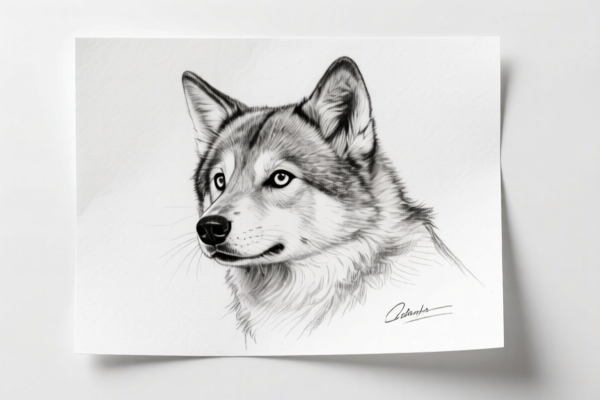

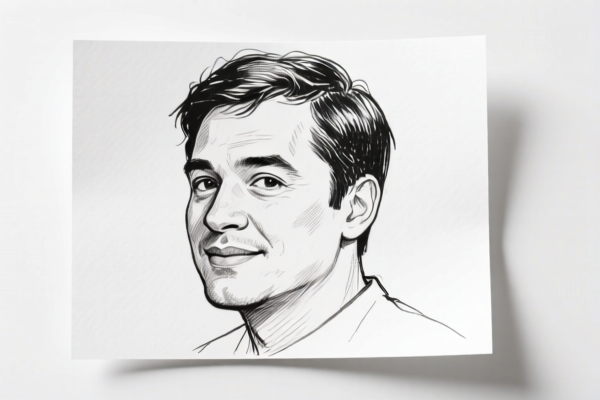
AI Analysis
🎨 Drawing Practice Paper (彩色画纸/纸张练习本)
🌐 HS Code Reference & Customs Clearance Guide | 2026 Latest Tariff Analysis | Strategic Compliance for China-Origin Paper Products
📌 I. Product Definition & Classification: Understanding "Drawing Paper" in International Trade
Drawing practice paper, commonly referred to as colored drawing paper or sketchbooks, is a staple in the stationery and art supply industry. In international trade, these products are classified based on their material composition, form (finished vs. raw), and specific use. The key distinction lies in whether the product is a finished notebook/sketchbook or cut-sized paper sheets.
📝 Key Distinctions: * Colored Drawing Paper (Sheets): Paper cut into specific sizes, often used for sketching. If it is a single sheet or stack of sheets, it falls under other paper articles or specific paper products. * Exercise Books/Sketchbooks: Bound paper products, including notebooks, logbooks, or sketchbooks made of paper. These are classified under Heading 4820.
⚠️ Critical Classification Point:
- If the product is a bound book/notebook/sketchbook (e.g., spiral-bound, glue-bound), it generally falls under 4820.10 or 4820.20.
- If the product is cut-sized paper (not bound, but used for drawing), it may fall under 4823.90 (other paper articles).
- Misclassification Risk: Declaring a bound sketchbook as "cut paper" or vice versa can lead to significant tariff discrepancies and customs delays.
📦 II. HS Code Classification Details (2026 Latest Tariff Cross-Reference)
Based on the provided data, here are the precise HS Codes for drawing practice paper, categorized by form and usage:
| HS Code | Product Description | Form & Material | Key Characteristics |
|---|---|---|---|
| 4820.10.40.00 | Paper Exercise Books/Notebooks | Material: Paper Form: Bound Notebook/Logbook |
Bound stationery. Includes sketchbooks, logbooks, and notebooks used for drawing or writing. |
| 4820.20.00.00 | Paper Exercise Books | Material: Paper Form: Meets exercise book requirements |
General exercise books. Covers standard exercise books, including those used for drawing practice if bound. |
| 4823.90.10.00 | Colored Drawing Paper | Material: Paper/Pulp Form: Cut-sized paper articles |
Cut sheets. Paper colored or processed, cut to size, but not bound into a book. |
| 4823.90.67.00 | Paper Exercise Books (Other) | Material: Paper Form: Other paper articles |
Specialty bound items. May include specific types of sketchbooks not fitting standard notebook definitions. |
| 4823.90.86.80 | Colored Drawing Paper/Books | Material: Paper Form: Other paper articles |
General "Other" category. Covers colored paper products that don't fit other specific subheadings, including some finished drawing pads. |
🔍 Important Note:
- HS 4820 codes are for bound products (notebooks, sketchbooks).
- HS 4823 codes are for unbound or other paper articles (like cut sheets or pads not strictly defined as notebooks).
- Colored vs. White: While color is a factor, the form (bound vs. cut) is the primary driver for HS code selection in this dataset.
💰 III. 2026 Latest Tariff Rate Breakdown (Including Surtaxes & Policy Levies)
✅ Applicable Country: United States (US)
✅ Country of Origin: China (CN)
✅ Effective Date: November 10, 2025 (and subsequent imports)
✅ Total Tax Rate: 35.0% (Applies to ALL listed HS Codes above)
🎯 Unified Tax Structure for All HS Codes Listed
| Tax Component | Rate | Legal Basis |
|---|---|---|
| Basic Tariff | 0.0% | Ad valorem rate for paper products |
| Section 301 Surtax | +25.0% | USITC Footnote 9903.88.01 (China-origin goods) |
| 122 Clause Tariff | +10.0% | IEEPA Section 122 (Additional China-specific levy) |
| Total Tax Rate | 35.0% | Sum of Basic + Section 301 + 122 Clause |
| Tax Calculation | CIF Value × 35% | Applied to Cost, Insurance, and Freight value |
| De Minimis Exemption | ❌ Not Applicable | High tariffs prevent $800 de minimis clearance |
📌 Explanation of Rates:
- Section 301 (25%): Imposed under U.S. Trade Law Section 301, targeting Chinese imports in specific categories, including paper products.
- 122 Clause (10%): A specific additional levy on Chinese-origin goods, often associated with IEEPA provisions.
- No Basic Tariff: The base MFN (Most Favored Nation) rate for these paper items is 0%, but the surtaxes dominate the cost.
- Total Burden: A 35% total duty significantly impacts the landed cost. For a $1,000 shipment, the duty alone is $350.
🛠️ IV. Customs Clearance Practical Advice (Pitfall Avoidance Guide)
✅ 1. Documentation Checklist (Non-Negotiable)
| Document | Required | Purpose |
|---|---|---|
| Commercial Invoice | ✅ Yes | Must clearly state "Drawing Practice Paper" or "Colored Sketchbook" with HS Code. |
| Packing List | ✅ Yes | Detail item count, weight, and dimensions. Separate bound books from cut sheets if mixed. |
| Product Photos | ✅ Yes | Show the product bound vs. unbound to prove classification. |
| Material Composition | ✅ Yes | Specify if paper is virgin pulp, recycled, or mixed. |
| Country of Origin Certificate | ✅ Yes | Essential for proving Chinese origin and applying correct surtaxes. |
| FCC/CE Certificates | ❌ Usually Not Required | Paper products generally do not require electronic certifications, but check for safety standards if coated with non-toxic materials. |
✅ 2. Declaration Strategy (Key Tips)
🔥 "Bound is 4820, Cut is 4823; Don't Mix, Don't Guess!"
| Scenario | Correct Declaration | Incorrect Declaration | Consequence |
|---|---|---|---|
| Sketchbook (Bound) | 4820.10.40.00 or 4820.20.00.00 |
4823.90.86.80 (Cut paper) |
Potential misclassification audit; delayed clearance. |
| Cut Drawing Sheets | 4823.90.10.00 |
4820.10.40.00 (Notebook) |
May face questions on "bound" status; minor risk. |
| Mixed Shipment | Split Declaration | Single HS Code for all | Severe penalties if not split correctly. |
✅ 3. Special Considerations for 2026
- No De Minimis Benefit: Due to the 35% tariff, shipments under $800 cannot bypass duties. All shipments are subject to full customs entry and duty payment.
- Labeling: Clearly mark "Made in China" on all packages to avoid origin disputes.
- Anti-Dumping/Countervailing Duties (AD/CVD): While not explicitly listed in the provided data, some paper products may be subject to AD/CVD. Always verify if specific Chinese paper manufacturers are on the AD/CVD list.
🌍 V. Global Market Comparison (2026 Overview)
| Market | HS Code | Base Tariff | Additional Surtaxes | Total Est. Duty | Notes |
|---|---|---|---|---|---|
| 🇺🇸 United States | 4820.10.40.00 / 4823.90.10.00 | 0% | 35% (Section 301 + 122) | 35% | Highest barrier. Plan for high landed cost. |
| 🇨🇳 China | 4820.10.40.00 | 10-13% | None | ~10-13% | No surtaxes. Domestic market is more accessible. |
| 🇪🇺 European Union | 4820.10.40.00 | 0% | None | 0% | Favorable for EU importers if EU-MFN applies. |
| 🇬🇧 United Kingdom | 4820.10.40.00 | 0% | None | 0% | Post-Brexit tariffs may vary, but generally low for paper. |
| 🇦🇺 Australia | 4820.10.40.00 | 5% | None | 5% | No surtaxes on Chinese paper. |
📌 Conclusion:
- The US market is the most challenging due to the 35% effective tariff.
- EU, UK, and Australia offer significantly better duty rates (0-5%).
- Consider supply chain diversification (e.g., exporting from Vietnam or Mexico) to mitigate US tariffs, though origin rules must be strictly followed.
📌 VI. Common Mistakes & Pitfalls (Lessons Learned)
❌ Mistake 1: Declaring bound sketchbooks as "cut paper" (4823.90) to avoid scrutiny.
👉 Consequence: Customs may reclassify them as notebooks (4820), leading to penalties for misdeclaration.
❌ Mistake 2: Ignoring the "122 Clause" tariff.
👉 Consequence: Underpaying duties by 10%. Customs will assess back taxes + interest + fines.
❌ Mistake 3: Assuming "colored paper" is exempt from Section 301.
👉 Consequence: All paper products from China are subject to the 25% surtax, regardless of color.
✅ Correct Practice:
"Clearly specify 'Bound Sketchbook' or 'Cut Drawing Paper' in the invoice. Provide photos showing binding. Calculate CIF value accurately and apply 35% total duty."
🎯 VII. Conclusion: Precision is Profit!
🎯 Key Takeaway:
🔹 "HS Code dictates duty; 35% is the US reality; Don't hide the bound structure!"
🔹 "Plan your pricing with 35% duty included, or explore non-US markets for better margins."
📌 Pro Tip:
- If you are exporting to the US, pre-clearance is essential.
- Consider HS Code Pre-Rulings from US Customs if your product is ambiguous (e.g., a loose-leaf pad that is not fully bound).
- Cost-Benefit Analysis: With a 35% tariff, ensure your product margin can absorb this cost, or consider tariff engineering (e.g., exporting partially finished goods if eligible).
📣 Immediate Action:
📞 Consult a licensed customs broker to verify your specific product's HS code.
📄 Prepare detailed product descriptions highlighting binding type and material.
💡 Evaluate alternative markets (EU, Asia) if US duties are too high.
✨ Smart Customs Compliance = Higher Profit Margins!
💼 Your product's success depends on accurate classification!
Customer Reviews
About HS Code Classification
The Harmonized System (HS) is an internationally standardized nomenclature developed by the World Customs Organization (WCO) to classify traded products. Over 200 countries use the HS system as the basis for customs tariffs, trade statistics, and import/export regulations.
Each HS code follows a hierarchical structure:
- Chapter (2 digits) — Broad category of goods (e.g., Chapter 84: Machinery and Mechanical Appliances)
- Heading (4 digits) — More specific grouping within the chapter
- Subheading (6 digits) — Internationally standardized breakdown, used by all WCO member countries
- National subdivisions (8-10 digits) — Country-specific extensions for further classification, such as US HTSUS 10-digit codes
Correct HS code classification is essential for smooth customs clearance, accurate duty payment, and compliance with trade regulations. Misclassification can lead to customs delays, overpayment of duties, or penalties.
When importing from CN to US, the applicable tariff rates may include:
- Most-Favored-Nation (MFN) rate — The standard duty rate applied to WTO members
- General rate — Applied to countries without trade agreements
- Trade remedy duties — Additional tariffs such as Section 301 (anti-dumping), Section 232 (national security), or countervailing duties
The information provided on this page is for reference purposes only. For official classification, please consult with your local customs authority or a licensed customs broker.