dressmakers tracing paper
CN → USProduct Images
AI Analysis
🧵 Dressmakers Tracing Paper (Pattern Transfer Paper)
🌐 HS Code Reference & Customs Clearance Guide | 2026 Latest Tariff Analysis | Professional Clearance Strategy
📌 I. Product Definition and Classification: Do You Really Understand "Tracing Paper"?
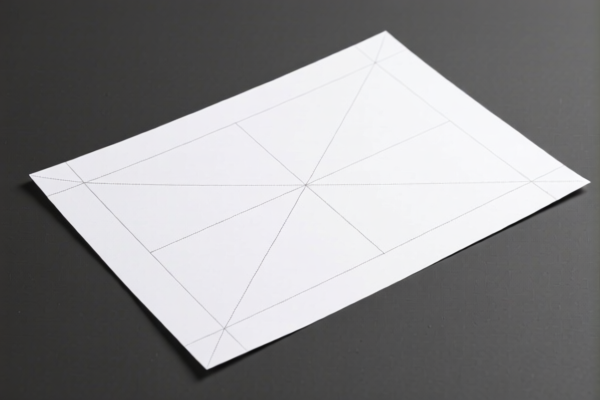
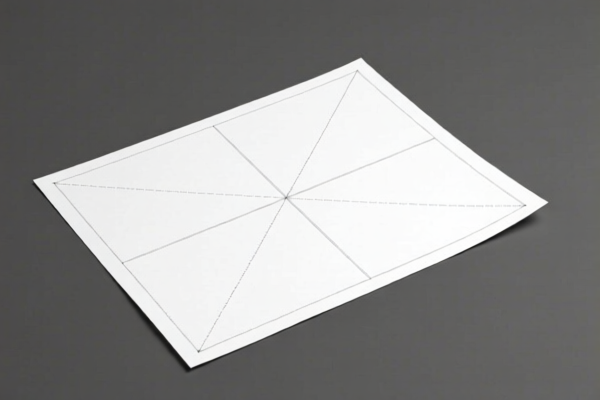
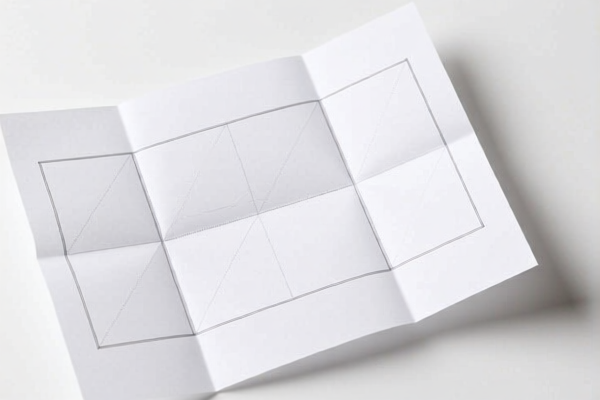
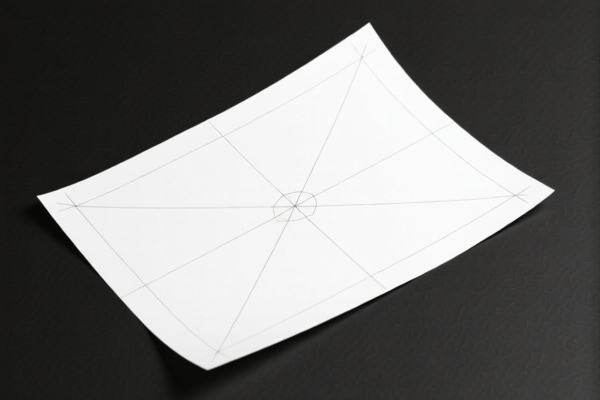
Dressmakers tracing paper, also known as Tailor’s Tracing Paper, Carbon Paper for Fabrics, or Pattern Transfer Paper, is a specialized stationery/craft material used in sewing and fashion design. It consists of a thin sheet coated with dry carbon or wax-based pigments on one side, used to transfer pattern markings (such as darts, buttonholes, and seams) from a paper pattern onto fabric.
In international trade, it is NOT considered a simple paper product, but rather a writing or drawing implement or a specialized craft supply.
⚠️ Key Distinction:
- If it is uncoated, plain tracing paper used for drawing → Classified under Chapter 48 (Paper).
- If it is coated with colored/colored pigment on one side for transfer → Classified under Chapter 96 (Miscellaneous Manufactured Articles) as writing/drawing implements.
- Most commercial "dressmakers tracing paper" is coated. Therefore, it falls under HS 9608.
📦 II. HS Code Classification Details (2026 Latest Tariff Authority Comparison)
| HS Code | Product Description | Applicable Scenario | Coated? |
|---|---|---|---|
9608.10.00.00 |
Ball-point pens (Not applicable) | ❌ No | N/A |
9608.20.00.00 |
Felt-tipped pens and other porous-tipped markers (Not applicable) | ❌ No | N/A |
9608.30.00.00 |
Ball-point pens (Not applicable) | ❌ No | N/A |
9608.60.00.00 |
Set of articles of two or more of the foregoing subheadings | ❌ No | N/A |
9608.99.00.00 |
Other pens, duplicating styluses, fountain pens, statement pens, pencils, and lead holders; parts thereof; ball-point refills | ✅ Yes (Most Common) | ✅ Yes (Coated) |
4802.55.00.00 |
Other paper, without mechanically prepared fibers, for writing/drawing | ❌ Only if Uncoated | ❌ No |
4823.69.00.00 |
Other paper, cellulose wadding or webs of cellulose fibers, cut to size or shape | ❌ Rarely | ❌ No |
🔍 Key Reminder:
- Coated Tracing Paper: Must be classified under9608.99.00.00(or similar subheading depending on specific country's 10-digit code, e.g.,9608.99.00in US HTS). It is treated as a "writing instrument" accessory.
- Uncoated Tracing Paper: If it is just plain, translucent paper for drawing patterns manually without carbon/pigment, it may fall under4802.55.00.00or4823.69.00.00.
- Mixed Packs: If sold in a set with pens, classification may shift, but standalone tracing paper is9608.99.00.00.
💰 III. 2026 Latest Tariff Rate Details (Including Surcharges & Policy Add-ons)
✅ Applicable Country: United States (US)
✅ Country of Origin: China (CN)
✅ Effective Date: From November 10, 2025 (for subsequent imports)
🎯 1. 9608.99.00.00 —— Dressmakers Tracing Paper (Coated)
| Item | Content |
|---|---|
| Base Tariff Rate | 3.4% (Ad valorem) |
| USITC Surcharge | +25% (Under USITC Footnote 9903.88.01 / Section 301) |
| IEEPA Surcharge | +10% (For China/HK origin, effective Nov 10, 2025) |
| Total Tariff Rate | 38.4% |
| Tax Calculation | CIF Value × 38.4% |
| De Minimis Eligibility | ❌ No (deny_de_minimis) |
| Legal Basis Path | IEEPA:9903.01.25 → IEEPA:9903.01.24 → USITC:9608.99.00.00 → FOOTNOTE:9903.88.01 |
📌 Explanation:
- The 25% USITC surcharge applies to most goods from China under Section 301.
- The 10% IEEPA surcharge is a new layer of tariffs on Chinese imports.
- Total 38.4% is a high tariff for a small item, significantly impacting profitability.
🎯 2. 4802.55.00.00 —— Uncoated Tracing Paper (If Applicable)
| Item | Content |
|---|---|
| Base Tariff Rate | 6.5% |
| USITC Surcharge | +25% |
| IEEPA Surcharge | +10% |
| Total Tariff Rate | 41.5% |
| Tax Calculation | CIF Value × 41.5% |
| De Minimis Eligibility | ❌ No |
| Legal Basis Path | IEEPA:9901.25 → IEEPA:9903.01.24 → USITC:4802.55.00.00 → FOOTNOTE:9903.88.01 |
📌 Note:
- Even uncoated paper from China faces 41.5% total tariff.
- Misclassification risk: If customs determines the "uncoated" paper is actually used for transfer (even lightly), they may reclassify it to9608.99.00.00. However, both codes have high tariffs.
🛠️ IV. Customs Clearance Practical Advice (Battle-Tested Pitfall Guide)
✅ 1. Required Documentation Checklist (No Omissions)
| Document | Mandatory? | Description |
|---|---|---|
| ✅ Product Specification Sheet | ✔️ | Include dimensions, sheet count, coating type (carbon/wax), brand |
| ✅ Product Photos | ✔️ | Clear image showing the coated side and packaging label |
| ✅ Commercial Invoice | ✔️ | Must specify "Dressmakers Tracing Paper" or "Pattern Transfer Paper", NOT just "Paper" |
| ✅ Certificate of Origin (CO) | ✔️ | To prove origin; if not China, check for FTZ benefits |
| ✅ Packing List | ✔️ | Detail item count, net/gross weight |
| ✅ FCC/CE Certification | ❌ | Not required for tracing paper |
✅ 2. Declaration Tips (Key Mantra)
🔥 "Coated is 9608, Uncoated is 4802, Name Accurate, Tariff Avoids Fate!"
| Scenario | Correct Declaration | Wrong Practice |
|---|---|---|
| Coated Tracing Paper | 9608.99.00.00 |
Misdeclare as "Paper" (4802) → Risk of reclassification + penalty |
| Uncoated Tracing Paper | 4802.55.00.00 |
Misdeclare as 9608 → Overpay tax slightly, but less risky |
| Mixed Pack (with pens) | 9608.60.00.00 |
Declare separately → Higher administrative cost |
| Small quantity (De Minimis) | Do NOT use De Minimis | Attempting $800 exemption → Shipment Seized! |
✅ 3. Special Situation Handling
| Situation | Handling Advice |
|---|---|
| OEM Custom Packaging | Provide design proof to show it is a specialized craft item, not generic paper |
| Labeling as "Carbon Paper" | Use "Tailor’s Carbon Paper" or "Dressmakers Tracing Paper" to avoid confusion with industrial "Carbon Paper" (4802.55 or 9608.99) |
| Import from Non-China Origin | If from Vietnam, Malaysia, Thailand, check for IEEPA Exemption. Tariff may drop to 0%~5% |
| Small Samples | If value < $800, still subject to tariffs if origin is China. Do not rely on de minimis |
🌍 V. Global Market Clearance Comparison (2026 Latest)
| Country/Region | Recommended HS Code | Tariff (China Origin) | Certification | Notes |
|---|---|---|---|---|
| 🇺🇸 USA | 9608.99.00.00 |
38.4% (Coated) | None | High tariff due to Section 301 + IEEPA |
| 🇨🇳 China | 9608.99.00.00 |
6.5% | None | Low import tariff |
| 🇪🇺 EU | 9608.99.00 |
4.5% | CE (if plastic components) | No major surcharges |
| 🇦🇺 Australia | 9608.99.00 |
5% | None | No major surcharges |
| 🇯🇵 Japan | 9608.99.00 |
3.2% | None | No major surcharges |
📌 Conclusion:
- USA is the only major market with high additional tariffs on Chinese dressmakers tracing paper.
- For US imports, cost impact is significant. Consider sourcing from Vietnam, Malaysia, or India to avoid IEEPA/301 surcharges.
- EU, AU, JP have relatively low and stable tariffs.
📌 VI. Common Mistakes & Pitfall Guide (Blood & Tears Lessons)
❌ Mistake 1: Declaring as "Office Stationery Paper" (4823)
👉 Consequence: Customs reclassifies to 9608.99.00.00 → Back taxes + fines + delays.
❌ Mistake 2: Assuming "De Minimis ($800)" applies
👉 Consequence: Shipment detained because China-origin goods over $800 are subject to tariffs. No exemption.
❌ Mistake 3: Calling it "Carbon Paper" without specifying "Tailor’s"
👉 Consequence: Confusion with industrial carbon paper. May be flagged for inspection.
❌ Mistake 4: Using "Tracing Paper" as only description
👉 Consequence: Customs may not recognize the product. Use "Dressmakers Tracing Paper (Coated)" for clarity.
✅ Correct Declaration Example:
"Dressmakers Tracing Paper, Coated, 12 Sheets, 18"x24", for Pattern Transfer, Model XYZ, Origin: China"
🎯 VII. Conclusion: Precise Classification Saves Money!
🎯 Remember the Mantra:
🔹 "Coated is 9608, Uncoated is 4802, Name Accurate, Tariff Avoids Fate!"
🔹 "USA Tariff 38.4%, Non-China Origin 0%, Source Smart, Profit Soars!"
📌 Pro Tip:
If your dressmakers tracing paper is originating from Vietnam, Malaysia, Thailand, or India, apply for IEEPA Exemption. Tariff drops to 0%~5%.
Recommendation: Pre-ruling application for HS Code9608.99.00.00if unsure about coating status.
📣 Immediate Action:
📞 Contact a professional customs broker + Provide product photos + Apply for HS Code pre-ruling
🚀 Let your Dressmakers Tracing Paper clear customs smoothly, efficiently export, and double profits!
✨ Professional clearance starts with precise classification!
💼 Every cent of your cost deserves precise calculation!
Customer Reviews
About HS Code Classification
The Harmonized System (HS) is an internationally standardized nomenclature developed by the World Customs Organization (WCO) to classify traded products. Over 200 countries use the HS system as the basis for customs tariffs, trade statistics, and import/export regulations.
Each HS code follows a hierarchical structure:
- Chapter (2 digits) — Broad category of goods (e.g., Chapter 84: Machinery and Mechanical Appliances)
- Heading (4 digits) — More specific grouping within the chapter
- Subheading (6 digits) — Internationally standardized breakdown, used by all WCO member countries
- National subdivisions (8-10 digits) — Country-specific extensions for further classification, such as US HTSUS 10-digit codes
Correct HS code classification is essential for smooth customs clearance, accurate duty payment, and compliance with trade regulations. Misclassification can lead to customs delays, overpayment of duties, or penalties.
When importing from CN to US, the applicable tariff rates may include:
- Most-Favored-Nation (MFN) rate — The standard duty rate applied to WTO members
- General rate — Applied to countries without trade agreements
- Trade remedy duties — Additional tariffs such as Section 301 (anti-dumping), Section 232 (national security), or countervailing duties
The information provided on this page is for reference purposes only. For official classification, please consult with your local customs authority or a licensed customs broker.