dried cowhide for footwear
CN → US| HS Code | Tariff Rate | Origin | Destination | Doc |
|---|---|---|---|---|
| 4104114010 | 15.0% | CN | US | Official Doc |
| 4104111020 | 35.0% | CN | US | Official Doc |
| 4107121020 | 35.0% | CN | US | Official Doc |
| 4107111020 | 35.0% | CN | US | Official Doc |
| 4104411020 | 35.0% | CN | US | Official Doc |
Product Images
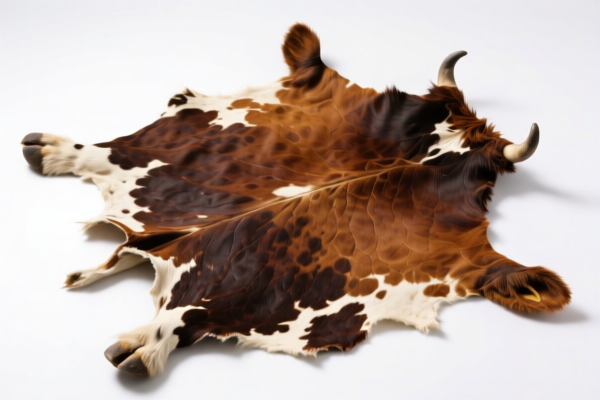
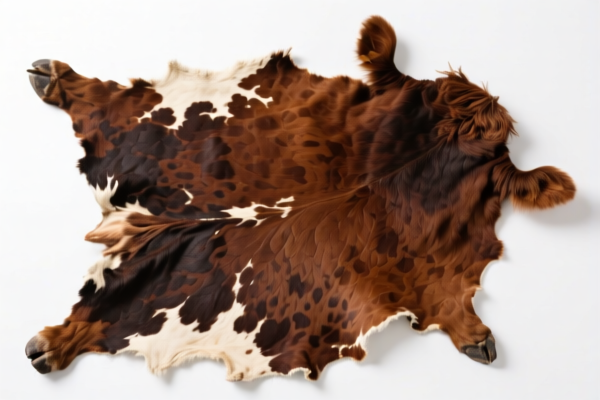
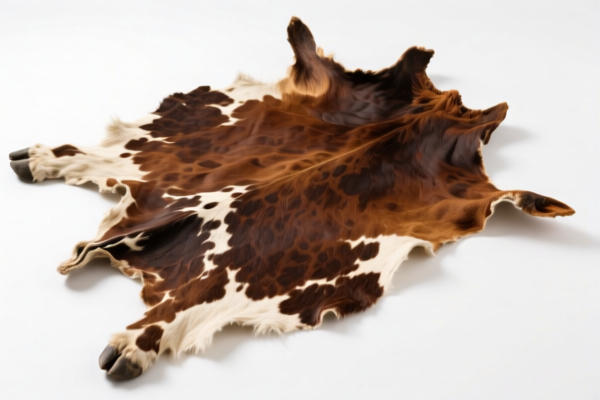
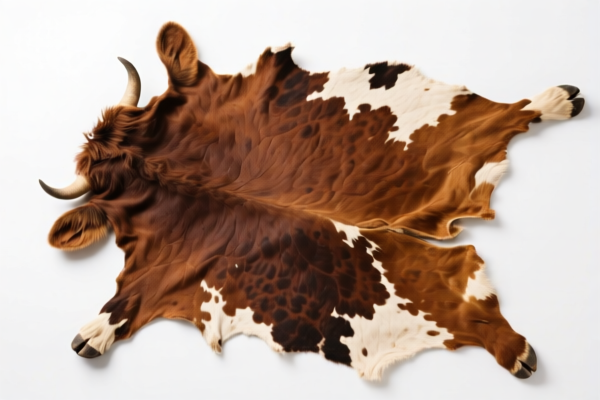
AI Analysis
🐄 Dried Cowhide for Footwear (Leather Hides & Skins)
🌐 HS Code Reference & Customs Clearance Guide | 2026 Latest Tariff Analysis | Professional Entry Strategies
📌 I. Product Definition & Classification: Do You Really Understand "Dried Cowhide"?
Dried cowhide, specifically processed for footwear, is the raw material foundation for shoe uppers, linings, and accessories. In international trade, it is strictly categorized based on its processing state (vegetable-tanned vs. chrome-tanned) and form (whole hides, splits, or sheets).
Key Distinctions: 1. Vegetable-Tanned Leather (Veg-Tan): Often classified under 4104 (if further processed) or 4101/4102 (if raw). However, the provided data points to specific sub-headings for finished or semi-finished leather goods intended for shoes. 2. Chrome-Tanned Leather: Typically falls under 4107. The provided data highlights specific HS codes for "uppers" or "shoe leather," indicating processed leather ready for cutting. 3. Physical State: Is it a whole hide, a split (grain vs. flesh side), or a specific cut for shoe uppers?
⚠️ Critical Distinction Point:
- If the leather is vegetable-tanned and used specifically for shoe uppers, it may fall under 4104.11.40.10 (Lower Tax).
- If it is chrome-tanned or processed as general shoe leather (including splits or specific upper materials), it typically falls under 4107 or other 4104 sub-headings with higher tariffs due to US trade policies.
📦 II. HS Code Classification Details (2026 Latest Tariff Authority Match)
Based on the provided <DATA>, here is the precise classification for dried cowhide for footwear:
| HS Code | Product Description | Application Scenario | Tax Status |
|---|---|---|---|
4104.11.40.10 |
Cowhide leather, for footwear, material: Cow (incl. Buffalo), purpose: Upper leather | Vegetable-tanned or specific veg-tan style uppers; traditional leather | ✅ Lower Tax |
4104.11.10.20 |
Cowhide leather, for footwear, material: Cow, form: Leather pieces, purpose: Shoe use | General cowhide pieces/leather for shoe manufacturing (non-vegetable specific) | ❌ Higher Tax |
4107.12.10.20 |
Cowhide leather, for footwear, material: Cow, purpose: Upper leather (Grain Leather category) | Chrome-tanned or mixed-tanned upper leather; high-quality grain leather | ❌ Higher Tax |
4107.11.10.20 |
Cowhide leather, for footwear, material: Cow, purpose: Shoe use (Surface/Pasted Leather category) | General surface leather or pasted leather for shoes; chrome-tanned | ❌ Higher Tax |
4104.41.10.20 |
Cowhide leather, for footwear, material: Cow, form: Matches upper leather, for shoe upper, full-grain or split-grain | Full-grain or split-grain leather specifically cut/formatted for shoe uppers | ❌ Higher Tax |
🔍 Key Insight:
-4104.11.40.10is the only code in this list with a significantly lower tariff structure. It specifically mentions "Cow (including Buffalo)" and "Upper leather," often implying traditional vegetable-tanned or specific high-grade veg-tan styles.
- All other codes (4107 series and other 4104 variants) attract the maximum additional tariffs. This is crucial for cost control.
💰 III. 2026 Latest Tariff Rate Breakdown (Including Surcharges & Policy Add-ons)
✅ Applicable Country: United States (US)
✅ Origin: China (CN)
✅ Effective Time: 2025/2026 (Current Trade Policy Context)
🎯 1. 4104.11.40.10 —— Cowhide Upper Leather (Vegetable/Specific Type)
| Item | Details |
|---|---|
| Base Tariff | 5.0% (Ad Valorem) |
| Section 301 Surcharge | 0.0% |
| Section 122 Surcharge | +10% |
| Total Tariff Rate | 15.0% |
| Tax Calculation | CIF Value × 15% |
| De Minimis Eligibility | ❌ Not Eligible (Deny De Minimis for Leather) |
| Legal Basis Path | Section 122: 10% + Base: 5% |
📌 Explanation:
- This is the most cost-effective classification for dried cowhide for footwear.
- Why? It likely falls under a specific sub-category of vegetable-tanned or traditional upper leather that may be exempt from Section 301 tariffs, but still subject to the 122条款 (Section 122) 10% surcharge.
- Total: 15%. This is a critical savings point compared to the 35% rate.
🎯 2. 4104.11.10.20, 4107.12.10.20, 4107.11.10.20, 4104.41.10.20 —— General/Chrome-Tanned Shoe Leather
| Item | Details |
|---|---|
| Base Tariff | 0.0% |
| Section 301 Surcharge | +25.0% |
| Section 122 Surcharge | +10.0% |
| Total Tariff Rate | 35.0% |
| Tax Calculation | CIF Value × 35% |
| De Minimis Eligibility | ❌ Not Eligible (Deny De Minimis for Leather) |
| Legal Basis Path | Section 301: 25% + Section 122: 10% + Base: 0% |
📌 Explanation:
- Why 35%? These codes are subject to both the Section 301 tariff (25%) and the Section 122 surcharge (10%).
- Section 301: Applies to many Chinese-origin leather products due to trade tensions.
- Section 122: A recent surcharge on certain goods, including leather articles.
- Total: 35%. This is a high-cost classification. Misclassification from 4104.11.40.10 to any of these codes results in a 20 percentage point increase in tax burden.
🛠️ IV. Customs Clearance Practical Advice (Real-World Pitfall Guide)
✅ 1. Preparation Checklist (Must-Haves)
| Document | Required? | Notes |
|---|---|---|
| ✅ Leather Certificate of Origin | ✔️ | Essential to prove "China Origin" and apply for any eligible exemptions. |
| ✅ Processing Description | ✔️ | Must specify: Tanning method (Veg vs. Chrome), Grain vs. Split, and Intended Use (Shoe Upper). |
| ✅ Product Photos | ✔️ | Clear images of the hide, showing grain, thickness, and any markings. |
| ✅ Commercial Invoice | ✔️ | Detailed description: "Dried Cowhide for Footwear, Veg-Tanned/Chrome-Tanned, for Shoe Upper." |
| ✅ Packing List | ✔️ | Include weight, volume, and number of hides/pieces. |
| ✅ Third-Party Test Report | ✔️ | If claiming "Vegetable-Tanned" for lower tax, provide test results to support the claim. |
✅ 2. Declaration Tips (Key Mnemonics)
🔥 "Specify Tanning, Define Use, Avoid 301, Save 20%!"
| Scenario | Correct Declaration | Wrong Declaration | Consequence |
|---|---|---|---|
| Vegetable-Tanned Upper | 4104.11.40.10 - "Veg-Tanned Cowhide Upper" |
4107.12.10.20 - "Chrome Leather" |
Saves 20% Tax |
| Chrome-Tanned Upper | 4107.12.10.20 - "Chrome Tanned Shoe Leather" |
4104.11.40.10 |
Pay 35% Tax (if misclassified) |
| Split/Full Grain | 4104.41.10.20 - "Full-Grain Cowhide for Shoes" |
Vague "Cowhide" | Pay 35% Tax |
| Raw Hides (Not Processed) | Not in Data (Likely 4101/4102) | Forcing into 4104/4107 | Misclassification Penalty |
✅ 3. Special Situations
| Situation | Handling Advice |
|---|---|
| Mixed Tanning Process | If partly veg-tanned, partly chrome-tanned, declare the majority or separate shipments. Mixing may lead to full 35% if not clearly documented. |
| "Buffalo" vs. "Cow" | The code 4104.11.40.10 explicitly includes Buffalo. Ensure your invoice says "Cow/Buffalo" to qualify. |
| Shoe Upper vs. Lining | If used for lining, it may not qualify for "Upper Leather" codes. Check the specific use case. |
| Section 122 Surcharge | Note that all listed codes are subject to the 10% Section 122 surcharge. It is not exempt. |
🌍 V. Global Market Comparison (2026 Latest)
| Country/Region | Recommended HS Code | Tariff (China Origin) | Notes |
|---|---|---|---|
| 🇺🇸 United States | 4104.11.40.10 (if Veg-Tan) |
15% | 4107 codes: 35% |
| 🇨🇳 China | 4104.11.40.10 |
~5-10% | Import duties may vary; check local FTA. |
| 🇪🇺 European Union | 4104 41 10 |
~12-16% | No Section 301/122; standard EU tariffs apply. |
| 🇬🇧 United Kingdom | 4104 41 10 |
~12-16% | Post-Brexit tariffs; no US-style surcharges. |
| 🇦🇺 Australia | 4104 41 10 |
~5-10% | Lower general rates; no Section 122. |
📌 Conclusion:
- The US is the only market with these high additional tariffs (Section 301 & 122).
- For US imports, classification as4104.11.40.10is critical to save 20% in taxes.
- Documentation must clearly support the "Vegetable-Tanned" or "Upper Leather" claim for this lower rate.
📌 VI. Common Mistakes & Pitfalls (Blood & Tears Lessons)
❌ Mistake 1: Declaring all cowhide as "Shoe Leather" without specifying tanning method.
👉 Result: Customs may default to the higher tariff code (4107 or 4104.41.10.20) → 35% Tax.
❌ Mistake 2: Using "Buffalo" in description but declaring under a "Cow-only" code that doesn't explicitly include it.
👉 Result: Documentation mismatch → Delays or audits.
❌ Mistake 3: Ignoring the Section 122 Surcharge.
👉 Result: Underestimating costs by 10%. All codes in this list include the 10% surcharge.
❌ Mistake 4: Claiming "Section 301 Exemption" for 4104.11.40.10.
👉 Result: This code already has 0% Section 301, so no exemption is needed, but misdeclaring it as exempt might trigger audits.
✅ Correct Practice:
"Dried Vegetable-Tanned Cowhide Upper Leather, 2.0mm Thickness, for Shoe Manufacturing, HS Code 4104.11.40.10, Origin: China, Subject to 10% Section 122 Surcharge."
🎯 VII. Conclusion: Professional Declaration, Cost Savings, Risk Reduction
🎯 Remember the Mnemonic:
🔹 "Veg-Tan Upper: 15% (Save 20%). Chrome/General: 35% (Pay More). Section 122: Always 10%. No De Minimis for Leather!"
🔹 "HS Code 4104.11.40.10 is the Golden Ticket for US Imports!"
📌 Pro Tip:
If your leather is not from China (e.g., Vietnam, Italy, Brazil), you may qualify for lower or zero Section 301/122 tariffs. Check the Country of Origin carefully.
For US imports, apply for an Advance Ruling if you are unsure about the tanning method classification.
📣 Immediate Action:
📞 Contact your customs broker.
📄 Provide Tanning Process Details (Veg vs. Chrome).
📊 Calculate the 20% Tax Difference between4104.11.40.10and4107.12.10.20.
🚀 Optimize your supply chain and tax burden today!
✨ Professional Clearance Starts with Accurate Classification!
💼 Every Percent of Tax Saved is Pure Profit!
Customer Reviews
About HS Code Classification
The Harmonized System (HS) is an internationally standardized nomenclature developed by the World Customs Organization (WCO) to classify traded products. Over 200 countries use the HS system as the basis for customs tariffs, trade statistics, and import/export regulations.
Each HS code follows a hierarchical structure:
- Chapter (2 digits) — Broad category of goods (e.g., Chapter 84: Machinery and Mechanical Appliances)
- Heading (4 digits) — More specific grouping within the chapter
- Subheading (6 digits) — Internationally standardized breakdown, used by all WCO member countries
- National subdivisions (8-10 digits) — Country-specific extensions for further classification, such as US HTSUS 10-digit codes
Correct HS code classification is essential for smooth customs clearance, accurate duty payment, and compliance with trade regulations. Misclassification can lead to customs delays, overpayment of duties, or penalties.
When importing from CN to US, the applicable tariff rates may include:
- Most-Favored-Nation (MFN) rate — The standard duty rate applied to WTO members
- General rate — Applied to countries without trade agreements
- Trade remedy duties — Additional tariffs such as Section 301 (anti-dumping), Section 232 (national security), or countervailing duties
The information provided on this page is for reference purposes only. For official classification, please consult with your local customs authority or a licensed customs broker.