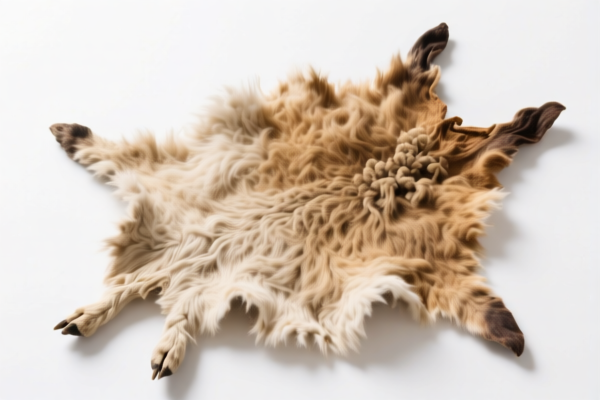
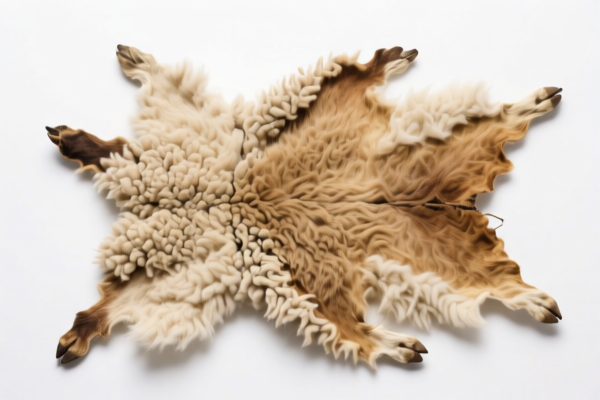
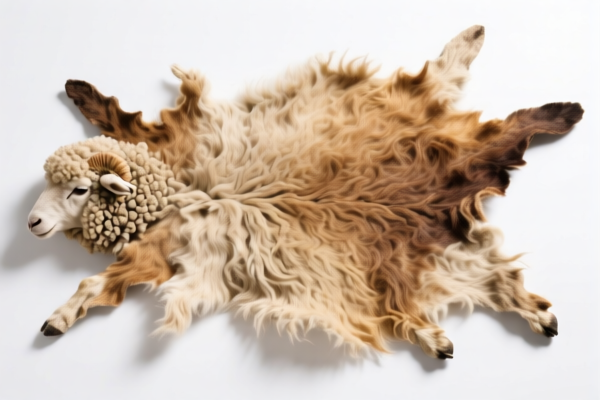
dried sheepskin hairless
CN → USProduct Images

AI Analysis
🐑 Dried Sheepskin (Hairless) | Raw Hides for Tanning
🌐 HS Code Reference & Customs Clearance Guide | 2026 Latest Tariff Analysis | Professional-Level Strategy
📌 I. Product Definition & Classification: What Exactly is "Dried Sheepskin Hairless"?
Dried Sheepskin (Hairless), often referred to in the trade as "Wet-Blue Sheepskin" (if chemically preserved) or "Raw Salted/Dried Sheepskins" (if minimally processed), is the primary raw material for the leather industry. Unlike sheepskins with wool (pelt), hairless skins have had the hair removed through mechanical scraping and chemical tanning/liming processes.
In international trade, this product is strictly classified under Chapter 41 (Animal Skins and Leather), not Chapter 43 (Furskins), because the hair/wool is removed.
Key Distinction:
- With Hair/Wool: Classified under HS 4303 (Furskins).
- Without Hair (Hairless): Classified under HS 4103 (Sheepskin/Sheep Leather).
⚠️ Critical Checkpoint:
- If the skin still has any visible wool or hair attached → HS 4303
- If the skin is completely hairless (smooth surface) → HS 4103
- "Dried" implies it is not fresh (wet) but preserved for export, typically via salting or chemical drying.
📦 II. HS Code Classification Details (2026 Latest Tariff Authority)
| HS Code | Product Description | Applicable Scenario | Hair Status | Preservation Method |
|---|---|---|---|---|
4103.20.00.00 |
Sheepskins and lambskins, dressed or tanned, including parchment-dressed | Most Common: Dried, hairless sheepskins ready for further processing or leather making | ❌ No Hair | Salted, Chemical, or Dried |
4103.20.10.00 |
Sheepskins and lambskins, raw (including wet-salted), dressed or tanned, including parchment-dressed | Raw, hairless sheepskins, often salted or lightly preserved | ❌ No Hair | Wet-Salted or Dried |
4303.10.00.00 |
Furskins of sheep or lamb | Incorrect if hairless. Only if hair/wool remains. | ✅ Has Hair | N/A |
4103.30.00.00 |
Pigskins and pigskins, dressed or tanned | Wrong species | N/A | N/A |
🔍 Key Reminder:
- The term "Hairless" is the decisive factor. Customs will visually inspect the product.
- "Dried" affects the preservation method but not the HS code chapter. Whether wet-salted or dry-salted, hairless sheepskins fall under 4103.
- Do NOT declare as "Leather Garments" or "Finished Leather" (HS 4104-4107) unless fully tanned and finished. Raw hairless skins are raw hides.
💰 III. 2026 Latest Tariff Rate Breakdown (Including Surtaxes & Policy Add-ons)
✅ Applicable Country: United States (US)
✅ Origin: China (CN)
✅ Effective Date: November 10, 2025 (including subsequent imports)
🎯 1. 4103.20.00.00 — Sheepskins, Hairless, Dried/Salted
| Item | Details |
|---|---|
| Base Tariff Rate | 6.5% (ad valorem) |
| USITC Surcharge (Section 301) | +25% |
| IEEPA Surcharge | +10% (for China/HK products, effective Nov 10, 2025) |
| Total Tariff Rate | 41.5% |
| Tax Calculation | CIF Value × 41.5% |
| De Minimis Eligibility | ❌ No (deny_de_minimis) |
| Legal Basis Path | IEEPA:9903.01.25 → IEEPA:9903.01.24 → USITC:4103.20.00.00 → FOOTNOTE:9903.88.01 |
📌 Explanation:
- The 25% USITC surcharge applies to most raw hides and leathers under Section 301.
- The 10% IEEPA surcharge is a new layer added in late 2025 specifically targeting Chinese raw materials.
- Total 41.5% is significantly higher than the base rate. This is a high-cost raw material for US importers.
🎯 2. 4103.20.10.00 — Raw Sheepskins (Wet-Salted/Dried), Hairless
| Item | Details |
|---|---|
| Base Tariff Rate | 6.5% |
| USITC Surcharge (Section 301) | +25% |
| IEEPA Surcharge | +10% |
| Total Tariff Rate | 41.5% |
| Tax Calculation | CIF Value × 41.5% |
| De Minimis Eligibility | ❌ No |
| Legal Basis Path | IEEPA:9901.25 → IEEPA:9903.01.24 → USITC:4103.20.10.00 → FOOTNOTE:9903.88.01 |
📌 Note:
- Whether "raw" or "dried," as long as it is hairless sheepskin, the tariff treatment is identical.
- Smell (due to salting) may trigger APHIS (USDA) inspection, but CBP handles the tariff.
🛠️ IV. Customs Clearance Practical Advice (Battle-Tested Pitfall Avoidance)
✅ 1. Required Documents Checklist (All Mandatory)
| Document | Mandatory? | Description |
|---|---|---|
| ✅ Commercial Invoice | ✔️ | Must specify: "Dried Sheepskins, Hairless, Species: Ovis aries, Quantity: XX Pieces, Weight: XX kg" |
| ✅ Packing List | ✔️ | Detail weight per layer, total gross/net weight, number of bales |
| ✅ Certificate of Origin (CO) | ✔️ | For US origin verification. No Preferential Tariff available for China. |
| ✅ APHIS Permit (if required) | ✔️ | Some dried hides may require USDA APHIS inspection for animal disease prevention (e.g., BSE, FMD). Check if the country is approved. |
| ✅ Treatment Certificate | ✔️ | Proof of drying/salting method to prevent odor/pest issues. |
| ✅ Photos | ✔️ | Clear photos showing no hair/wool remaining. |
✅ 2. Declaration Tips (Key Mantra)
🔥 "Hairless = 4103, Not 4303; Dried ≠ Raw Meat; Specify Species!"
| Scenario | Correct Declaration | Wrong Practice |
|---|---|---|
| Hairless Sheepskins | 4103.20.00.00 |
Misdeclaring as 4303 (Furskin) → Penalty + Retesting |
| With Hair/Wool | 4303.10.00.00 |
Declaring as 4103 → Wrong Tariff + Fine |
| Finished Leather | 4104.19.00.00 |
Declaring raw hides as finished leather → Tariff Evasion |
| Animal By-Products | Specify "For Leather Manufacturing" | Vague description like "Animal Skins" → CBP Query |
✅ 3. Special Cases
| Scenario | Handling Advice |
|---|---|
| Strong Odor | Ensure proper ventilation and salting. USDA may reject if odor indicates rotting or disease. |
| Mixed Bales (Hairless + Hairy) | Do not mix! Separate shipments. Mixed bales cause classification ambiguity and delays. |
| OEM/Contract Manufacturing | Provide contract showing purpose (e.g., "for glove leather production") to justify raw hide status. |
| Small Quantity (<800kg) | Still subject to full tariff and APHIS inspection. No de minimis exemption. |
🌍 V. Global Market Comparison (2026 Latest)
| Country/Region | Recommended HS Code | Tariff | Certification | Remarks |
|---|---|---|---|---|
| 🇺🇸 USA | 4103.20.00.00 |
41.5% (China) | APHIS + FDA | Highest tariff due to 25% + 10% surcharges |
| 🇨🇳 China | 4103.20.00.00 |
6.5% | CCC (if finished) | Base rate only |
| 🇪🇺 EU | 4103.20.00 |
6.5% | REACH + Ecolabel | No surcharges |
| 🇦🇺 Australia | 4103.20.00 |
5% | Biosecurity Check | Strict APVMA/DAFF checks |
| 🇯🇵 Japan | 4103.20.00 |
5% | FMD Free Certificate | Requires health certificate |
📌 Conclusion:
- USA is the most expensive market for importing dried hairless sheepskins from China due to the 41.5% effective tariff.
- EU and Japan are more tariff-friendly but require strict animal health certifications.
- Consider transshipment (e.g., via Vietnam or Turkey) only if legally compliant, but be aware of rules of origin and potential anti-circumvention investigations.
📌 VI. Common Errors & Pitfalls (Lessons Learned)
❌ Error 1: Declaring "Dried Sheepskin" as "Leather"
👉 Consequence: Wrong HS Code (4104 vs 4103), leading to 6% vs 41.5% discrepancy → Heavy Penalty
❌ Error 2: Mixing Hairless and Hairy Skins in One Shipment
👉 Consequence: CBP cannot classify → Shipment Held, Retaxed at Highest Rate (often 41.5% for all)
❌ Error 3: Ignoring APHIS Requirements
👉 Consequence: USDA rejects shipment due to odor or disease risk → Return at Importer’s Expense
❌ Error 4: Using Vague Descriptions ("Animal Skins")
👉 Consequence: CBP issues Informational Letter, delaying clearance by 2-4 weeks
✅ Correct Practice:
"Dried Sheepskins, Hairless, Species: Ovis aries, Preserved by Salt, for Leather Manufacturing, Batch No. XYZ, 500 Pieces, 1500 kg Gross Weight"
🎯 VII. Conclusion: Precise Classification Saves Costs!
🎯 Remember the Mantra:
🔹 "Hairless = 4103, Hairy = 4303.
🔹 "US Tariff = 41.5%, EU = 6.5%.
🔹 "Raw Hides Need APHIS, Finished Leather Need REACH."
📌 Pro Tip:
If you are importing large volumes (>1 container), consider applying for an Advance Ruling (CBP Ruling) to confirm the HS Code and tariff liability before shipment. This avoids unexpected costs at port.
📣 Immediate Action:
📞 Contact a Licensed Customs Broker + Provide Product Photos + Request APHIS Clearance Status
🚀 Ensure Smooth Customs Clearance, Avoid Delays, and Protect Margins!
✨ Professional Customs Clearance Starts with Accurate Classification!
💼 Every Percent Matters in Global Trade!
Customer Reviews
About HS Code Classification
The Harmonized System (HS) is an internationally standardized nomenclature developed by the World Customs Organization (WCO) to classify traded products. Over 200 countries use the HS system as the basis for customs tariffs, trade statistics, and import/export regulations.
Each HS code follows a hierarchical structure:
- Chapter (2 digits) — Broad category of goods (e.g., Chapter 84: Machinery and Mechanical Appliances)
- Heading (4 digits) — More specific grouping within the chapter
- Subheading (6 digits) — Internationally standardized breakdown, used by all WCO member countries
- National subdivisions (8-10 digits) — Country-specific extensions for further classification, such as US HTSUS 10-digit codes
Correct HS code classification is essential for smooth customs clearance, accurate duty payment, and compliance with trade regulations. Misclassification can lead to customs delays, overpayment of duties, or penalties.
When importing from CN to US, the applicable tariff rates may include:
- Most-Favored-Nation (MFN) rate — The standard duty rate applied to WTO members
- General rate — Applied to countries without trade agreements
- Trade remedy duties — Additional tariffs such as Section 301 (anti-dumping), Section 232 (national security), or countervailing duties
The information provided on this page is for reference purposes only. For official classification, please consult with your local customs authority or a licensed customs broker.