drill bit holder
CN → US| HS Code | Tariff Rate | Origin | Destination | Doc |
|---|---|---|---|---|
| 7326908688 | 87.9% | CN | US | Official Doc |
| 7326908605 | 87.9% | CN | US | Official Doc |
| 8207506000 | 40.2% | CN | US | Official Doc |
| 8207508000 | 37.9% | CN | US | Official Doc |
| 8466100110 | 38.9% | CN | US | Official Doc |
| 8466100130 | 38.9% | CN | US | Official Doc |
Product Images
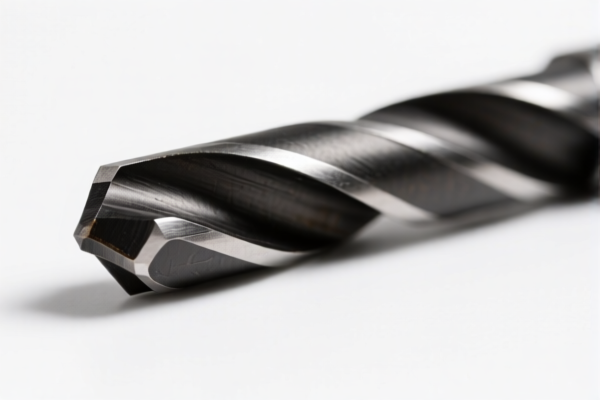
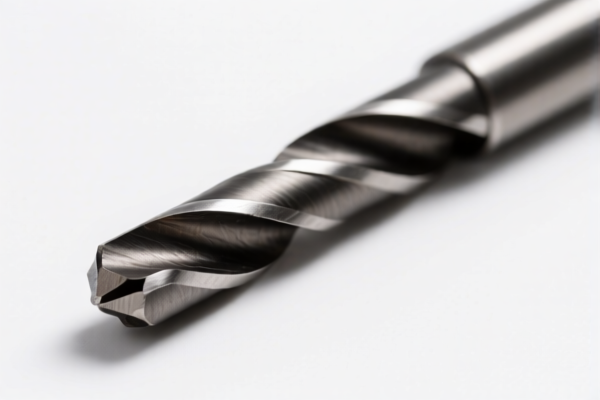
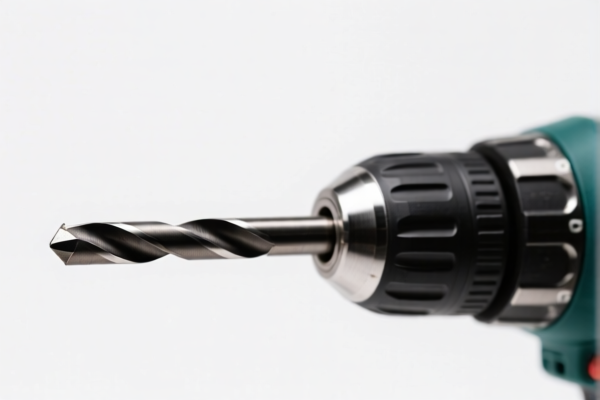
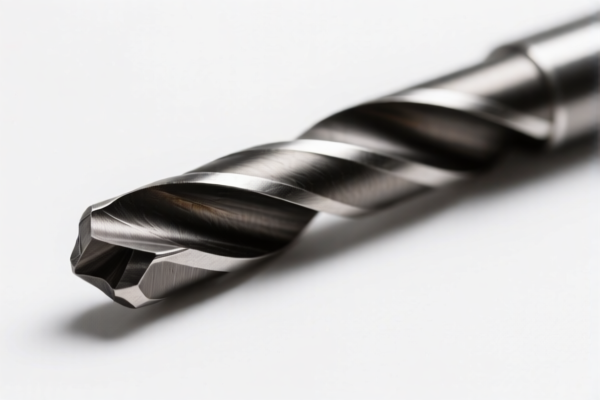
AI Analysis
🔩 Drill Bit Holder & Tooling Systems
🌐 HS Code Classification & US Import Duty Guide | 2026 Customs Strategy
📌 Executive Summary The term "Drill Bit Holder" is a functional description that spans multiple HS Code classifications depending on what it holds, what it powers, and what material it is made of. In US Customs (CBP) terminology, "holders" are generally treated as Parts & Accessories (Chapter 84) rather than the cutting tools themselves (Chapter 82), unless they are specifically designed as the interchangeable tool itself.
Below is the precise breakdown based on the provided <DATA> set, analyzing two distinct categories: Machine Tool Holders (Precision/Machining) and Base Metal Accessories (General/Hardware).
📦 一、HS Code 分类明细 (Based on Provided DATA)
There are 4 HS Codes in the dataset relevant to "Drill Bit Holders" or tool holding systems. They are split into two logical groups:
🏭 Group A: Precision Machine Tool Holders (Chapter 84)
Used for CNC machines, lathes, milling machines (Headings 8456-8465).
| HS Code | Product Description | Key Identifier |
|---|---|---|
8466.10.01.10 |
Tool holders for forming-type or cutting-type dies | Used with machines of 8456-8465; specifically for dies. |
8466.10.01.30 |
Holders for replaceable cutting or drill inserts | Specifically for inserts (carbide tips, etc.), not the whole bit. |
⚠️ Critical Distinction: These are mechanical fixtures used in industrial machining centers. They are not the drill bit itself, nor are they simple hand-held chucks.
🔧 Group B: Base Metal Parts/Accessories (Chapter 82)
Used for interchangeable tools, including hand tools and general machine tools.
| HS Code | Product Description | Key Identifier |
|---|---|---|
8207.50.60.00 |
Interchangeable tools... for drilling... For handtools, and parts thereof | Not suitable for cutting metal. Specifically for handtools. |
8207.50.80.00 |
Interchangeable tools... for drilling... Other | Not suitable for cutting metal. General category (machine or hand). |
⚠️ Critical Distinction: The description says "Not suitable for cutting metal." This means these "holders" or bits are likely for wood, plastic, masonry, or composite materials. If the holder holds a metal-cutting carbide bit, it usually falls under Chapter 84 (Group A) or Chapter 82.04/82.07 depending on design. However, based on this specific DATA, these two codes explicitly exclude metal-cutting applications.
💰 二、2026年最新关税税率详解 (Detailed Tax Breakdown)
✅ 适用国家:美国(US)
✅ 原产地:中国(CN)
✅ 生效时间:2026年关税结构(含基础税 + 加征关税)
🎯 1. Industrial Precision Holders (Chapter 84)
HS Codes: 8466.10.01.10 & 8466.10.01.30
| Item | Content |
|---|---|
| Base Tariff | 3.9% |
| Additional Tariff (Section 301) | 25.0% |
| Steel/Aluminum Surcharge (New Policy) | 50.0% (Note: Check if product contains significant steel/aluminum) |
| Total Tax Rate | 28.9% (Base + 301) or 77.9% (If Steel Surcharge Applies) |
| Legal Basis | Base: 3.9% + Section 301: 25.0% + Steel/Al: 50.0% |
📌 Explanation:
- These are high-precision mechanical parts.
- Crucial: If the holder is made of steel or aluminum, the 50% steel/aluminum surcharge may apply on top of the 25%, leading to a 77.9% total effective rate.
- If it is made of carbide, tungsten, or non-metallic composite, the 50% surcharge might not apply, keeping it at 28.9%. Material composition is key here.
🎯 2. Non-Metal-Cutting Drill Parts (Chapter 82)
HS Codes: 8207.50.60.00 & 8207.50.80.00
| Item | Content |
|---|---|
| Base Tariff | 0.0% |
| Additional Tariff (Section 301) | 0.0% |
| Steel/Aluminum Surcharge | 0.0% (No surcharge listed for this subheading in DATA) |
| Total Tax Rate | 0.0% |
| Legal Basis | Base: 0.0% + Section 301: 0.0% |
📌 Explanation:
- These are duty-free under current DATA.
- Restriction: They are NOT suitable for cutting metal. If you import a steel drill bit holder designed for metalworking, this classification is incorrect and will lead to audits.
- Ideal for: Wood drilling bits, plastic drilling chucks, masonry accessories.
🛠️ 三、清关实操建议 (Customs Clearance Strategy)
✅ 1. 如何正确归类?(Classification Decision Tree)
| Question | Answer | Resulting HS Code | Tax Rate |
|---|---|---|---|
| Is it for CNC/Machine Tools (8456-8465)? | Yes | Group A (8466.10.01.10 or .30) |
28.9% or 77.9% |
| Does it hold replaceable inserts? | Yes | 8466.10.01.30 |
28.9% or 77.9% |
| Does it hold dies? | Yes | 8466.10.01.10 |
28.9% or 77.9% |
| Is it for HANDTOOLS only? | Yes | Group B (8207.50.60.00) |
0.0% |
| Is it NOT for cutting metal? | Yes | Group B (8207.50.80.00) |
0.0% |
| Is it for cutting METAL? | Yes | NOT in Group B. Must be Group A or other Chapter 82 codes not listed. | 28.9%+ |
✅ 2. 申报关键词建议 (Description for CBP)
-
For
8466.10.01.10:
"Metal cutting tool holder, forming-type die, for CNC machining centers, Model XYZ, Steel Alloy"
(Must specify "for machines of 8456-8465") -
For
8466.10.01.30:
"Holder for replaceable carbide drill inserts, for milling machines, not for handtools" -
For
8207.50.60.00:
"Drill bit holder for handtools, not suitable for metal cutting, made of plastic/rubber"
(Emphasize "Not for Metal Cutting" to qualify for 0% duty) -
For
8207.50.80.00:
"Interchangeable drill holder, not suitable for cutting metal, other"
✅ 3. 避坑指南 (Pitfalls to Avoid)
-
❌ Misclassifying Metal-Cutting Holders as Handtool Parts:
If you import a steel chuck for a metal-cutting drill, and declare it under8207.50.60.00(0% tax), CBP will audit you. The phrase "Not suitable for cutting metal" in the HTS description is a legal trap. If your product cuts metal, you cannot use this code. -
❌ Ignoring the Steel/Aluminum Surcharge:
For8466.10.01.xx, if the holder is steel, the 50% surcharge applies.
Calculation:
Base (3.9%) + Section 301 (25%) + Steel/Al (50%) = 78.9%(DATA says 77.9%, likely due to specific statutory adjustments, but the 50% factor is critical).
Strategy: If possible, use composite materials (carbon fiber, hardened non-steel alloys) to avoid the 50% steel surcharge. -
❌ Vague Descriptions:
Do not just write "Drill Bit Holder."
Write: "Tool holder for CNC lathe, model ABC, holds ISO 40 shank."
CBP needs to know the machine type (Handtool vs. Machine Tool) and application (Metal vs. Non-Metal).
🌍 四、全球主要市场清关对比 (Global Context)
| Market | HS Code (Likely) | Duty Rate (CN Origin) | Notes |
|---|---|---|---|
| 🇺🇸 USA | 8466.10.01 |
28.9% - 77.9% | High Section 301 + Steel Surcharge |
| 🇺🇸 USA | 8207.50 |
0.0% | Only if strictly non-metal-cutting |
| 🇪🇺 EU | 8466.10 | ~0-4% | No Section 301; Lower base tariffs |
| 🇨🇳 China | 8466.10 | ~3-6% | Import duty low, VAT 13% applies |
📌 Conclusion:
The US is the most expensive market for industrial drill holders due to Section 301 + Steel/Aluminum Surcharges.
If your product is a simple, non-metal-cutting holder (e.g., for wood), you can achieve 0% duty in the US by correctly classifying under8207.50.60.00or.80.00.
For industrial metal-cutting holders, expect 28.9% minimum, potentially 77.9%.
🎯 五、结语 (Final Advice)
🎯 Key Takeaway:
"Metal-Cutting? Pay 29-78%. Non-Metal? Pay 0%. Material Matters!"
- If for CNC/Machine: Use
8466.10.01.xx. Prepare for high tariffs. Check material composition to avoid the 50% steel surcharge if possible. - If for Handtools/Non-Metal: Use
8207.50.60.00or.80.00. Declare "Not suitable for cutting metal" prominently in the description to secure 0% duty. - Always Provide: Machine compatibility, material composition, and application type (metal vs. non-metal) in your commercial invoice.
📌 Disclaimer:
HS Code classification is complex. Always consult with a licensed customs broker for Advance Rulings if the product application is ambiguous. The rates above are based on the provided
<DATA>and current US trade policies.
Customer Reviews
About HS Code Classification
The Harmonized System (HS) is an internationally standardized nomenclature developed by the World Customs Organization (WCO) to classify traded products. Over 200 countries use the HS system as the basis for customs tariffs, trade statistics, and import/export regulations.
Each HS code follows a hierarchical structure:
- Chapter (2 digits) — Broad category of goods (e.g., Chapter 84: Machinery and Mechanical Appliances)
- Heading (4 digits) — More specific grouping within the chapter
- Subheading (6 digits) — Internationally standardized breakdown, used by all WCO member countries
- National subdivisions (8-10 digits) — Country-specific extensions for further classification, such as US HTSUS 10-digit codes
Correct HS code classification is essential for smooth customs clearance, accurate duty payment, and compliance with trade regulations. Misclassification can lead to customs delays, overpayment of duties, or penalties.
When importing from CN to US, the applicable tariff rates may include:
- Most-Favored-Nation (MFN) rate — The standard duty rate applied to WTO members
- General rate — Applied to countries without trade agreements
- Trade remedy duties — Additional tariffs such as Section 301 (anti-dumping), Section 232 (national security), or countervailing duties
The information provided on this page is for reference purposes only. For official classification, please consult with your local customs authority or a licensed customs broker.