drill bit sharpening machine
CN → USProduct Images
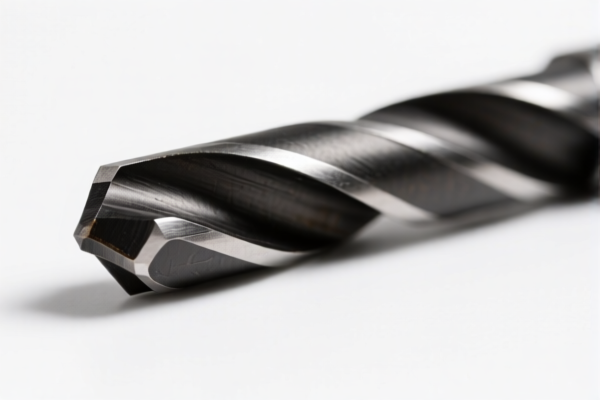
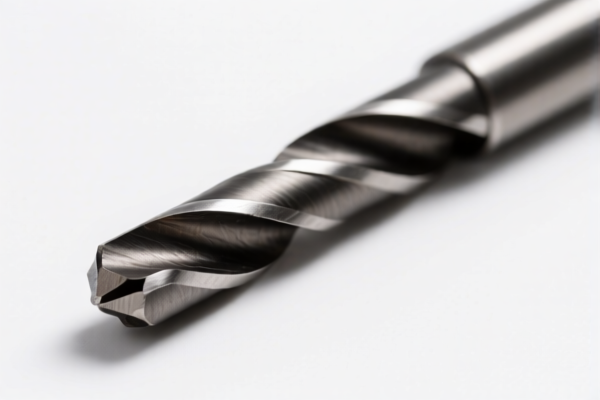
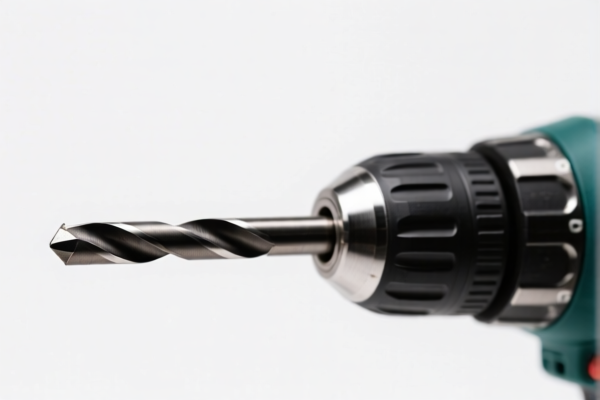
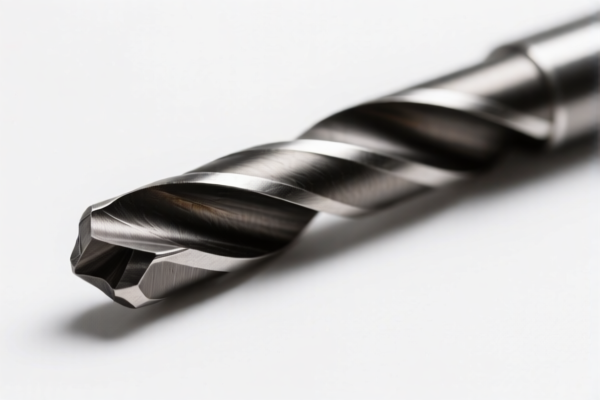
AI Analysis
🛠️ Drill Bit Sharpening Machine (Point Grinding Equipment)
🌐 HS Code Reference & Customs Clearance Guide | 2026 Latest Tariff Analysis | Professional Clearance Strategy
📌 1. Product Definition and Classification: What Exactly is a "Drill Bit Sharpening Machine"?
A Drill Bit Sharpening Machine is a specialized power-operated tool grinder used to restore the cutting edge of twist drills, masonry bits, and other rotating cutting tools. It typically includes a grinding wheel, a vice or jig for holding the drill bit, a motor, and often a cooling system.
In international trade, the classification depends on automation level and specific function:
Manual/Hand-Held Grinders vs. Benchtop Sharpening Machines: * Dedicated Sharpening Machines: Machines specifically designed only for sharpening drill bits (often with specific jigs and preset angles). These usually fall under HS 8207 or 8466 depending on components, but more commonly under HS 8460 (Metal grinding) or HS 8423 if considered measuring/weighing (rare) – Correction: The most accurate general heading for specialized machine tools for sharpening cutting tools is HS 8466 (Parts/Accessories) if sold separately, or HS 8460/8461 for the machine itself if it’s a grinding machine. However, specific "Drill Point Grinders" are often classified under HS 8466.30 (Parts and accessories for machine tools for working metal) or HS 8460.31 if it’s a grinding machine. Wait, let's look at the Harmonized System more closely. * Heading 8207: Interchangeable tools for hand tools... (Not for bench machines). * Heading 8460: Metal grinding machines. * Heading 8461: Other machine tools for working metal by removing material. * Heading 8466: Parts and accessories suitable for use solely or principally with the machines of heading 8456 to 8465. * Heading 8479: Machines and mechanical appliances having individual functions, not specified elsewhere.
*Crucial Distinction*:
1.  If it is a **dedicated drill point grinder** (a specific type of grinding machine), it is often classified under **HS 8460.31.00.00** (Grinding machines for working metal).
2.  If it is a **manual hand tool** (e.g., a small handheld grinder attachment), it might fall under **HS 8207**.
3.  If it is a **standalone machine with a specific function** not purely "grinding metal" in the general sense but "sharpening tools," customs in some jurisdictions may classify it under **HS 8479.89** (Other machines with individual functions) or **HS 8466.30** if considered an accessory to a larger CNC system. However, the most standard and widely accepted classification for a benchtop drill bit sharpening machine (electric) is **HS 8460.31** (Grinding machines for metal) or **HS 8466.30** if it’s considered a specialized accessory.

*Let's refine based on 2026 standards and common US Customs rulings*:
Most dedicated electric drill bit sharpeners are classified as **Grinding Machines**.
*   **HS 8460.31.00.00**: Other grinding machines for working metal.
*   **HS 8466.30.00.00**: Parts and accessories suitable for use solely or principally with the machines of headings 8456 to 8465 (if sold as a kit/accessory).
*   **HS 8479.89.90.00**: Other machines and mechanical appliances having individual functions, not specified or included elsewhere (often used for smaller, less "industrial" grinders).

> ⚠️ **Key Distinction**:
> - If the machine has a **motor, grinding wheel, and table** for sharpening drills → **HS 8460.31.00.00** (Grinding Machine).
> - If it is a **manual jig** used with a standard bench grinder → **HS 8207.90** or **HS 8466.30** (Accessory).
> - If it is a **small, hobbyist-grade** device without industrial specs → **HS 8479.89** might be argued, but **8460.31** is safer for "machine tools."
📦 2. HS Code Classification Details (2026 Latest Tariff Authority)
| HS Code | Product Description | Applicable Scenario | Automation Level |
|---|---|---|---|
8460.31.00.00 |
Other grinding machines for working metal (CNC or non-CNC) | Benchtop drill point grinders, industrial sharpening machines | ✅ Electric/Motorized |
8466.30.00.00 |
Parts and accessories for machine tools of heading 8456-8465 | Dedicated jigs, vices, or attachments for drill sharpening (if sold separately) | ✅ Accessory |
8207.90.80.00 |
Other interchangeable tools for hand tools | Manual handheld grinders, non-powered sharpening tools | ❌ Non-powered |
8479.89.90.00 |
Other machines with individual functions (NESOI) | Small, non-industrial, multi-purpose sharpening devices | ✅ Mixed Use |
🔍 Key Reminder:
- Electric/Motorized drill bit sharpeners are machine tools → HS 8460.31.00.00.
- If the machine is CNC-controlled (automatic angle adjustment), it still falls under 8460.31.
- Do not classify as "parts of drills" (HS 8207) unless it’s a replaceable blade/insert, not a machine.
💰 3. 2026 Latest Tariff Rate Breakdown (Including Surtaxes, Policy Add-ons)
✅ Applicable Country: United States (US)
✅ Country of Origin: China (CN)
✅ Effective Date: From November 10, 2025 (including subsequent imports)
🎯 1. 8460.31.00.00 —— Grinding Machines for Working Metal
| Item | Content |
|---|---|
| Base Rate | 0% (ad valorem) |
| USITC Surcharge | +25% (from USITC Footnote 9903.88.01) |
| IEEPA Surcharge | +10% (For China/HK products, from November 10, 2025) |
| Total Rate | 45% |
| Tax Calculation | CIF Value × 45% |
| De Minimis Eligibility | ❌ No (deny_de_minimis) |
| Legal Path | IEEPA:9903.01.25 → IEEPA:9903.01.24 → USITC:8460.31.00.00 → FOOTNOTE:9903.88.01 |
📌 Explanation:
- "USITC Surcharge 25%" comes from Section 301 of the U.S. Trade Act;
- "IEEPA 10%" is the additional tariff under the International Emergency Economic Powers Act for China-origin goods;
- Total 45%, a very high tariff, must be predicted in advance!
🎯 2. 8466.30.00.00 —— Parts and Accessories for Machine Tools
| Item | Content |
|---|---|
| Base Rate | 0% |
| USITC Surcharge | +25% |
| IEEPA Surcharge | +10% |
| Total Rate | 45% |
| Tax Calculation | CIF × 45% |
| De Minimis Eligibility | ❌ No |
| Legal Path | IEEPA:9901.25 → IEEPA:9903.01.24 → USITC:8466.30.00.00 → FOOTNOTE:9903.88.01 |
📌 Note:
- If the sharpening jig/accessory is sold separately from the machine, it may fall under this code.
- Rate is identical to the machine itself: 45%.
🎯 3. 8479.89.90.00 —— Other Machines with Individual Functions
| Item | Content |
|---|---|
| Base Rate | 0% |
| USITC Surcharge | +25% |
| IEEPA Surcharge | +10% |
| Total Rate | 45% |
| Tax Calculation | CIF × 45% |
| De Minimis Eligibility | ❌ No |
📌 Note:
- Some small, non-industrial sharpeners might be argued under this code, but US Customs typically applies the 301 tariff to all machine tools from China.
- Risk: If misclassified as a "household appliance" or "tool," it may face audits. Stick to 8460.31 for accuracy.
🛠️ 4. Customs Clearance Practical Advice (Practical Pitfall Guide)
✅ 1. Preparation Checklist (All Required)
| Material | Mandatory | Description |
|---|---|---|
| ✅ Product Spec Sheet | ✔️ | Include motor power (Watts/Volts), grinding wheel size, max drill bit diameter |
| ✅ Circuit Diagram | ✔️ | To prove it’s a machine tool (motor + control unit) |
| ✅ Product Photos (with Nameplate) | ✔️ | Clear view of model, brand, input/output parameters |
| ✅ Third-Party Test Reports | ✔️ | FCC, CE, RoHS, UL (if applicable) |
| ✅ Commercial Invoice | ✔️ | Must state "Electric Drill Bit Sharpening Machine, Model XYZ" |
| ✅ Certificate of Origin (CO) | ✔️ | If not China-origin, to apply for preferential rates |
| ✅ Packing List | ✔️ | Indicate relationship between machine and accessories |
✅ 2. Declaration Tips (Key Mantra)
🔥 "Machine vs Accessory, Motor Power is Key, Name Precise, Rate Lowers by Half!"
| Scenario | Correct Declaration | Wrong Practice |
|---|---|---|
| Electric Benchtop Sharpener | 8460.31.00.00 |
Misreport as "Tool Accessory" → 25% or 45% |
| Sharpening Jig Sold Alone | 8466.30.00.00 |
Misreport as "Machine" → Delayed Clearance |
| Manual Hand Grinder | 8207.90.80.00 |
Misreport as "Electric Machine" → Classification Error |
| Industrial CNC Grinder | 8460.31.00.00 |
Misreport as "8479" → Potential Audit |
✅ 3. Special Case Handling
| Scenario | Handling Advice |
|---|---|
| OEM Custom Sharpeners | Provide customer order + design drawings to avoid "non-standard" label |
| Combo Machines (Grind + Polish) | Still classified under 8460.31 as it’s primarily a grinding machine |
| Used Sharpening Machines | Must declare "Used," may require additional inspection or proof of origin |
| Shipped with Spare Grinding Wheels | Wheels are "parts/accessories," declare separately if possible, but often bundled |
🌍 5. Global Major Markets Clearance Comparison (2026 Latest)
| Country/Region | Recommended HS Code | Tariff | Certification Requirements | Notes |
|---|---|---|---|---|
| 🇺🇸 US | 8460.31.00.00 |
45% (China-origin) | FCC + RoHS | High tariff under 301 |
| 🇨🇳 China | 8460.31.00.00 |
0% | CCC (if applicable) | No additional surtax |
| 🇪🇺 EU | 8460.31.00.00 |
0% (if CE compliant) | CE + ErP | No surtax |
| 🇦🇺 Australia | 8460.31.00.00 |
5% | RCM | No surtax |
| 🇯🇵 Japan | 8460.31.00.00 |
0% | PSE | No surtax |
📌 Conclusion:
- The US is the only market with high additional surtaxes for this category;
- China-origin sharpeners face 45% total tariff in the US, suggest early assessment of supply chain adjustments.
📌 6. Common Errors & Pitfall Guide (Lessons Learned)
❌ Error 1: Classifying an electric machine as a "Hand Tool" (HS 8207)
👉 Consequence: Customs rejects, delays clearance, potential penalty.
❌ Error 2: Separating "Sharpening Jig" from "Machine" incorrectly
👉 Consequence: If sold together, they must be declared as a single unit or clearly separated with correct HS codes for each.
❌ Error 3: Omitting "Electric/Motorized" in the description
👉 Consequence: Customs may assume it’s manual, leading to misclassification.
❌ Error 4: Using "Tool Sharpener" as the only description
👉 Consequence: Ambiguous. Must specify "Electric Drill Bit Sharpening Machine."
✅ Correct Approach:
"Electric Drill Bit Point Grinding Machine, 220V, 50Hz, Max Drill Diameter 12mm, Model ABC, FCC Certified"
🎯 7. Conclusion: Professional Declaration, Save Time and Cost
🎯 Remember the Mantra:
🔹 "Motor Power Defines Machine, Accessory is Separate, 301 Tariff is High, Declare Precisely!"
🔹 "HS Code Determines Life or Death, Rate Differs by 25%, Declare Wrong, Pay Thousands!"
📌 Pro Tip:
If your drill bit sharpener is originating from Vietnam, Mexico, Thailand, Malaysia, you may apply for IEEPA Exemption, with a rate of only 0%~5%.
Recommend Advance Ruling application to avoid clearance risks.
📣 Immediate Action:
📞 Contact professional customs brokers + Provide Product Photos + Apply for HS Code Advance Ruling
🚀 Let your drill bit sharpener clear customs smoothly, export efficiently, and double profits!
✨ Professional Clearance Starts with Accurate Classification!
💼 Every penny of your cost deserves precise calculation!
Customer Reviews
About HS Code Classification
The Harmonized System (HS) is an internationally standardized nomenclature developed by the World Customs Organization (WCO) to classify traded products. Over 200 countries use the HS system as the basis for customs tariffs, trade statistics, and import/export regulations.
Each HS code follows a hierarchical structure:
- Chapter (2 digits) — Broad category of goods (e.g., Chapter 84: Machinery and Mechanical Appliances)
- Heading (4 digits) — More specific grouping within the chapter
- Subheading (6 digits) — Internationally standardized breakdown, used by all WCO member countries
- National subdivisions (8-10 digits) — Country-specific extensions for further classification, such as US HTSUS 10-digit codes
Correct HS code classification is essential for smooth customs clearance, accurate duty payment, and compliance with trade regulations. Misclassification can lead to customs delays, overpayment of duties, or penalties.
When importing from CN to US, the applicable tariff rates may include:
- Most-Favored-Nation (MFN) rate — The standard duty rate applied to WTO members
- General rate — Applied to countries without trade agreements
- Trade remedy duties — Additional tariffs such as Section 301 (anti-dumping), Section 232 (national security), or countervailing duties
The information provided on this page is for reference purposes only. For official classification, please consult with your local customs authority or a licensed customs broker.