driving horse leather gloves
CN → US| HS Code | Tariff Rate | Origin | Destination | Doc |
|---|---|---|---|---|
| 4203291800 | 49.0% | CN | US | Official Doc |
| 6216009000 | 21.3% | CN | US | Official Doc |
| 4203218060 | 39.9% | CN | US | Official Doc |
| 4205006000 | 39.9% | CN | US | Official Doc |
| 6216002600 | 24.5% | CN | US | Official Doc |
Product Images
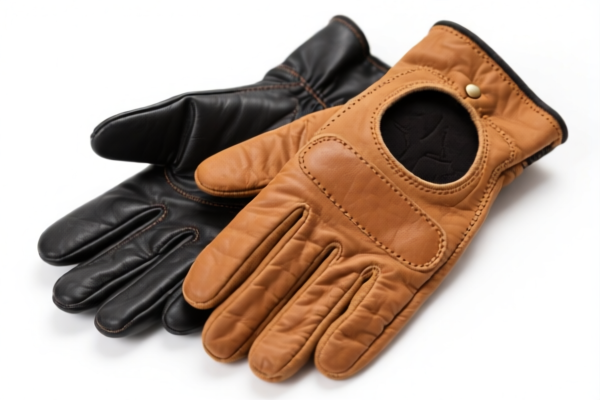
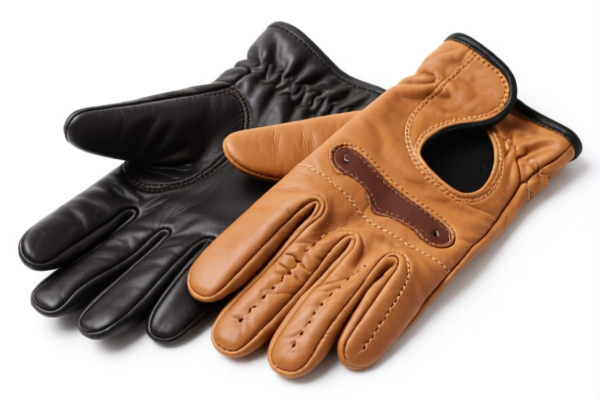
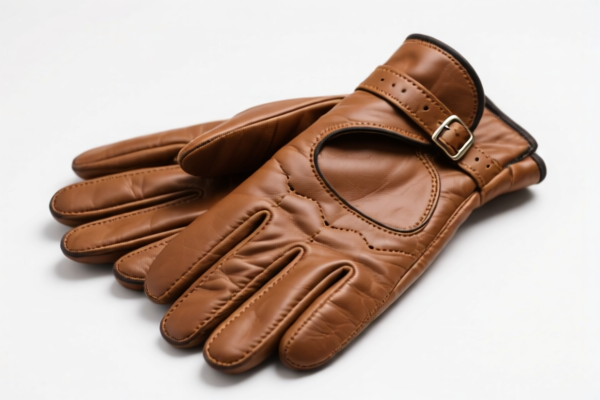
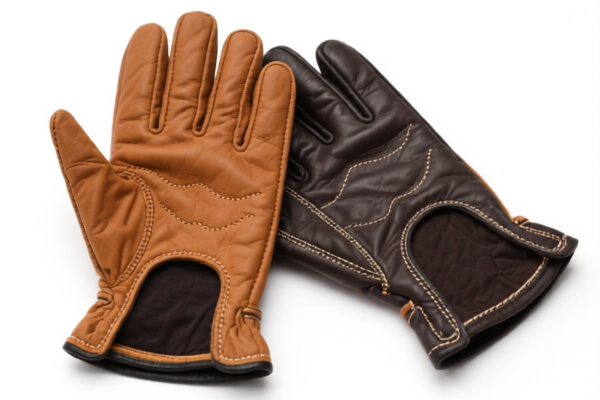
AI Analysis
🐎 Driving & Equestrian Leather Gloves: HS Code Classification & US Customs Clearance Guide (2026)
🌐 HS Code Reference & Clearance Strategy | 2026 Latest Tariff Analysis | Professional Compliance
📌 I. Product Definition & Classification: Do You Really Understand "Leather Gloves"?)
Leather gloves for equestrian (horse riding) and driving purposes are specialized protective gear. In international trade, they are strictly classified based on material, usage, and structure. Misclassification can lead to significant duty differences and customs delays.
Equestrian Gloves (Horse Riding): Designed for grip, protection, and precision in horse riding. Often made of horsehide, cowhide, or synthetic leather, featuring padding, perforations, or touchscreen compatibility.
Driving Gloves: Designed for hand protection and grip while operating vehicles. Typically thinner, softer leather (often kid leather or smooth cowhide), sometimes with suede palms for enhanced friction.
⚠️ Key Distinction Point:
- Equestrian Gloves: Classified under Chapter 42 (Articles of Leather; Saddlery and Harness) because they are considered "sports equipment" or "specialized articles" in many jurisdictions, specifically under heading 4203 (Articles of apparel and clothing accessories, of leather or composition leather).
- Driving/General Leather Gloves: Classified under Chapter 62 (Articles of Apparel and Clothing Accessories, Not Knitted or Crocheted) if they are considered general-purpose or "driving" specific under heading 6216 (Gloves, Mittens and Muffs, of Leather or Composition Leather).
- Material Nuance: If the leather is not plastic/rubber coated, it falls under specific subheadings. If it is a "specialty sports glove," it may avoid the "general glove" heading.
📦 II. HS Code Classification Details (2026 Latest Tariff Authority Comparison)
Based on the provided data, here are the five most relevant HS Codes for Driving Horse Leather Gloves, along with their tax implications and reasoning.
| HS Code | Product Description & Reasoning | Total Tax Rate | Tax Breakdown |
|---|---|---|---|
4203.29.18.00 |
Equestrian Leather Gloves Matched by leather material and glove form. Classified as horsehide or cowhide gloves. This falls under "Other articles of apparel and clothing accessories, of leather" (Chapter 42), often treated as specialty sports/saddlery items. |
49.0% | Base: 14.0% Section 301: 25.0% 122 Clause: 10% |
6216.00.90.00 |
Leather Equestrian/Driving Gloves (General) Matched by glove usage and leather material. Classified as "Other gloves" (Chapter 62). This is the default category if not specifically recognized as "sports equipment" under Ch. 42. |
21.3% | Base: 3.8% Section 301: 7.5% 122 Clause: 10% |
4203.21.80.60 |
Leather Equestrian Gloves (Sports Specific) Matched by leather material, glove form, and equestrian use. Classified under "Other sports gloves" in Chapter 42. This code specifically targets gloves designed for sports, including equestrian. |
39.9% | Base: 4.9% Section 301: 25.0% 122 Clause: 10% |
4205.00.60.00 |
Men's Leather Driving Gloves Matched by leather material and glove form. Classified as "Other leather articles" (not apparel). This is used if the gloves are considered industrial/driving accessories rather than clothing. |
39.9% | Base: 4.9% Section 301: 25.0% 122 Clause: 10% |
6216.00.26.00 |
Men's Leather Driving Gloves (Non-Coated) Matched by glove form and non-plastic/rubber coated leather. Classified under "Other gloves" in Chapter 62, specifically for non-coated leather gloves. |
24.5% | Base: 7.0% Section 301: 7.5% 122 Clause: 10% |
🔍 Key Insight:
- Chapter 42 vs. Chapter 62: The biggest risk is misclassifying "Equestrian Gloves" as general "Chapter 62" gloves. Chapter 42 items often face higher base tariffs (14% vs 3.8%) but may be argued as specialty sports gear.
- "Driving" vs. "Equestrian": "Driving gloves" are often grouped with general leather gloves (Ch. 62), while "Equestrian" gloves have a stronger claim to Chapter 42 (Sports/Equipment).
- 122 Clause: All codes above include a 10% "122 Clause" tariff (likely referring to a specific US trade remedy or retaliation tariff), which is constant across all classifications.
💰 III. 2026 Latest Tariff Rate Analysis (Including Additional Duties & Policy Add-ons)
✅ Applicable Country: United States (US)
✅ Origin: China (CN)
✅ Effective Date: 2025-11-10 onwards (for subsequent imports)
🎯 1. 4203.29.18.00 — Equestrian Leather Gloves (High Duty)
| Item | Detail |
|---|---|
| Base Duty | 14.0% |
| Section 301 Duty | +25.0% |
| 122 Clause Duty | +10.0% |
| Total Duty | 49.0% |
| Tax Calculation | CIF Value × 49.0% |
| De Minimis Exemption | ❌ Not Eligible (Due to Section 301 & 122 Clause) |
| Legal Path | USITC:4203.29.18.00 → Section 301: 9903.01.25 → 122 Clause: 9903.88.01 |
📌 Explanation:
- This code classifies gloves as "Articles of Leather" in Chapter 42.
- The 49% total duty is very high, driven by the 25% Section 301 tariff and 10% 122 Clause.
- Clearance Risk: High. Customs may scrutinize whether the gloves are truly "equestrian" or generic.
🎯 2. 6216.00.90.00 — Leather Equestrian/Driving Gloves (Lowest Duty)
| Item | Detail |
|---|---|
| Base Duty | 3.8% |
| Section 301 Duty | +7.5% |
| 122 Clause Duty | +10.0% |
| Total Duty | 21.3% |
| Tax Calculation | CIF Value × 21.3% |
| De Minimis Exemption | ❌ Not Eligible |
| Legal Path | USITC:6216.00.90.00 → Section 301: 9903.01.24 → 122 Clause: 9903.88.01 |
📌 Note:
- This is the most cost-effective classification if the gloves can be argued as "General Leather Gloves" rather than "Specialty Sports Gear."
- The base duty is only 3.8%, but the 7.5% Section 301 still applies.
- Strategy: If the gloves are not explicitly marketed as "Equestrian" but are used for driving, this code is safer.
🎯 3. 4203.21.80.60 — Leather Equestrian Gloves (Sports Specific)
| Item | Detail |
|---|---|
| Base Duty | 4.9% |
| Section 301 Duty | +25.0% |
| 122 Clause Duty | +10.0% |
| Total Duty | 39.9% |
| Tax Calculation | CIF Value × 39.9% |
| De Minimis Exemption | ❌ Not Eligible |
| Legal Path | USITC:4203.21.80.60 → Section 301: 9903.01.25 → 122 Clause: 9903.88.01 |
📌 Note:
- Lower base duty (4.9%) than4203.29.18.00(14%), but the 25% Section 301 still applies.
- Total duty is 39.9%, still high.
- Use Case: When gloves are explicitly "Sports Equestrian Gloves" and you want to avoid the higher 14% base.
🎯 4. 4205.00.60.00 — Men's Leather Driving Gloves (Accessory)
| Item | Detail |
|---|---|
| Base Duty | 4.9% |
| Section 301 Duty | +25.0% |
| 122 Clause Duty | +10.0% |
| Total Duty | 39.9% |
| Tax Calculation | CIF Value × 39.9% |
| De Minimis Exemption | ❌ Not Eligible |
| Legal Path | USITC:4205.00.60.00 → Section 301: 9903.01.25 → 122 Clause: 9903.88.01 |
📌 Note:
- Classified as "Other Leather Articles" (Chapter 42, not apparel).
- Same total duty as4203.21.80.60(39.9%).
- Use Case: For driving gloves that are not considered "clothing" but "accessories."
🎯 5. 6216.00.26.00 — Men's Leather Driving Gloves (Non-Coated)
| Item | Detail |
|---|---|
| Base Duty | 7.0% |
| Section 301 Duty | +7.5% |
| 122 Clause Duty | +10.0% |
| Total Duty | 24.5% |
| Tax Calculation | CIF Value × 24.5% |
| De Minimis Exemption | ❌ Not Eligible |
| Legal Path | USITC:6216.00.26.00 → Section 301: 9903.01.24 → 122 Clause: 9903.88.01 |
📌 Note:
- Second most cost-effective at 24.5%.
- Specifically for non-plastic/rubber coated leather.
- Use Case: If the gloves are smooth, uncoated leather driving gloves, this code offers a balance between specificity and lower duty.
🛠️ IV. Clearance Practical Advice (实战避坑指南)
✅ 1. Required Documentation Checklist (Missing Items = Delay)
| Document | Must Provide | Notes |
|---|---|---|
| ✅ Product Specification Sheet | ✔️ | Include material (Horsehide/Cowhide/Kid), lining, padding, size range. |
| ✅ Product Photos | ✔️ | Clear images of front, back, palm, and any branding. Show if it has touchscreen tips. |
| ✅ Commercial Invoice | ✔️ | Clearly state "Leather Gloves for Equestrian/Driving Use." Avoid generic "Gloves." |
| ✅ Material Declaration | ✔️ | Specify if leather is plastic/rubber coated. Critical for 6216.00.26.00 vs 6216.00.90.00. |
| ✅ Origin Certificate | ✔️ | If not China, apply for preferential rates. For China, declare CN origin for Section 301/122 Clause. |
| ✅ Packing List | ✔️ | List quantities per size/color. |
✅ 2. Declaration Tips (Key Mnemonics)
🔥 "Material First, Use Second, Code Choice is Critical!"
| Scenario | Recommended HS Code | Reason |
|---|---|---|
| Equestrian Gloves, Horsehide/Cowhide | 4203.29.18.00 or 4203.21.80.60 |
Chapter 42 for specialty sports gear. |
| Driving Gloves, General Use | 6216.00.90.00 or 6216.00.26.00 |
Chapter 62 for general leather gloves. Lower duty. |
| Smooth, Uncoated Driving Gloves | 6216.00.26.00 |
Specific for non-coated leather. Lowest duty in Ch. 62. |
| Gloves with Plastic/Rubber Coating | Not listed in provided data | Likely higher duty or different code. Avoid if possible. |
⚠️ Critical Warning:
- Do not use6216.00.26.00if the gloves have any plastic/rubber coating. It will be rejected.
- Do not use4203codes for simple driving gloves unless they are explicitly marketed as "Equestrian" or "Sports." Customs may challenge this.
✅ 3. Special Cases Handling
| Scenario | Advice |
|---|---|
| OEM/Custom Branding | Provide design drawings. If branding is minimal, it may be classified as general gloves. |
| Touchscreen Compatible | Still leather gloves. Declare material accurately. Do not misclassify as "Electronics." |
| Mixed Materials (Leather + Fabric) | If leather is the main material (>50%), classify under Chapter 42/62. If fabric dominates, classify under Chapter 61 (Knitted) or 62. |
| Sample vs. Bulk | Samples may still be subject to duties. Declare value accurately. |
🌍 V. Global Market Comparison (2026 Latest)
| Country/Region | Recommended HS Code | Total Duty (China Origin) | Notes |
|---|---|---|---|
| 🇺🇸 USA | 6216.00.90.00 (Lowest Duty) |
21.3% | Section 301 + 122 Clause apply. |
| 🇪🇺 EU | 4203.29.00 / 6216.00.90 |
Varies (Avg. 4-12%) | No Section 301. CE marking may be required. |
| 🇨🇳 China | 4203.29.00 / 6216.00.90 |
Varies (Avg. 8-14%) | Import VAT 13%. No Section 301. |
| 🇬🇧 UK | 4203.29.00 / 6216.00.90 |
Varies (Avg. 4-12%) | Post-Brexit rules. Check UK Tariff. |
| 🇯🇵 Japan | 4203.29.00 / 6216.00.90 |
Varies (Avg. 6-10%) | No Section 301. |
📌 Conclusion:
- USA is the most expensive market for Chinese leather gloves due to Section 301 and 122 Clause.
- Strategic Recommendation: For US imports, try to classify under Chapter 62 (6216.00.90.00or6216.00.26.00) to achieve 21.3% or 24.5% duty instead of 39.9% or 49%.
- Ensure the product description emphasizes "General Driving Gloves" if using Chapter 62 codes.
📌 VI. Common Errors & Pitfalls (Lessons Learned)
❌ Error 1: Classifying Equestrian Gloves as 6216.00.90.00 to save duty.
👉 Consequence: Customs may reclassify as 4203 and charge 39.9-49%.
👉 Fix: If gloves are explicitly for equestrian use, use Chapter 42 codes but be prepared for higher duty. If for general use, Chapter 62 is better.
❌ Error 2: Claiming 6216.00.26.00 for coated leather gloves.
👉 Consequence: Classification error, penalty, delay.
👉 Fix: Verify material. If coated, use 6216.00.90.00.
❌ Error 3: Omitting "Leather" in product description.
👉 Consequence: Customs may suspect synthetic material and apply different duty.
👉 Fix: Clearly state "100% Leather" or "Horsehide Leather."
✅ Correct Declaration Example:
"Men's Leather Driving Gloves, 100% Cowhide, Unlined, No Plastic Coating, Model D-100, Size M-L."
🎯 VII. Conclusion: Professional Declaration for Cost Efficiency
🎯 Remember the Mnemonic:
🔹 "Chapter 62 is Cheaper, Chapter 42 is Specialty. Use 62 for Driving, 42 for Riding. Avoid Coating, Use Uncoated. 21.3% is the Best Bet!"
🔹 "HS Code Determines Duty, 21.3% vs 49% is a Huge Difference. Declare Accurately, Save Thousands!"
📌 Pro Tip:
If your leather gloves are originating from Vietnam, Mexico, or Thailand, you may qualify for IEEPA Exemptions or lower Section 301 rates.
Recommendation: Apply for a Pre-Ruling (Advance Ruling) with US Customs and Border Protection (CBP) before shipment to confirm the correct HS Code and duty rate.
📣 Immediate Action:
📞 Contact a Licensed Customs Broker + Provide Product Photos + Apply for HS Code Pre-Ruling
🚀 Ensure your leather gloves clear US Customs smoothly, efficiently, and profitably!
✨ Professional Customs Clearance Starts with Precise Classification!
💼 Every Dollar of Duty Matters!
Customer Reviews
About HS Code Classification
The Harmonized System (HS) is an internationally standardized nomenclature developed by the World Customs Organization (WCO) to classify traded products. Over 200 countries use the HS system as the basis for customs tariffs, trade statistics, and import/export regulations.
Each HS code follows a hierarchical structure:
- Chapter (2 digits) — Broad category of goods (e.g., Chapter 84: Machinery and Mechanical Appliances)
- Heading (4 digits) — More specific grouping within the chapter
- Subheading (6 digits) — Internationally standardized breakdown, used by all WCO member countries
- National subdivisions (8-10 digits) — Country-specific extensions for further classification, such as US HTSUS 10-digit codes
Correct HS code classification is essential for smooth customs clearance, accurate duty payment, and compliance with trade regulations. Misclassification can lead to customs delays, overpayment of duties, or penalties.
When importing from CN to US, the applicable tariff rates may include:
- Most-Favored-Nation (MFN) rate — The standard duty rate applied to WTO members
- General rate — Applied to countries without trade agreements
- Trade remedy duties — Additional tariffs such as Section 301 (anti-dumping), Section 232 (national security), or countervailing duties
The information provided on this page is for reference purposes only. For official classification, please consult with your local customs authority or a licensed customs broker.