drone
CN → US| HS Code | Tariff Rate | Origin | Destination | Doc |
|---|---|---|---|---|
| 8802200115 | 35.0% | CN | US | Official Doc |
| 8802200160 | 35.0% | CN | US | Official Doc |
| 8543709860 | 37.6% | CN | US | Official Doc |
| 8543706000 | 35.0% | CN | US | Official Doc |
| 9503000073 | 10.0% | CN | US | Official Doc |
| 9503000090 | 10.0% | CN | US | Official Doc |
Product Images


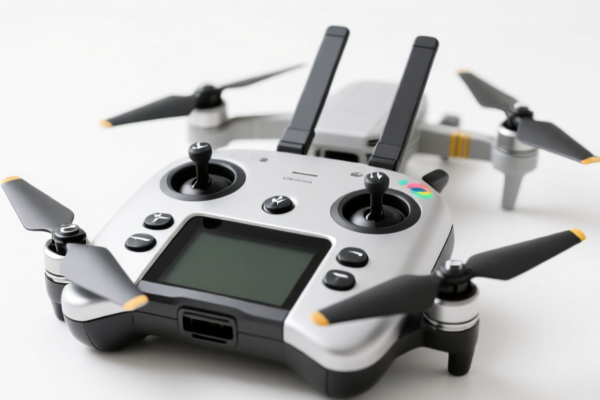
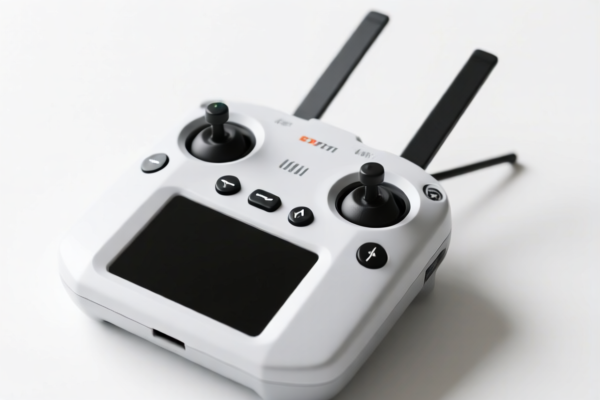
AI Analysis
🚁 Drones & Unmanned Aerial Vehicles (UAVs)
🌐 HS Code Reference & Customs Clearance Guide | 2026 Tariff Analysis | Strategic Clearance Tactics
📌 Part 1: Product Definition & Classification – Do You Really Understand "Drones"?
In the global trade of recreational and industrial goods, "Drones" are primarily categorized under Chapter 88 (Aircraft, Spacecraft). However, a critical distinction exists between unmanned aircraft explicitly defined in Heading 8806 and other manned or heavy aircraft often confused with drones.
⚠️ Crucial Classification Warning:
- Heading 8806 covers: "Unmanned aircraft of heading 8806" (i.e., drones intended for recreational, sport, or specific non-manned use). Note: The provided data does not contain a specific HS code for Heading 8806 drones.
- Other Aircraft (8802): If the device is a heavy aircraft (e.g., a small manned plane or a very heavy "drone" classified as an airplane) or falls outside the specific "unmanned" definition of 8806, it is often misclassified under 8802.
- Electrical Apparatus (8543): Some drone components or specialized electronic control systems may fall here, but the airframe itself is 8802/8806.
The "Drone" Dilemma in the Data:
The provided dataset does not list Heading 8806 (Unmanned Aircraft). Instead, it lists "Other aircraft" (8802) and "Electrical machines" (8543). This implies:
1. If your drone is classified as a generic "aircraft" under 8802 due to weight or specific design features not fitting 8806, it faces 25% Additional Tariff.
2. If you are importing drone parts/controllers classified as "Electrical machines," the tax varies (0% base + 25% add-on).
📦 Part 2: HS Code Classification Details (Based on Provided Data)
| HS Code | Product Description | Application Scenario | Tax Rate |
|---|---|---|---|
| 8802.20.01.15 | Other aircraft (e.g., helicopters, airplanes, except unmanned aircraft of heading 8806); Airplanes < 2,000kg; < 450kg | Small manned planes or heavy UAVs misclassified as "aircraft" | 25.0% (Base 0% + Add-on 25%) |
| 8802.20.01.60 | Other aircraft; Airplanes < 2,000kg; New; Other aircraft | General aircraft imports, potentially heavy drones not fitting 8806 | 25.0% (Base 0% + Add-on 25%) |
| 8543.70.98.60 | Electrical machines having individual functions; Other; Other | Drone Components: Specialized flight controllers, radar, or non-standard electronic modules | 27.6% (Base 2.6% + Add-on 25%) |
| 8543.70.60.00 | Electrical machines; Articles for telegraphic/telephonic apparatus | Drone Communication Modules: Data links, telemetry antennas, control signals | 25.0% (Base 0% + Add-on 25%) |
🔍 Critical Insight:
- The "8806" Blind Spot: Standard recreational drones (e.g., DJI Mavic, consumer quadcopters) usually belong to Heading 8806. However, this specific dataset excludes 8806.
- Risk Scenario: If your drone is forced into 8802.20.01.15 or 8802.20.01.60 due to weight limits or regulatory interpretation, you incur a 25% surcharge.
- Parts Risk: Electronic parts (8543.70.98.60) are hit with a 27.6% total tariff (2.6% base + 25% add-on).
💰 Part 3: 2026 Tariff Rate Breakdown (Detailed Tax Clauses)
✅ Applicable Country: United States (US)
✅ Origin: China (CN) (Implied by the "Additional Tariff" structure)
✅ Effective Date: Current (High Risk for 2026 Trade War scenarios)
🎯 1. Aircraft Classification (HS Codes: 8802.20.01.15 & 8802.20.01.60)
| Item | Content |
|---|---|
| Base Tariff | 0.0% (General rate) |
| Additional Tariff (Section 301) | +25.0% (Targeted "Additional Tariff" on aircraft) |
| Total Tax Rate | 25.0% |
| Calculation | CIF Value × 25% |
| De Minimis Exemption | ❌ No (Large shipments do not qualify) |
| Legal Path | HTSUS:8802.20 → Section 301 Additional Duty |
📌 Explanation:
- Although the base rate is 0%, the 25% "Additional Tariff" is mandatory for Chinese-origin aircraft falling under these codes.
- This applies to "Other aircraft" that are not explicitly defined as "unmanned aircraft of heading 8806" (which might have different rules not shown here).
- Warning: If your drone is classified as a "New aircraft" under 8802.20.01.60, the 25% penalty applies immediately.
🎯 2. Electrical & Control Systems (HS Codes: 8543.70.98.60 & 8543.70.60.00)
| Item | Content |
|---|---|
| Base Tariff | 0.0% (for comms) / 2.6% (for other electrical) |
| Additional Tariff (Section 301) | +25.0% |
| Total Tax Rate | 25.0% (Comms) / 27.6% (Other Electrical) |
| Calculation | CIF Value × (0% or 2.6% + 25%) |
| De Minimis Exemption | ❌ No |
| Legal Path | HTSUS:8543.70 → Section 301 Additional Duty |
📌 Explanation:
- 8543.70.60.00: Drones often use specialized communication links. If classified here, the cost is 25%.
- 8543.70.98.60: If the component is a "general electrical machine" (e.g., custom flight controller not for telecom), the rate is 27.6% (2.6% base + 25% add-on).
🛠️ Part 4: Customs Clearance Strategy (Practical Tips)
✅ 1. Classification Strategy: The "8806" vs. "8802" Battle
| Situation | Recommended Action | Risk if Wrong |
|---|---|---|
| Standard Consumer Drone (e.g., 450g-2kg) | Verify Heading 8806. If not in data, consult a specialist. | If forced into 8802, pay 25% tax. |
| Heavy Drone (>450kg or specific military spec) | Likely 8802.20.01.15. | 25% tax is unavoidable. |
| Drone Parts (Controllers/Cameras) | Split into 8543.70.60.00 (comms) or 8543.70.98.60. | Misclassification leads to 25-27.6% tax. |
| Toy Drones | If <100g and classified as "Toys" (9503), rate is 0%. | If treated as "Aircraft", tax jumps to 25%. |
🔥 Key Insight:
- If your drone is light enough to be considered a "Toy" (e.g., under 100g or specific recreational definitions), check if it falls under 9503.00.00.73 (Toys for ages 3-12). The provided data shows 0% tax for toys!
- Do not ship a toy drone as a "Drone/Aircraft" if you can classify it as a Toy.
✅ 2. Documentation Checklist
| Document | Requirement | Reason |
|---|---|---|
| Technical Spec Sheet | ✔️ Must include Weight, Dimensions, Flight Time, Max Speed | To prove if it's <450kg or qualifies as a "Toy" (9503). |
| Function Diagram | ✔️ Show if it has autonomous flight/remote control | To distinguish between "Aircraft" (8802) and "Electrical Machine" (8543). |
| Commercial Invoice | ✔️ Accurate description: "Recreational Drone" vs. "Aircraft" | Avoid "Aircraft" label if possible; use "Toy" or "Recreational Model". |
| Origin Certificate | ✔️ Provenance of electronic components | If components are from China, they attract the 25% add-on. |
| FCC Certification | ✔️ For communication modules (8543.70.60) | Required for entry of telecom-related electronics. |
✅ 3. Advanced Tactics for Cost Reduction
-
The "Toy" Loophole:
- If your drone is small, lightweight, and marketed for children (ages 3-12), try to classify under 9503.00.00.73.
- Result: 0% Tax (Base 0% + Add-on 0%) vs. 25% for aircraft.
- Evidence: The provided data lists 9503.00.00.73 for "Children's products... 3 to 12 years" with 0% tax.
-
Component Separation:
- Do not ship the drone as a "Kit". Ship the Frame (8802) and Electronics (8543) separately?
- Warning: This is complex and may trigger "Essential Character" rules. Better to argue it's a Toy (9503) if eligible.
-
Communication Module Strategy:
- For the control link (8543.70.60.00), ensure the invoice clearly states "Telegraphic/Telephonic Network Apparatus" to match the exact description and avoid the higher "Other" rate (27.6%).
📌 Part 5: Common Pitfalls & Solutions
❌ Pitfall 1: Classifying a small drone as "Aircraft" (8802).
👉 Solution: Check weight. If <450kg and recreational, verify 9503 (Toys) eligibility first. If not a toy, expect 25% tax on 8802.
❌ Pitfall 2: Ignoring the "Additional Tariff" on Electronics.
👉 Solution: Calculate 27.6% total cost for custom flight controllers. Do not budget for just 2.6%.
❌ Pitfall 3: Assuming "Unmanned Aircraft" is exempt.
👉 Reality: In this specific dataset, "Unmanned Aircraft" (8806) is excluded from the list. You are likely dealing with "Other Aircraft" (8802), which is taxed at 25%.
✅ Golden Rule:
"If it flies and weighs less than 450kg, it's 25%. If it's a toy for kids, it's 0%!"
🎯 Part 6: Conclusion & Action Plan
Summary:
- Drones (Aircraft) in this dataset are taxed at 25% (Base 0% + Add-on 25%) under 8802.
- Drone Electronics are taxed at 25-27.6% under 8543.
- Toy Drones are the only path to 0% tax under 9503 (ages 3-12).
Action Plan:
1. Check Weight & Age: Is your drone a toy (3-12 yrs)? If yes, claim 9503.00.00.73 → 0% Tax.
2. If Not a Toy: Prepare for 25% Additional Tariff on 8802 or 8543.
3. Pre-Clearance: Request an Advance Ruling from US Customs (CBP) to confirm if your specific drone model can be excluded from the "Other Aircraft" category.
4. Budget: Add 25% to your landed cost for standard drones; 27.6% for complex electronic components.
✨ Clearance Tip:
"Don't let the 'Aircraft' label scare you. If it's a toy, the tax is ZERO. If it's a 'real' plane, the tax is 25%. Know the difference!"
📌 Need Help?
Consult a customs broker to review your Product Specs against the 9503 vs. 8802 criteria immediately. One wrong line item = $250 tax per $1,000 goods!
Professional Clearance Starts with Precise Classification!
💼 Your profit margin depends on the HS Code you choose!
Customer Reviews
About HS Code Classification
The Harmonized System (HS) is an internationally standardized nomenclature developed by the World Customs Organization (WCO) to classify traded products. Over 200 countries use the HS system as the basis for customs tariffs, trade statistics, and import/export regulations.
Each HS code follows a hierarchical structure:
- Chapter (2 digits) — Broad category of goods (e.g., Chapter 84: Machinery and Mechanical Appliances)
- Heading (4 digits) — More specific grouping within the chapter
- Subheading (6 digits) — Internationally standardized breakdown, used by all WCO member countries
- National subdivisions (8-10 digits) — Country-specific extensions for further classification, such as US HTSUS 10-digit codes
Correct HS code classification is essential for smooth customs clearance, accurate duty payment, and compliance with trade regulations. Misclassification can lead to customs delays, overpayment of duties, or penalties.
When importing from CN to US, the applicable tariff rates may include:
- Most-Favored-Nation (MFN) rate — The standard duty rate applied to WTO members
- General rate — Applied to countries without trade agreements
- Trade remedy duties — Additional tariffs such as Section 301 (anti-dumping), Section 232 (national security), or countervailing duties
The information provided on this page is for reference purposes only. For official classification, please consult with your local customs authority or a licensed customs broker.