dry bovine leather
CN → US| HS Code | Tariff Rate | Origin | Destination | Doc |
|---|---|---|---|---|
| 4101901030 | 17.5% | CN | US | Official Doc |
| 4101201010 | 17.5% | CN | US | Official Doc |
| 4107117030 | 15.0% | CN | US | Official Doc |
| 4107127030 | 15.0% | CN | US | Official Doc |
| 4103901130 | 17.5% | CN | US | Official Doc |
Product Images

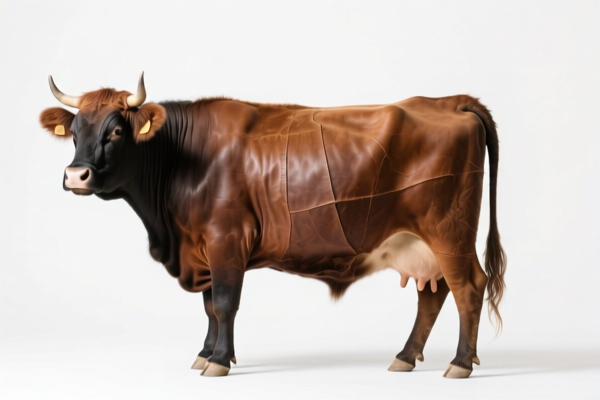
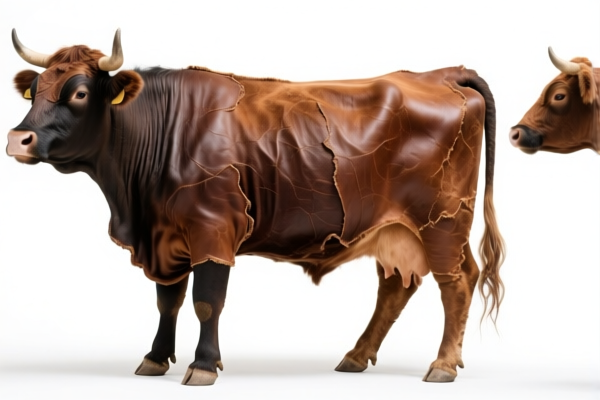

AI Analysis
🐄 Dry Bovine Leather (Unprocessed & Processed Skins)
🌐 HS Code Reference & Customs Clearance Guide | 2026 Latest Tariff Analysis | Professional Entry Strategy
📌 I. Product Definition & Classification: Do You Really Understand "Dry Bovine Leather"?
Dry Bovine Leather, in the context of international trade, refers to cattle hides or skins that have undergone drying (for preservation) but have NOT undergone the tanning or further preparation process. It is the raw material for the leather industry.
The classification depends strictly on the physical state (whole sheet vs. split/layer) and the degree of preparation (raw/dried vs. semi-tanned/prepared).
⚠️ Critical Distinction Point:
- If the leather is raw, dried, and whole (unglued, unsplit) → It falls under Chapter 41 (Raw Hides/Skins), specifically 4101 or 4103.
- If the leather has been split (sawn into layers) or partially prepared (e.g., beamhouse operations like liming or deliming, but not fully tanned) → It often falls under 4107 or 4103.
- Key Rule: If it is just "dried" without chemical tanning agents, it is considered a raw hide/skin. However, HS codes differentiate between whole hides and splits/pieces.
📦 II. HS Code Classification Matrix (2026 Latest Tariff Authority Cross-Reference)
| HS Code | Product Description | Application Scenario | State/Format |
|---|---|---|---|
4101.20.10.10 |
Dry Bovine Hides, Whole, Unglued | Raw cattle hides, dried whole sheets, not split, not tanned | ✅ Whole, Dried |
4101.90.10.30 |
Dry Bovine Hides, Other (e.g., Flayed, Slightly Salted) | Other forms of dry bovine hides not specifically listed in .10 | ✅ Whole, Dried |
4107.11.70.30 |
Dry Bovine Leather Splits, Full Grain | Split cattle leather, full-grain layer, dried/prepared but not fully tanned | ✅ Split, Dried |
4107.12.70.30 |
Dry Bovine Leather Splits, Corrected Grain | Split cattle leather, split layer (meat side/inner), dried/prepared | ✅ Split, Dried |
4103.90.11.30 |
Note: Listed as "Dry Deer Skin" in Data | Discrepancy Alert: HS Code 4103.90.11.30 is listed in the data for Deer Skin, not Bovine. Do not use for Bovine Leather. |
❌ Mismatch |
🔍 Important Clarification:
- The data provided links4103.90.11.30to Dry Deer Skin (鹿皮), not Bovine Leather. This HS code is incorrect for Bovine Leather.
- For Bovine Leather, only 4101 (Hides) and 4107 (Skins/Leather Splits) are relevant.
- 4101 is for whole hides that are dried.
- 4107 is for splits or pieces that may have undergone slight preparation (like beamhouse) but are not yet fully tanned.
💰 III. 2026 Latest Tariff Rate Breakdown (Including Additional Duties, Policy Surcharges)
✅ Applicable Country: United States (US)
✅ Origin: China (CN)
✅ Effective Date: November 10, 2025 (and subsequent imports)
🎯 1. 4101.20.10.10 & 4101.90.10.30 —— Raw Dry Bovine Hides (Whole)
These codes cover unglued, dried, whole bovine hides.
| Item | Details |
|---|---|
| Base Duty Rate | 0.0% (Ad Valorem) |
| Section 301 Additional Duty | +7.5% |
| 122 Clause Tariff (IEEPA) | +10% |
| Total Duty Rate | 17.5% |
| Tax Calculation | CIF Value × 17.5% |
| De Minimis Eligibility | ❌ Not Eligible (Denied) |
| Legal Authority Path | 122 Clause: 10% → Section 301: 7.5% → Base: 0% |
📌 Explanation:
- Base Rate: 0% because raw hides are often duty-free under normal trade.
- Additional Duties: Subject to 7.5% under Section 301 (US-China trade tensions) and 10% under the "122 Clause" (a specific provision targeting certain Chinese goods).
- Total: 17.5% is the effective duty rate for raw, dried bovine hides.
🎯 2. 4107.11.70.30 & 4107.12.70.30 —— Dry Bovine Leather Splits (Prepared/Split)
These codes cover bovine leather that has been split (e.g., into full grain and split layers) and dried.
| Item | Details |
|---|---|
| Base Duty Rate | 5.0% (Ad Valorem) |
| Section 301 Additional Duty | 0.0% |
| 122 Clause Tariff (IEEPA) | +10% |
| Total Duty Rate | 15.0% |
| Tax Calculation | CIF Value × 15.0% |
| De Minimis Eligibility | ❌ Not Eligible (Denied) |
| Legal Authority Path | 122 Clause: 10% → Base: 5.0% → Section 301: 0% |
📌 Explanation:
- Base Rate: 5.0% because split leather is considered more "processed" than raw hides.
- Additional Duties: No Section 301 duty (0%) but still subject to the 10% 122 Clause.
- Total: 15.0% is the effective duty rate. This is 2.5% lower than raw whole hides due to the lack of Section 301 surcharge.
🛠️ IV. Customs Clearance Practical Advice (Real-World Pitfall Avoidance Guide)
✅ 1. Required Documentation Checklist (All Mandatory)
| Document | Required | Description |
|---|---|---|
| ✅ Product Specification Sheet | ✔️ | Must specify: Species (Bovine), Form (Whole/Split), State (Dried), Moisture Content. |
| ✅ Photos of Goods | ✔️ | Clear images showing texture, stitching (if any), and labels. Distinguish between whole hide and split. |
| ✅ Commercial Invoice | ✔️ | Must explicitly state "Dry Bovine Leather" or "Raw Bovine Hide." Avoid vague terms like "Leather Scrap." |
| ✅ Packing List | ✔️ | Detail weight, dimensions, and number of hides/splits. |
| ✅ Non-Tanning Declaration | ✔️ | Confirm that the product has NOT been tanned, dyed, or chrome-treated. |
| ✅ Certificate of Origin | ✔️ | If claiming preferential rates (though unlikely for US/China raw leather). |
✅ 2. Classification Tips (Key Mantra)
🔥 "Raw Whole = 4101, Split = 4107, No Tanning = 17.5% or 15%"
| Scenario | Correct HS Code | Incorrect Practice |
|---|---|---|
| Whole, dried, unglued bovine hide | 4101.20.10.10 |
Misclassifying as split leather |
| Bovine hide split into layers, dried | 4107.11.70.30 or 4107.12.70.30 |
Misclassifying as raw hide (4101) |
| Tanned/Dyed Leather | Not in Data | Using 4101/4107 for tanned goods → Severe Penalty |
| Deer Skin | 4103.90.11.30 |
Using this for Bovine Leather → Customs Rejection |
✅ 3. Special Cases & Handling
| Scenario | Handling Advice |
|---|---|
| Mixed Hides (Bovine + Other) | Declare separately. Bovine hides must be classified under 4101/4107. |
| Dried vs. Salted | Salted hides are still "raw" but may have different moisture content requirements. Ensure "Dry" status is clear. |
| Splits vs. Whole | If hides are cut into panels (not split), they may still be classified under 4101 if not chemically treated. |
| Deer Skin Mistake | Do not use 4103.90.11.30 for bovine leather. It is for deer. Using it will cause misclassification. |
🌍 V. Global Main Market Customs Comparison (2026 Latest)
| Country/Region | Recommended HS Code | Tariff | Certification Requirements | Notes |
|---|---|---|---|---|
| 🇺🇸 USA | 4101.20.10.10 / 4107.11.70.30 |
17.5% / 15% | No specific certification | High additional duties (122 Clause) |
| 🇨🇳 China | 4101.20.10.10 / 4107.11.70.30 |
0% - 5% | No special certification | Low base duty, no 122 Clause |
| 🇪🇺 EU | 4101.20.00 / 4107.10 |
0% - 6% | No special certification | Generally low tariffs for raw hides |
| 🇬🇧 UK | 4101.20.00 / 4107.10 |
0% - 6% | No special certification | Post-Brexit rules may vary |
| 🇯🇵 Japan | 4101.20.000 / 4107.10.000 |
0% - 3% | No special certification | Very low tariffs for raw materials |
📌 Conclusion:
- USA is the most expensive market due to the 122 Clause (10%) and Section 301 (7.5%).
- Split leather (4107) is cheaper than Whole Hides (4101) in the US due to 0% Section 301 duty.
- European and Asian markets offer significantly lower duties, making them more cost-effective for raw leather imports.
📌 VI. Common Errors & Pitfall Guide (Lessons Learned)
❌ Error 1: Using 4103.90.11.30 for Bovine Leather
👉 Consequence: This HS code is for Deer Skin. Misclassification leads to customs seizure and fines.
✅ Correct Use: Use 4101 or 4107 series for Bovine.
❌ Error 2: Declaring "Tanned Leather" as "Dry Bovine Leather"
👉 Consequence: Tanned leather falls under 4104/4105/4106, which have different tariffs (often higher). Misclassification leads to underpayment of duties and penalties.
✅ Correct Use: Ensure the product is NOT tanned. If tanned, use the correct tanned leather HS code.
❌ Error 3: Not Distinguishing Between Whole Hides and Splits
👉 Consequence: Wrong HS code → Wrong Tariff (17.5% vs 15%).
✅ Correct Use: Clearly define if the leather is whole or split.
❌ Error 4: Ignoring the 122 Clause
👉 Consequence: Unexpected 10% additional duty at customs.
✅ Correct Use: Factor in the 122 Clause (10%) in all cost calculations for US imports.
🎯 VII. Conclusion: Precise Classification, Cost Savings, Smooth Clearance!
🎯 Remember the Mantra:
🔹 "Whole Hides = 4101 (17.5%), Splits = 4107 (15%), No Tanning = 0% Base"
🔹 "122 Clause Hits 10%, Section 301 Hits 7.5% (Only on 4101)"
🔹 "Deer Skin is 4103, Not Bovine! Don't Mix Them Up!"
📌 Pro Tip:
If your leather is sourced from Vietnam, Mexico, or Thailand, you may avoid the 122 Clause and Section 301 tariffs, reducing the duty to 0% - 5%.
Consider supply chain diversification to mitigate US tariff risks.
📣 Immediate Action:
📞 Contact a Professional Customs Broker + Provide Product Photos + Apply for HS Code Advance Ruling
🚀 Ensure Smooth Customs Clearance, Efficient Global Trade, Maximized Profit!
✨ Professional Customs Clearance Starts with Accurate Classification!
💼 Every Penny of Cost Deserves Precise Calculation!
Customer Reviews
About HS Code Classification
The Harmonized System (HS) is an internationally standardized nomenclature developed by the World Customs Organization (WCO) to classify traded products. Over 200 countries use the HS system as the basis for customs tariffs, trade statistics, and import/export regulations.
Each HS code follows a hierarchical structure:
- Chapter (2 digits) — Broad category of goods (e.g., Chapter 84: Machinery and Mechanical Appliances)
- Heading (4 digits) — More specific grouping within the chapter
- Subheading (6 digits) — Internationally standardized breakdown, used by all WCO member countries
- National subdivisions (8-10 digits) — Country-specific extensions for further classification, such as US HTSUS 10-digit codes
Correct HS code classification is essential for smooth customs clearance, accurate duty payment, and compliance with trade regulations. Misclassification can lead to customs delays, overpayment of duties, or penalties.
When importing from CN to US, the applicable tariff rates may include:
- Most-Favored-Nation (MFN) rate — The standard duty rate applied to WTO members
- General rate — Applied to countries without trade agreements
- Trade remedy duties — Additional tariffs such as Section 301 (anti-dumping), Section 232 (national security), or countervailing duties
The information provided on this page is for reference purposes only. For official classification, please consult with your local customs authority or a licensed customs broker.