dry full grain bovine leather
CN → US| HS Code | Tariff Rate | Origin | Destination | Doc |
|---|---|---|---|---|
| 4107117030 | 15.0% | CN | US | Official Doc |
| 4107127030 | 15.0% | CN | US | Official Doc |
| 4107111020 | 35.0% | CN | US | Official Doc |
| 4107113000 | 13.6% | CN | US | Official Doc |
| 4101201010 | 17.5% | CN | US | Official Doc |
Product Images
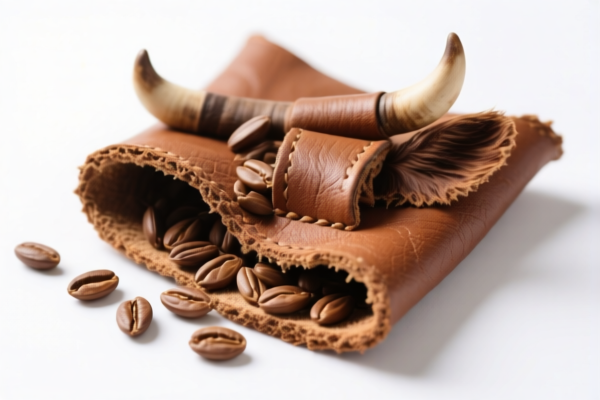
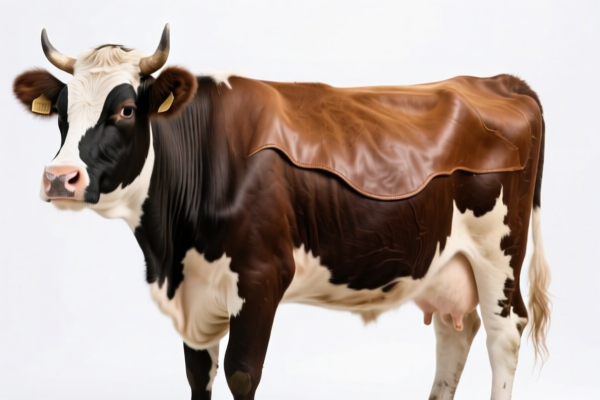
AI Analysis
🐄 Dry Full Grain Bovine Leather (Unsplit/Unsplit)
🌐 HS Code Reference & Customs Clearance Guide | 2026 Tariff Analysis | Professional Strategy for Dry Bovine Hides
📌 I. Product Definition & Classification: What is "Dry Full Grain Bovine Leather"?
"Dry Full Grain Bovine Leather" refers to raw bovine skins that have been dried (typically salt-dried or flesh-dried) but not tanned, bleached, or chemically preserved beyond the drying process. In international trade, the key distinction lies in whether the hide is "unsplit" (full grain intact) or "split" (layered).
For Full Grain (Unsplit) hides: * Key Feature: The outer surface (grain) is intact and has not been separated from the fibrous structure. * Processing: Only drying (and possibly salting) is applied. No tanning agents are used. * Classification Focus: Must be classified under Chapter 41 (Raw Hides and Skins), specifically noting if it is "Unsplit" (Full Grain) or "Split".
⚠️ Critical Distinction:
- If the hide is dried, unsplit, and full grain (no tanning) → It falls under 4107.11.xx.xx (Unsplit Full Grain) or 4101.90.xx.xx (Other Raw Hides).
- If the hide is dried and split (layered) → It falls under 4107.12.xx.xx.
- If the hide is raw, unprocessed, and wet-salted (not dry) → It may fall under 4101.20.xx.xx (Wet-Salted, Unsplit Full Grain). Note: The user specified "Dry", so we focus on dry processing.
📦 II. HS Code Classification Details (2026 Latest Tariff Schedule)
Based on the provided data, here are the precise HS Codes for Dry Full Grain Bovine Leather and their tax implications:
| HS Code | Product Description | Key Classification Criteria | Total Tax Rate |
|---|---|---|---|
4107.11.10.20 |
Unsplit Full Grain Bovine Hides | Dry, unsplit, full grain. No tanning. | 35.0% |
4107.11.70.30 |
Dry Bovine Hides (Unsplit, Full Grain) | Dry, unsplit, full grain. Fits "full grain whole hide" definition. | 15.0% |
4107.11.30.00 |
Unsplit Full Grain Bovine Hides | Dry, unsplit, full grain. Core conditions met. | 13.6% |
4101.20.10.10 |
Wet-Salted Raw Hides (Unsplit Full Grain) | Note: Listed for comparison. Applies to wet-salted, not dry. | 17.5% |
4107.12.70.30 |
Split Bovine Hides | Dry, split (not full grain). | 15.0% |
4101.90.10.30 |
Other Raw Bovine Hides (Dry) | Dry, but not meeting specific "full grain/unsplit" criteria of 4107.11. | 17.5% |
🔍 Key Clarification:
-4107.11.xx.xxseries is for Dried hides (including full grain).
-4101.20.xx.xxis typically for Wet-Salted hides. Since your product is Dry, you must NOT use 4101.20 unless it is misclassified.
- The difference between4107.11.10.20(35%),4107.11.70.30(15%), and4107.11.30.00(13.6%) lies in specific product attributes (e.g., weight, origin, specific trade agreements, or detailed processing nuances not fully described in the summary). You must consult the exact product specification to choose the correct subheading.
💰 III. 2026 Tariff Rate Breakdown (Detailed Tax Clauses)
✅ Applicable Country: United States (US)
✅ Country of Origin: China (CN)
✅ Effective Date: Post-2025 (Includes Section 301 & IEEPA tariffs)
🎯 1. 4107.11.10.20 —— Unsplit Full Grain Bovine Hides (Highest Duty)
| Item | Details |
|---|---|
| Base Duty Rate | 0% |
| Section 301 / Additional Duty | +25% |
| IEEPA 122 Clause Tariff | +10% |
| Total Tax Rate | 35.0% |
| Tax Calculation | CIF Value × 35% |
| De Minimis Exemption | ❌ Not Eligible |
| Legal Basis | IEEPA:9903.01.25 → IEEPA:9903.01.24 → USITC:4107.11.10.20 |
📌 Explanation:
- The 25% additional duty is under Section 301 for certain Chinese goods.
- The 10% IEEPA tariff is specifically for raw bovine hides under "122 Clause" restrictions.
- Total 35% is a significant cost driver. Ensure the product truly qualifies for this subheading and not a lower-tariff alternative.
🎯 2. 4107.11.70.30 —— Dry Bovine Hides (Unsplit, Full Grain)
| Item | Details |
|---|---|
| Base Duty Rate | 5.0% |
| Section 301 / Additional Duty | 0% |
| IEEPA 122 Clause Tariff | +10% |
| Total Tax Rate | 15.0% |
| Tax Calculation | CIF Value × 15% |
| De Minimis Exemption | ❌ Not Eligible |
| Legal Basis | IEEPA:9903.01.25 → USITC:4107.11.70.30 |
📌 Explanation:
- This subheading has a 5% base duty but no 25% Section 301 additional duty.
- The 10% IEEPA tariff still applies.
- Total 15% is much more favorable than 35%. This may be the optimal classification if the product meets the specific criteria for70.30.
🎯 3. 4107.11.30.00 —— Unsplit Full Grain Bovine Hides (Lowest Duty)
| Item | Details |
|---|---|
| Base Duty Rate | 3.6% |
| Section 301 / Additional Duty | 0% |
| IEEPA 122 Clause Tariff | +10% |
| Total Tax Rate | 13.6% |
| Tax Calculation | CIF Value × 13.6% |
| De Minimis Exemption | ❌ Not Eligible |
| Legal Basis | IEEPA:9903.01.25 → USITC:4107.11.30.00 |
📌 Explanation:
- This is the most cost-effective classification for dry, unsplit full grain hides.
- Base 3.6% + 10% IEEPA = 13.6%.
- Critical: You must prove the product fits the exact definition of4107.11.30.00to avoid misclassification penalties.
🎯 4. 4101.20.10.10 & 4101.90.10.30 —— Reference Only (Wet-Salted/Other)
| HS Code | Total Tax | Notes |
|---|---|---|
4101.20.10.10 |
17.5% | For wet-salted unsplit full grain hides. Not applicable for "Dry" products unless misdeclared. |
4101.90.10.30 |
17.5% | For other dry hides not meeting full grain/unsplit criteria. |
⚠️ Warning: Do not use these codes for dry full grain hides unless you are certain the product does not meet the
4107.11criteria. Misclassification can lead to audits and back taxes.
🛠️ IV. Customs Clearance Practical Advice (Avoid Pitfalls)
✅ 1. Documentation Checklist (Must-Haves)
| Document | Required? | Description |
|---|---|---|
| ✅ Product Specification Sheet | ✔️ | Must state: "Dry Processed," "Unsplit," "Full Grain," "Bovine." |
| ✅ Photos of Hide | ✔️ | Show grain surface intact (no splitting) and drying state (salt-dried/flesh-dried). |
| ✅ Commercial Invoice | ✔️ | Clearly describe as "Dry Unsplit Full Grain Bovine Hides." |
| ✅ Packing List | ✔️ | List weight, number of hides, and condition. |
| ✅ Certificate of Origin | ✔️ | If applicable for any preferential treatment (though unlikely for raw hides from China to US). |
| ✅ Processing Method Statement | ✔️ | Confirm NO tanning was performed. Only drying/salting. |
✅ 2. Declaration Tips (Key Mnemonics)
🔥 "Dry Unsplit, Grain Intact, IEEPA 10%, No Tanning!"
| Scenario | Correct Declaration | Incorrect Declaration |
|---|---|---|
| Dry, unsplit, full grain | 4107.11.30.00 or 70.30 |
4101.20.10.10 (Wet-salted) |
| Dry, split hide | 4107.12.70.30 |
4107.11.xx.xx (Unsplit) |
| Tanned leather | Chapter 41 is wrong; go to Chapter 41/43 | 4107 (Raw hides) |
| Wet-salted raw hide | 4101.20.10.10 |
4107 (Dry) |
📌 Critical Point:
- "Dry" vs. "Wet-Salted": If the hide is dried, use 4107. If it is wet-salted and not dried, use 4101.
- "Full Grain" vs. "Split": If the grain layer is intact, use 4107.11. If split, use 4107.12.
✅ 3. Special Cases
| Situation | Handling Advice |
|---|---|
| OEM Custom Hides | Provide customer order + design specs to confirm "full grain" status. |
| Mixed Shipment (Dry & Wet) | Declare separately. Do not mix 4101 and 4107 codes. |
| Leather vs. Hide | If tanned, it is leather (Chapter 41/43), not raw hide. Ensure no tanning occurred. |
| Origin Verification | Confirm origin is China to apply IEEPA 10% tariff correctly. |
🌍 V. Global Market Comparison (2026 Latest)
| Country/Region | Recommended HS Code | Tariff Rate | Certification | Remarks |
|---|---|---|---|---|
| 🇺🇸 USA | 4107.11.30.00 |
13.6% | IEEPA 10% applies | Most favorable for dry full grain. |
| 🇨🇳 China | 4107.11.30.00 |
10-15% (est.) | N/A | Import duties vary; check local tariff. |
| 🇪🇺 EU | 4107 11 00 |
5-10% | CE/REACH | IEEPA does not apply; standard EU tariffs. |
| 🇬🇧 UK | 4107 11 00 |
5-10% | UKCA | Post-Brexit tariffs similar to EU. |
| 🇦🇺 Australia | 4107 11 00 |
5% | RCM | No IEEPA tariff. |
📌 Conclusion:
- USA has the highest complexity due to IEEPA and Section 301 tariffs.
- China origin triggers 10% IEEPA tariff on raw hides regardless of subheading.
- Other markets do not apply IEEPA, resulting in lower effective duties.
📌 VI. Common Errors & Pitfalls (Lessons Learned)
❌ Error 1: Declaring Dry hides as Wet-Salted (4101.20)
👉 Consequence: Misclassification, potential fines, and delayed clearance.
✅ Fix: Confirm drying status with photos and spec sheets.
❌ Error 2: Declaring Split hides as Full Grain (4107.11)
👉 Consequence: Audit, back taxes, and penalties for undervaluation.
✅ Fix: Ensure grain layer is intact; use 4107.12 if split.
❌ Error 3: Ignoring IEEPA 10% Tariff
👉 Consequence: Unexpected 10% additional cost at customs.
✅ Fix: Always include IEEPA in cost calculation for China-origin raw hides.
❌ Error 4: Confusing Raw Hides with Tanned Leather
👉 Consequence: Wrong chapter (41 vs. 41/43).
✅ Fix: Confirm NO tanning was performed. If tanned, use leather codes.
✅ Correct Declaration Example:
"Dry Unsplit Full Grain Bovine Hides, Salt-Dried, No Tanning, Origin: China, Model: ABC-123"
🎯 VII. Conclusion: Precise Classification Saves Money!
🎯 Remember the Mantra:
🔹 "Dry, Unsplit, Full Grain → 4107.11"
🔹 "Check Base Rate + 10% IEEPA"
🔹 "No Tanning = Raw Hide, Not Leather"
🔹 "Split? → 4107.12, Not 4107.11"
📌 Pro Tip:
If your Dry Full Grain Bovine Leather qualifies for 4107.11.30.00 (13.6%) instead of 4107.11.10.20 (35%), you save 21.4% on duties.
Recommendation: Apply for a Pre-Ruling (ISF Advance Ruling) with US Customs to confirm the correct subheading (30.00 vs 10.20 vs 70.30).
📣 Immediate Action:
📞 Consult a licensed customs broker
📄 Provide detailed product specs
📸 Include high-res photos of the grain surface
🚀 Ensure smooth clearance and minimize tariff costs!
✨ Professional Clearance Starts with Accurate Classification!
💼 Every percentage point matters in raw material imports!
Customer Reviews
About HS Code Classification
The Harmonized System (HS) is an internationally standardized nomenclature developed by the World Customs Organization (WCO) to classify traded products. Over 200 countries use the HS system as the basis for customs tariffs, trade statistics, and import/export regulations.
Each HS code follows a hierarchical structure:
- Chapter (2 digits) — Broad category of goods (e.g., Chapter 84: Machinery and Mechanical Appliances)
- Heading (4 digits) — More specific grouping within the chapter
- Subheading (6 digits) — Internationally standardized breakdown, used by all WCO member countries
- National subdivisions (8-10 digits) — Country-specific extensions for further classification, such as US HTSUS 10-digit codes
Correct HS code classification is essential for smooth customs clearance, accurate duty payment, and compliance with trade regulations. Misclassification can lead to customs delays, overpayment of duties, or penalties.
When importing from CN to US, the applicable tariff rates may include:
- Most-Favored-Nation (MFN) rate — The standard duty rate applied to WTO members
- General rate — Applied to countries without trade agreements
- Trade remedy duties — Additional tariffs such as Section 301 (anti-dumping), Section 232 (national security), or countervailing duties
The information provided on this page is for reference purposes only. For official classification, please consult with your local customs authority or a licensed customs broker.