dry lambskins without wool
CN → US| HS Code | Tariff Rate | Origin | Destination | Doc |
|---|---|---|---|---|
| 4103901130 | 17.5% | CN | US | Official Doc |
| 4102101000 | 17.5% | CN | US | Official Doc |
| 4103901190 | 17.5% | CN | US | Official Doc |
| 4102291090 | 17.5% | CN | US | Official Doc |
| 4103901140 | 17.5% | CN | US | Official Doc |
Product Images
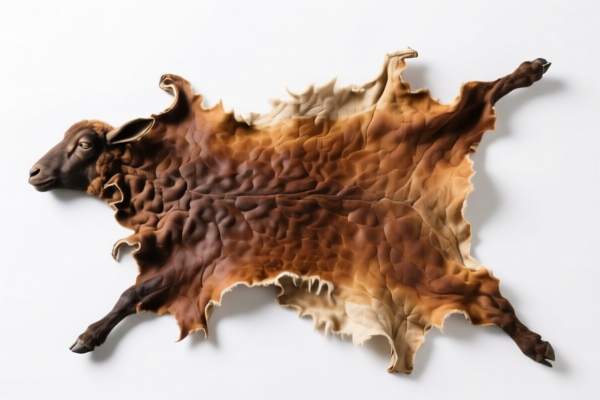
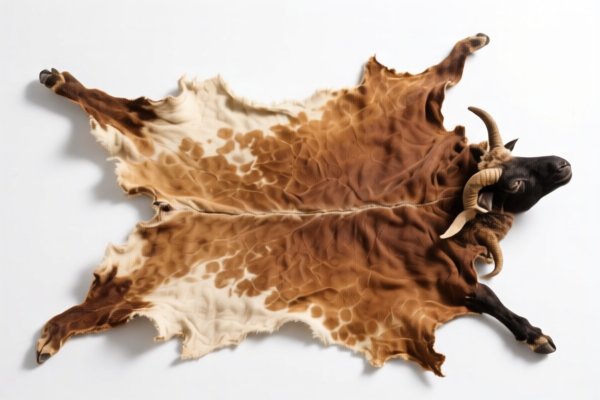
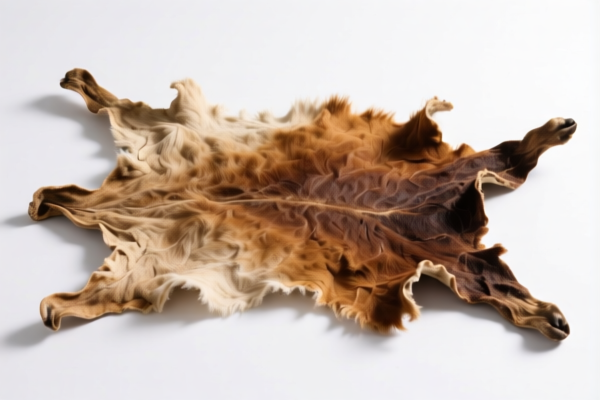
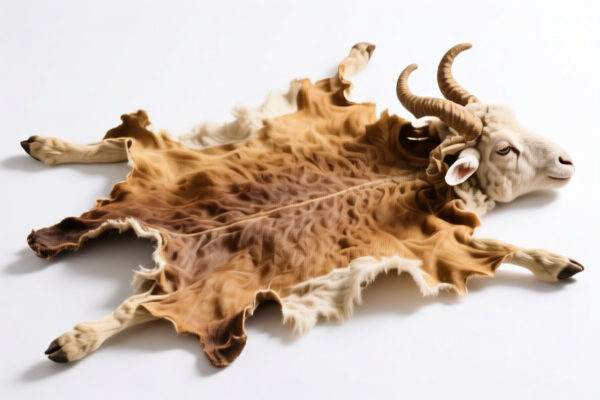
AI Analysis
🐑 Dry Lambskins Without Wool (Unprepared Skins)
🌐 HS Code Reference & Customs Clearance Guide | 2026 Latest Tariff Analysis | Professional Entry Strategy
📌 I. Product Definition & Classification: What Exactly Are "Dry Lambskins Without Wool"?
Dry lambskins without wool refer to the skins of young sheep (lambs) that have been removed from the animal, cleaned, and dried, but have not undergone any tanning, preservation, or further processing (such as currying or dyeing). They are essentially in their "raw" state, minus the hair/wool layer.
In international trade, these are strictly classified under Chapter 41: Raw Hides and Skins of Bovines (including buffalo) or equine animals; other raw hides and skins. Specifically, they fall under the subheading for other raw hides and skins, which includes sheep and lamb skins.
⚠️ Critical Distinction:
- If the skins still have wool/hair attached → They may fall under different subheadings (e.g., 4103.90.11.40 in some contexts, but often still under 4102/4103 depending on exact processing).
- If the skins have been tanned or preserved → They move to Chapter 41 subheadings for tanned fur skins (e.g., 4104, 4105, etc.).
- Un-tanned, dry, no-wool is the key identifier here, placing them squarely in the 4102 or 4103 range.
📦 II. HS Code Classification Details (2026 Latest Tariff Authority Comparison)
Based on the provided data, the relevant HS Codes for dry lambskins without wool are as follows:
| HS Code | Product Description | Key Characteristics | Processing State |
|---|---|---|---|
4102.10.10.00 |
Dry lambskins, without wool, unprepared | Fully compliant with the definition of un-tanned lambskins without wool. | Raw, dried, no wool, no tanning |
4103.90.11.30 |
Other raw hides and skins, of sheep or lambs, unprepared | Fits: Un-prepared, specific animal skin classification (sheep/lamb), without wool. | Raw, dried, no wool, no tanning |
4103.90.11.90 |
Other raw hides and skins, of sheep or lambs, unprepared | Fits: Un-prepared, falls under "other" categories for un-tanned sheep/lamb skins. | Raw, dried, no wool, no tanning |
4103.90.11.40 |
Dry sheepskins, with wool, unprepared | Note: This code specifies with wool. If your product is without wool, this may not be the most accurate, but some classifiers may still use 4103.90.11.40 if the "without wool" distinction is not strictly enforced in the specific country’s tariff schedule. However, per your data, it is listed as "with wool." Caution: If your goods are without wool, 4102.10.10.00 is the most precise. |
Raw, dried, with wool (see warning) |
4102.29.10.90 |
Other raw hides and skins, of sheep or lambs, not split | Fits: Material and processing state limits apply. Un-prepared, un-tanned. | Raw, dried, no wool, no tanning |
🔍 Key Takeaway:
- The most direct and accurate code for dry lambskins without wool is4102.10.10.00.
- Codes under4103.90.11.30/90are also valid as "other raw hides/skins" but are less specific than 4102.
-4103.90.11.40explicitly states "with wool" in its summary. If your goods are without wool, this code may lead to misclassification risks.
-4102.29.10.90is a broader category for "other" sheep/lamb skins, also applicable if they don't fit the primary 4102.10 definition.
💰 III. 2026 Latest Tariff Rate Breakdown (Including Surcharges & Policy Add-ons)
✅ Applicable Country: United States (US)
✅ Origin: China (CN)
✅ Effective Date: November 10, 2025 (and subsequent imports)
🎯 1. 4102.10.10.00 – Dry Lambskins Without Wool (Unprepared)
| Item | Content |
|---|---|
| Base Tariff Rate | 0.0% (ad valorem) |
| Section 301 Surcharge | +7.5% |
| Section 122 Tariff | +10.0% |
| Total Effective Rate | 17.5% |
| Tax Calculation | CIF Value × 17.5% |
| De Minimis Exemption? | ❌ No (Denied for this category) |
| Legal Basis Path | Section 301: 7.5% → Section 122: 10% → HS 4102.10.10.00 |
📌 Explanation:
- Base Rate: 0% because raw hides/skins often have low base duties.
- Section 301 (7.5%): Additional tariff on Chinese-origin goods under U.S. Trade Law Section 301.
- Section 122 (10%): Specific tariff applied to certain leather/raw hide products.
- Total: 17.5%. This is a significant cost that must be factored into your landed cost.
- No De Minimis: Small parcels do not qualify for exemption; full duty applies.
🎯 2. 4103.90.11.30 – Other Raw Sheep/Lamb Skins (Unprepared)
| Item | Content |
|---|---|
| Base Tariff Rate | 0.0% |
| Section 301 Surcharge | +7.5% |
| Section 122 Tariff | +10.0% |
| Total Effective Rate | 17.5% |
| Tax Calculation | CIF Value × 17.5% |
| De Minimis Exemption? | ❌ No |
| Legal Basis Path | Section 301: 7.5% → Section 122: 10% → HS 4103.90.11.30 |
📌 Note: Same tax structure as 4102.10.10.00. The classification difference is minor for tariff purposes, but accuracy matters for customs inspection.
🎯 3. 4103.90.11.90 – Other Raw Sheep/Lamb Skins (Unprepared)
| Item | Content |
|---|---|
| Base Tariff Rate | 0.0% |
| Section 301 Surcharge | +7.5% |
| Section 122 Tariff | +10.0% |
| Total Effective Rate | 17.5% |
| Tax Calculation | CIF Value × 17.5% |
| De Minimis Exemption? | ❌ No |
| Legal Basis Path | Section 301: 7.5% → Section 122: 10% → HS 4103.90.11.90 |
🎯 4. 4102.29.10.90 – Other Raw Sheep/Lamb Skins
| Item | Content |
|---|---|
| Base Tariff Rate | 0.0% |
| Section 301 Surcharge | +7.5% |
| Section 122 Tariff | +10.0% |
| Total Effective Rate | 17.5% |
| Tax Calculation | CIF Value × 17.5% |
| De Minimis Exemption? | ❌ No |
| Legal Basis Path | Section 301: 7.5% → Section 122: 10% → HS 4102.29.10.90 |
⚠️ Special Note on 4103.90.11.40 (With Wool)
While the provided data lists 4103.90.11.40 with the same 17.5% total tax, its description specifies "with wool."
❗ Risk: If you import wool-less skins but declare under
4103.90.11.40, customs may flag this as misdeclaration. This could lead to:
- Delayed clearance
- Penalties for false labeling
- Potential reclassification to4102.10.10.00with retrospective audit
✅ Recommendation: Use 4102.10.10.00 for wool-less skins to ensure accuracy and avoid customs disputes.
🛠️ IV. Customs Clearance Practical Advice (Pitfall Avoidance Guide)
✅ 1. Required Documentation Checklist
| Document | Mandatory | Description |
|---|---|---|
| ✅ Product Specification Sheet | ✔️ | Must clearly state: "Dry Lambskins, Without Wool, Un-tanned, Un-prepared." |
| ✅ Product Photos | ✔️ | Clear images showing no wool/hair attached, and the raw, dried skin texture. |
| ✅ Commercial Invoice | ✔️ | Describe as: "Dry Lambskins, Unprepared, Without Wool, HS 4102.10.10.00" |
| ✅ Packing List | ✔️ | Detail quantity, weight, and packaging type (e.g., baled, boxed). |
| ✅ Origin Certificate (CO) | ✔️ | If applicable, to confirm Chinese origin (subject to 17.5% tariff). |
| ✅ Third-Party Inspection Report | ✔️ | Optional but recommended to confirm "un-tanned" and "wool-less" status. |
✅ 2. Declaration Tips (Key Phrases to Use)
🔥 "Be Precise: No Wool, No Tanning, Raw State!"
| Scenario | Correct Declaration | Incorrect Declaration |
|---|---|---|
| Dry Lambskins Without Wool | 4102.10.10.00 – "Dry lambskins, without wool, unprepared" |
"Sheepskin" (too vague) → Risk of misclassification |
| If Wool is Present | 4103.90.11.40 – "Dry sheepskins, with wool" |
Declaring "without wool" when wool is present → Fraud risk |
| Tanned Lambskins | Different HS Code (e.g., 4104/4105) | Declaring as "raw" → 17.5% tax vs. potentially lower/higher base rate, plus penalties |
| Split Skins (Inner/Outer) | Specify "split" if applicable | Assuming "whole skin" → Duty calculation errors |
✅ 3. Special Circumstances Handling
| Situation | Recommendation |
|---|---|
| Mixed Shipments (With & Without Wool) | Separate declarations required. Do not combine under one HS code. |
| Partially Tanned Skins | If any tanning has occurred, it is no longer "unprepared." Re-classify accordingly. |
| Samples for Quality Testing | Still subject to 17.5% duty. No de minimis exemption. |
| Re-exported Goods | If goods were originally imported and are now being re-exported, verify duty drawback eligibility. |
🌍 V. Global Customs Comparison (2026 Latest)
| Country/Region | Recommended HS Code | Tariff Rate (China Origin) | Notes |
|---|---|---|---|
| 🇺🇸 United States | 4102.10.10.00 |
17.5% | Includes Section 301 (7.5%) + Section 122 (10%) |
| 🇨🇳 China | 4102.10.10.00 |
~20-30% (Import Duty) | Import duties for raw hides vary; check latest MOFCOM tariffs. |
| 🇪🇺 European Union | 4102.21.00 or 4102.29.00 |
~5-6% | No Section 301/122 equivalents, but may have anti-dumping if applicable. |
| 🇬🇧 United Kingdom | 4102.29.00 |
~5-6% | Post-Brexit tariffs may differ slightly from EU. |
| 🇯🇵 Japan | 4102.21.00 |
~5-8% | Generally lower base tariffs for raw hides. |
📌 Conclusion:
- The US market is the most costly for raw, un-tanned lambskins from China due to Section 301 and Section 122 tariffs.
- Consider supply chain diversification (e.g., sourcing from non-China origins) if targeting the US market, as this could reduce or eliminate the 17.5% surcharge.
- EU/UK/Japan offer more competitive tariff structures for this product.
📌 VI. Common Mistakes & Pitfall Guide
❌ Mistake 1: Declaring "Lambskin" without specifying "Without Wool"
👉 Consequence: Customs may assume wool is present, leading to delays and potential misclassification penalties.
❌ Mistake 2: Using 4103.90.11.40 (With Wool) for Wool-less Skins
👉 Consequence: Misdeclaration. Customs may reject the entry or impose fines for inaccurate labeling.
❌ Mistake 3: Assuming "Raw Skins" are duty-free
👉 Consequence: Ignorance of Section 301 (7.5%) and Section 122 (10%) tariffs leads to unexpected 17.5% costs.
❌ Mistake 4: Not providing photos or specs
👉 Consequence: Customs may hold goods for inspection, causing delayed clearance and storage fees.
✅ Best Practice:
Use the exact description: "Dry Lambskins, Unprepared, Without Wool, HS 4102.10.10.00"
Include clear photos and specifications in all documentation.
🎯 VII. Conclusion: Precision in Classification Saves Money!
🎯 Key Takeaway:
🔹 "No Wool + No Tanning = 4102.10.10.00"
🔹 Total US Duty = 17.5% (0% Base + 7.5% Sec 301 + 10% Sec 122)
🔹 No De Minimis Exemption – All shipments are taxable.
🔹 Accuracy is Critical – Misclassification leads to penalties and delays.
📌 Pro Tip:
If you are importing large volumes, consider applying for an Advance Ruling from U.S. Customs and Border Protection (CBP) to confirm the correct HS Code and duty rate. This provides legal certainty and avoids post-import audits.
📣 Action Item:
📞 Contact a licensed customs broker to review your shipment documentation.
📄 Ensure your commercial invoice explicitly states: "Dry Lambskins, Without Wool, Unprepared, HS 4102.10.10.00."
🚀 Plan for the 17.5% tariff in your landed cost calculations.
✨ Professional clearance starts with accurate classification!
💼 Every dollar saved on misclassification is a dollar earned in profit!
Customer Reviews
About HS Code Classification
The Harmonized System (HS) is an internationally standardized nomenclature developed by the World Customs Organization (WCO) to classify traded products. Over 200 countries use the HS system as the basis for customs tariffs, trade statistics, and import/export regulations.
Each HS code follows a hierarchical structure:
- Chapter (2 digits) — Broad category of goods (e.g., Chapter 84: Machinery and Mechanical Appliances)
- Heading (4 digits) — More specific grouping within the chapter
- Subheading (6 digits) — Internationally standardized breakdown, used by all WCO member countries
- National subdivisions (8-10 digits) — Country-specific extensions for further classification, such as US HTSUS 10-digit codes
Correct HS code classification is essential for smooth customs clearance, accurate duty payment, and compliance with trade regulations. Misclassification can lead to customs delays, overpayment of duties, or penalties.
When importing from CN to US, the applicable tariff rates may include:
- Most-Favored-Nation (MFN) rate — The standard duty rate applied to WTO members
- General rate — Applied to countries without trade agreements
- Trade remedy duties — Additional tariffs such as Section 301 (anti-dumping), Section 232 (national security), or countervailing duties
The information provided on this page is for reference purposes only. For official classification, please consult with your local customs authority or a licensed customs broker.