drying mat
CN → US| HS Code | Tariff Rate | Origin | Destination | Doc |
|---|---|---|---|---|
| 4016910000 | 37.7% | CN | US | Official Doc |
| 4016990500 | 20.9% | CN | US | Official Doc |
| 3924901050 | 13.3% | CN | US | Official Doc |
| 3924104000 | 13.4% | CN | US | Official Doc |
| 7323999080 | 88.4% | CN | US | Official Doc |
Product Images
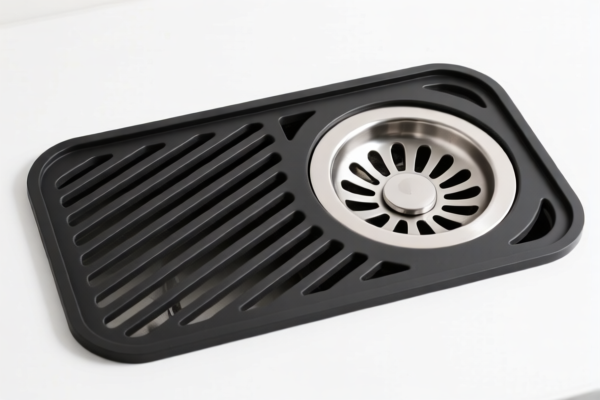
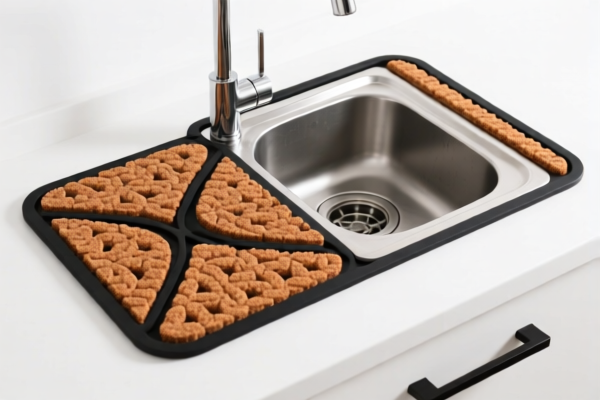
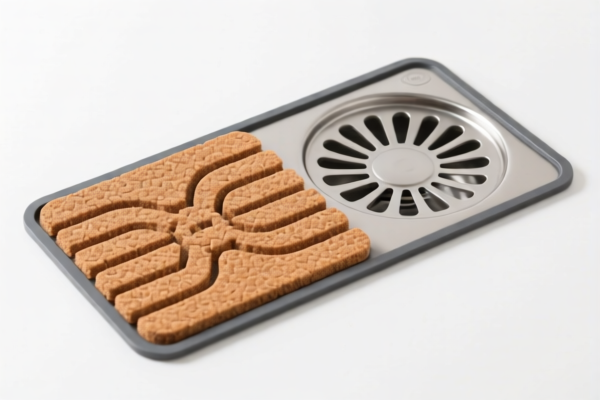
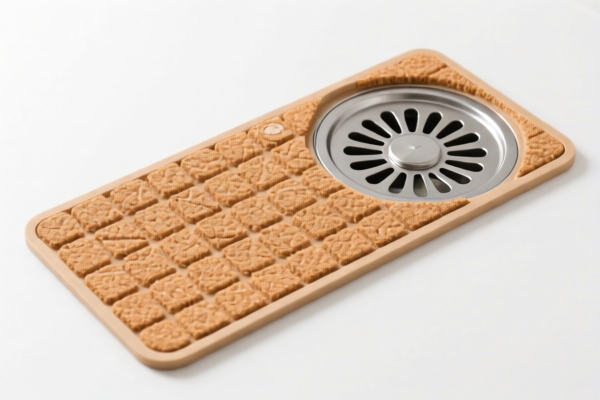
AI Analysis
🖥️ Drying Mats (Silicone/Kitchen Accessories)
🌐 HS Code Reference & Customs Clearance Guide | 2026 Latest Tariff Analysis | Professional Level通关 Strategy
📌 I. Product Definition & Classification: Do You Really Understand “Drying Mats”?
A "Drying Mat" (specifically Silicone Drying Mats) is a common household/kitchen accessory used for draining water from washed dishes, fruits, or vegetables. However, in international trade, its classification is highly contentious because it sits at the intersection of plastics (silicone), rubber products, and household articles.
In the eyes of customs, the key distinction lies in the material composition and functional description: * Silicone Rubber/Elastomer: If classified as rubber, it falls under Chapter 40. * Plastic/Synthetic Resin: If classified as plastic, it falls under Chapter 39. * Metal: If it has a significant metal frame or is metal-based (rare for pure silicone mats, but possible for composite mats), it falls under Chapter 73.
⚠️ Key Distinction Point:
- If the mat is primarily silicone rubber (soft, elastic, heat-resistant), it leans towards Chapter 40.
- If the manufacturer markets it as a plastic/synthetic resin mat (often cheaper, less elastic), it leans towards Chapter 39.
- If it is described as a metal drain rack with a mat, it might be incorrectly classified as Chapter 73 (highest risk).
📦 II. HS Code Classification Details (2026 Latest Tariff Authoritative Comparison)
| HS Code | Product Description | Application Scenario | Material Key | Total Tax Rate* |
|---|---|---|---|---|
4016.91.00.00 |
Other vulcanized rubber goods, of a kind used for carpets, mats & matting | Silicone mats marketed as "rubber-like" or traditional rubber mats | Vulcanized Rubber | 37.7% |
4016.99.05.00 |
Other articles of vulcanized rubber or elastomeric, for domestic use | Other unlisted household items, silicone/elastomer | Vulcanized Rubber/Elastomer | 20.9% |
3924.90.10.50 |
Tableware & kitchenware, plastic, other | Plastic/synthetic resin mats for home use | Plastic/Synthetic Resin | 13.3% |
3924.10.40.00 |
Tableware & kitchenware, plastic | Household supplies, plastic/synthetic materials | Plastic/Synthetic | 13.4% |
7323.99.90.80 |
Table, kitchen or other household articles of iron or steel | Drain racks or mats with metal frames/supports | Iron/Steel | 88.4% |
🔍 Critical Reminder:
-7323.99.90.80(Iron/Steel) is the most dangerous classification for silicone mats. If declared as "Metal Drain Rack" when it is actually silicone, you face 88.4% tax.
-3924.xxxx.xxxx(Plastic) offers the lowest tax burden (~13.3-13.4%), but requires proving the material is plastic/synthetic resin, not rubber.
-4016.xxxx.xxxx(Rubber) is the "safe but expensive" middle ground, with taxes ranging from 20.9% to 37.7%.
💰 III. 2026 Latest Tariff Rate Details (Including Surcharges & Policy Add-ons)
✅ Applicable Country: USA (US)
✅ Origin: China (CN)
✅ Effective Date: From November 10, 2025 (including subsequent imports)
🎯 1. 4016.91.00.00 —— Other Vulcanized Rubber Goods (Carpets/Mats)
| Item | Content |
|---|---|
| Basic Tariff | 2.7% (ad valorem) |
| Section 301 Surcharge | +25.0% |
| Section 122 Surcharge | +10.0% |
| Total Tax Rate | 37.7% |
| Tax Calculation | CIF Value × 37.7% |
| De Minimis Eligibility | ❌ No (deny_de_minimis) |
| Legal Basis Path | Section 301: 9903.88.01 → Section 122 → USITC:4016.91.00.00 |
📌 Explanation:
- "Section 301 Surcharge 25%" comes from the US Trade Act Section 301;
- "Section 122 Surcharge 10%" is an additional levy on certain rubber goods;
- Total 37.7%, this is a high tariff category.
🎯 2. 4016.99.05.00 —— Other Articles of Vulcanized Rubber (Domestic Use)
| Item | Content |
|---|---|
| Basic Tariff | 3.4% |
| Section 301 Surcharge | +7.5% |
| Section 122 Surcharge | +10.0% |
| Total Tax Rate | 20.9% |
| Tax Calculation | CIF × 20.9% |
| De Minimis Eligibility | ❌ No |
| Legal Basis Path | Section 301: 9903.01.24 → Section 122 → USITC:4016.99.05.00 |
📌 Note:
- This is often the preferred classification for genuine silicone mats that don't fit the "carpet/mat" definition of 4016.91.
- Lower than 37.7%, but still significant.
🎯 3. 3924.90.10.50 / 3924.10.40.00 —— Plastic Tableware/Kitchenware
| Item | Content |
|---|---|
| Basic Tariff | 3.3% / 3.4% |
| Section 301 Surcharge | +0.0% |
| Section 122 Surcharge | +10.0% |
| Total Tax Rate | 13.3% / 13.4% |
| Tax Calculation | CIF × 13.3-13.4% |
| De Minimis Eligibility | ❌ No |
| Legal Basis Path | Section 122 → USITC:3924.90.10.50 / 3924.10.40.00 |
📌 Strategy:
- Lowest Tax Option.
- If your product is not pure vulcanized rubber but rather food-grade silicone (often technically a polymer/elastomer), declaring it as Plastic/Synthetic Resin (Chapter 39) can save ~10-20% in taxes.
- Risk: Must provide Material Safety Data Sheet (MSDS) or test reports proving it is not "vulcanized rubber" to avoid reclassification.
🎯 4. 7323.99.90.80 —— Iron/Steel Household Articles (HIGH RISK!)
| Item | Content |
|---|---|
| Basic Tariff | 3.4% |
| Section 301 Surcharge | +25.0% |
| Section 122 Surcharge | +10.0% |
| Steel/Aluminum/Copper Surcharge | +50.0% |
| Total Tax Rate | 88.4% |
| Tax Calculation | CIF × 88.4% |
| De Minimis Eligibility | ❌ No |
| Legal Basis Path | Section 301 + Steel Surcharge 50% → Section 122 → USITC:7323.99.90.80 |
📌 WARNING:
- DO NOT declare silicone drying mats as "Iron/Steel".
- This rate (88.4%) is extreme. It applies if the product is deemed a metal drain rack or if customs misidentifies the material.
- If your mat has a metal frame, the entire assembly may be classified under Chapter 73. Consider shipping the mat separately if possible.
🛠️ IV. Customs Clearance Practical Suggestions (Pitfall Avoidance Guide)
✅ 1. Required Documents Checklist (Must Have)
| Document | Mandatory | Description |
|---|---|---|
| ✅ Product Spec Sheet | ✔️ | Material composition (Silicone vs. Plastic vs. Rubber), dimensions, heat resistance |
| ✅ Material Test Report | ✔️ | Crucial: Prove it is Food-Grade Silicone (often classified under Plastic Ch.39) or Rubber (Ch.40). Avoid "Metal" claims if none exists. |
| ✅ Product Photos | ✔️ | Clear images showing the product, brand, and any metal components (if none, state "No Metal Parts") |
| ✅ Commercial Invoice | ✔️ | Clear description: "Silicone Kitchen Drying Mat, No Metal, Plastic/Synthetic Material" |
| ✅ Certificate of Origin (CO) | ✔️ | To prove origin (China) and apply correct tariffs |
| ✅ Packing List | ✔️ | Weight and dimensions for customs valuation |
✅ 2. Declaration Techniques (Key Mnemonics)
🔥 “Plastic Low, Rubber Med, Steel High; Material Proof is King!”
| Scenario | Correct Declaration | Wrong Approach |
|---|---|---|
| Pure Silicone Mat | 3924.xxxx (Plastic) |
Declare as "Rubber" → 20.9-37.7% |
| Mat with Metal Frame | 7323.99.90.80 (Steel) |
Declare as "Plastic" → Rejection + Fine |
| Generic "Drain Mat" | 4016.99.05.00 (Rubber) |
Vague description → Audit Delay |
| Silicone Mat + Mat Packaging | Main Item + Accessory | Split packaging incorrectly → Misclassification |
✅ 3. Special Situation Handling
| Situation | Handling Advice |
|---|---|
| Food-Grade Silicone | Provide FDA/LFGB Compliance Certificate. Argue for Chapter 39 (Plastic) as many food-grade silicones are chemically polymers, not traditional vulcanized rubber. |
| Mat with Metal Grid | If the metal grid is detachable, ship separately. If integrated, you must use 7323.99.90.80 (88.4%). |
| OEM Custom Colors | Provide design files to prove uniqueness, avoid being classified as "generic" which might attract higher scrutiny. |
| Small Samples | Even for samples, the De Minimis threshold is NOT applicable for these HS codes due to Section 301/122 surcharges. Taxes apply regardless of value. |
🌍 V. Global Market Clearance Comparison (2026 Latest)
| Country/Region | Recommended HS Code | Tax Rate | Certification | Note |
|---|---|---|---|---|
| 🇺🇸 USA | 3924.90.10.50 |
13.3% | FDA + RoHS | Lowest tax if declared as plastic. |
| 🇪🇺 EU | 3924.10.40.00 |
0-4% | CE + LFGB | No Section 301/122 surcharges. |
| 🇨🇳 China | 3924.10.40.00 |
9-13% | CCC (if applicable) | Import tax applies, no US surcharges. |
| 🇬🇧 UK | 3924.10.40.00 |
0-12% | UKCA | Post-Brexit rules vary. |
📌 Conclusion:
- USA is the most complex market due to Section 301 and 122 surcharges.
- Plastic (Ch.39) classification is the most tax-efficient strategy for silicone mats in the US, but requires strong material documentation.
- Steel (Ch.73) classification is prohibitive (88.4%) and should be avoided unless the product is genuinely metal.
📌 VI. Common Mistakes & Pitfall Guide (Blood & Tears Lessons)
❌ Mistake 1: Declaring "Silicone Mat" as "Metal Drain Rack"
👉 Consequence: 88.4% tax → Profit wiped out!
❌ Mistake 2: Declaring "Silicone Mat" as "Rubber" when it’s Food-Grade Plastic/Silicone
👉 Consequence: 20.9-37.7% tax → Overpayment by ~10-25% compared to Plastic classification.
❌ Mistake 3: Ignoring Section 122 Surcharge
👉 Consequence: Missing the 10% Section 122 tax → Underpayment + Penalties.
❌ Mistake 4: Using "Mat" as the sole product name
👉 Consequence: Customs ambiguity → Audit Delay → Storage Fees.
✅ Correct Approach:
“Silicone Kitchen Drying Mat, Food-Grade, Plastic Material, No Metal Components, FDA Approved, Model XYZ”
🎯 VII. Conclusion: Professional Declaration, Save Time & Money!
🎯 Remember the Mnemonic:
🔹 “Plastic 13%, Rubber 21-38%, Steel 88%; Material Proof is the Key!”
🔹 “HS Code Defines Fate, Tax Difference is Huge; Declare Accurately, Save Thousands!”
📌 Pro Tip:
If your product is 100% silicone without metal, strongly consider Chapter 39 (Plastic) with FDA/LFGB documentation to achieve the 13.3% tax rate in the US.
For metal-framed mats, accept the 88.4% rate or separate shipping to mitigate costs.
📣 Immediate Action:
📞 Contact a Professional Broker + Provide Material Test Reports + Request Advance Ruling
🚀 Let Your Drying Mats Clear Customs Smoothly, Efficiently, and Profitably!
✨ Professional Customs Clearance Starts with Accurate Classification!
💼 Every Penny of Your Cost Deserves Precise Calculation!
Customer Reviews
About HS Code Classification
The Harmonized System (HS) is an internationally standardized nomenclature developed by the World Customs Organization (WCO) to classify traded products. Over 200 countries use the HS system as the basis for customs tariffs, trade statistics, and import/export regulations.
Each HS code follows a hierarchical structure:
- Chapter (2 digits) — Broad category of goods (e.g., Chapter 84: Machinery and Mechanical Appliances)
- Heading (4 digits) — More specific grouping within the chapter
- Subheading (6 digits) — Internationally standardized breakdown, used by all WCO member countries
- National subdivisions (8-10 digits) — Country-specific extensions for further classification, such as US HTSUS 10-digit codes
Correct HS code classification is essential for smooth customs clearance, accurate duty payment, and compliance with trade regulations. Misclassification can lead to customs delays, overpayment of duties, or penalties.
When importing from CN to US, the applicable tariff rates may include:
- Most-Favored-Nation (MFN) rate — The standard duty rate applied to WTO members
- General rate — Applied to countries without trade agreements
- Trade remedy duties — Additional tariffs such as Section 301 (anti-dumping), Section 232 (national security), or countervailing duties
The information provided on this page is for reference purposes only. For official classification, please consult with your local customs authority or a licensed customs broker.