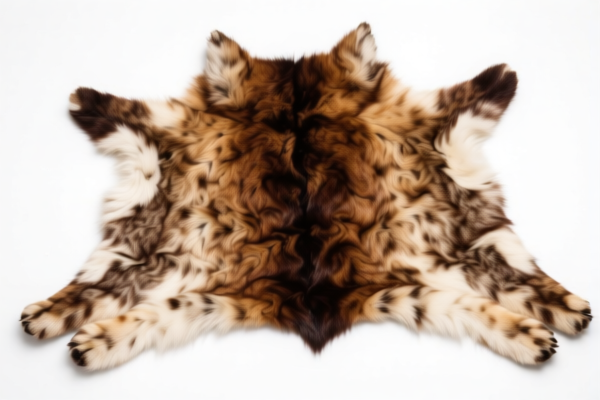
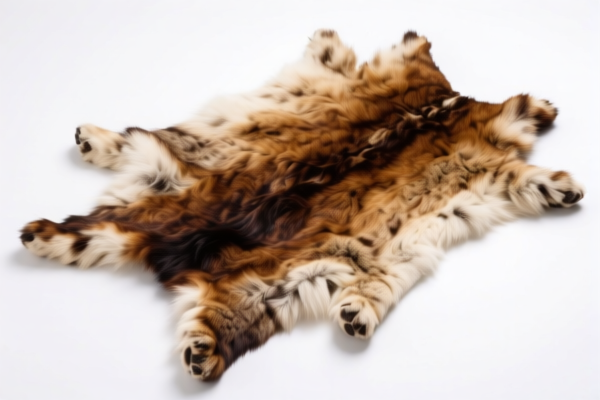
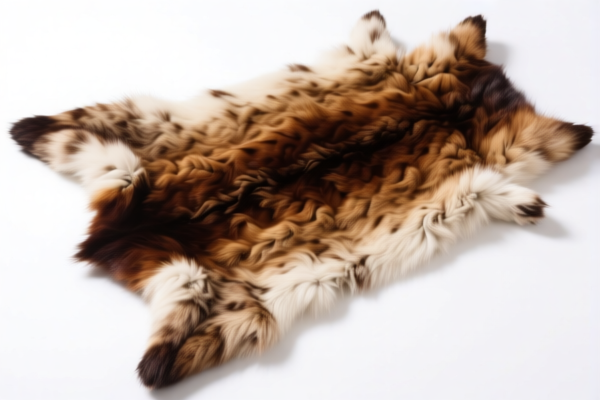
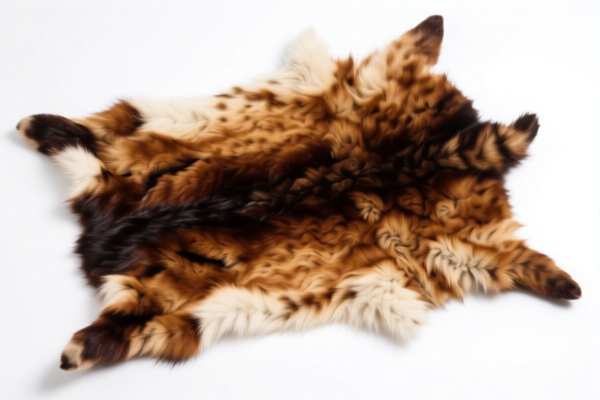
dyed fur skins whole unassembled
CN → US| HS Code | Tariff Rate | Origin | Destination | Doc |
|---|---|---|---|---|
| 4107113000 | 13.6% | CN | US | Official Doc |
| 4107198000 | 12.4% | CN | US | Official Doc |
| 4103901190 | 17.5% | CN | US | Official Doc |
| 4303100060 | 39.0% | CN | US | Official Doc |
| 4301800290 | 17.5% | CN | US | Official Doc |
Product Images
AI Analysis
🧥 Dyed Fur Skins – Whole, Unassembled (No Head, Tail, or Claw)
🌐 HS Code Reference & Customs Clearance Guide | 2026 Latest Tariff Analysis | Professional Entry Strategy
📌 One: Product Definition and Classification: Do You Really Understand "Dyed Fur Skins"?
Dyed fur skins, in the context of international trade, refer to animal hides or pelts that have undergone a dyeing process. The key descriptors here are "Whole" (the skin remains intact in one piece, not split into layers) and "Unassembled" (not cut into specific shapes like sleeves or vests, nor assembled into garments).
In the Harmonized System (HS), the classification hinges on two critical factors: 1. Material Type: Is it "Leather" (hair removed, e.g., cowhide) or "Fur Skin" (hair retained, e.g., mink, fox)? 2. Processing State: Is it merely dyed and dressed (Chapter 41 or 43 before assembly)?
⚠️ Key Distinction Point:
- If the product is rawhide/leather (no long hair, dyed) → It falls under Chapter 41 (Leather).
- If the product is fur/pelt (hair retained, dyed) → It falls under Chapter 43 (Fur Skins).
- "Unassembled" means it is not yet a garment. If it were cut into shapes or assembled, it might fall under Chapter 42 or 61/62.
📦 Two: HS Code Classification Details (2026 Latest Tariff Authority Comparison)
Based on the provided data, here are the four specific HS Codes for dyed, whole, unassembled skins, categorized by material and usage:
| HS Code | Product Description | Material Type | Form & Processing | Primary Use |
|---|---|---|---|---|
4107.11.30.00 |
Dyed Whole Hide (No Head) | Dyed Leather | Whole, Unsplit | General leather goods (non-fur) |
4107.19.80.00 |
Dyed Whole Hide (No Head) | Leather | Whole, Dyed | General leather goods (other than 4107.11) |
4103.90.11.90 |
Dyed Whole Pelt (No Head/Tail/Claw) | Dyed Fur | Whole, Unprocessed (Raw/Undressed beyond dyeing) | Raw fur trade, further processing |
4303.10.00.60 |
Dyed Whole Fur for Garments | Fur | Whole, Dyed | Garment Manufacturing |
4301.80.02.90 |
Dyed Whole Fur for Garments | Fur | Whole, Dyed | Garment Manufacturing (Other types) |
🔍 Critical Note:
- Chapter 41 vs. Chapter 43: This is the most common error. If the animal skin has long hair (fur), it is Chapter 43. If it is smooth/leather (hair removed), it is Chapter 41.
- "Unassembled": All these codes apply because the skins are flat and not yet cut/sewn into final products.
- "Whole": The skin is intact. If split into layers, the HS codes would change (e.g., to 4104 or 4105 series for splits).
💰 Three: 2026 Latest Tariff Rate Breakdown (Including Surtaxes & Policy Add-ons)
✅ Applicable Country: United States (US)
✅ Origin: China (CN)
✅ Effective Date: 2025/2026 (Current Policy)
🎯 1. 4107.11.30.00 —— Dyed Whole Leather (Unsplit)
| Item | Details |
|---|---|
| Base Tariff | 3.6% |
| Section 301 Surtax | 0.0% |
| Section 122 Surtax | 10.0% |
| Total Tax Rate | 13.6% |
| Calculation | CIF Value × 13.6% |
| Legal Basis | Base Tariff + 122 Clause |
📌 Explanation:
- This is for unsplit leather (full thickness).
- No Section 301 surcharge, but 10% Section 122 applies.
- Moderate duty, suitable for high-quality full-grain leather goods.
🎯 2. 4107.19.80.00 —— Other Dyed Whole Leather
| Item | Details |
|---|---|
| Base Tariff | 2.4% |
| Section 301 Surtax | 0.0% |
| Section 122 Surtax | 10.0% |
| Total Tax Rate | 12.4% |
| Calculation | CIF Value × 12.4% |
| Legal Basis | Base Tariff + 122 Clause |
📌 Explanation:
- For leather not classified in 4107.11 (e.g., other species or processes).
- Lowest duty among leather options.
- Still subject to the 10% Section 122 surcharge.
🎯 3. 4103.90.11.90 —— Dyed Whole Fur Pelt (Unprocessed)
| Item | Details |
|---|---|
| Base Tariff | 0.0% |
| Section 301 Surtax | 7.5% |
| Section 122 Surtax | 10.0% |
| Total Tax Rate | 17.5% |
| Calculation | CIF Value × 17.5% |
| Legal Basis | Section 301 + 122 Clause |
📌 Explanation:
- This is a raw/unprocessed fur pelt that has been dyed but not yet fully dressed or assembled.
- 0% base but hit by 7.5% Section 301 and 10% Section 122.
- Higher effective rate due to Section 301, despite low base tariff.
🎯 4. 4303.10.00.60 —— Dyed Whole Fur for Garments
| Item | Details |
|---|---|
| Base Tariff | 4.0% |
| Section 301 Surtax | 25.0% |
| Section 122 Surtax | 10.0% |
| Total Tax Rate | 39.0% |
| Calculation | CIF Value × 39.0% |
| Legal Basis | Base + 301 (Heavy) + 122 |
📌 Explanation:
- This is pre-prepared fur for clothing.
- Highest duty in the list!
- 25% Section 301 is applied here (likely due to "garment-related" classification).
- Critical: Do not use this if the fur is not intended for garments, but be aware of the high cost.
🎯 5. 4301.80.02.90 —— Other Dyed Whole Fur for Garments
| Item | Details |
|---|---|
| Base Tariff | 0.0% |
| Section 301 Surtax | 7.5% |
| Section 122 Surtax | 10.0% |
| Total Tax Rate | 17.5% |
| Calculation | CIF Value × 17.5% |
| Legal Basis | Section 301 + 122 Clause |
📌 Explanation:
- Similar to4103.90.11.90but under Chapter 43.
- 0% base, 7.5% Section 301, 10% Section 122.
- Moderate duty. Choose this if the product is clearly fur but not "garment-specific" in Chapter 43 subheadings.
🛠️ Four: Customs Clearance Practical Advice (Avoiding Pitfalls)
✅ 1. Essential Documentation Checklist
| Document | Required? | Description |
|---|---|---|
| ✅ Commercial Invoice | ✔️ | Must clearly state: "Dyed Whole [Leather/Fur] Skins, Unassembled, No Head/Tail/Claw" |
| ✅ Packing List | ✔️ | Detail skin count, dimensions, weight, and condition (dry/wet) |
| ✅ Material Certificate | ✔️ | Prove whether it is Leather (Chapter 41) or Fur (Chapter 43). Critical! |
| ✅ Process Description | ✔️ | Explain dyeing process: Was it split? Was it assembled? (Answer: No) |
| ✅ Origin Certificate | ✔️ | For potential duty exemptions or tracking |
| ✅ Photos | ✔️ | Show skin texture, hair presence (for fur), and dye uniformity |
✅ 2. Declaration Strategy (Key Tips)
🔥 "Identify Material First, Then Process, Then Use!"
| Scenario | Correct HS Code | Wrong Code & Consequence |
|---|---|---|
| Cowhide/Leather, dyed, whole | 4107.11.30.00 or 4107.19.80.00 |
Misclassifying as Fur → Chapter 43 (Higher scrutiny, different tariffs) |
| Mink/Fox Fur, dyed, whole | 4301.80.02.90 or 4303.10.00.60 |
Misclassifying as Leather → Chapter 41 (Illegal, penalties) |
| Fur Skins assembled into coats | Chapter 61/42 (Not in this list) | Declaring as "Whole Skins" → Smuggling/Undervaluation risk |
| Split Leather (two layers) | Chapter 41/42 (Different codes) | Declaring as "Whole" → Misdeclaration |
✅ 3. Special Circumstances
| Situation | Handling Advice |
|---|---|
| OEM Custom Dyeing | Provide dye lot numbers and color standards to prove value consistency |
| High Value Fur (Mink/Chinchilla) | Ensure accurate valuation; CBP may audit "garment-ready" classifications (4303.10.00.60) closely due to 39% tax |
| Mixed Batches | Do not mix leather and fur in one shipment; declare separately to avoid classification errors |
| Section 122 Exemptions | Check if any specific trade agreements or exemptions apply to reduce the 10% surcharge |
🌍 Five: Global Market Clearance Comparison (2026 Latest)
| Country/Region | Recommended HS Code | Tariff (China Origin) | Certification/Remarks |
|---|---|---|---|
| 🇺🇸 USA | 4107.11.30.00 (Leather) or 4301.80.02.90 (Fur) |
12.4% - 39.0% | Heavy Surtaxes (Section 301 & 122) |
| 🇪🇺 EU | Varies by Chapter | 0% - 6% | No Section 301/122; Eori Number Required |
| 🇨🇳 China | Same HS Codes | 0% - 10% | No Section 122/301; Import License may be needed for Fur |
| 🇯🇵 Japan | Varies | 0% - 8% | No Major Surtaxes; CITES Permit for Endangered Species |
📌 Conclusion:
- USA is the most expensive market for dyed skins due to Section 122 (10%) and Section 301 (up to 25%).
- EU and Japan are more favorable, but CITES permits are crucial for endangered species (e.g., mink, fox).
- Cost Impact: A $10,000 shipment of fur skins could incur $3,900 in duties in the US vs. $0-$800 in other markets.
📌 Six: Common Errors & Pitfall Guide (Blood Lessons)
❌ Error 1: Misclassifying Fur as Leather
👉 Consequence: Wrong HS Code, potential fraud charges, and 39% vs. 13.6% tax difference.
❌ Error 2: Declaring "Whole Skins" when they are cut into shapes
👉 Consequence: Classified as "Garments" or "Parts," leading to higher duties or bans on certain fur types.
❌ Error 3: Ignoring CITES Permits for endangered fur
👉 Consequence: Seizure and Deportation by CBP and FWS (Fish and Wildlife Service).
❌ Error 4: Failing to specify "No Head/Tail/Claw"
👉 Consequence: Customs may reclassify based on different subheadings, causing delays and audits.
✅ Correct Practice:
"Dyed Whole Mink Fur Skins, Unassembled, No Head/Tail/Claw, Raw Hide, For Further Processing"
+ CITES Permit + Detailed Material Certificate
🎯 Seven: Conclusion: Precision Classification Saves Money!
🎯 Remember the Golden Rules:
🔹 "Leather vs. Fur: Check the Hair!"
🔹 "Whole vs. Split: Check the Thickness!"
🔹 "USA Tariffs: Add 10% (122) + 25% (301)!"
🔹 "Fur for Garments: 39% Tax Alert!"
📌 Pro Tip:
If your fur skins are not intended for garments in the US, try to classify under 4301.80.02.90 (17.5%) instead of 4303.10.00.60 (39%) to save 21.5% in duties. Consult a customs broker to verify the "intended use" documentation.
📣 Immediate Action:
📞 Hire a licensed customs broker.
📄 Provide clear photos and material certificates.
🚀 Get an Advance Ruling (PAR) to lock in the correct HS Code and tax rate.
✨ Professional Clearance Starts with Accurate Classification!
💼 Your profit margin depends on the correct HS Code!
Customer Reviews
About HS Code Classification
The Harmonized System (HS) is an internationally standardized nomenclature developed by the World Customs Organization (WCO) to classify traded products. Over 200 countries use the HS system as the basis for customs tariffs, trade statistics, and import/export regulations.
Each HS code follows a hierarchical structure:
- Chapter (2 digits) — Broad category of goods (e.g., Chapter 84: Machinery and Mechanical Appliances)
- Heading (4 digits) — More specific grouping within the chapter
- Subheading (6 digits) — Internationally standardized breakdown, used by all WCO member countries
- National subdivisions (8-10 digits) — Country-specific extensions for further classification, such as US HTSUS 10-digit codes
Correct HS code classification is essential for smooth customs clearance, accurate duty payment, and compliance with trade regulations. Misclassification can lead to customs delays, overpayment of duties, or penalties.
When importing from CN to US, the applicable tariff rates may include:
- Most-Favored-Nation (MFN) rate — The standard duty rate applied to WTO members
- General rate — Applied to countries without trade agreements
- Trade remedy duties — Additional tariffs such as Section 301 (anti-dumping), Section 232 (national security), or countervailing duties
The information provided on this page is for reference purposes only. For official classification, please consult with your local customs authority or a licensed customs broker.