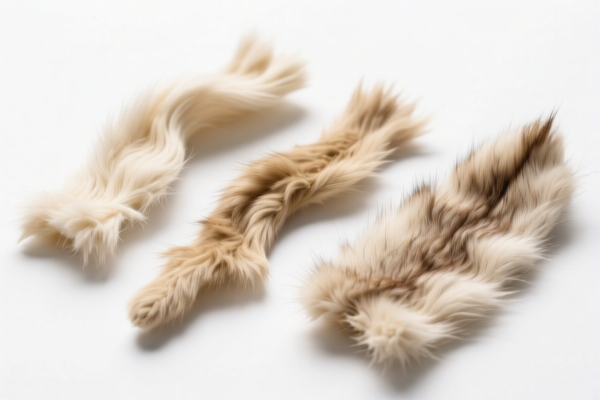
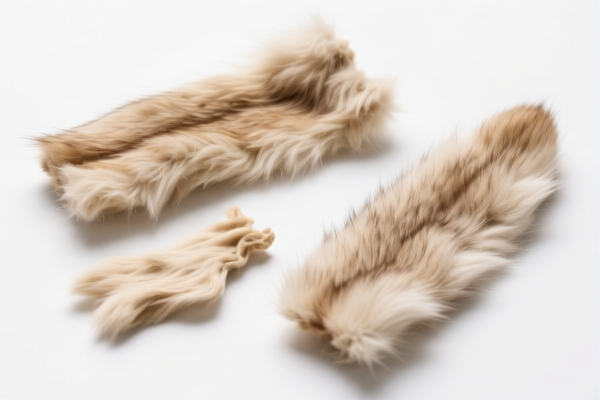
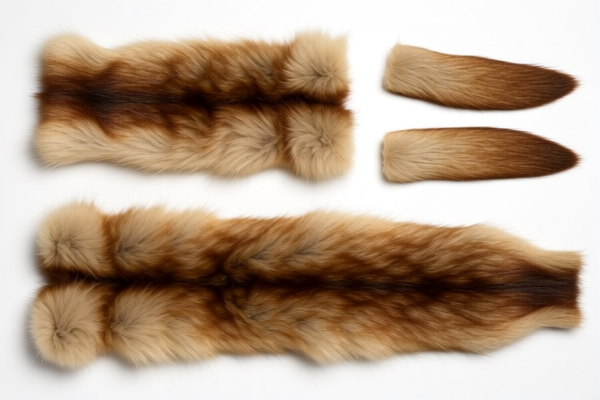
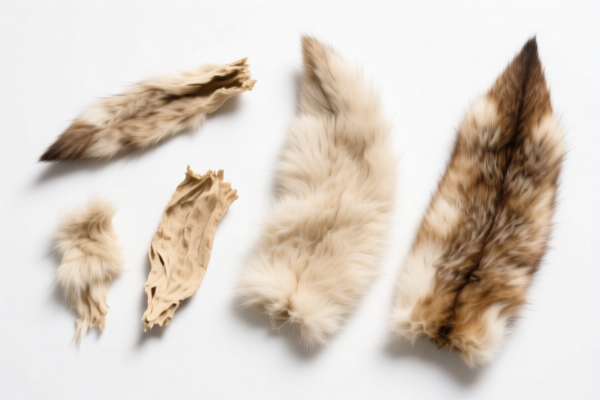
dyed fur waste unassembled
CN → US| HS Code | Tariff Rate | Origin | Destination | Doc |
|---|---|---|---|---|
| 4302209000 | 36.7% | CN | US | Official Doc |
| 4303900000 | 35.0% | CN | US | Official Doc |
| 4303100060 | 39.0% | CN | US | Official Doc |
Product Images
AI Analysis
🧥 Dyed Fur Waste/Unassembled Fragments (Fur Waste, Unassembled)
🌐 HS Code Reference & Customs Clearance Guide | 2026 Latest Tariff Analysis | Professional Entry Strategies for Fur Products
📌 I. Product Definition & Classification: Do You Truly Understand "Dyed Fur Waste"?
Dyed fur waste and unassembled fur fragments are by-products or scrap materials derived from fur processing. Unlike finished fur garments or accessories, these materials consist of loose pieces, scraps, or fragments that have not been assembled into a final product. The key characteristic is that the fur has been dyed (colored/treated), which significantly impacts its customs classification compared to undyed fur.
In international trade, these items are generally classified under Chapter 43 (Furskins and Furs) but fall into specific subcategories based on their form (waste vs. fragments) and status (unassembled). Misclassification can lead to severe tariff discrepancies due to the high additional duties imposed on fur products from certain origins.
⚠️ Key Distinction Points:
- Unassembled Fragments (4302.20.90.00): Pieces that are identifiable as fur fragments, dyed, but not yet sewn or assembled into a garment or accessory.
- Waste/Scrap (4303.90.00.00 or 4303.10.00.60): Used for manual crafting, discarded pieces, or non-durable fur remnants. Classification depends on whether it is considered "non-mink fur waste" or general fur waste.
- Finished vs. Unfinished: If assembled into a collar or cuff, it may fall under different headings (e.g., 4303 or 4304). This guide strictly covers UNASSEMBLED/WASTE forms.
📦 II. HS Code Classification Details (2026 Latest Tariff Authority Comparison)
| HS Code | Product Description | Application Scenario | Key Feature |
|---|---|---|---|
4302.20.90.00 |
Dyed fur waste/fragments (unassembled), material is fur, form is fragments/unassembled, includes dyeing characteristics. | Raw fur scraps for manufacturing, bulk trade of dyed fur pieces. | ✅ Dyed, Unassembled |
4303.90.00.00 |
Dyed fur waste/fragments (unassembled) or waste, material is fur, form is fragments/unassembled or waste, belongs to fur制品 category. | General fur waste, miscellaneous fur scraps, non-specific fur remnants. | ✅ Dyed, Waste/Unassembled |
4303.10.00.60 |
Dyed fur waste (for manual use), material is fur, belongs to non-mink fur制品 category, judged based on parts and fallback category rules. | Manual crafts, DIY fur projects, small-scale artisanal use. | ✅ Dyed, Manual Use, Non-Mink |
🔍 Critical Reminder:
- "Unassembled" is crucial: If the fur fragments are sewn together (even partially), they may be reclassified as finished goods (e.g., collars, cuffs) with different HS codes.
- "Dyed" Status: Dyed fur attracts different scrutiny and potentially different base tariffs compared to raw/undyed fur.
- "Waste" vs. "Fragments": Some jurisdictions distinguish between "waste" (scrap/offcuts) and "fragments" (usable pieces). This affects the specific 10-digit HS code selection.
💰 III. 2026 Latest Tariff Rate Details (Including Additional Taxes, Policy Add-ons)
✅ Applicable Country: United States (US)
✅ Country of Origin: China (CN)
✅ Effective Date: From November 10, 2025 (including subsequent imports)
🎯 1. 4302.20.90.00 —— Dyed Fur Fragments (Unassembled)
| Item | Details |
|---|---|
| Base Tariff Rate | 1.7% (ad valorem) |
| Section 301 Additional Duty | +25.0% |
| Section 122 Duty (IEEPA) | +10.0% (For China/HK products, effective Nov 10, 2025) |
| Total Effective Rate | 36.7% |
| Tax Calculation | CIF Value × 36.7% |
| De Minimis Exemption Applicable? | ❌ NO (deny_de_minimis) |
| Legal Basis Path | USITC:4302.20.90.00 → SECTION_301:Footnote_9903.88.01 → IEEPA:9903.01.25 |
📌 Explanation:
- The base tariff of 1.7% is relatively low for fur products.
- However, the 25% Section 301 duty is applied due to US-China trade tensions.
- The 10% Section 122 duty (IEEPA) is a new/additional layer targeting specific Chinese goods, further increasing the cost.
- Total 36.7% makes this category highly expensive for importers. Profit margins must account for this significant tax burden.
🎯 2. 4303.90.00.00 —— Dyed Fur Waste/Unassembled (General Category)
| Item | Details |
|---|---|
| Base Tariff Rate | 0.0% (ad valorem) |
| Section 301 Additional Duty | +25.0% |
| Section 122 Duty (IEEPA) | +10.0% (For China/HK products, effective Nov 10, 2025) |
| Total Effective Rate | 35.0% |
| Tax Calculation | CIF Value × 35.0% |
| De Minimis Exemption Applicable? | ❌ NO (deny_de_minimis) |
| Legal Basis Path | USITC:4303.90.00.00 → SECTION_301:Footnote_9903.88.01 → IEEPA:9903.01.24 |
📌 Explanation:
- Interestingly, the base tariff is 0%, which is lower than the previous code.
- However, the additional duties (25% + 10%) remain the same, resulting in a total of 35.0%.
- This code is often used for general fur waste that doesn't fit the specific "fragment" definition of 4302.20.
- Risk: Customs may challenge this classification if the material is deemed "usable fragments" rather than "waste."
🎯 3. 4303.10.00.60 —— Dyed Fur Waste (For Manual Use, Non-Mink)
| Item | Details |
|---|---|
| Base Tariff Rate | 4.0% (ad valorem) |
| Section 301 Additional Duty | +25.0% |
| Section 122 Duty (IEEPA) | +10.0% (For China/HK products, effective Nov 10, 2025) |
| Total Effective Rate | 39.0% |
| Tax Calculation | CIF Value × 39.0% |
| De Minimis Exemption Applicable? | ❌ NO (deny_de_minimis) |
| Legal Basis Path | USITC:4303.10.00.60 → SECTION_301:Footnote_9903.88.01 → IEEPA:9903.01.25 |
📌 Explanation:
- This code specifically targets non-mink fur waste used for manual purposes.
- The base tariff is 4.0%, higher than 4303.90.00.00.
- Total rate is 39.0%, the highest among the three options.
- Use Case: Only apply if the fur is explicitly non-mink and intended for manual/DIY use. Misclassification here can lead to penalties.
🛠️ IV. Customs Clearance Practical Advice (Real-World Pitfall Avoidance Guide)
✅ 1. Required Documentation Checklist (None are Optional)
| Document | Mandatory | Explanation |
|---|---|---|
| ✅ Product Specification Sheet | ✔️ | Must detail: Fur type (mink/non-mink), dye color, piece size, weight, and "unassembled" status. |
| ✅ Photos (Including Tags) | ✔️ | Clear images showing the fur fragments, dye uniformity, and lack of assembly (no stitching). |
| ✅ Commercial Invoice | ✔️ | Must explicitly state: "Dyed Fur Waste/Unassembled Fragments" – NOT "Fur Garments" or "Fur Parts." |
| ✅ Packing List | ✔️ | Detail weight, quantity, and packaging method (bulk, boxed, etc.). |
| ✅ Certificate of Origin (CO) | ✔️ | Essential for determining Section 301 and Section 122 applicability. |
| ✅ Third-Party Inspection Report | ✔️ | Optional but recommended: Confirms material composition and "waste" status. |
✅ 2. Declaration Tips (Key Mantra)
🔥 "Unassembled is Key, Waste vs Fragment Clear, Name Precise, Duty Lower!"
| Scenario | Correct Declaration | Wrong Practice |
|---|---|---|
| Dyed fur scraps for manufacturing | 4302.20.90.00 (Dyed Fur Fragments) |
Declare as "Fur Pieces" → Ambiguity |
| General fur scrap/offcuts | 4303.90.00.00 (Fur Waste) |
Declare as "Raw Fur" → Different Base Tariff |
| Non-mink fur for DIY crafts | 4303.10.00.60 (Non-Mink Fur Waste) |
Declare as "Mink Waste" → Higher Base Tariff + Penalties |
| Assembled fur collars | NOT Applicable (Use 4303/4304) | Declare unassembled code for assembled goods → Severe Penalty |
✅ 3. Special Situation Handling
| Situation | Handling Advice |
|---|---|
| Mixed Fur Types | If the shipment contains both mink and non-mink, split the declaration or use the highest applicable rate to avoid audits. Prefer 4303.90.00.00 for mixed waste. |
| "Waste" vs. "Fragment" Dispute | Provide photos showing irregular shapes, no standard dimensions, and no assembly to prove "waste/fragment" status. |
| Section 122 Duty (10%) | This is a new/additional duty. Ensure your HS code cross-references correctly with IEEPA:9903.01.25 or 9903.01.24. |
| De Minimis (Section 321) | ❌ Do NOT use Section 321 (de minimis) for fur products from China. All fur products are exempt from de minimis (deny_de_minimis). Always file a formal entry. |
🌍 V. Global Market Comparison (2026 Latest)
| Country/Region | Recommended HS Code | Tariff (China Origin) | Certification | Notes |
|---|---|---|---|---|
| 🇺🇸 USA | 4302.20.90.00 / 4303.90.00.00 |
35.0% - 36.7% | No specific fur cert, but CO required | High additional duties (35%+) |
| 🇨🇳 China | 4302.20.90.00 / 4303.90.00.00 |
~1.7% - 0% | None | Low base tariff, no Section 301 |
| 🇪🇺 EU | 4302.20.90 / 4303.90.90 |
~3.5% - 5.0% | CITES (if endangered species) | No Section 301, but strict CITES rules |
| 🇬🇧 UK | 4302.20.90 / 4303.90.90 |
~3.5% - 5.0% | CITES | Post-Brexit rules apply |
| 🇨🇦 Canada | 4302.20.90 / 4303.90.90 |
~3.5% - 5.0% | CITES | No Section 301 |
📌 Conclusion:
- USA is the only major market with significant additional tariffs (35%+) for Chinese fur waste.
- EU/UK/Canada have lower base tariffs but strict CITES (Convention on International Trade in Endangered Species) regulations. If the fur is from endangered species (e.g., certain minks, foxes), permits are required regardless of tariff.
- Profitability in the US market is significantly reduced due to the 35-39% total tax rate.
📌 VI. Common Errors & Pitfall Guide (Lessons Learned)
❌ Error 1: Declaring "Dyed Fur Waste" as "Raw Fur"
👉 Consequence: Base tariff difference (1.7% vs 0%) + Potential CITES violation if dye masks species origin.
👉 Result: Audit, delay, or reclassification penalty.
❌ Error 2: Using De Minimis (Section 321) for Fur Shipments
👉 Consequence: All fur products from China are excluded from de minimis.
👉 Result: Package held, fines, or forced formal entry with penalties.
❌ Error 3: Misclassifying "Assembled" Items as "Unassembled"
👉 Consequence: If items are sewn (even partially), they are not "waste/fragments."
👉 Result: Tariff rate may change, and customs may impose fines for false declaration.
❌ Error 4: Ignoring Section 122 (10% IEEPA Duty)
👉 Consequence: Underpayment of duties.
👉 Result: Back taxes + interest + penalties.
✅ Correct Practice:
"Dyed Fur Waste, Unassembled Fragments, Non-Mink, For Manual Use Only, HS 4303.10.00.60, Origin: China"
🎯 VII. Conclusion: Precise Classification Saves Money!
🎯 Key Takeaways:
🔹 "Unassembled" is the legal key: Ensure no assembly, stitching, or finishing.
🔹 "Waste" vs. "Fragment": Choose wisely to minimize base tariff (0% vs 1.7% vs 4.0%).
🔹 Total Tax is High: Expect 35-39% total duty in the US due to Section 301 (25%) + Section 122 (10%).
🔹 No De Minimis: Always file a formal entry for fur products from China.
📌 Pro Tip:
If your fur waste is not from China (e.g., from Canada, Denmark, or Russia), you MAY avoid Section 301 and Section 122 duties, reducing the total tariff to just the base rate (0-4%).
Strategy: Consider sourcing fur waste from non-China origins if US market entry is critical.
📣 Immediate Action:
📞 Consult a licensed customs broker + Provide detailed product photos + Apply for Advance Ruling if uncertain about classification.
🚀 Ensure accurate HS Code declaration to avoid costly delays and penalties!
✨ Professional Customs Clearance Starts with Accurate Classification!
💼 Every Percent of Tariff Matters in the Fur Trade!
Customer Reviews
About HS Code Classification
The Harmonized System (HS) is an internationally standardized nomenclature developed by the World Customs Organization (WCO) to classify traded products. Over 200 countries use the HS system as the basis for customs tariffs, trade statistics, and import/export regulations.
Each HS code follows a hierarchical structure:
- Chapter (2 digits) — Broad category of goods (e.g., Chapter 84: Machinery and Mechanical Appliances)
- Heading (4 digits) — More specific grouping within the chapter
- Subheading (6 digits) — Internationally standardized breakdown, used by all WCO member countries
- National subdivisions (8-10 digits) — Country-specific extensions for further classification, such as US HTSUS 10-digit codes
Correct HS code classification is essential for smooth customs clearance, accurate duty payment, and compliance with trade regulations. Misclassification can lead to customs delays, overpayment of duties, or penalties.
When importing from CN to US, the applicable tariff rates may include:
- Most-Favored-Nation (MFN) rate — The standard duty rate applied to WTO members
- General rate — Applied to countries without trade agreements
- Trade remedy duties — Additional tariffs such as Section 301 (anti-dumping), Section 232 (national security), or countervailing duties
The information provided on this page is for reference purposes only. For official classification, please consult with your local customs authority or a licensed customs broker.