dyed satin fabric
CN → US| HS Code | Tariff Rate | Origin | Destination | Doc |
|---|---|---|---|---|
| 5512110060 | 47.0% | CN | US | Official Doc |
| 5208192020 | 42.9% | CN | US | Official Doc |
| 5407820040 | 49.9% | CN | US | Official Doc |
| 5208292020 | 42.7% | CN | US | Official Doc |
| 5512210060 | 47.0% | CN | US | Official Doc |
| 5007903040 | 35.8% | CN | US | Official Doc |
Product Images
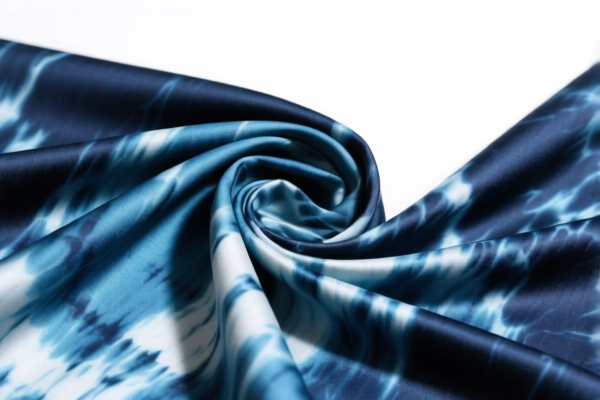
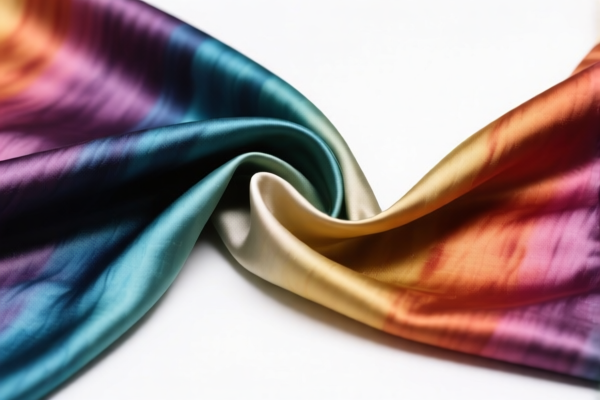
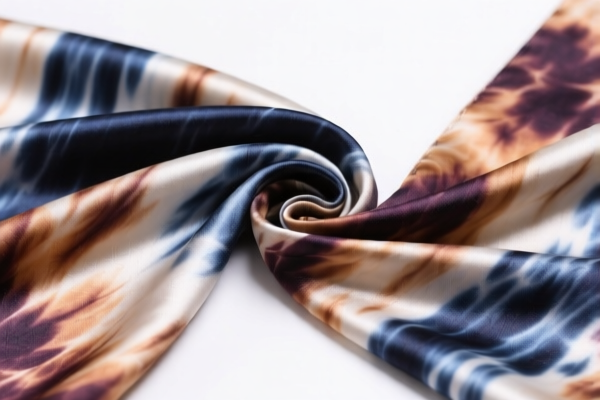
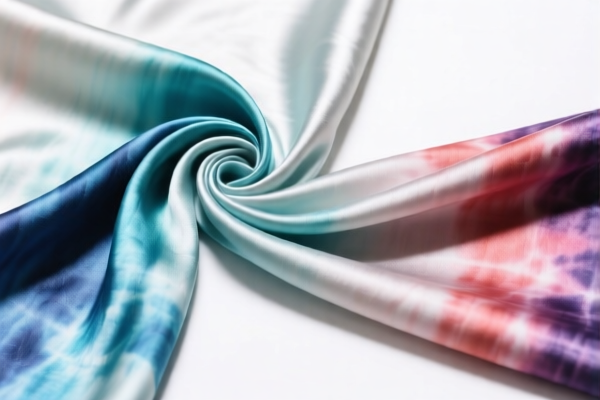
AI Analysis
🧵 Dyed Satin Fabric: HS Code Classification & Clearance Strategy (2026 Updated)
🌐 HS Code Reference & Customs Clearance Guide | 2026 Latest Tariff Analysis | Professional-Level通关 Strategy
📌 I. Product Definition & Classification: Do You Really Understand "Dyed Satin"?
Dyed Satin Fabric refers to woven textiles characterized by a glossy surface and dull back, achieved through a satin weave structure. In international trade, the classification depends heavily on the raw material composition (Silk, Synthetic Staple Fiber, or Man-made Filament) and the specific weave characteristics. It is not a single HS code but a category that splits into multiple subheadings based on fiber content.
⚠️ Key Distinction Point:
- If made from Synthetic Staple Fibers (e.g., Polyester staple) → Typically falls under Chapter 55;
- If made from Man-made Filament Yarns (e.g., Polyester filament) → Typically falls under Chapter 54;
- If made from Cotton (less common for "satin" in luxury sense, but possible for sateen) → Typically falls under Chapter 52;
- If made from Silk → Typically falls under Chapter 50.
The data provided below focuses on Polyester/Synthetic and Cotton variants commonly exported to the US, which carry significant附加 tariffs.
📦 II. HS Code Classification Details (2026 Latest Tariff Authority Comparison)
| HS Code | Product Description | Application Scenario | Fiber Type | Weave/Structure |
|---|---|---|---|---|
5512.11.00.60 |
Woven fabrics, mainly or wholly of synthetic staple fibers, dyed | Dyed satin-style woven fabric | Synthetic Staple (e.g., Polyester staple) | Satin or Twill weave |
5512.21.00.60 |
Woven fabrics, mainly or wholly of synthetic staple fibers, dyed | Dyed satin-style woven fabric (variant) | Synthetic Stapel (e.g., Polyester staple) | Satin or Twill weave |
5407.82.00.40 |
Woven fabrics, mainly or wholly of synthetic filament yarns | Dyed satin weave fabric meeting weave requirements | Synthetic Filament (e.g., Polyester filament) | Satine/Plain/Twill (Satin specified) |
5208.19.20.20 |
Woven fabrics, mainly or wholly of cotton, dyed | Dyed satin-style (Sateen) fabric | Cotton | Satin or Satin-like weave |
5208.29.20.20 |
Woven fabrics, mainly or wholly of cotton, dyed | Dyed satin-style (Sateen) fabric | Cotton | Satin or Satin-like weave |
5007.90.30.40 |
Dyed satin lining fabric | Dyed satin lining, matching dyed satin appearance | Silk (Woven silk fabrics) | Dyed satin structure |
🔍 Key Reminder:
- "Satin" is a weave structure, not a fiber. You must identify the raw material first.
- For Polyester Staple Fiber fabrics, use 5512.xx.xx.xx.
- For Polyester Filament fabrics, use 5407.xx.xx.xx.
- For Cotton Sateen, use 5208.xx.xx.xx.
- For Silk Satin, use 5007.xx.xx.xx.
- Misclassification leads to severe penalties, especially with the high附加 tariffs on these chapters.
💰 III. 2026 Latest Tariff Rate Details (Including Additional Taxes & Policy Add-ons)
✅ Applicable Country: United States (US)
✅ Country of Origin: China (CN)
✅ Effective Time: From November 10, 2025 (including subsequent imports)
🎯 1. 5512.11.00.60 & 5512.21.00.60 —— Synthetic Staple Fiber Satin Fabric
| Item | Detail |
|---|---|
| Base Rate | 12.0% (Ad Valorem) |
| USITC Additional Tax | +25.0% (Section 301 Tariff) |
| IEEPA Additional Tax | +10.0% (Section 122 Clause Tariff, targeting China/HK products) |
| Total Rate | 47.0% |
| Tax Calculation | CIF Value × 47.0% |
| De Minimis Exemption | ❌ Not Eligible (deny_de_minimis) |
| Legal Basis Path | IEEPA:122 Clause → USITC:5512.11.00.60 / 5512.21.00.60 → FOOTNOTE:Section 301 |
📌 Explanation:
- "25% USITC Tax" is from Section 301 of the Trade Act of 1974;
- "10% IEEPA Tax" is an additional surcharge specifically applied to Chinese-origin goods under Section 122 of the relevant executive order;
- Total 47% is extremely high. Accurate classification between "Staple" and "Filament" is crucial to avoid overpayment or underpayment risks.
🎯 2. 5407.82.00.40 —— Synthetic Filament Satin Fabric (Weave Specified)
| Item | Detail |
|---|---|
| Base Rate | 14.9% (Ad Valorem) |
| USITC Additional Tax | +25.0% (Section 301 Tariff) |
| IEEPA Additional Tax | +10.0% (Section 122 Clause Tariff) |
| Total Rate | 49.9% |
| Tax Calculation | CIF Value × 49.9% |
| De Minimis Exemption | ❌ Not Eligible (deny_de_minimis) |
| Legal Basis Path | IEEPA:122 Clause → USITC:5407.82.00.40 → FOOTNOTE:Section 301 |
📌 Note:
- This code applies to filament yarns (smooth, continuous fibers) with satin structure.
- Note the higher base rate (14.9%) compared to staple fibers (12.0%), resulting in a 49.9% total duty.
- Must prove "weave requirements" are met (i.e., it is indeed a satin weave, not plain or twill).
🎯 3. 5208.19.20.20 & 5208.29.20.20 —— Cotton Sateen Fabric
| Item | Detail |
|---|---|
| Base Rate | 7.9% (for .19.20.20) / 7.7% (for .29.20.20) |
| USITC Additional Tax | +25.0% (Section 301 Tariff) |
| IEEPA Additional Tax | +10.0% (Section 122 Clause Tariff) |
| Total Rate | 42.9% (.19) / 42.7% (.29) |
| Tax Calculation | CIF Value × Rate |
| De Minimis Exemption | ❌ Not Eligible (deny_de_minimis) |
| Legal Basis Path | IEEPA:122 Clause → USITC:5208.xx.xx.xx → FOOTNOTE:Section 301 |
📌 Note:
- These codes are for Cotton fabrics with satin-like weave (often called "Sateen").
- Slightly lower total duty (42.7%-42.9%) compared to polyester satin, but still very high.
- Ensure the fabric is primarily cotton. Blends may change the chapter entirely.
🎯 4. 5007.90.30.40 —— Dyed Satin Lining (Silk)
| Item | Detail |
|---|---|
| Base Rate | 0.8% (Ad Valorem) |
| USITC Additional Tax | +25.0% (Section 301 Tariff) |
| IEEPA Additional Tax | +10.0% (Section 122 Clause Tariff) |
| Total Rate | 35.8% |
| Tax Calculation | CIF Value × 35.8% |
| De Minimis Exemption | ❌ Not Eligible (deny_de_minimis) |
| Legal Basis Path | IEEPA:122 Clause → USITC:5007.90.30.40 → FOOTNOTE:Section 301 |
📌 Note:
- Applies to Silk satin lining fabric.
- Lowest total duty among the listed codes (35.8%) due to low base rate, but still subject to significant附加 taxes.
- Must be 100% silk or primarily silk. Synthetic "satin" (polyester) cannot be classified here.
🛠️ IV. Customs Clearance Practical Advice (Real-World Pitfall Avoidance Guide)
✅ 1. Required Documentation Checklist (No Exceptions)
| Document | Mandatory | Explanation |
|---|---|---|
| ✅ Fabric Specification Sheet | ✔️ | Must include: Fiber content (%), Weight (GSM), Width, Weave Type (Satin), Color Fastness Rating. |
| ✅ Weave Diagram/Photos | ✔️ | Clear images showing the satin gloss surface and dull back. Helps Customs confirm "Satin Weave." |
| ✅ Third-Party Test Report | ✔️ | OEKO-TEX, REACH, or SGS report confirming fiber content and dyeing process. |
| ✅ Commercial Invoice | ✔️ | Must state: "Dyed Satin Fabric," Fiber Content, Country of Origin, HS Code. |
| ✅ Packing List | ✔️ | Details roll dimensions, weight, and quantity. |
| ✅ Certificate of Origin (CO) | ✔️ | Required for any potential FTA benefits (though US-China FTA is limited, it helps prove origin). |
✅ 2. Declaration Tips (Key Mantra)
🔥 “Fiber First, Weave Second, Name Precise, Tax Avoided!”
| Scenario | Correct Declaration | Wrong Practice |
|---|---|---|
| Polyester Satin | 5512.11.00.60 (Staple) or 5407.82.00.40 (Filament) |
Misdeclaring as Cotton → 42.9% instead of 47-49.9% |
| Cotton Sateen | 5208.19.20.20 or 5208.29.20.20 |
Misdeclaring as Silk → 35.8% vs 42.9% (or visa versa) |
| Silk Satin | 5007.90.30.40 |
Misdeclaring as Polyester → 35.8% vs 49.9% |
| Lining Fabric | Clearly state "Lining" if applicable | Generic "Fabric" → Delays for inspection |
✅ 3. Special Circumstances Handling
| Scenario | Handling Advice |
|---|---|
| Blended Fabrics | If >50% polyester, use Chapter 54/55. If <50%, may shift to Chapter 52/50. Do not guess. |
| Printed Satin | If the fabric is printed, ensure HS Code reflects "Printed" if applicable. Some codes above are for "Dyed." Printed may have different base rates. |
| Sample Shipments | Still subject to 35.8%-49.9% duty. No de minimis exemption. Declare accurately. |
| OEM Custom Fabric | Provide customer specs + dye lot numbers. Avoid being flagged for "generic" goods. |
🌍 V. Global Market Clearance Comparison (2026 Latest)
| Country/Region | Recommended HS Code | Tariff (CN Origin) | Certification | Remarks |
|---|---|---|---|---|
| 🇺🇸 USA | 5407.82.00.40 / 5512.11.00.60 etc. |
35.8% - 49.9% | OEKO-TEX, REACH | Highest duty burden due to 301 + 122 Clause taxes. |
| 🇨🇳 China | Same HS Codes | 0% - 12% (Import Duty) | CCC (if applicable) | No additional tariffs. |
| 🇪🇺 EU | Same HS Codes | 0% - 12% | CE, REACH | No Section 301/IEEPA equivalents. |
| 🇬🇧 UK | Same HS Codes | 0% - 12% | UKCA | Post-Brexit tariffs may vary slightly. |
| 🇯🇵 Japan | Same HS Codes | 0% - 8% | PSE (if electrical, not applicable) | Generally low tariffs, no附加 taxes. |
📌 Conclusion:
- The US is the most challenging market for dyed satin fabric due to the cumulative 35.8% - 49.9% duty.
- Cost Optimization: Consider sourcing from countries with US FTAs (e.g., Mexico, Canada, Australia) if possible, to avoid Section 301/IEEPA taxes.
- Supply Chain: If using Chinese-origin fabric, budget for ~40-50% in duties.
📌 VI. Common Errors & Pitfall Guide (Blood-Teaching Lessons)
❌ Error 1: Declaring all "Satin" as one HS Code
👉 Consequence: Customs audits fiber content. If polyester is declared as silk, you face fraud penalties.
✅ Fix: Always specify Fiber Content in description.
❌ Error 2: Ignoring the "Staple" vs. "Filament" distinction
👉 Consequence: 5512 (Staple) vs. 5407 (Filament) have different base rates and sometimes different附加 tax applicability.
✅ Fix: Check yarn label or test report.
❌ Error 3: Assuming "Satin Lining" is exempt
👉 Consequence: 5007.90.30.40 is still subject to 35.8% duty. No exemption.
✅ Fix: Include duty cost in pricing model.
❌ Error 4: Using "Textile Fabric" as generic name
👉 Consequence: Customs request for information (RFI), causing 15-30 day delays.
✅ Fix: Use specific terms: "Dyed Polyester Satin Woven Fabric."
🎯 VII. Conclusion: Precise Classification Saves Money!
🎯 Remember the Mantra:
🔹 "Fiber Determines Chapter, Weave Determines Subheading, Tariff is King!"
🔹 "Satin is not a Fiber, it's a Weave! Misclassify, and you Pay the Price!"
📌 Pro Tip:
If your fabric is 100% Silk, the duty is lower (35.8%), but Silk is subject to strict origin and quality controls.
If you are using Polyester, expect 47-49.9%.
Consider Advanced Ruling (Advance Ruling) from US CBP if you have large volumes, to lock in the HS Code and avoid post-entry adjustments.
📣 Immediate Action:
📞 Consult a licensed Customs Broker + Provide Test Reports + Apply for HS Code Advance Ruling
🚀 Ensure Your Dyed Satin Fabric Clears Customs Smoothly, Minimizes Duty, and Maximizes Profit!
✨ Professional Clearance Starts with Accurate Classification!
💼 Every Percent of Duty is a Percent of Your Margin!
Customer Reviews
About HS Code Classification
The Harmonized System (HS) is an internationally standardized nomenclature developed by the World Customs Organization (WCO) to classify traded products. Over 200 countries use the HS system as the basis for customs tariffs, trade statistics, and import/export regulations.
Each HS code follows a hierarchical structure:
- Chapter (2 digits) — Broad category of goods (e.g., Chapter 84: Machinery and Mechanical Appliances)
- Heading (4 digits) — More specific grouping within the chapter
- Subheading (6 digits) — Internationally standardized breakdown, used by all WCO member countries
- National subdivisions (8-10 digits) — Country-specific extensions for further classification, such as US HTSUS 10-digit codes
Correct HS code classification is essential for smooth customs clearance, accurate duty payment, and compliance with trade regulations. Misclassification can lead to customs delays, overpayment of duties, or penalties.
When importing from CN to US, the applicable tariff rates may include:
- Most-Favored-Nation (MFN) rate — The standard duty rate applied to WTO members
- General rate — Applied to countries without trade agreements
- Trade remedy duties — Additional tariffs such as Section 301 (anti-dumping), Section 232 (national security), or countervailing duties
The information provided on this page is for reference purposes only. For official classification, please consult with your local customs authority or a licensed customs broker.