dyed whole animal hide for livestock
CN → USProduct Images
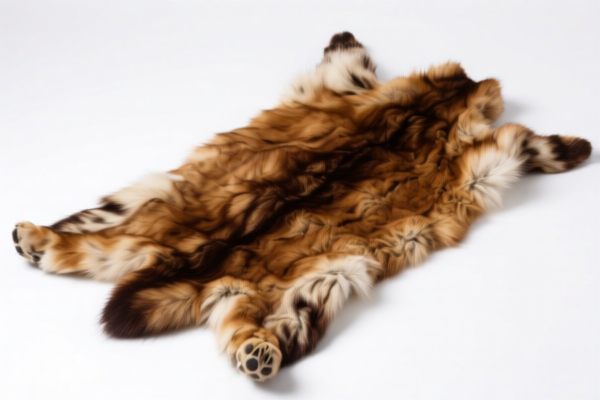
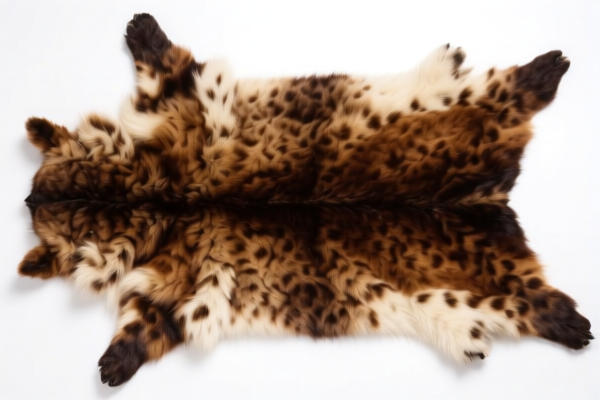
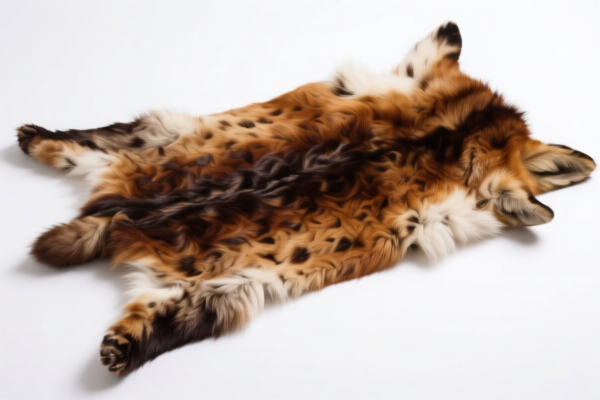
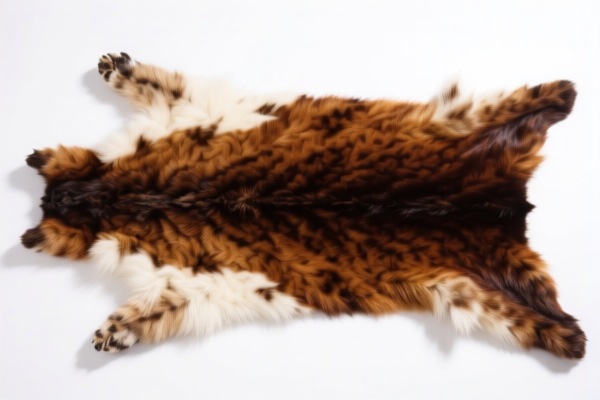
AI Analysis
🐄 Dyed Whole Animal Hide for Livestock (Tanned/Lined)
🌐 HS Code Reference & Clearance Guide | 2026 Latest Tariff Analysis | Professional Customs Strategy
📌 I. Product Definition & Classification: Do You Really Understand "Dyed Livestock Hide"?
Dyed whole animal hide for livestock refers to raw hides that have undergone tanning, dyeing, and potentially lining processes. In international trade, this product is highly regulated due to its dual nature: it is an animal product (subject to sanitary controls) and a semi-finished leather good (subject to trade duties).
Key Distinctions:
Raw Hide vs. Tanned/Lined Hide: If the hide is merely salted or dried (raw), it falls under Chapter 05. If it has been tanned (chemically treated to prevent decomposition) and dyed, it falls under Chapter 41.
"Whole" vs. "Cut": Whole hides (undamaged, full size) are treated differently from pieces or scraps.
"Dyed":* Indicates the addition of color, which does not change the fundamental classification from Tanned Leather but may affect specific sub-headings depending on the tanning method (vegetable vs. chrome).
⚠️ Critical Classification Point:
- If the hide is tanned and lined (finished leather) → Chapter 41 (e.g., 4104, 4105).
- If the hide is raw (only salted/dried, not tanned) → Chapter 05 or 0411 (depending on specific treatment).
- Note: The term "Dyed" almost always implies tanning has occurred, as dyeing raw hide is impractical. We assume Tanned and Dyed for this analysis.
📦 II. HS Code Classification Details (2026 Latest Tariff Authority)
| HS Code | Product Description | Application Scenario | Tanning Method | Is It Tanned? |
|---|---|---|---|---|
4104.51.00.00 |
Bovine leather (including calf), full-grain, tanned/dyed | High-end footwear, luxury bags, furniture | Chrome/Vegetable | ✅ Yes |
4104.59.00.00 |
Bovine leather (including calf), other tanned/dyed | Industrial use, lower-grade leather goods | Chrome/Vegetable | ✅ Yes |
4105.30.00.00 |
Sheepskin/Lambskin, tanned/dyed, lined | Garments, gloves, jackets | Chrome | ✅ Yes |
4106.22.00.00 |
Goat/Sheep skin, tanned/dyed, not split | Exotic leather goods | Chrome/Vegetable | ✅ Yes |
0506.90.00.00 |
Bones and horn-working material; untreated hides | Raw hides, salted, not tanned | ❌ No | ❌ No |
4115.10.00.00 |
Scrap leather and leather dust | Recycled materials, industrial filler | N/A | N/A |
🔍 Key Reminder:
- Chapter 41 covers Tanned or Dressed Hides and Skins.
- Chapter 05 covers Animal Products Not Elsewhere Specified, including raw hides.
- Misclassification Risk: Declaring tanned hides as raw hides (Chapter 05) to avoid higher tariffs or sanitary checks is a major customs violation leading to fines and seizure.
💰 III. 2026 Latest Tariff Rate Details (Including Surtaxes, Policy Surcharges)
✅ Applicable Country: United States (US)
✅ Origin: China (CN)
✅ Effective Date: November 10, 2025 (including subsequent imports)
🎯 1. 4104.51.00.00 – Bovine Leather, Full-Grain, Tanned/Dyed
| Item | Details |
|---|---|
| Base Tariff | 3.2% (ad valorem) |
| USITC Surcharge | +25% (under USITC Footnote 9903.88.01) |
| IEEPA Surcharge | +10% (against China/HK products, effective Nov 10, 2025) |
| Total Tariff | ~38.2% |
| Tax Calculation | CIF Value × 38.2% |
| De Minimis Eligibility | ❌ No (deny_de_minimis) |
| Legal Authority Path | IEEPA:9903.01.25 → IEEPA:9903.01.24 → USITC:4104.51.00.00 → FOOTNOTE:9903.88.01 |
📌 Explanation:
- "USITC Surcharge 25%" stems from Section 301 of the Trade Act;
- "IEEPA 10%" is the additional duty under the International Emergency Economic Powers Act;
- Total ~38.2% is a high tariff, requiring careful cost calculation.
🎯 2. 4105.30.00.00 – Sheepskin/Lambskin, Tanned/Dyed, Lined
| Item | Details |
|---|---|
| Base Tariff | 1.8% (ad valorem) |
| USITC Surcharge | +25% |
| IEEPA Surcharge | +10% |
| Total Tariff | ~36.8% |
| Tax Calculation | CIF Value × 36.8% |
| De Minimis Eligibility | ❌ No |
| Legal Authority Path | IEEPA:9901.25 → IEEPA:9903.01.24 → USITC:4105.30.00.00 → FOOTNOTE:9903.88.01 |
📌 Note:
- Sheepskin often has a lower base rate but is still subject to the same surcharges;
- "Lined" means it includes an inner lining material (e.g., fleece), which does not change the leather classification.
🛠️ IV. Customs Clearance Practical Advice (Battle-Tested Pitfall Avoidance Guide)
✅ 1. Required Documentation Checklist (None Can Be Skipped)
| Document | Must Provide | Description |
|---|---|---|
| ✅ Tanning Process Description | ✔️ | Detail the tanning method (Chrome vs. Vegetable) and dyeing process |
| ✅ Sanitary Certificate (Veterinary) | ✔️ | CRITICAL: Prove the animal was healthy and sourced from approved farms |
| ✅ Product Photos (Front/Back) | ✔️ | Show full size, texture, color, and any defects |
| ✅ Commercial Invoice | ✔️ | Clearly state "Tanned and Dyed Bovine Leather" |
| ✅ Packing List | ✔️ | Specify weight per hide, total hides per carton |
| ✅ Certificate of Origin (CO) | ✔️ | If non-China origin, claim preferential rates |
| ✅ Fumigation Certificate | ✔️ | Required for animal products to prevent pests |
✅ 2. Declaration Tips (Key Mantras)
🔥 "Tanned Declare Tanned, Raw Declare Raw; Wrong Code, Heavy Fine!"
| Situation | Correct Declaration | Wrong Practice |
|---|---|---|
| Tanned & Dyed Whole Hide | 4104.51.00.00 |
Misdeclare as Raw Hide (0506.90.00.00) → Penalty + Seizure |
| Sheepskin with Fleece Lining | 4105.30.00.00 |
Split into "Leather" + "Fabric" → Complex Duty Calculation |
| Raw Salted Hides | 0506.90.00.00 |
Declare as Tanned → Unnecessary High Tariff |
| Leather Scraps | 4115.10.00.00 |
Declare as Whole Hides → Classification Error |
✅ 3. Special Cases Handling
| Situation | Handling Advice |
|---|---|
| Chrome-Tanned vs. Vegetable-Tanned | Must specify! Chrome-tanned may require additional chemical disclosures |
| Lined Sheepskin | Ensure the lining is not classified separately; the whole item is leather |
| Import from Vietnam/Mexico | Check for IEEPA Exemption if processed significantly outside China |
| Animal Disease Restrictions | Confirm origin country is not on USDA APHIS Restricted List |
🌍 V. Global Major Market Clearance Comparison (2026 Latest)
| Country/Region | Recommended HS Code | Tariff | Certification Requirement | Notes |
|---|---|---|---|---|
| 🇺🇸 US | 4104.51.00.00 |
~38.2% (CN Origin) | Veterinary Cert + Fumigation | High tariffs for CN origin |
| 🇨🇳 China | 4104.51.00.00 |
5-8% | No special certs for import | Low tariffs, simple clearance |
| 🇪🇺 EU | 4104.51.00.00 |
6.5% | REACH Compliance | No IEEPA surcharge |
| 🇦🇺 Australia | 4104.51.00.00 |
5% | Biosecurity Approval | Strict biosecurity checks |
| 🇯🇵 Japan | 4104.51.00.00 |
6% | SFI (Sanitary & Phytosanitary) | Detailed origin tracing |
📌 Conclusion:
- US is the most expensive market for Chinese-origin tanned leather due to surcharges;
- Biosecurity is universal: All major markets require strict veterinary and fumigation certificates;
- Diversify Supply Chain: Consider sourcing from Vietnam/Mexico to avoid IEEPA surcharges.
📌 VI. Common Errors & Pitfall Avoidance Guide (Blood-Stained Lessons)
❌ Mistake 1: Declaring Tanned Leather as "Raw Hides"
👉 Consequence: Customs detects tanning chemicals → Seizure + Fine
❌ Mistake 2: Failing to Provide Veterinary Certificate
👉 Consequence: Quarantine hold at port → Demurrage Charges + Return/Destroy
❌ Mistake 3: Misidentifying "Lined" Sheepskin as Fabric + Leather
👉 Consequence: Incorrect duty calculation → Underpayment Penalty
❌ Mistake 4: Using "Animal Hide" as Description without Tanning Method
👉 Consequence: Customs rejects declaration → Delay + Inspection
✅ Correct Practice:
"Tanned and Dyed Full-Grain Bovine Leather, Chrome-Tanned, Full Size, For Footwear, Batch No. XYZ, Fumigated"
🎯 VII. Conclusion: Professional Declaration, Save Time, Reduce Cost!
🎯 Remember the Mantras:
🔹 "Tanned is Tanned, Raw is Raw; Chrome vs. Veg, Must Declare!"
🔹 "Vet Cert is Life, No Cert, No Entry!"
🔹 "US Tariff High, Think Twice or Ship Else!"
📌 Tips:
- If your leather is sourced from Vietnam, Mexico, or Indonesia, you may apply for IEEPA Exemption, reducing tariffs to 0-6%;
- Recommend applying for an Advance Ruling if the tanning method is unique;
- Always verify USDA APHIS Import Requirements for the specific animal type (Bovine vs. Sheep).
📣 Immediate Action:
📞 Contact a licensed customs broker + Provide Tanning Details + Obtain Veterinary Certificates
🚀 Ensure your leather passes customs smoothly, legally, and profitably!
✨ Professional Clearance Starts with Accurate Classification!
💼 Your Every Dollar is Worth Precise Calculation!
Customer Reviews
About HS Code Classification
The Harmonized System (HS) is an internationally standardized nomenclature developed by the World Customs Organization (WCO) to classify traded products. Over 200 countries use the HS system as the basis for customs tariffs, trade statistics, and import/export regulations.
Each HS code follows a hierarchical structure:
- Chapter (2 digits) — Broad category of goods (e.g., Chapter 84: Machinery and Mechanical Appliances)
- Heading (4 digits) — More specific grouping within the chapter
- Subheading (6 digits) — Internationally standardized breakdown, used by all WCO member countries
- National subdivisions (8-10 digits) — Country-specific extensions for further classification, such as US HTSUS 10-digit codes
Correct HS code classification is essential for smooth customs clearance, accurate duty payment, and compliance with trade regulations. Misclassification can lead to customs delays, overpayment of duties, or penalties.
When importing from CN to US, the applicable tariff rates may include:
- Most-Favored-Nation (MFN) rate — The standard duty rate applied to WTO members
- General rate — Applied to countries without trade agreements
- Trade remedy duties — Additional tariffs such as Section 301 (anti-dumping), Section 232 (national security), or countervailing duties
The information provided on this page is for reference purposes only. For official classification, please consult with your local customs authority or a licensed customs broker.