ear clips
CN → US| HS Code | Tariff Rate | Origin | Destination | Doc |
|---|---|---|---|---|
| 7117909000 | 28.5% | CN | US | Official Doc |
| 8505192000 | 39.9% | CN | US | Official Doc |
| 8505193000 | 39.9% | CN | US | Official Doc |
| 3926908500 | 24.0% | CN | US | Official Doc |
Product Images
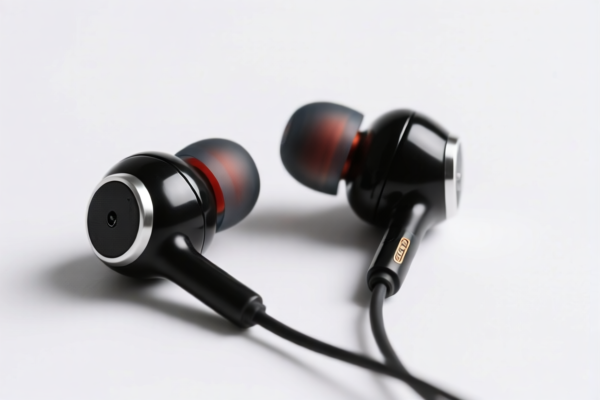
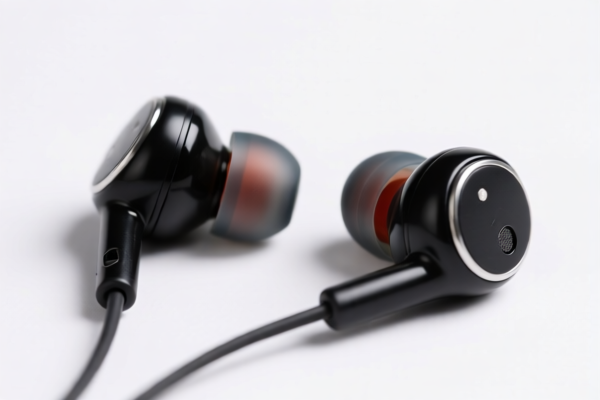
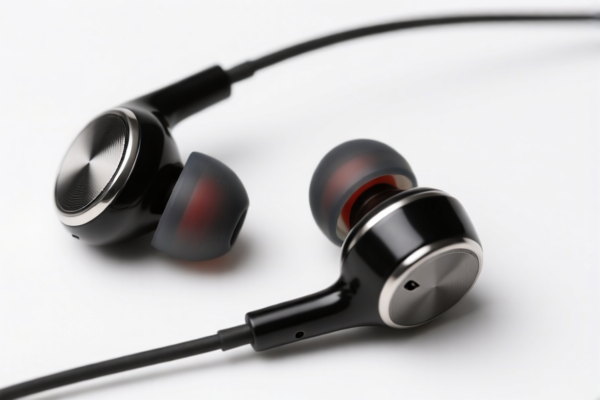
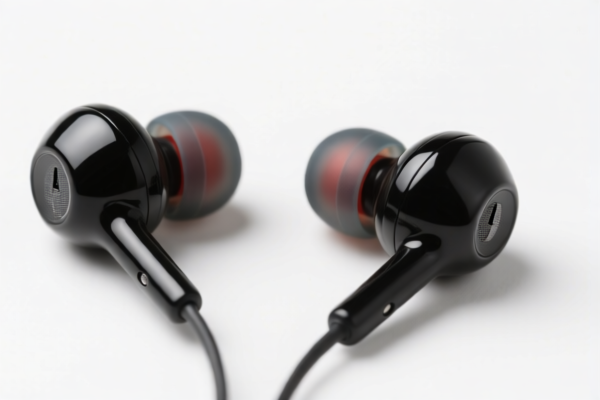
AI Analysis
👂 Ear Clips (Fashion Jewelry & Magnetic Accessories)
🌐 HS Code Reference & Customs Clearance Guide | 2026 Latest Tariff Analysis | Professional Clearance Strategy
📌 I. Product Definition & Classification: What Exactly Are "Ear Clips"?
Ear clips are non-pierced jewelry items designed to be worn on the earlobe without piercing. They typically utilize a clamp mechanism or a magnetic attachment system. In international trade, the classification depends heavily on the material (precious vs. base metal/plastic) and the functional component (specifically if magnets are used as the primary fastening mechanism).
⚠️ Key Classification Distinction:
- If the item is primarily a fashion accessory made of non-precious materials (plastic, alloy, etc.) → It is classified as Imitation Jewelry.
- If the item functions primarily as a magnetic device or contains flexible permanent magnets as a key component → It may be classified under Magnetic Articles.
- Critical Note: For US imports from China, the distinction between "Jewelry" and "Magnetic Components" significantly impacts the Section 301 / 122 Clause tariff rates.
📦 II. HS Code Classification Details (2026 Latest Tariff Authority Comparison)
Based on the provided data, there are four potential HS Codes depending on the specific material composition and functional priority of the Ear Clip.
| HS Code | Product Description | Application Scenario | Material/Feature |
|---|---|---|---|
7117.90.90.00 |
Imitation Jewelry (Non-precious metal/plastic) | Fashion ear clips, clip-on earrings, decorative accessories | ✅ Non-precious material, jewelry form |
8505.19.20.00 |
Other Magnets & Articles (Flexible Composite) | Magnetic ear clips where magnetic properties are dominant/composite | ✅ Contains flexible magnets |
8505.19.30.00 |
Permanent Magnets (Other) | Ear clips categorized under permanent magnets or magnetized articles | ✅ Magnetic material application |
3926.90.85.00 |
Other Plastic Articles (Miscellaneous) | Ear clips made entirely or mostly of plastic/composites, no other specific category fits | ✅ Plastic/Composite material |
🔍 重点提醒 (Key Reminder):
- Jewelry vs. Magnet: If the ear clip is marketed as "Jewelry" but uses strong magnets, US Customs may scrutinize it under 8505 if the magnetic function is deemed primary. However,7117.90.90.00is the most common for fashion ear clips.
- Material Logic: If the product is purely plastic/clay with minor magnetic parts,3926.90.85.00might be considered, but7117is often preferred for "jewelry" forms regardless of minor internal magnets.
💰 III. 2026 Latest Tariff Rate Breakdown (Including Surtaxes & Policy Add-ons)
✅ Applicable Country: United States (US)
✅ Origin: China (CN)
✅ Effective Time: 2025/2026 (Including subsequent imports)
🎯 1. 7117.90.90.00 —— Imitation Jewelry (Most Common for Fashion Ear Clips)
| Item | Content |
|---|---|
| Base Tariff | 11.0% (Ad Valorem) |
| Section 301 Surtax | +7.5% (Standard Section 301 rate for many jewelry/accessories) |
| Section 122 Tariff | +10.0% (Specific to certain fashion accessories/jewelry items from China) |
| Total Tax Rate | 28.5% |
| Tax Calculation | CIF Value × 28.5% |
| De Minimis Eligibility | ❌ NO (Deny De Minimis) |
| Legal Path | Base: 7117 → Sect301: +7.5% → 122 Clause: +10% |
📌 Explanation:
- This is the standard classification for non-precious metal or plastic fashion earrings.
- The 28.5% total rate is significantly higher than pre-trade war rates.
- Section 122 applies specifically to certain imported consumer goods, including fashion jewelry.
🎯 2. 8505.19.20.00 —— Magnets/Articles (Flexible Composite)
| Item | Content |
|---|---|
| Base Tariff | 4.9% |
| Section 301 Surtax | +25.0% (Higher surtax for electronic/magnetic components) |
| Section 122 Tariff | +10.0% |
| Total Tax Rate | 39.9% |
| Tax Calculation | CIF Value × 39.9% |
| De Minimis Eligibility | ❌ NO (Deny De Minimis) |
| Legal Path | Base: 8505 → Sect301: +25% → 122 Clause: +10% |
📌 Explanation:
- If Customs determines the magnetic function is the primary characteristic (rather than the jewelry aspect), this code may apply.
- Higher Surcharge: The 25% Section 301 rate is standard for many magnetic/electronic components, leading to a much higher total burden (39.9%).
🎯 3. 8505.19.30.00 —— Permanent Magnets (Other)
| Item | Content |
|---|---|
| Base Tariff | 4.9% |
| Section 301 Surtax | +25.0% |
| Section 122 Tariff | +10.0% |
| Total Tax Rate | 39.9% |
| Tax Calculation | CIF Value × 39.9% |
| De Minimis Eligibility | ❌ NO (Deny De Minimis) |
| Legal Path | Base: 8505 → Sect301: +25% → 122 Clause: +10% |
📌 Explanation:
- Similar to8505.19.20.00, this falls under permanent magnets.
- Risk: Misclassifying fashion jewelry as "magnets" can trigger higher duties and potential audits for undervaluation of the "jewelry" aspect.
🎯 4. 3926.90.85.00 —— Other Plastic Articles (Fallback Category)
| Item | Content |
|---|---|
| Base Tariff | 6.5% |
| Section 301 Surtax | +7.5% |
| Section 122 Tariff | +10.0% |
| Total Tax Rate | 24.0% |
| Tax Calculation | CIF Value × 24.0% |
| De Minimis Eligibility | ❌ NO (Deny De Minimis) |
| Legal Path | Base: 3926 → Sect301: +7.5% → 122 Clause: +10% |
📌 Explanation:
- This is a fallback category for plastic items not specified elsewhere.
- Lowest Total Rate (24.0%) among the options, but risky if the item is clearly recognized as "jewelry" by customs.
- Warning: If the item looks like jewelry, Customs may reject this code and force7117, resulting in back taxes.
🛠️ IV. Customs Clearance Practical Advice (Battle-Tested Guide)
✅ 1. Required Documentation Checklist (Non-Negotiable)
| Document | Must Provide | Explanation |
|---|---|---|
| ✅ Product Photos | ✔️ | Clear images of the front, back, and clasp mechanism (magnetic vs. screw). |
| ✅ Bill of Materials (BOM) | ✔️ | List all materials (e.g., "Zinc Alloy + Plastic + Neodymium Magnet"). |
| ✅ Function Description | ✔️ | Clearly state: "Fashion accessory, non-functional magnet (for attraction only) vs. Industrial magnet." |
| ✅ Commercial Invoice | ✔️ | Description: "Fashion Ear Clips, Non-Piercing, Material: Alloy/Plastic." |
| ✅ HS Code Justification | ✔️ | Explain why 7117 is chosen over 8505 (e.g., "Primary purpose is ornamentation, not magnetic function"). |
✅ 2. Declaration Strategy (Key Mantras)
🔥 "Jewelry Form, Non-Precious, Claim 7117; Avoid 8505 Trap!"
| Scenario | Correct Declaration | Wrong Approach |
|---|---|---|
| Fashion Ear Clips (Alloy/Plastic) | 7117.90.90.00 |
Declare as "Magnets" → 39.9% Tariff |
| Ear Clips with Strong Magnets | 7117.90.90.00 (with explanation) |
Declare as 8505 → 39.9% Tariff |
| Pure Plastic/Clay Ear Clips | 3926.90.85.00 (if no jewelry look) |
Declare as "Jewelry" → 28.5% (might be okay, but check material) |
| Mixed Material (Metal + Magnet) | 7117.90.90.00 |
Declaring as "Metal Parts" → 25%+ Surtax |
📌 Strategic Tip:
- Goal: Secure7117.90.90.00(28.5%) or3926.90.85.00(24.0%) if legally defensible.
- Avoid:8505(39.9%) unless the item is purely an industrial magnetic component, not jewelry.
✅ 3. Special Circumstances Handling
| Situation | Handling Advice |
|---|---|
| Magnetic Ear Clips | Emphasize "Fashion Jewelry" function. Provide proof that magnets are secondary (e.g., low strength, hidden inside). |
| OEM Custom Designs | Provide design sketches showing ornamental features (gemstones, shapes) to support 7117. |
| Plastic "Clay" Earrings | Use 3926.90.85.00 if they are purely decorative and lack metal components, but ensure they don't look like standard metal jewelry. |
| High-Value Items | Even if low cost, high volume increases audit risk. Ensure consistent HS Code usage across all shipments. |
🌍 V. Global Market Comparison (2026 Latest)
| Country/Region | Recommended HS Code | Tariff Rate | Certification | Notes |
|---|---|---|---|---|
| 🇺🇸 USA | 7117.90.90.00 |
28.5% | None specific | High surtaxes apply. Avoid 8505 for fashion items. |
| 🇨🇳 China | 7117.90.90.00 |
~8-10% | None | No Section 301/122 surtaxes. |
| 🇪🇺 EU | 7117.90.00 |
0-1.7% | CE (if electronic) | Low base tariffs, but high VAT (20%). |
| 🇬🇧 UK | 7117.90.00 |
0-1.7% | UKCA | Post-Brexit rules apply. |
| 🇦🇺 Australia | 7117.90.00 |
5-10% | ACCC | Standard FTA rates may apply. |
📌 Conclusion:
- USA is the most challenging market due to Section 301 (7.5-25%) and Section 122 (10%) surtaxes.
- Total burden can reach 28.5% - 39.9%, significantly eroding profit margins for low-cost jewelry.
- Strategic Recommendation: Consider sourcing from non-China countries (Vietnam, Thailand) to potentially avoid 122 Clause and 301 Surtax if eligible.
📌 VI. Common Errors & Pitfalls (Blood & Tears Lessons)
❌ Mistake 1: Declaring magnetic ear clips as 8505.19.20.00
👉 Consequence: Tax jumps from 28.5% to 39.9% → 11.4% unnecessary cost increase!
❌ Mistake 2: Declaring metal ear clips as 3926.90.85.00 (Plastic)
👉 Consequence: Customs audit → Back taxes + Penalty for misclassification.
❌ Mistake 3: Omitting "Magnetic" in description for 7117
👉 Consequence: If magnets are strong, Customs may reclassify to 8505 → 39.9% Tariff.
❌ Mistake 4: Assuming De Minimis (Section 321) applies
👉 Consequence: NO De Minimis for these HS Codes from China → Full taxation on every shipment.
✅ Correct Practice:
"Fashion Ear Clips, Non-Piercing, Zinc Alloy & Plastic, Decorative, Not for Industrial Use, Model XYZ"
🎯 VII. Conclusion: Professional Declaration, Save Cost, Ensure Compliance!
🎯 Remember the Mantra:
🔹 "Jewelry Form, Claim 7117; Magnet Focus, Pay 39.9%!"
🔹 "122 Clause adds 10%, 301 adds 7.5-25%; Declaring wrong costs you dearly!"
📌 Pro Tip:
If your ear clips are shipped from Vietnam, Mexico, or Thailand, you may be eligible for zero Section 301/122 surtaxes, reducing the total rate to the base tariff only (0-11%).
✅ Recommendation: Consider supply chain diversification to avoid US surtaxes.
📣 Immediate Action:
📞 Contact a licensed Customs Broker + Provide Product Photos + Apply for Pre-Ruling (Adverse Ruling) if uncertain.
🚀 Let your ear clips clear smoothly, maximize profit, and stay compliant!
✨ Professional Clearance Starts with Precise Classification!
💼 Every cent of tariff is worth calculating precisely!
Customer Reviews
About HS Code Classification
The Harmonized System (HS) is an internationally standardized nomenclature developed by the World Customs Organization (WCO) to classify traded products. Over 200 countries use the HS system as the basis for customs tariffs, trade statistics, and import/export regulations.
Each HS code follows a hierarchical structure:
- Chapter (2 digits) — Broad category of goods (e.g., Chapter 84: Machinery and Mechanical Appliances)
- Heading (4 digits) — More specific grouping within the chapter
- Subheading (6 digits) — Internationally standardized breakdown, used by all WCO member countries
- National subdivisions (8-10 digits) — Country-specific extensions for further classification, such as US HTSUS 10-digit codes
Correct HS code classification is essential for smooth customs clearance, accurate duty payment, and compliance with trade regulations. Misclassification can lead to customs delays, overpayment of duties, or penalties.
When importing from CN to US, the applicable tariff rates may include:
- Most-Favored-Nation (MFN) rate — The standard duty rate applied to WTO members
- General rate — Applied to countries without trade agreements
- Trade remedy duties — Additional tariffs such as Section 301 (anti-dumping), Section 232 (national security), or countervailing duties
The information provided on this page is for reference purposes only. For official classification, please consult with your local customs authority or a licensed customs broker.