ear plugs
CN → US| HS Code | Tariff Rate | Origin | Destination | Doc |
|---|---|---|---|---|
| 9021908100 | 10.0% | CN | US | Official Doc |
| 9021100090 | 10.0% | CN | US | Official Doc |
| 4016996050 | 37.5% | CN | US | Official Doc |
| 4016990500 | 20.9% | CN | US | Official Doc |
| 8543708900 | 17.5% | CN | US | Official Doc |
Product Images
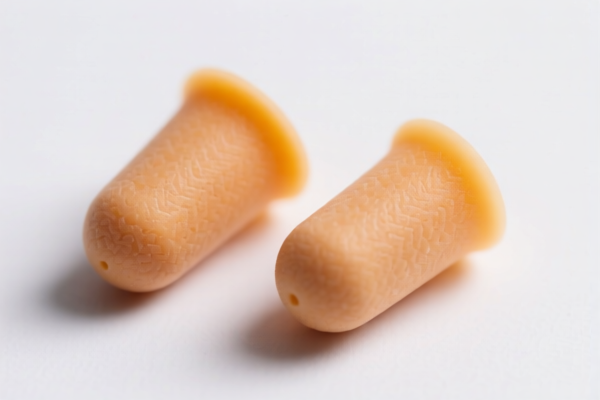
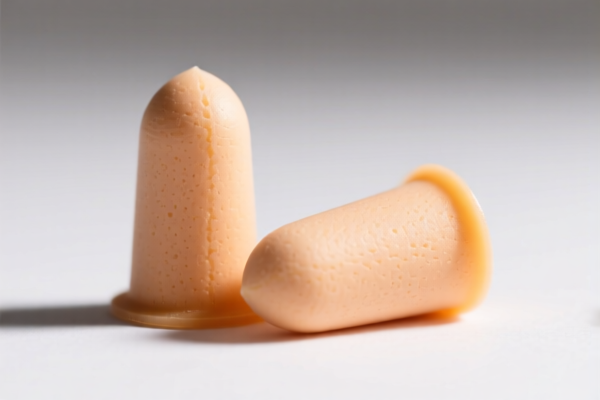


AI Analysis
🎧 Ear Plugs (Hearing Protection & Audio Accessories)
🌐 HS Code Reference & Customs Clearance Guide | 2026 Latest Tariff Analysis | Professional Clearance Strategy
📌 I. Product Definition & Classification: Do You Really Understand "Ear Plugs"?
Ear plugs are a versatile category that bridges medical/surgical devices, personal protective equipment (PPE), and consumer electronics. In international trade, their classification heavily depends on the material, primary function, and design.
1. Medical/Surgical Orthopedic Devices: Solid or foam plugs used for structural protection or hearing aid components; 2. Rubber/Elastic Products: Soft, deformable plugs made of silicone, latex, or rubber for noise cancellation; 3. Electronic Audio Devices: "Ear plug headphones" that actively play audio, integrating circuits and drivers.
⚠️ Key Distinction Point:
- If it is a passive noise-canceling plug made of rubber/silicone → Likely Chapter 40 (Rubber) or Chapter 90 (Medical/Orthopedic);
- If it is an active audio device (headphones/earbuds) → Likely Chapter 85 (Electrical Machinery);
- If it is a medical implant/prosthesis → Likely Chapter 90 (Surgical Instruments).
📦 II. HS Code Classification Details (Based on Provided Data)
The following HS codes are derived from the provided dataset, categorized by inference logic (Material vs. Function):
| HS Code | Product Description | Inference Logic & Summary | Total Tax Rate |
|---|---|---|---|
9021.10.00.90 |
Orthopedic Appliances (Other) | Function-Inferred: Classified as "other" orthopedic devices not being bone plates/screws. No material conflict. | 10.0% |
4016.99.60.50 |
Vulcanized Rubber Articles | Material-Inferred: Made of vulcanized rubber/elastic body. General-purpose rubber product falling under "Other vulcanized rubber articles." | 37.5% |
4016.99.05.00 |
Vulcanized Rubber Articles (Other) | Material+Use-Inferred: Rubber/silicone material. Classified as "Other household items" for personal protection. No material conflict. | 20.9% |
9021.90.81.00 |
Orthopedic Devices (Other) | Function-Inferred: Considered as appliances for compensating defects (hearing impairment) or protection. Matches "Other appliances worn or carried." | 10.0% |
8543.70.89.00 |
Audio Playback Devices | Form-Inferred: Based on "Ear Plug Headphones." Classified as audio recording/reproduction equipment. Material (plastic/metal) fits electronic device category. | 17.5% |
🔍 Critical Note:
- Medical vs. General Use: If the ear plug is marketed as a medical device (e.g., for hearing aid retention or surgical ear protection), it leans toward HS 9021. - Material vs. Function: If it is a simple silicone/rubber plug for noise reduction, it may fall under HS 4016 (Rubber) or HS 9021 (if deemed orthopedic). - Electronics: If the product includes speakers, batteries, or wiring ("Ear Plug Headphones"), it MUST be classified under HS 8543.
💰 III. 2026 Latest Tariff Rate Breakdown (Detailed Tax Clauses)
✅ Applicable Country: United States (US)
✅ Country of Origin: China (CN) (Inferred from 122-Clause & Section 301 context)
✅ Effective Time: Current (as per dataset)
🎯 1. 9021.10.00.90 & 9021.90.81.00 —— Orthopedic/Medical Devices
| Item | Detail |
|---|---|
| Base Tariff | 0.0% (Most Favored Nation rate for medical/orthopedic appliances) |
| Section 301 Tariff | 0.0% (Exempt from additional 25% tariff under current analysis) |
| Section 122 Tariff | +10% (Specific provision applied to this classification) |
| Total Tax Rate | 10.0% |
| Tax Calculation | CIF Value × 10% |
| Legal Pathway | Base Rate (0%) → Sec 122 (+10%) = 10% |
📌 Explanation:
- These codes offer the lowest tax burden among the options. - They are classified as medical/orthopedic appliances, which often enjoy 0% base duty. - The 10% Sec 122 tariff is a specific surcharge applicable here, but avoids the higher Section 301 rates seen in rubber/electronics categories.
🎯 2. 4016.99.05.00 —— Other Vulcanized Rubber Articles (Household/Protective)
| Item | Detail |
|---|---|
| Base Tariff | 3.4% |
| Section 301 Tariff | +7.5% (Additional tariff on rubber articles) |
| Section 122 Tariff | +10% |
| Total Tax Rate | 20.9% |
| Tax Calculation | CIF Value × 20.9% |
| Legal Pathway | Base (3.4%) → Sec 301 (+7.5%) → Sec 122 (+10%) = 20.9% |
📌 Explanation:
- This classification applies to rubber/silicone ear plugs used for general household/personal protection. - The 3.4% base is higher than medical devices. - Section 301 (7.5%) and Section 122 (10%) are both applied, resulting in a moderate tax rate.
🎯 3. 8543.70.89.00 —— Electrical Audio Devices (Ear Plug Headphones)
| Item | Detail |
|---|---|
| Base Tariff | 0.0% |
| Section 301 Tariff | +7.5% |
| Section 122 Tariff | +10% |
| Total Tax Rate | 17.5% |
| Tax Calculation | CIF Value × 17.5% |
| Legal Pathway | Base (0%) → Sec 301 (+7.5%) → Sec 122 (+10%) = 17.5% |
📌 Explanation:
- This applies ONLY if the product is an audio-playing device ("Ear Plug Headphones"). - Despite 0% base tariff, the Section 301 (7.5%) and Section 122 (10%) surcharges apply. - Key Risk: Misclassifying a simple rubber plug as an electronic device (or vice versa) can lead to incorrect tax liability and customs delays.
🎯 4. 4016.99.60.50 —— Other Vulcanized Rubber Articles (General Purpose)
| Item | Detail |
|---|---|
| Base Tariff | 2.5% |
| Section 301 Tariff | +25.0% (High Section 301 rate) |
| Section 122 Tariff | +10% |
| Total Tax Rate | 37.5% |
| Tax Calculation | CIF Value × 37.5% |
| Legal Pathway | Base (2.5%) → Sec 301 (+25%) → Sec 122 (+10%) = 37.5% |
📌 Explanation:
- This is the highest tax bracket among the provided options. - It applies to general-purpose vulcanized rubber articles without specific household or medical designation. - The 25% Section 301 tariff significantly increases the cost. Avoid this code if a more specific classification (like medical or household) is applicable.
🛠️ IV. Customs Clearance Practical Advice (Battle-Tested Pitfall Guide)
✅ 1. Documentation Checklist (Non-Negotiable)
| Document | Required | Notes |
|---|---|---|
| ✅ Product Specification Sheet | ✔️ | Must detail material (Silicone/Rubber/Electronic), dimensions, and intended use (Medical vs. Consumer). |
| ✅ Product Photos | ✔️ | Clear images of the product, packaging, and any labels (e.g., "Hearing Protection," "Audio Device"). |
| ✅ Intended Use Statement | ✔️ | Explicitly state if it is for medical orthopedic use, noise protection, or audio playback. |
| ✅ FCC Certification | ✔️ | MANDATORY if classified under 8543 (Electronics). Without it, customs will delay seizure. |
| ✅ CE/RoHS Reports | ✔️ | Helpful for 4016 (Rubber) to prove compliance with chemical regulations. |
| ✅ Commercial Invoice | ✔️ | Must match the declared HS Code exactly. Use precise descriptions like "Silicone Ear Plugs for Hearing Protection" vs. "Ear Plug Headphones." |
✅ 2. Classification Strategy (Key Rules)
🔥 "Function First, Material Second, Electronics Third!"
| Scenario | Recommended HS Code | Reason |
|---|---|---|
| Passive Noise-Canceling Plugs (Foam/Rubber) | 9021.10.00.90 or 9021.90.81.00 |
Classified as Orthopedic/Appliances for hearing protection. Lowest tax (10%). |
| Silicone Ear Plugs for Sleep | 4016.99.05.00 |
Classified as Household Rubber Article. Moderate tax (20.9%). |
| Active Earbuds/Headphones | 8543.70.89.00 |
Classified as Audio Device. Requires FCC. Tax 17.5%. |
| Generic Rubber Plugs (No specific use) | 4016.99.60.50 |
Avoid! Highest tax (37.5%) due to general categorization. |
⚠️ Critical Warning:
- Do NOT declare "Ear Plugs" without specifying the type. Vague descriptions lead to customs holds. - If it’s medical, provide a FDA registration number or Intended Use Statement aligning with HS 9021. - If it’s electronic, FCC ID is mandatory. No FCC = Seizure.
✅ 3. Special Case Handling
| Case | Handling Advice |
|---|---|
| Medical-Grade Ear Plugs | Emphasize "Orthopedic Appliance" in description. Provide medical device documentation. Aim for HS 9021 (10%). |
| Consumer Noise-Canceling Plugs | Use "Silicone Ear Plugs for Noise Reduction" and classify under HS 4016.99.05.00 (20.9%) or HS 9021 if argued as hearing protection. |
| Ear Plug Headphones | Clearly state "Audio Player" and include FCC ID. Use HS 8543 (17.5%). |
| Mixed Shipments | Separate shipments by type. Do not mix electronics with rubber plugs to avoid complex valuation and classification issues. |
🌍 V. Global Market Comparison (2026 Context)
| Market | Recommended HS Code | Estimated Tax (China Origin) | Key Requirement |
|---|---|---|---|
| 🇺🇸 USA | 9021.10.00.90 |
10% (Sec 122 only) | Medical/Orthopedic declaration |
| 🇺🇸 USA | 4016.99.05.00 |
20.9% (Sec 301 + Sec 122) | Household/Rubber declaration |
| 🇺🇸 USA | 8543.70.89.00 |
17.5% (Sec 301 + Sec 122) | FCC Certification |
| 🇪🇺 EU | 9021.90.00 |
~0-3% | CE Marking, Medical Device Regulation (MDR) if medical |
| 🇨🇳 China | 9021.90.81.00 |
0-3% | CCC if medical |
📌 Conclusion:
- USA is the most complex market due to Section 301 and Section 122 tariffs. - HS 9021 (10%) is the most cost-effective for passive ear plugs in the US. - HS 4016.99.60.50 (37.5%) is the least favorable and should be avoided if possible.
📌 VI. Common Errors & Pitfalls (Blood Lessons)
❌ Error 1: Declaring "Ear Plugs" as Generic Rubber (4016.99.60.50)
👉 Result: 37.5% Tax + Potential delays.
✅ Fix: Use "Orthopedic Appliance" (9021) for protection-focused plugs.
❌ Error 2: Missing FCC ID for electronic ear plugs
👉 Result: Seizure by CBP.
✅ Fix: Ensure FCC Certification is attached for any audio-playing device.
❌ Error 3: Mixing Medical and Consumer items in one shipment
👉 Result: Classification Conflict, potential audit.
✅ Fix: Separate shipments by intended use.
❌ Error 4: Using vague descriptions like "Hearing Protection" for Electronic Headphones
👉 Result: Misclassification (HS 9021 vs. 8543), leading to underpayment or overpayment.
✅ Fix: Clearly distinguish "Passive Plug" vs. "Active Headphone".
🎯 VII. Conclusion: Professional Classification Saves Money!
🎯 Remember the Golden Rule:
🔹 "Medical/Protection = 10% (9021)"
🔹 "Household Rubber = 20.9% (4016.05)"
🔹 "Audio Device = 17.5% (8543) + FCC"
🔹 "Generic Rubber = 37.5% (4016.60) → AVOID!"
📌 Pro Tip:
- For passive ear plugs, argue "Orthopedic Appliance" status to secure the 10% rate.
- For electronic ear plugs, ensure FCC compliance and use HS 8543.
- Never use HS 4016.99.60.50 unless you have no other option.
📣 Immediate Action:
📞 Consult a Customs Broker + Provide Product Photos + Submit FCC Docs (if electronic)
🚀 Optimize your HS Code to minimize duties and accelerate clearance!
✨ Professional Clearance Starts with Accurate Classification!
💼 Your Bottom Line Depends on the Right HS Code!
Customer Reviews
About HS Code Classification
The Harmonized System (HS) is an internationally standardized nomenclature developed by the World Customs Organization (WCO) to classify traded products. Over 200 countries use the HS system as the basis for customs tariffs, trade statistics, and import/export regulations.
Each HS code follows a hierarchical structure:
- Chapter (2 digits) — Broad category of goods (e.g., Chapter 84: Machinery and Mechanical Appliances)
- Heading (4 digits) — More specific grouping within the chapter
- Subheading (6 digits) — Internationally standardized breakdown, used by all WCO member countries
- National subdivisions (8-10 digits) — Country-specific extensions for further classification, such as US HTSUS 10-digit codes
Correct HS code classification is essential for smooth customs clearance, accurate duty payment, and compliance with trade regulations. Misclassification can lead to customs delays, overpayment of duties, or penalties.
When importing from CN to US, the applicable tariff rates may include:
- Most-Favored-Nation (MFN) rate — The standard duty rate applied to WTO members
- General rate — Applied to countries without trade agreements
- Trade remedy duties — Additional tariffs such as Section 301 (anti-dumping), Section 232 (national security), or countervailing duties
The information provided on this page is for reference purposes only. For official classification, please consult with your local customs authority or a licensed customs broker.