earring
CN → US| HS Code | Tariff Rate | Origin | Destination | Doc |
|---|---|---|---|---|
| 7116201500 | 24.0% | CN | US | Official Doc |
| 7117909000 | 28.5% | CN | US | Official Doc |
| 7116200500 | 13.3% | CN | US | Official Doc |
| 7117909000 | 28.5% | CN | US | Official Doc |
| 7113195025 | 23.0% | CN | US | Official Doc |
Product Images
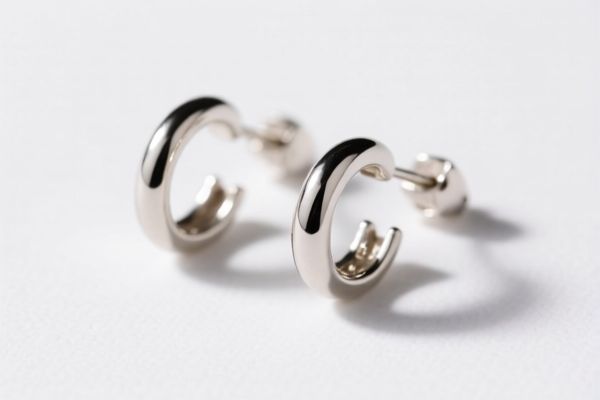
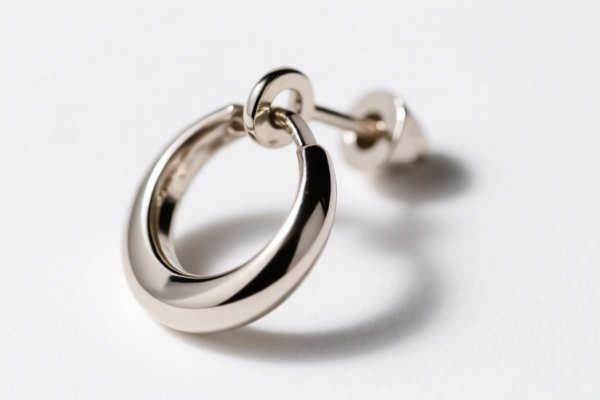
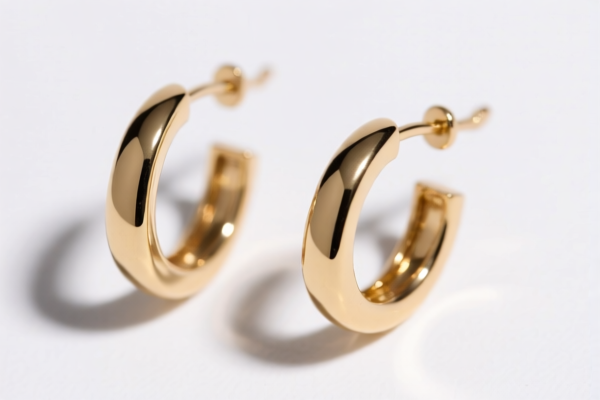

AI Analysis
💎 Earrings (Jewelry & Imitation Jewelry)
🌐 HS Code Reference & Clearance Guide | 2026 Latest Tariff Analysis | Professional Customs Strategy
📌 I. Product Definition & Classification: Do You Really Understand "Earrings"?
Earrings are among the most versatile accessories in the global fashion industry. In international trade, they are strictly classified based on material composition. The HS Code classification is not arbitrary; it depends entirely on whether the item is made of precious metals, gemstones, or base materials.
1. Gemstone/Semi-Gemstone Earrings: Earrings where the main value comes from stones (even if set in base metal).
2. Precious Metal/Semi-Precious Stone Earrings: Earrings made of precious metals (Gold, Silver, etc.) or specific semi-precious stone constructions.
3. Imitation/Non-Precious Jewelry: Earrings made of non-precious metals, plastic, glass, or synthetic materials designed to mimic fine jewelry.
⚠️ Key Distinction Point:
- If the item contains gemstones or semi-gemstones as the primary feature → 7116.20.05.00 (Lowest Tax)
- If the item is made of precious metals or semi-precious stones → 7116.20.15.00 (Medium Tax)
- If the item is imitation jewelry (base metal, plastic, etc.) → 7117.90.90.00 (Highest Tax)
📦 II. HS Code Classification Details (2026 Latest Tariff Authority Comparison)
| HS Code | Product Description | Material Inference | Applicable Scenario |
|---|---|---|---|
7116.20.05.00 |
Earrings classified as jewelry, material reasonably inferred as gemstone or semi-gemstone articles | Gemstone / Semi-Gemstone | Stone-set earrings, crystal earrings, jade earrings |
7116.20.15.00 |
Earrings classified as jewelry, material reasonably inferred as precious metal or semi-precious stone articles | Precious Metal / Semi-Precious Stone | Gold/Silver plated stone earrings, high-end fine jewelry |
7117.90.90.00 |
Earrings classified as imitation jewelry, material likely non-precious | Non-Precious Metal / Base Material | Fashion jewelry, alloy earrings, costume jewelry, plastic earrings |
7113.19.50.25 |
Note: Listed in data but refers to Rings/指环 | Precious Metal Jewelry | Excluded for Earrings – See Section IV for Correction |
🔍 Critical Reminder:
- The data provided contains a mixed entry for7113.19.50.25which explicitly describes "Rings" (指环) in its summary. Earrings should NOT be classified under this code. - Earrings are correctly classified under 7116 (Articles of Gold, Silver, or Platinum, or of base metal clad with precious metal, inlaid with precious or semi-precious stones) or 7117 (Imitation Jewelry). - Misclassification between 7116 and 7117 leads to significant tax discrepancies (13.3% vs 28.5%).
💰 III. 2026 Latest Tariff Rate Breakdown (Including Surcharges & Policy Add-ons)
✅ Applicable Country: United States (US)
✅ Country of Origin: China (CN)
✅ Effective Time: Current enforcement including Section 301 and Section 122 tariffs.
🎯 1. 7116.20.05.00 —— Earrings: Gemstone/Semi-Gemstone
| Item | Content |
|---|---|
| Base Tariff | 3.3% (ad valorem) |
| Section 301 Surcharge | 0.0% (Specific exemption or rate applied) |
| Section 122 Tariff | 10% (Specific duty on certain articles) |
| Total Tax Rate | 13.3% |
| Tax Calculation | CIF Value × 13.3% |
| Legal Path | Base Tariff → Section 122 (10%) |
📌 Explanation:
- This is the most favorable rate among the three earring categories.
- The total tax burden is significantly lower because it attracts no Section 301 surcharge in this specific dataset, only the base rate and the Section 122 tariff.
- Ideal for products with genuine or high-quality semi-precious stones.
🎯 2. 7116.20.15.00 —— Earrings: Precious Metal/Semi-Precious Stone
| Item | Content |
|---|---|
| Base Tariff | 6.5% (ad valorem) |
| Section 301 Surcharge | 7.5% |
| Section 122 Tariff | 10% |
| Total Tax Rate | 24.0% |
| Tax Calculation | CIF Value × 24.0% |
| Legal Path | Base Tariff → Section 301 (7.5%) → Section 122 (10%) |
📌 Explanation:
- Higher base tariff (6.5%) compared to gemstone variants.
- Subject to an additional 7.5% Section 301 tariff, bringing the total to 24.0%.
- Applicable for fine jewelry items containing precious metals or specific semi-precious stone constructions that do not fall under the "gemstone/semi-gemstone" subheading 05.
🎯 3. 7117.90.90.00 —— Earrings: Imitation Jewelry (Non-Precious)
| Item | Content |
|---|---|
| Base Tariff | 11.0% (ad valorem) |
| Section 301 Surcharge | 7.5% |
| Section 122 Tariff | 10% |
| Total Tax Rate | 28.5% |
| Tax Calculation | CIF Value × 28.5% |
| Legal Path | Base Tariff → Section 301 (7.5%) → Section 122 (10%) |
📌 Explanation:
- This is the highest tax rate category for earrings.
- Even though it is "imitation" jewelry, it attracts the highest base rate (11.0%) plus the standard Section 301 and 122 surcharges.
- Applies to fashion jewelry, alloy earrings, costume jewelry, and items made of base metals, plastic, or glass.
🛠️ IV. Customs Clearance Practical Advice (Real-World Pitfall Avoidance)
✅ 1. Preparation Checklist (All Documents Required)
| Document | Mandatory | Description |
|---|---|---|
| ✅ Product Composition Declaration | ✔️ | Must clearly state material (e.g., "Stainless Steel with Cubic Zirconia" vs. "Sterling Silver with Sapphire") |
| ✅ Product Photos (Clear) | ✔️ | Show details of settings, hallmarks, and overall structure |
| ✅ Bill of Lading / Air Waybill | ✔️ | Standard shipping documents |
| ✅ Commercial Invoice | ✔️ | Must specify "Earrings" and material. Avoid vague terms like "Accessory" |
| ✅ Packing List | ✔️ | Detail item counts and weights |
| ✅ Certificate of Origin | ✔️ | Required for origin verification (China) |
| ✅ Third-Party Test Report | ✔️ | For metal content (if claiming precious metal) or lead/nickel compliance (CPSIA/REACH) |
✅ 2. Declaration Tips (Key Mnemonics)
🔥 "Material is King, Code is King, Don't Mix Up 7116 and 7117!"
| Scenario | Correct Declaration | Error to Avoid |
|---|---|---|
| Stone-set Earrings | 7116.20.05.00 (13.3%) |
Misclassifying as Imitation (7117) → Overpaying tax |
| Fashion/Alloy Earrings | 7117.90.90.00 (28.5%) |
Misclassifying as Gemstone (7116) → Underpaying Tax & Penalties |
| Precious Metal Earrings | 7116.20.15.00 (24.0%) |
Using generic "Jewelry" code without material detail |
| Mixed Packages | Separate by HS Code | Mixing Stone, Precious, and Imitation in one HS Code line |
⚠️ Warning:
- If you declare alloy earrings as gemstone earrings to save tax, Customs may reject the declaration, demand reclassification, and impose penalties.
- If you declare gemstone earrings as imitation jewelry, you overpay taxes unnecessarily.
✅ 3. Special Case Handling
| Situation | Handling Advice |
|---|---|
| Mixed Materials | If earrings have both precious metal parts and stone parts, the primary material determines the code. Consult a customs broker if ambiguous. |
| Gift Sets | If earrings are part of a jewelry set (e.g., necklace + earrings), the principal article determines the classification. Usually, the necklace may dictate the code if it's more valuable. |
| Packaging | Do not include "dummy" packaging that misleads about the material. Be transparent about content. |
| Origin Labeling | Ensure "Made in China" is clearly marked on the product or packaging to avoid origin-related issues. |
🌍 V. Global Market Comparison (2026 Latest)
| Country/Region | Recommended HS Code (Earrings) | Tax Rate (China Origin) | Certification Required | Remarks |
|---|---|---|---|---|
| 🇺🇸 USA | 7116.20.05.00 / 7117.90.90.00 |
13.3% - 28.5% | CPSIA, ASTM F963 | High scrutiny on lead/nickel |
| 🇪🇺 EU | 7116 / 7117 |
2.5% - 5.0% | REACH, Nickel Directive | No Section 122/301 |
| 🇨🇳 China | 7116 / 7117 |
6.5% - 11.0% | CCC (if applicable) | No extra surcharges |
| 🇯🇵 Japan | 7116 / 7117 |
2.0% - 5.5% | PSE (if electronic) | Low base tariffs |
📌 Conclusion:
- The USA has the highest effective tax burden for Chinese-origin earrings due to Section 122 and Section 301 tariffs.
- EU, China, and Japan have significantly lower tax rates, making them more cost-effective markets for jewelry export if logistics allow.
📌 VI. Common Errors & Pitfall Guide (Lessons Learned)
❌ Error 1: Classifying Fashion Jewelry as Precious Jewelry
👉 Consequence: Underpayment of tax. Customs will reassess at 24.0% or 28.5%, leading to back taxes + penalties.
❌ Error 2: Ignoring Section 122 Tariff
👉 Consequence: Missing the 10% surcharge in declaration leads to underpayment and potential hold at customs.
❌ Error 3: Using Generic Descriptions like "Jewelry"
👉 Consequence: Customs may assign the highest possible rate (28.5%) due to lack of clarity.
❌ Error 4: Confusing Earrings with Rings
👉 Consequence: 7113.19.50.25 is for Rings. Declaring earrings under this code is a misclassification error and will cause delays or rejection.
✅ Correct Practice:
"Earrings, Gold-Plated with Cubic Zirconia Stones, Fashion Jewelry, Model XYZ, Lead-Free, CPSIA Compliant"
🎯 VII. Conclusion: Precision Declaration Saves Money!
🎯 Remember the Mnemonic:
🔹 "Stone is Low (13.3%), Precious is Mid (24.0%), Imitation is High (28.5%)."
🔹 "HS Code 7116 for Fine, 7117 for Fake, 7113 for Rings – Don't Make a Mistake!"
📌 Tips:
- If your earrings contain real gemstones, use 7116.20.05.00 to save the most on taxes.
- If they are base metal/plastic, use 7117.90.90.00 and prepare for the 28.5% rate.
- Never use 7113 codes for earrings.
- Consider duty mitigation strategies like bonding or warehousing if cash flow is tight.
📣 Immediate Action:
📞 Contact a licensed customs broker + Provide material specifications + Apply for HS Code Pre-Ruling if uncertain.
🚀 Let your earrings pass smoothly, pay only what is due, and maximize your profit!
✨ Professional Clearance Starts with Accurate Classification!
💼 Every cent counts in the jewelry trade!
Customer Reviews
About HS Code Classification
The Harmonized System (HS) is an internationally standardized nomenclature developed by the World Customs Organization (WCO) to classify traded products. Over 200 countries use the HS system as the basis for customs tariffs, trade statistics, and import/export regulations.
Each HS code follows a hierarchical structure:
- Chapter (2 digits) — Broad category of goods (e.g., Chapter 84: Machinery and Mechanical Appliances)
- Heading (4 digits) — More specific grouping within the chapter
- Subheading (6 digits) — Internationally standardized breakdown, used by all WCO member countries
- National subdivisions (8-10 digits) — Country-specific extensions for further classification, such as US HTSUS 10-digit codes
Correct HS code classification is essential for smooth customs clearance, accurate duty payment, and compliance with trade regulations. Misclassification can lead to customs delays, overpayment of duties, or penalties.
When importing from CN to US, the applicable tariff rates may include:
- Most-Favored-Nation (MFN) rate — The standard duty rate applied to WTO members
- General rate — Applied to countries without trade agreements
- Trade remedy duties — Additional tariffs such as Section 301 (anti-dumping), Section 232 (national security), or countervailing duties
The information provided on this page is for reference purposes only. For official classification, please consult with your local customs authority or a licensed customs broker.