eco friendly notebook
CN → US| HS Code | Tariff Rate | Origin | Destination | Doc |
|---|---|---|---|---|
| 3926909989 | 22.8% | CN | US | Official Doc |
| 3926100000 | 15.3% | CN | US | Official Doc |
| 4820102060 | 35.0% | CN | US | Official Doc |
Product Images
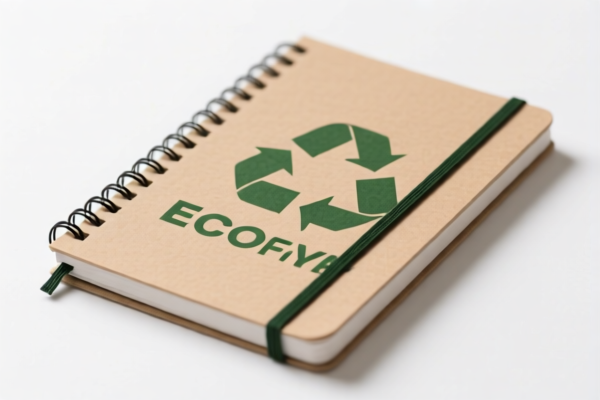
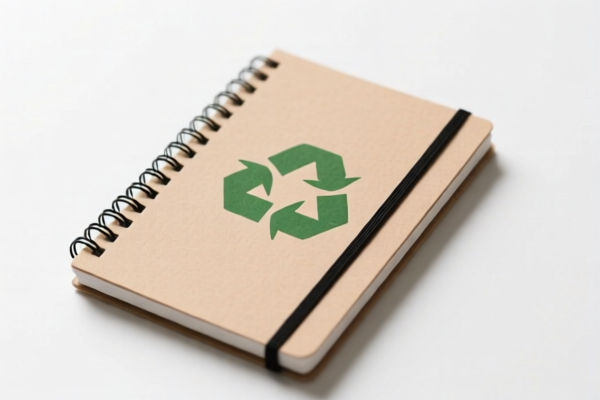
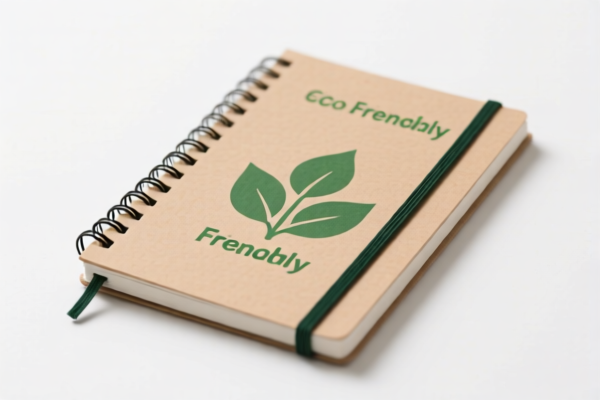
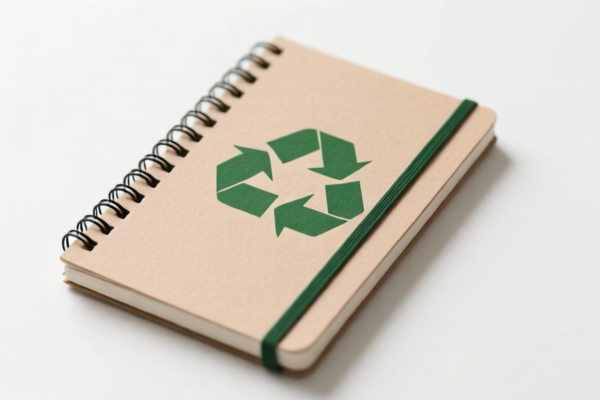
AI Analysis
🌿 Eco-Friendly Notebook (Sustainable Stationery)
🌐 HS Code Reference & Customs Clearance Guide | 2026 Latest Tariff Analysis | Professional Transit Strategy
📌 I. Product Definition & Classification: What is an "Eco-Friendly" Notebook?
In international trade, "Eco-Friendly" is a marketing or material attribute, not a legal classification criterion. The Harmonized System (HS) classifies notebooks based on material composition and product structure.
An "Eco-Friendly Notebook" typically falls into two main categories depending on its binding and paper type:
- Bound Notebooks/Diaries: If the notebook is bound (sewn, glued, or stapled) with covers, it generally falls under Chapter 48 (Paper Products) or Chapter 39 (Plastics, if covers dominate).
- Unbound/Loose Sheets: If it is merely a pad of loose writing paper (even if eco-friendly), it may fall under different subheadings.
⚠️ Critical Distinction:
- If the product is a bound book-like structure (with a cover and internal pages bound together) →归类 under 4820.10 (Notebooks/Diaries).
- If the product is a plastic-covered journal or cover without significant paper content →归类 under 3926.10 (Office Supplies) or 3926.90 (Other Plastic Articles).
- "Eco-friendly" claims (e.g., recycled paper, soy ink) do not change the HS Code. Customs officers look at the physical form, not the environmental certification.
📦 II. HS Code Classification Details (2026 Latest Tariff Authority Comparison)
Based on the provided data, here are the most relevant HS Codes for notebooks and related stationery. Note that specific "notebooks" fall under 4820.10, while related accessories or plastic covers fall under 3926.
| HS Code | Product Description | Applicable Scenario | Key Classification Feature |
|---|---|---|---|
4820.10.20.10 |
Diaries, notebooks and address books, bound; memorandum pads, letter pads and similar articles: Diaries and address books | Bound notebooks, daily planners, address books with covers. | Bound. Includes both "Diaries" and "Address Books". |
4820.10.20.60 |
Diaries, notebooks and address books, bound; memorandum pads, letter pads and similar articles: Other | Other bound notebooks that do not fit "Diaries/Address Books" (e.g., plain composition notebooks). | Bound. Covers general "Notebooks" that aren't specifically diaries/address books. |
4817.20.20.00 |
Letter cards, plain postcards and correspondence cards: Sheets of writing paper... prepared for use as combination sheets and envelopes | Writing pads with perforated edges or gummed borders (less common for standard "notebooks"). | Perforated/Gummed Sheets. Not a standard bound notebook. |
4817.30.00.00 |
Boxes, pouches, wallets and writing compendiums, of paper or paperboard, containing an assortment of paper stationery | Stationery sets (e.g., pen + notepad + envelope in a box). | Assorted Sets. Not a single notebook. |
3926.10.00.00 |
Office or school supplies (of plastics or other materials of headings 3901-3914) | Plastic covers, plastic binders, or fully plastic "notebooks" (e.g., dry-erase boards, plastic folios). | Plastic Material. If the primary characteristic is plastic, not paper. |
3926.90.99.89 |
Other articles of plastics... Other: Other | Miscellaneous plastic stationery items not classified elsewhere (e.g., plastic clipboards, plastic document sleeves). | Catch-all Plastic. High tax rate. |
🔍 Key Note for Eco-Friendly Products:
- If your "Eco-Friendly Notebook" is paper-based (recycled paper pulp), it MUST be classified under 4820.10 (4820.10.20.10or4820.10.20.60).
- If it has a plastic cover but is primarily paper, it is still 4820.10 (the paper content defines the essential character).
- Only if the product is entirely plastic (e.g., a reusable plastic writing slate) does it fall under 3926.
💰 III. 2026 Latest Tariff Rate Details (Including Surcharges)
✅ Applicable Country: United States (US)
✅ Origin: China (CN)
✅ Effective Time: 2025/2026 (Based on current trade policies)
🎯 1. 4820.10.20.10 & 4820.10.20.60 — Bound Notebooks (Paper-Based)
| Item | Content |
|---|---|
| Base Tariff | 0.0% (ad valorem) |
| Section 301 Surcharge | +25.0% |
| Total Effective Rate | 25.0% |
| Tax Calculation | CIF Value × 25% |
| De Minimis Exemption | ❌ Not Applicable (Section 301 goods are excluded from $800 de minimis for China-origin) |
| Legal Basis Path | USITC:4820.10.20.10/60 → 301 Footnote: 9903.88.01 |
📌 Explanation:
- Paper-based notebooks are subject to a 25% additional tariff under the US-China Trade War (Section 301).
- There is no base tariff, so the entire duty burden is the 25% surcharge.
- "Eco-friendly" does not exempt you from this tariff.
🎯 2. 3926.10.00.00 — Plastic Office/School Supplies
| Item | Content |
|---|---|
| Base Tariff | 0.0% |
| Surcharge | 0.0% |
| Total Effective Rate | 0.0% |
| Tax Calculation | CIF Value × 0% |
| De Minimis Exemption | ✅ Potentially Applicable (If under $800 and not explicitly excluded) |
| Legal Basis Path | USITC:3926.10.00.00 |
📌 Explanation:
- Plastic office supplies (e.g., plastic covers, plastic folders) may qualify for 0% tariff if correctly classified.
- Warning: If the item is misclassified as plastic but is actually paper-based, customs may reclassify it to 4820.10 and charge 25%.
🎯 3. 3926.90.99.89 — Other Plastic Articles
| Item | Content |
|---|---|
| Base Tariff | 5.3% |
| Surcharge | +7.5% |
| Total Effective Rate | 12.8% |
| Tax Calculation | CIF Value × 12.8% |
| De Minimis Exemption | ❌ Not Applicable (China-origin goods subject to Section 301) |
📌 Explanation:
- This applies to miscellaneous plastic stationery items not covered under "Office Supplies" (3926.10).
- Rarely used for standard notebooks unless they are complex plastic accessories.
🛠️ IV. Customs Clearance Practical Advice (Avoid Pitfalls)
✅ 1. Required Documentation Checklist
| Document | Must Provide | Explanation |
|---|---|---|
| ✅ Product Specification Sheet | ✔️ | Must specify: Material (Paper % vs. Plastic %), Binding Type (Glued/Stitched), Page Count. |
| ✅ Material Composition Statement | ✔️ | Explicitly state: "Cover: Paper/Cardboard, Interior: Recycled Paper." Avoid vague terms like "Eco-materials." |
| ✅ Product Photos (Labeled) | ✔️ | Clear images of the binding, cover, and interior pages. Show if it is bound or loose. |
| ✅ Commercial Invoice | ✔️ | Description should be precise: "Bound Notebook, Recycled Paper, 100 Sheets" NOT just "Notebook." |
| ✅ FSC/PEFC Certification | ❓ Optional | Proof of sustainable sourcing. Does not affect HS Code, but useful for marketing. |
✅ 2. Declaration Tips (Key Mnemonic)
🔥 "Paper Bound = 4820 (25%); Plastic Only = 3926 (0-12.8%); Eco Label = No Tax Break!"
| Scenario | Correct HS Code | Tax Rate | Wrong Declaration |
|---|---|---|---|
| Recycled Paper Notebook, Bound | 4820.10.20.60 |
25% | Declare as "Plastic Folder" → Risk of Misclassification Penalty |
| Plastic Cover Notebook, Paper Pages | 4820.10.20.60 |
25% | Declare as "Plastic Article" → Customs may inspect and reclassify |
| Reusable Plastic Dry-Erase Book | 3926.10.00.00 |
0% | Declare as "Paper Notebook" → Overpay Tax |
| Loose Leaf Recycled Paper Pad | 4820.10.20.60 |
25% | Declare as "Stationery Set" → Incorrect |
✅ 3. Special Considerations for "Eco-Friendly" Claims
- No Tariff Preference for Green Products: Currently, no major trade agreement (including US-China) offers tariff reductions specifically for "eco-friendly" or "recycled" content. Do not assume green status lowers duties.
- Avoid "Plastic" Misclassification: Many importers try to classify paper notebooks as "Plastic Office Supplies" (
3926.10) to avoid the 25% tax. This is high-risk. If customs determines the product is predominantly paper (by weight or value), they will reassess and charge 25% + penalties. - Kitting Issues: If you sell a "Notebook + Pen" set, ensure it is classified correctly. If it's a "writing compendium" (
4817.30), it also faces 25% tax.
🌍 V. Global Market Comparison (2026)
| Market | Recommended HS Code for Paper Notebooks | Tariff Rate | Notes |
|---|---|---|---|
| 🇺🇸 USA | 4820.10.20.60 |
25% | Section 301 surcharge applies. No eco-exemption. |
| 🇨🇳 China | 4820.10.20.60 |
~10-15% | Check local VAT (13%) + Consumption Tax (if any). |
| 🇪🇺 EU | 4820.10.00 |
~6.5% | No Section 301-style surcharges. Standard MFN rate. |
| 🇨🇦 Canada | 4820.10.00.00 |
0% (if under CUSMA/USMCA origin) | Verify origin rules. |
| 🇦🇺 Australia | 4820.10.00.00 |
5% | Standard AFTA rate may apply if from ASEAN. |
📌 Conclusion:
- The USA is the most expensive market for paper notebooks due to the 25% additional tariff.
- "Eco-friendly" is not a tariff code. Focus on accurate material description to avoid penalties.
📌 VI. Common Mistakes & Pitfalls (Lessons Learned)
❌ Mistake 1: Using "Eco-Friendly" as the product name in the invoice without material details.
👉 Consequence: Customs may request additional info, causing delay.
❌ Mistake 2: Classifying a paper notebook with a plastic cover as 3926.10.00.00 to save tax.
👉 Consequence: Customs inspection reveals paper dominance → Reclassified to 4820.10 → 25% Tax + Interest + Penalties.
❌ Mistake 3: Claiming "De Minimis" exemption for a $500 shipment of eco-notebooks.
👉 Consequence: Section 301 goods from China are excluded from de minimis. The entire shipment is subject to duty.
✅ Correct Approach:
"Bound Notebook, 100 Sheets, Recycled Paper Content, Cardboard Cover, Model XYZ, FSC Certified"
🎯 VII. Conclusion: Precision in Classification Saves Money
🎯 Key Takeaway:
🔹 "Eco-friendly" does not mean "Tax-free."
🔹 "Paper-bound = 25% in USA."
🔹 "Accurate Material Description is Key."
📌 Pro Tip:
If your product is 100% plastic (e.g., a reusable plastic writing pad with erasable pages), classify it under 3926.10.00.00 to enjoy 0% tariff. But if it has any paper content, it is likely 4820.10 and subject to 25%.
📣 Immediate Action:
📞 Consult a licensed customs broker for Pre-Ruling if your product has mixed materials (e.g., Paper + Plastic Binding).
🚀 Accurate Classification = Predictable Costs = Competitive Edge!
✨ Smart Clearance, Starts with the Right HS Code!
💼 Every Dollar Saved is a Dollar Earned!
Customer Reviews
About HS Code Classification
The Harmonized System (HS) is an internationally standardized nomenclature developed by the World Customs Organization (WCO) to classify traded products. Over 200 countries use the HS system as the basis for customs tariffs, trade statistics, and import/export regulations.
Each HS code follows a hierarchical structure:
- Chapter (2 digits) — Broad category of goods (e.g., Chapter 84: Machinery and Mechanical Appliances)
- Heading (4 digits) — More specific grouping within the chapter
- Subheading (6 digits) — Internationally standardized breakdown, used by all WCO member countries
- National subdivisions (8-10 digits) — Country-specific extensions for further classification, such as US HTSUS 10-digit codes
Correct HS code classification is essential for smooth customs clearance, accurate duty payment, and compliance with trade regulations. Misclassification can lead to customs delays, overpayment of duties, or penalties.
When importing from CN to US, the applicable tariff rates may include:
- Most-Favored-Nation (MFN) rate — The standard duty rate applied to WTO members
- General rate — Applied to countries without trade agreements
- Trade remedy duties — Additional tariffs such as Section 301 (anti-dumping), Section 232 (national security), or countervailing duties
The information provided on this page is for reference purposes only. For official classification, please consult with your local customs authority or a licensed customs broker.