edge banding tool
CN → US| HS Code | Tariff Rate | Origin | Destination | Doc |
|---|---|---|---|---|
| 8205595510 | 40.3% | CN | US | Official Doc |
| 8465940025 | 37.9% | CN | US | Official Doc |
| 8205591000 | 42.2% | CN | US | Official Doc |
| 8465940065 | 37.9% | CN | US | Official Doc |
| 8422309160 | 35.0% | CN | US | Official Doc |
Product Images
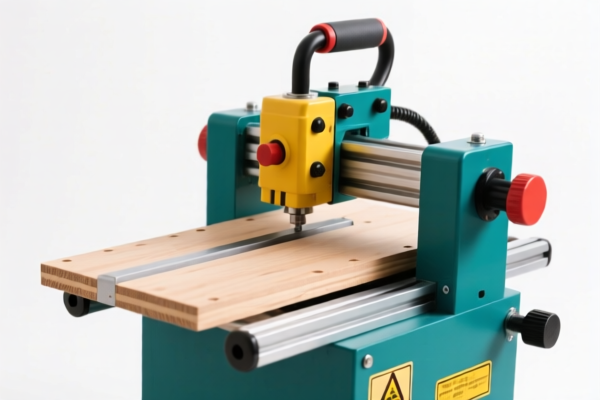
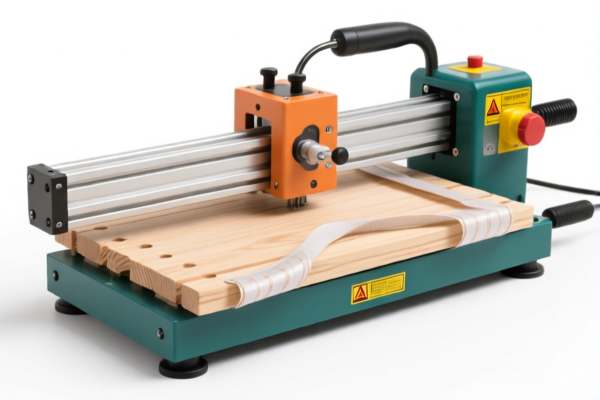
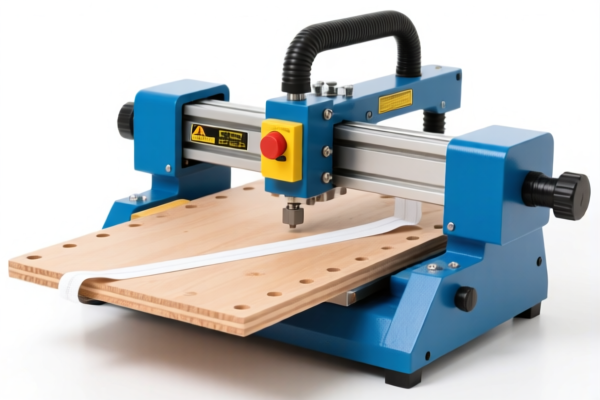
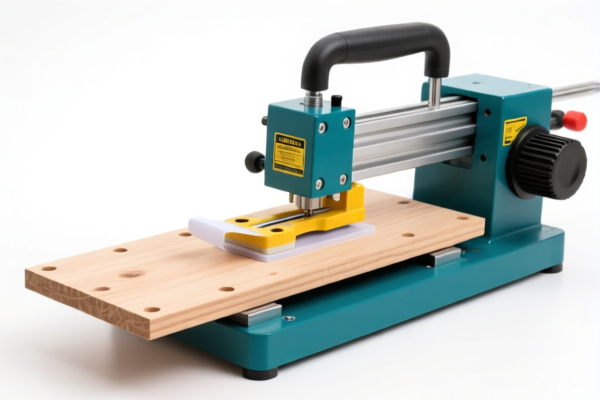
AI Analysis
🪚 Edge Banding Tool (封边工具)
🌐 HS Code Reference & Customs Clearance Guide | 2026 Latest Tariff Analysis | Professional Clearance Strategy
📌 Part I: Product Definition & Classification: What Exactly is an "Edge Banding Tool"?
An Edge Banding Tool is a specialized equipment or accessory used in woodworking and furniture manufacturing to apply, trim, and finish edge banding (a strip of material) onto the exposed edges of sheet goods like MDF, plywood, or particle board.
In international trade, classification depends heavily on whether it is a standalone hand tool or a part/component of a machine. Since the material composition is often not explicitly stated in the prompt, we rely on functional inference and fallback categories (n.e.s.) to determine the correct HS Code.
⚠️ Key Distinction Point:
- If the tool is a manual hand tool (e.g., scrapers, trimmers held by hand) → Classify under Chapter 82 (Tools).
- If the tool is an automated attachment or part of a machine → Classify under Chapter 84 (Machinery).
- If the function mimics sealing/closing rather than woodworking → Consider Chapter 84 (8422) as a fallback for similar functions.
📦 Part II: HS Code Classification Details (2026 Latest Tariff Mapping)
Based on the provided data, here are the five possible HS Code classifications with their corresponding tax rates and rationales:
| HS Code | Product Description | Rationale for Classification | Total Tax Rate |
|---|---|---|---|
8205.59.55.10 |
Other hand tools (Fallback) | Inferred as a hand tool due to "edge banding" usage. Since material is unspecified, it falls under the "other" fallback category. | 40.3% |
8465.94.00.25 |
Parts/Accessories for Woodworking Machinery | High functional match with edge banding machines. Classified as a machinery part/component based on the principle of accessories. | 37.9% |
8205.59.10.00 |
Other Hand Tools & Parts | Explicitly classified as a hand tool category, fitting the "other hand tools and parts" fallback attribute. | 42.2% |
8465.94.00.65 |
Other Machinery for Working Wood (n.e.s.) | Use in woodworking processes fits the "Other" (n.e.s.) category without material conflict. | 37.9% |
8422.30.91.60 |
Sealing/Enclosing Machinery (Reference) | Based on function definition (closing/sealing operation) and fallback category principle, used as a similar function reference. | 35.0% |
🔍 Critical Insight:
- Lowest Risk/Lowest Rate:8422.30.91.60(35.0%) – If you can argue the primary function is "sealing" rather than just trimming.
- Most Accurate (Machinery):8465.94.00.25/8465.94.00.65(37.9%) – If it is an automated part of an edge bander.
- Most Accurate (Hand Tool):8205.59.10.00(42.2%) – If it is a manual trimmer/scrapper.
💰 Part III: 2026 Latest Tariff Rate Breakdown (Including Surtaxes & Policy Add-ons)
✅ Applicable Country: United States (US)
✅ Origin: China (CN)
✅ Effective Date: From November 10, 2025 (for subsequent imports)
🎯 1. 8205.59.55.10 – Other Hand Tools (Fallback)
| Item | Content |
|---|---|
| Base Tariff | 5.3% (ad valorem) |
| Section 301 Surtax | +25.0% |
| Section 122 IEEPA Surtax | +10.0% |
| Total Tax Rate | 40.3% |
| Tax Calculation | CIF Value × 40.3% |
| De Minimis Eligibility | ❌ Not Eligible (Deny De Minimis) |
| Legal Path | Base: 8205.59.55.10 → Surtax: 301 → IEEPA: 122 |
📌 Explanation:
- Classified as a hand tool, but subject to the full burden of US trade war tariffs.
- Total 40.3% is a significant cost driver for manual woodworking accessories.
🎯 2. 8465.94.00.25 – Parts for Woodworking Machinery
| Item | Content |
|---|---|
| Base Tariff | 2.9% (ad valorem) |
| Section 301 Surtax | +25.0% |
| Section 122 IEEPA Surtax | +10.0% |
| Total Tax Rate | 37.9% |
| Tax Calculation | CIF Value × 37.9% |
| De Minimis Eligibility | ❌ Not Eligible (Deny De Minimis) |
| Legal Path | Base: 8465.94.00.25 → Surtax: 301 → IEEPA: 122 |
📌 Explanation:
- Lower base tariff (2.9%) compared to hand tools (5.3%), but still hit hard by 35% in surtaxes.
- Best classified as a machine part if it attaches to an automated edge bander.
🎯 3. 8205.59.10.00 – Other Hand Tools & Parts
| Item | Content |
|---|---|
| Base Tariff | 7.2% (ad valorem) |
| Section 301 Surtax | +25.0% |
| Section 122 IEEPA Surtax | +10.0% |
| Total Tax Rate | 42.2% |
| Tax Calculation | CIF Value × 42.2% |
| De Minimis Eligibility | ❌ Not Eligible (Deny De Minimis) |
| Legal Path | Base: 8205.59.10.00 → Surtax: 301 → IEEPA: 122 |
📌 Explanation:
- Highest Tax Rate among hand tool categories.
- Avoid this code unless the tool is definitively a manual hand tool and no machinery part classification applies.
🎯 4. 8465.94.00.65 – Other Machinery for Working Wood (n.e.s.)
| Item | Content |
|---|---|
| Base Tariff | 2.9% (ad valorem) |
| Section 301 Surtax | +25.0% |
| Section 122 IEEPA Surtax | +10.0% |
| Total Tax Rate | 37.9% |
| Tax Calculation | CIF Value × 37.9% |
| De Minimis Eligibility | ❌ Not Eligible (Deny De Minimis) |
| Legal Path | Base: 8465.94.00.65 → Surtax: 301 → IEEPA: 122 |
📌 Explanation:
- Identical tax rate to8465.94.00.25.
- Use this if the tool is a standalone unit for woodworking but doesn't fit the "parts" definition.
🎯 5. 8422.30.91.60 – Sealing/Enclosing Machinery (Reference)
| Item | Content |
|---|---|
| Base Tariff | 0.0% (ad valorem) |
| Section 301 Surtax | +25.0% |
| Section 122 IEEPA Surtax | +10.0% |
| Total Tax Rate | 35.0% |
| Tax Calculation | CIF Value × 35.0% |
| De Minimis Eligibility | ❌ Not Eligible (Deny De Minimis) |
| Legal Path | Base: 8422.30.91.60 → Surtax: 301 → IEEPA: 122 |
📌 Explanation:
- Lowest Total Tax Rate (35.0%).
- Strategic Advantage: By arguing the tool's function is "sealing" (closing the edge band to the substrate) rather than just trimming, you may qualify for this lower-base-tariff category.
- Risk: Requires strong justification to Customs that the primary function aligns with "sealing machinery" rather than "woodworking tools."
🛠️ Part IV: Customs Clearance Practical Advice (Live Pitfall Avoidance Guide)
✅ 1. Preparation Checklist (Missing Documents = Delay)
| Document | Mandatory? | Explanation |
|---|---|---|
| ✅ Product Specifications | ✔️ | Must detail: Manual vs. Automatic, Material (Steel/Carbide), Function (Trimming/Sealing). |
| ✅ Photographs (Clear) | ✔️ | Show the tool in use. If it attaches to a machine, show the connection point. |
| ✅ Commercial Invoice | ✔️ | Clearly state: "Edge Banding Tool for Furniture Manufacturing" or "Part for Edge Banding Machine". |
| ✅ Origin Certificate (CO) | ✔️ | Essential for US origin verification. |
| ✅ Packing List | ✔️ | Separate packing lists if combining hand tools and machine parts to avoid confusion. |
✅ 2. Declaration Strategies (Key Mantra)
🔥 “Function Over Form, Seal Over Saw, Machine Part Saves Cash!”
| Scenario | Correct Declaration | Incorrect Action | Consequence |
|---|---|---|---|
| Manual Trimmer/Scrapper | 8205.59.10.00 or 8205.59.55.10 |
Declare as "Machinery Part" | Risk of Misclassification Penalty |
| Automated Blade/Belt for Edge Bander | 8465.94.00.25 |
Declare as "Hand Tool" | Higher Tax (42.2% vs 37.9%) |
| Tool Emphasizing "Sealing" Function | 8422.30.91.60 |
Declare as "Woodworking Saw" | Missed Savings (35.0% vs 40%+) |
| Mixed Shipment (Hand + Machine) | Separate Entries | Combine in one line item | Chaos & Audit Risk |
✅ 3. Special Handling Cases
| Case | Handling Advice |
|---|---|
| OEM Custom Tools | Provide design drawings to prove it is a part of a specific machine model, favoring 8465 classification. |
| Multi-Function Tools | If it trims AND seals, argue for sealing function (8422.30.91.60) to lower base tax. |
| Small Hand Tools | If value is low, note that De Minimis is DENIED for China-origin goods under current IEEPA/301 rules. Do not rely on $800 exemption. |
| Kit Sets | If sold as a kit (tool + glue + strip), declare the main tool as the primary item; accessories may follow the main tool's classification. |
🌍 Part V: Global Market Clearance Comparison (2026 Latest)
| Country/Region | Recommended HS Code | Tariff (China Origin) | Certification Requirements | Remarks |
|---|---|---|---|---|
| 🇺🇸 USA | 8422.30.91.60 (Preferred) |
35.0% | None specific (General) | Highest protectionism; 35% is the best-case scenario. |
| 🇨🇳 China | 8205.59.55.10 |
5.3% (Base) | None | No surtaxes; import into China is cheap. |
| 🇪🇺 EU | 8205.59.00 |
2.7% - 4.5% | CE (if electrical) | No trade war tariffs; standard WTO rates apply. |
| 🇬🇧 UK | 8205.59.00 |
4.0% | UKCA | Post-Brexit standard rates. |
| 🇯🇵 Japan | 8205.59.00 |
3.6% | PSE (if electric) | JCTA free trade benefits may apply if origin verified. |
📌 Conclusion:
- USA is the most difficult market due to the combination of Base Tariff + 301 Surtax + IEEPA Surtax.
- Strategy for US Export: Aggressively pursue the8422.30.91.60classification by emphasizing the "sealing" function to achieve the 35.0% rate instead of 40%+.
- Avoid8205.59.10.00if possible, as 42.2% is the highest burden.
📌 Part VI: Common Errors & Pitfalls (Blood & Tears Lessons)
❌ Error 1: Declaring a machine part as a hand tool
👉 Consequence: Paying 42.2% instead of 37.9%. Small difference, but cumulative impact is huge.
❌ Error 2: Declaring a hand tool as a machine part
👉 Consequence: Customs rejection or audit for misclassification. Must provide proof of attachment.
❌ Error 3: Ignoring Section 122 IEEPA
👉 Consequence: Assuming only 301 (25%) applies. Total is 35%+, not 25%. This is a critical cost miscalculation.
❌ Error 4: Using "Woodworking Tool" as a generic description
👉 Consequence: Customs officer assigns worst-case scenario code. Be specific: "Edge Banding Trimmer" or "Edge Banding Machine Blade."
✅ Correct Practice:
"Edge Banding Sealing Tool, Model XYZ, Used for Furniture Manufacturing, Designed for Sealing Operations, Material: Carbide Tipped, Country of Origin: China"
🎯 Part VII: Conclusion: Precise Classification = Profit Protection
🎯 Remember the Mantra:
🔹 "Seal is Cheaper than Saw, Machine Part Beats Hand Tool, 35% is the Target, 42% is the Trap!"
🔹 "HS Code decides your margin, 7% difference means life or death in margins!"
📌 Pro Tip:
If your product can be argued as either a hand tool or a machine part, always choose the machine part classification (8465) or the sealing machinery reference (8422) if legally justifiable. The base tax savings (2.9% vs 5.3% or 7.2%) are the only leverage you have against the fixed 35% surtaxes.
📣 Immediate Action:
📞 Contact a licensed US Customs Broker.
📤 Submit Product Photos + Functional Description.
🚀 Apply for Pre-Ruling (if applicable) or ensure documentation supports the8422.30.91.60(35.0%) classification to maximize profit.
✨ Professional Clearance Starts with Precise Classification!
💼 Your Bottom Line Depends on These 7%!
Customer Reviews
About HS Code Classification
The Harmonized System (HS) is an internationally standardized nomenclature developed by the World Customs Organization (WCO) to classify traded products. Over 200 countries use the HS system as the basis for customs tariffs, trade statistics, and import/export regulations.
Each HS code follows a hierarchical structure:
- Chapter (2 digits) — Broad category of goods (e.g., Chapter 84: Machinery and Mechanical Appliances)
- Heading (4 digits) — More specific grouping within the chapter
- Subheading (6 digits) — Internationally standardized breakdown, used by all WCO member countries
- National subdivisions (8-10 digits) — Country-specific extensions for further classification, such as US HTSUS 10-digit codes
Correct HS code classification is essential for smooth customs clearance, accurate duty payment, and compliance with trade regulations. Misclassification can lead to customs delays, overpayment of duties, or penalties.
When importing from CN to US, the applicable tariff rates may include:
- Most-Favored-Nation (MFN) rate — The standard duty rate applied to WTO members
- General rate — Applied to countries without trade agreements
- Trade remedy duties — Additional tariffs such as Section 301 (anti-dumping), Section 232 (national security), or countervailing duties
The information provided on this page is for reference purposes only. For official classification, please consult with your local customs authority or a licensed customs broker.