elastic no tie shoelaces
CN → US| HS Code | Tariff Rate | Origin | Destination | Doc |
|---|---|---|---|---|
| 9606108000 | 37.7% | CN | US | Official Doc |
| 6217108500 | 24.6% | CN | US | Official Doc |
| 6217109550 | 32.1% | CN | US | Official Doc |
| 6307905010 | 17.5% | CN | US | Official Doc |
Product Images
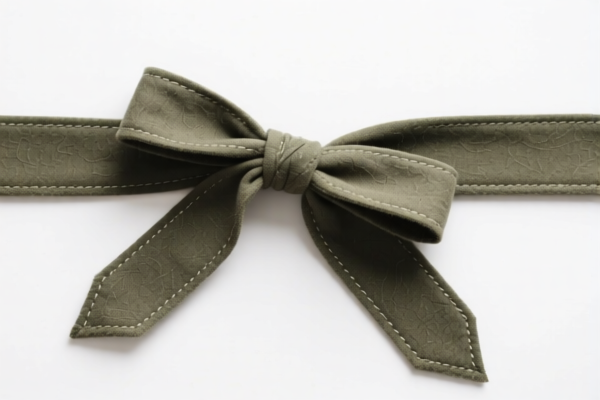
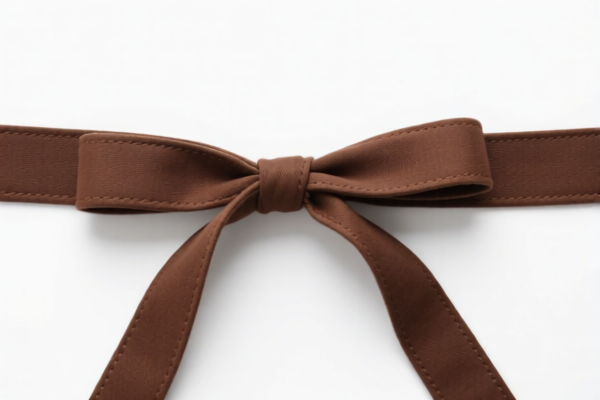

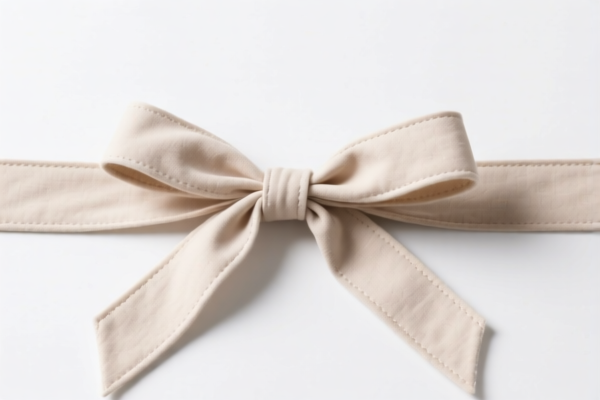
AI Analysis
🏃♂️ Elastic No-Tie Shoelaces (Smart Laces)
🌐 HS Code Reference & Customs Clearance Guide | 2026 Latest Tariff Analysis | Professional Clearance Strategy
📌 1. Product Definition & Classification: Do You Really Understand "No-Tie Shoelaces"?
Elastic no-tie shoelaces are modern auxiliary materials for footwear and apparel. They replace traditional laces with elastic cords featuring lock mechanisms (such as snap buttons, buckles, or pressure buckles). In international trade, their classification depends heavily on their material and functional form:
Buckle/Button-Type Accessories: If the lace features a plastic or metal lock mechanism, it may be classified as "buttons, buckles, and parts thereof" (Chapter 96). Garment/Footwear Accessories: If viewed as an integral part of the garment or footwear assembly (e.g., rubber, plastic, or fiber bands), it falls under "Other made-up clothing accessories" (Chapter 62). Textile Products: If primarily composed of cotton or synthetic fibers without complex mechanical parts, it may be classified under "Other finished textile articles" (Chapter 63).
⚠️ Key Distinction Point:
- If it has a mechanical lock (snap/button) → Consider 9606 (Buttons/Buckles)
- If it is a simple elastic band/strap → Consider 6217 (Garment Accessories) or 6307 (Other Textiles)
📦 2. HS Code Classification Details (2026 Latest Tariff Authority Comparison)
| HS Code | Product Description | Application Scenario | Material/Structure |
|---|---|---|---|
9606.10.80.00 |
Other Press Studs and Snap Fasteners; Buttons and Button Molds | Laces with plastic/metal lock buttons or snap closures | Plastic/Metal mechanical components |
6217.10.85.00 |
Other made-up clothing accessories | Elastic laces made of rubber, plastic, or fiber, used as general garment/footwear accessories | Rubber/Plastic/Fiber (Non-chapter 6212 definition) |
6217.10.95.50 |
Other made-up clothing accessories (Tariff subject to Section 301) | Elastic laces with additional tariffs applied, generally plastic/silicone/fiber | Plastic/Silicone/Fiber |
6307.90.50.10 |
Other made-up articles, including dress patterns | Cotton or synthetic fiber elastic laces, no complex mechanical locks | Cotton/Synthetic Fiber |
🔍 Key Reminder:
- Mechanical Locks: If the "no-tie" function relies on a snap button or buckle, it is best classified under 9606.10.80.00. - Pure Elastic: If it is simply a pull-on elastic band (e.g., "Lock Laces" style without a hard button), it is often classified under 6217 or 6307 depending on material and exact composition. - Material Matters: The presence of 122条款 (Section 122/301) tariffs varies by HS code, significantly impacting cost.
💰 3. 2026 Latest Tariff Rate Details (Including Surtaxes & Policy Add-ons)
✅ Applicable Country: United States (US)
✅ Origin: China (CN)
✅ Effective Time: 2025 November 10 onwards (including subsequent imports)
🎯 1. 9606.10.80.00 — Other Press Studs and Snap Fasteners (Buttons/Buckles)
| Item | Content |
|---|---|
| Basic Tariff | 2.7% |
| Section 301 Surcharge | +25.0% |
| 122 Clause Tariff (IEEPA) | +10.0% |
| Total Tax Rate | 37.7% |
| Tax Calculation | CIF Value × 37.7% |
| De Minimis Eligibility | ❌ Not Eligible (deny_de_minimis) |
| Legal Basis Path | IEEPA:9903.01.25 → Section 301:9903.88.01 → USITC:9606.10.80.00 |
📌 Explanation:
- 2.7% is the basic Most Favored Nation (MFN) tariff for buttons/buckles. - 25% is the Section 301 surcharge for Chinese goods. - 10% is the IEEPA (122 Clause) surcharge effective from Nov 10, 2025. - Total: 37.7%. This is a high tariff bracket. Classification as "buttons" attracts the highest surcharge.
🎯 2. 6217.10.85.00 — Other Made-Up Clothing Accessories
| Item | Content |
|---|---|
| Basic Tariff | 14.6% |
| Section 301 Surcharge | 0.0% |
| 122 Clause Tariff (IEEPA) | +10.0% |
| Total Tax Rate | 24.6% |
| Tax Calculation | CIF Value × 24.6% |
| De Minimis Eligibility | ❌ Not Eligible (deny_de_minimis) |
| Legal Basis Path | IEEPA:9903.01.24 → USITC:6217.10.85.00 |
📌 Note:
- 14.6% is the basic tariff for garment accessories. - 0% Section 301: This specific subheading does not trigger the 25% Section 301 surcharge. - 10% IEEPA: The 122 Clause surcharge still applies. - Total: 24.6%. This is significantly lower than 9606.10.80.00. This is a cost-effective classification if the product can be justified as a "garment accessory" rather than a "button."
🎯 3. 6217.10.95.50 — Other Made-Up Clothing Accessories (With Surtaxes)
| Item | Content |
|---|---|
| Basic Tariff | 14.6% |
| Section 301 Surcharge | +7.5% |
| 122 Clause Tariff (IEEPA) | +10.0% |
| Total Tax Rate | 32.1% |
| Tax Calculation | CIF Value × 32.1% |
| De Minimis Eligibility | ❌ Not Eligible (deny_de_minimis) |
| Legal Basis Path | IEEPA:9903.01.25 → Section 301:9903.01.24 → USITC:6217.10.95.50 |
📌 Warning:
- This subheading is similar to 6217.10.85.00 but incurs a 7.5% Section 301 surcharge in addition to the 10% IEEPA. - Total: 32.1%. Higher than 24.6%, so avoid this subheading if 6217.10.85.00 is applicable.
🎯 4. 6307.90.50.10 — Other Made-Up Articles (Textile Focus)
| Item | Content |
|---|---|
| Basic Tariff | 0.0% |
| Section 301 Surcharge | +7.5% |
| 122 Clause Tariff (IEEPA) | +10.0% |
| Total Tax Rate | 17.5% |
| Tax Calculation | CIF Value × 17.5% |
| De Minimis Eligibility | ❌ Not Eligible (deny_de_minimis) |
| Legal Basis Path | IEEPA:9903.01.25 → Section 301:9903.01.24 → USITC:6307.90.50.10 |
📌 Strategy:
- 0% Basic Tariff: The lowest base rate. - 7.5% Section 301: Lower surcharge than 25% or 14.6%. - 10% IEEPA: Standard 122 Clause. - Total: 17.5%. This is the lowest total tariff among the options. However, it requires the product to be clearly defined as a "textile article" (e.g., cotton/synthetic fiber laces) without mechanical buttons.
🛠️ 4. Customs Clearance Practical Advice (Real-World Pitfall Guide)
✅ 1. Preparation Material Checklist (None Can Be Omitted)
| Material | Required | Description |
|---|---|---|
| ✅ Product Specifications | ✔️ | Include material composition (e.g., 100% Polyester), presence of locks/buttons, length, color. |
| ✅ Product Photos (Clear) | ✔️ | Show the entire lace, including the lock mechanism (if any) and stitching. |
| ✅ Commercial Invoice | ✔️ | Clearly state "Elastic No-Tie Shoelaces, Accessory for Footwear/Apparel." Avoid vague terms like "Plastic Parts." |
| ✅ Packing List | ✔️ | Indicate quantity and packaging details. |
| ✅ Material Certificate | ✔️ | If claiming 6307 or 6217, provide proof of fiber content (e.g., Polyester, Nylon). |
| ✅ Declaration Statement | ✔️ | Confirm origin (China) and compliance with IEEPA/Section 301. |
✅ 2. Declaration Tips (Key Mnemonics)
🔥 "Mechanical Lock = Button (9606), Textile Band = Accessory (6217/6307). Choose Wisely!"
| Scenario | Correct Declaration | Wrong Practice |
|---|---|---|
| Laces with Snap Buttons | 9606.10.80.00 (37.7%) |
Declare as "Fabric Accessory" → Risk of Rejection/Fine |
| Pure Elastic Bands (No Lock) | 6217.10.85.00 (24.6%) or 6307.90.50.10 (17.5%) |
Declare as "Buttons" → Unnecessary 25% Surcharge |
| Mixed (Some Buttons, Some Bands) | Split Declaration or Choose Lowest Applicable | Mix in one HS Code → Customs Audit Risk |
| Cotton/Synthetic Fiber Focus | 6307.90.50.10 (17.5%) |
Declare as "Plastic" → Higher Base Rate |
✅ 3. Special Circumstances Handling
| Situation | Handling Advice |
|---|---|
| OEM Custom Laces | Provide customer order + design drawings. If custom-designed, emphasize "Made-Up Accessory." |
| Product with Metal/Plastic Locks | Must declare under 9606.10.80.00. Cannot be classified as "Textile Accessory" if locks are dominant. |
| Pure Elastic "Lock Laces" (No Hard Lock) | Best classified under 6217.10.85.00 or 6307.90.50.10 to save 25% Section 301 tax. |
| Sample vs. Bulk | Samples may have different clearance paths, but bulk must follow full tariff rules. |
🌍 5. Global Main Market Clearance Comparison (2026 Latest)
| Country/Region | Recommended HS Code | Tariff (China Origin) | Certification Requirements | Notes |
|---|---|---|---|---|
| 🇺🇸 USA | 9606.10.80.00 |
37.7% | N/A | High tariff due to Section 301 + IEEPA. |
| 🇺🇸 USA | 6307.90.50.10 |
17.5% | N/A | Lowest tariff for textile-focused no-tie laces. |
| 🇨🇳 China | 6217.10.90.00 |
0-5% | N/A | Low tariff, but domestic market rules differ. |
| 🇪🇺 EU | 6217.10.90.95 |
0-4% | CE (if applicable) | No Section 301. IEEPA does not apply. |
| 🇬🇧 UK | 6217.10.90.95 |
0-4% | UKCA | Post-Brexit rules. No US surcharges. |
📌 Conclusion:
- USA is the highest-cost market due to Section 301 and IEEPA. - EU/UK have no Section 301, making classification less critical for tax savings, but still important for compliance. - Strategy for USA: If your product has no hard mechanical lock, classify as 6307.90.50.10 (17.5%) or 6217.10.85.00 (24.6%) to save 10-20% in taxes compared to 9606.10.80.00.
📌 6. Common Mistakes & Pitfall Guide (Lessons Learned)
❌ Mistake 1: Declaring all no-tie laces under 9606.10.80.00
👉 Consequence: Pay 37.7% tax when you could pay 17.5% or 24.6%.
👉 Solution: If no hard button, use 6217 or 6307.
❌ Mistake 2: Declaring elastic laces as "General Textiles" without specifying "Made-Up Accessory"
👉 Consequence: Customs may reject or reclassify, leading to delays.
👉 Solution: Clearly state "Made-Up Elastic Shoelaces, Accessory for Footwear."
❌ Mistake 3: Ignoring the 122 Clause (IEEPA)
👉 Consequence: Surprise 10% tax from Nov 10, 2025.
👉 Solution: All China-origin goods are subject to this. Factor it into pricing.
❌ Mistake 4: Misclassifying as "Garments" (Chapter 61/62 main items)
👉 Consequence: Incorrect HS Code, potential penalty.
👉 Solution: Laces are accessories, not garments.
✅ Correct Practice:
"Elastic No-Tie Shoelaces, 100% Polyester, with Plastic Lock Mechanism, Model XYZ, for Footwear Accessories"
🎯 7. Conclusion: Professional Declaration, Save Time, Reduce Cost!
🎯 Remember the Mnemonic:
🔹 "Lock Button = 9606 (37.7%), Pure Elastic = 6307 (17.5%), Smart Choice Saves 20%!"
🔹 "HS Code Determines Life, Tariff Difference is Key, Declaration One Step, Save Thousands!"
📌 Tips:
- If your laces are made of cotton, consider 6307.90.50.10 (17.5%).
- If your laces have plastic/metal locks, you must use 9606.10.80.00 (37.7%).
- If your laces are rubber/plastic bands (no lock), use 6217.10.85.00 (24.6%).
- Apply for Advance Ruling if unsure about your specific product structure.
📣 Immediate Action:
📞 Contact Professional Customs Broker + Provide Product Photos + Apply for HS Code Advance Ruling
🚀 Let your Elastic No-Tie Shoelaces pass customs smoothly, efficiently, and profitably!
✨ Professional Clearance Starts with Accurate Classification!
💼 Every Cent of Your Cost Deserves Precise Calculation!
Customer Reviews
About HS Code Classification
The Harmonized System (HS) is an internationally standardized nomenclature developed by the World Customs Organization (WCO) to classify traded products. Over 200 countries use the HS system as the basis for customs tariffs, trade statistics, and import/export regulations.
Each HS code follows a hierarchical structure:
- Chapter (2 digits) — Broad category of goods (e.g., Chapter 84: Machinery and Mechanical Appliances)
- Heading (4 digits) — More specific grouping within the chapter
- Subheading (6 digits) — Internationally standardized breakdown, used by all WCO member countries
- National subdivisions (8-10 digits) — Country-specific extensions for further classification, such as US HTSUS 10-digit codes
Correct HS code classification is essential for smooth customs clearance, accurate duty payment, and compliance with trade regulations. Misclassification can lead to customs delays, overpayment of duties, or penalties.
When importing from CN to US, the applicable tariff rates may include:
- Most-Favored-Nation (MFN) rate — The standard duty rate applied to WTO members
- General rate — Applied to countries without trade agreements
- Trade remedy duties — Additional tariffs such as Section 301 (anti-dumping), Section 232 (national security), or countervailing duties
The information provided on this page is for reference purposes only. For official classification, please consult with your local customs authority or a licensed customs broker.