electric actuator
CN → US| HS Code | Tariff Rate | Origin | Destination | Doc |
|---|---|---|---|---|
| 8543908885 | 85.0% | CN | US | Official Doc |
| 8543906800 | 35.0% | CN | US | Official Doc |
| 8481809020 | 37.0% | CN | US | Official Doc |
| 8481809025 | 37.0% | CN | US | Official Doc |
Product Images
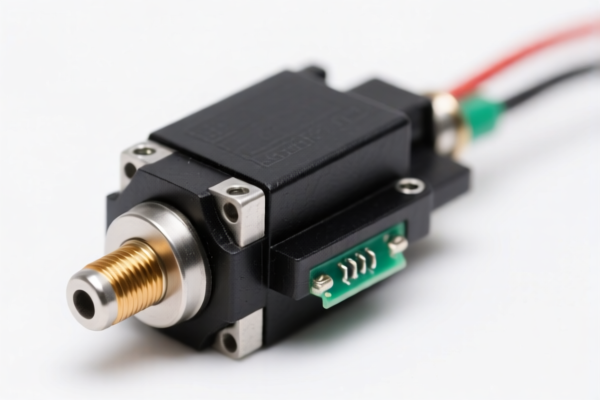
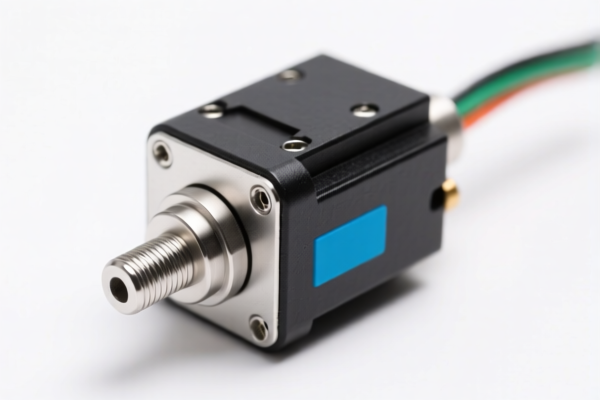
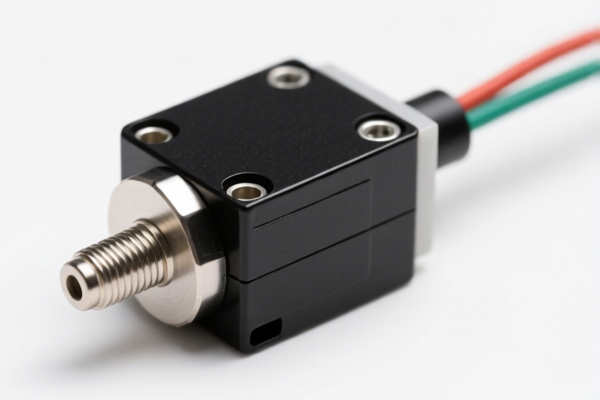
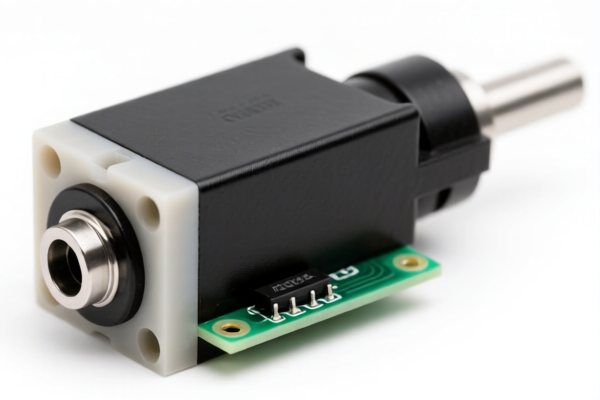
AI Analysis
⚡ Electric Actuator (Industrial Control Devices)
🌐 HS Code Reference & Customs Clearance Guide | 2026 Latest Tariff Analysis | Professional Clearance Strategy
📌 1. Product Definition & Classification: What Exactly is an "Electric Actuator"?
An Electric Actuator is a device used to move or control a mechanism or system, typically by converting electrical energy into mechanical motion. In international trade, these devices are often classified based on their primary function: * Are they control valves/components (regulated under Chapter 84)? * Are they electrical machinery/parts (regulated under Chapter 85)?
The classification depends heavily on whether the device is viewed as a "valve actuator" or an "electrical component." Below are the four most common HS Code classifications for Electric Actuators, along with their corresponding tax implications.
📦 2. HS Code Classification Details (2026 Latest Tariff Alignment)
| HS Code | Summary Description | Key Characteristics | Total Tax Rate |
|---|---|---|---|
8543.90.88.85 |
Parts of other electrical machines with individual functions | Classified as parts of specific electrical equipment. No material conflict. | 85.0% |
8543.90.68.00 |
Parts of electrical apparatus (e.g., PCB assemblies) | Includes printed circuit components. Default electrical classification. | 35.0% |
8481.80.90.20 |
Electromagnetic or electro-hydraulic control valves | Fits the description of "actuating devices" for control valves. | 37.0% |
8481.80.90.25 |
Driving devices for valves (electronic features) | Electronic characteristics match "electric drive" descriptions. | 37.0% |
🔍 Key Distinction Note:
- If the actuator is strictly a component of a larger electrical system without being a valve itself, it may fall under 8543.
- If the actuator’s primary purpose is to operate a valve (control fluid/gas flow), it is more accurately classified under 8481 (Valves).
- Tax Impact: The difference between8543.90.88.85(85%) and8481.80.90.20/25(37%) is significant. Proper functional description is critical.
💰 3. Detailed Tariff Breakdown (Including Surcharges & Policy Add-ons)
✅ Applicable Country: United States (US)
✅ Origin: China (CN)
✅ Effective Date: Current tariffs as per 2026 trade regulations
🎯 1. 8543.90.88.85 – Parts of Other Electrical Machines (High Risk)
| Item | Content |
|---|---|
| Base Duty | 0.0% |
| Section 301 Surcharge | +25.0% |
| Section 122 Surcharge | +10.0% (Steel, Aluminum, Copper products) |
| Section 232 Surcharge | +50.0% (Steel, Aluminum, Copper products) |
| Total Tax Rate | 85.0% |
| Calculation | CIF Value × 85% |
| De Minimis Exemption | ❌ Not Applicable |
| Legal Basis | High-duty bracket for specific electrical parts under current trade restrictions. |
📌 Explanation:
This classification attracts the highest possible combined tariffs due to the inclusion of Section 232 (Steel/Aluminum/Copper) and Section 122 surcharges. If your actuator contains significant metal components and is classified as a general electrical part, this rate applies. Extremely high cost implication.
🎯 2. 8543.90.68.00 – Parts of Electrical Apparatus (Moderate Risk)
| Item | Content |
|---|---|
| Base Duty | 0.0% |
| Section 301 Surcharge | +25.0% |
| Section 122 Surcharge | +10.0% |
| Total Tax Rate | 35.0% |
| Calculation | CIF Value × 35% |
| De Minimis Exemption | ❌ Not Applicable |
| Legal Basis | Standard electrical apparatus parts classification. |
📌 Explanation:
This classification applies if the actuator is viewed as a standard electrical component (e.g., containing PCBs) but does not trigger the heavier Section 232 steel/aluminum surcharges. It is significantly cheaper than the 85% bracket but still carries a 35% total burden.
🎯 3. 8481.80.90.20 & 8481.80.90.25 – Control Valves & Driving Devices (Optimal)
| Item | Content |
|---|---|
| Base Duty | 2.0% |
| Section 301 Surcharge | +25.0% |
| Section 122 Surcharge | +10.0% |
| Total Tax Rate | 37.0% |
| Calculation | CIF Value × 37% |
| De Minimis Exemption | ❌ Not Applicable |
| Legal Basis | Chapter 84: Nuclear reactors, boilers, machinery, mechanical appliances; parts thereof. |
📌 Explanation:
These HS codes classify the device as a valve control component.
-8481.80.90.20: Specifically for electromagnetic or electro-hydraulic devices.
-8481.80.90.25: For other driving devices with electronic features.
Why choose this?
Although the base duty is 2%, the total rate (37%) is lower than the 85% electrical part classification. This is often the most cost-effective route if the product’s primary function is clearly tied to valve control systems.
🛠️ 4. Customs Clearance Practical Advice (Avoid Pitfalls)
✅ 1. Documentation Checklist (Essential)
| Document | Mandatory? | Purpose |
|---|---|---|
| Product Specification Sheet | ✔️ | Must clearly state: Voltage, Power, Drive Type (Electric), and Primary Function (e.g., "Valve Actuator"). |
| Function Diagram | ✔️ | Illustrate how the actuator connects to a valve or system. Prove it’s not just a generic motor. |
| Commercial Invoice | ✔️ | Use precise language: "Electric Valve Actuator" vs. "Electrical Motor Part." |
| Bill of Lading | ✔️ | Ensure packaging lists match invoice details. |
| Origin Certificate | ✔️ | If non-China origin, may reduce taxes. |
✅ 2. Classification Strategy (Critical Tips)
🔥 “Function Defines Function, Not Just Form!”
| Scenario | Recommended HS Code | Reason |
|---|---|---|
| Actuator explicitly designed for valve control | 8481.80.90.20 or 8481.80.90.25 |
Primary function is valve operation → Chapter 84 applies. Lower total tax (37%). |
| Actuator is a generic motor/parts for unknown use | 8543.90.68.00 |
General electrical part → Chapter 85. Moderate tax (35%). |
| Actuator contains significant steel/aluminum AND is classified as electrical part | 8543.90.88.85 |
Triggers Section 232 + 122 → Highest tax (85%). Avoid if possible. |
⚠️ Warning:
Do not simply label the product as "Electric Motor" or "Controller" if it is specifically used for valves. Misclassification can lead to penalties or higher duties. Provide clear functional descriptions to support Chapter 84 classification.
✅ 3. Special Considerations
| Situation | Advice |
|---|---|
| Mixed Components | If the actuator contains steel/aluminum parts, ensure the functional description emphasizes electronic control rather than mechanical structure to avoid Section 232 surcharges if possible. |
| Pre-Ruling | Apply for an Advance Ruling (CBP Ruling) before shipment to confirm the correct HS code and avoid surprises at the port. |
| Supply Chain Diversification | If sourcing from non-China countries (e.g., Vietnam, Mexico), check if any Section 301 or IEEPA tariffs are waived. |
🌍 5. Global Market Comparison (2026)
| Region | Recommended HS Code | Estimated Total Duty (China Origin) | Notes |
|---|---|---|---|
| 🇺🇸 USA | 8481.80.90.20/25 |
37.0% | Best balance of function and cost. |
| 🇺🇸 USA | 8543.90.88.85 |
85.0% | Avoid unless necessary. High metal content triggers extra surcharges. |
| 🇪🇺 EU | 8481.80.90 |
~2.0% - 4.0% | No Section 301 surcharges. Lower overall cost. |
| 🇨🇳 China | 8481.80.90 |
~2.0% - 4.0% | Standard import duty. No additional US-style surcharges. |
📌 Conclusion:
- For US Imports, classify as8481.80.90.20/25if the product is a valve actuator to save 48% in taxes compared to the 85% electrical part classification.
- Always provide clear functional documentation to support Chapter 84 classification.
📌 6. Common Mistakes & Pitfalls (Lessons Learned)
❌ Mistake 1: Classifying a valve actuator as a general "electrical part" (8543)
👉 Result: 85% tax rate due to Section 232/122 surcharges. Massive cost overrun.
❌ Mistake 2: Using vague descriptions like "Motor Controller"
👉 Result: Customs may reject the Chapter 84 classification, forcing a re-evaluation and potential penalties.
❌ Mistake 3: Ignoring Section 122 and 232 implications for metal components
👉 Result: Unexpected surcharges if the product contains steel/aluminum and is not properly exempted or classified under Chapter 84.
✅ Correct Approach:
"Electric Valve Actuator, Model XYZ, 24V DC, for Industrial Fluid Control, Contains PCB and Steel Housing" → Supports
8481.80.90.20.
🎯 7. Conclusion: Smart Classification Saves Money!
🎯 Key Takeaway:
🔹 "If it controls a valve, use Chapter 84."
🔹 "8481.80.90.20/25 = 37% vs. 8543.90.88.85 = 85%. Choose wisely!"
🔹 "Clear Function Description = Lower Duties + Faster Clearance."
📌 Pro Tip:
If your electric actuator is not made in China, consult your customs broker to see if Section 301 surcharges can be waived. For US imports, pre-classification rulings are highly recommended to avoid costly surprises.
📣 Next Steps:
📞 Contact a Licensed Customs Broker to review your product’s functional documentation.
📄 Submit an Advance Ruling Request to CBP for definitive classification.
🚀 Optimize Your Supply Chain to minimize tariff exposure.
✨ Accurate Classification is the First Step to Profitable Trade!
💼 Don’t let misclassification eat your margins!
Customer Reviews
About HS Code Classification
The Harmonized System (HS) is an internationally standardized nomenclature developed by the World Customs Organization (WCO) to classify traded products. Over 200 countries use the HS system as the basis for customs tariffs, trade statistics, and import/export regulations.
Each HS code follows a hierarchical structure:
- Chapter (2 digits) — Broad category of goods (e.g., Chapter 84: Machinery and Mechanical Appliances)
- Heading (4 digits) — More specific grouping within the chapter
- Subheading (6 digits) — Internationally standardized breakdown, used by all WCO member countries
- National subdivisions (8-10 digits) — Country-specific extensions for further classification, such as US HTSUS 10-digit codes
Correct HS code classification is essential for smooth customs clearance, accurate duty payment, and compliance with trade regulations. Misclassification can lead to customs delays, overpayment of duties, or penalties.
When importing from CN to US, the applicable tariff rates may include:
- Most-Favored-Nation (MFN) rate — The standard duty rate applied to WTO members
- General rate — Applied to countries without trade agreements
- Trade remedy duties — Additional tariffs such as Section 301 (anti-dumping), Section 232 (national security), or countervailing duties
The information provided on this page is for reference purposes only. For official classification, please consult with your local customs authority or a licensed customs broker.